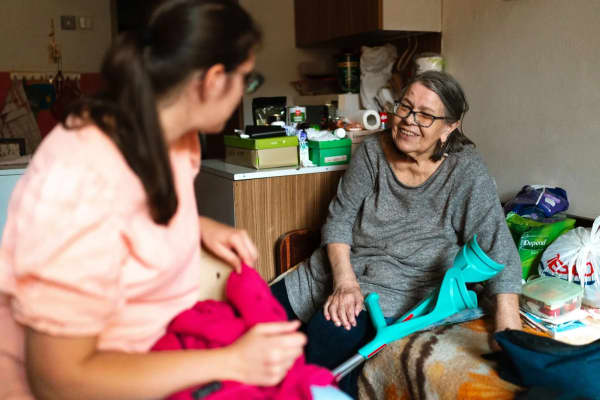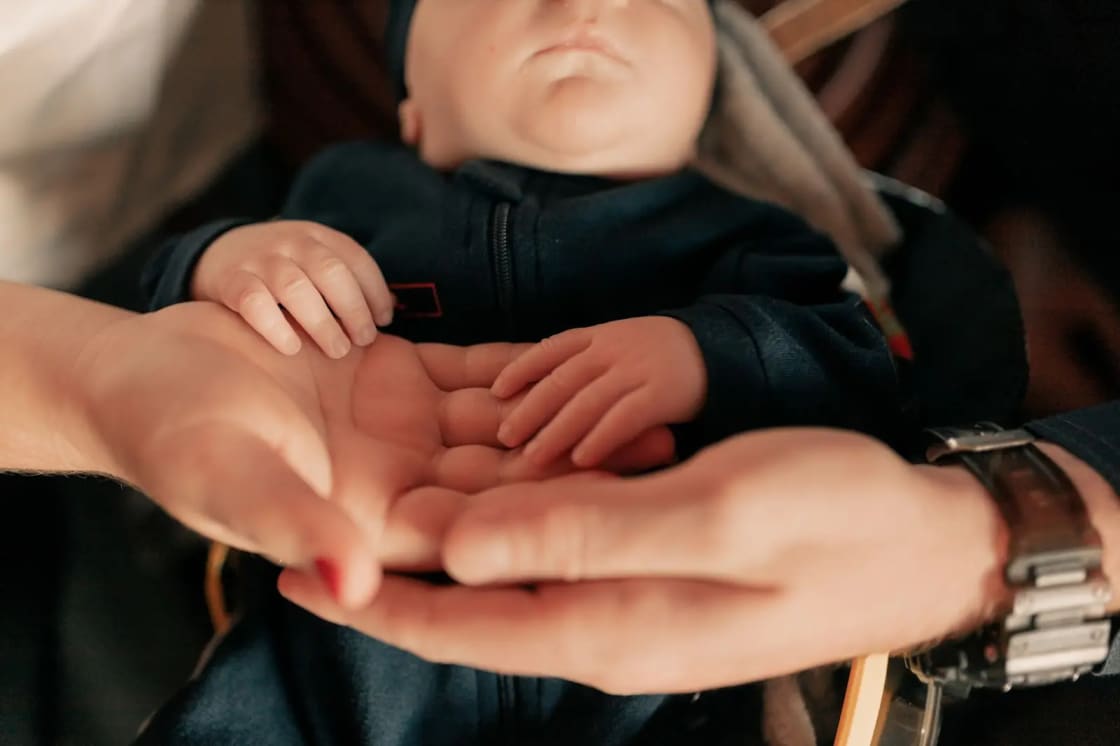

The first months with a new baby are the same everywhere: sleepless, disorienting, and much longer on the inside than they look from outside. What differs by place is the infrastructure around you — where to go, who to ask, and what's available at two in the morning.
Utah Valley happens to be unusually well set up for this, mostly because so many people here are doing it at the same time. Here's the practical map.
This guide is informational and not medical advice. For any concern about your health or your baby's, contact a qualified provider.
Feeding, and getting help early
If feeding is going badly, the single most useful thing to know is that it's much easier to fix early, and that asking for help is normal rather than an admission of failure.
Fetched live from AirNow when this page loads, so it is current whichever day you are reading this.
Hospital lactation consultants are the first stop. Both major delivery hospitals in the county have them, and support often extends past discharge — ask what's available before you leave, because in the fog of the first days you won't think to ask later.
Private IBCLCs — international board certified lactation consultants — practice in the valley and many will do home visits, which is worth a great deal when leaving the house is a production. Some insurance plans cover lactation support; check.
Your pediatrician's office often has staff who can help with feeding questions, and weight checks there are a practical way to know whether things are working.
Peer support groups meet around the valley and provide a different kind of help — the reassurance of being in a room with people whose babies also won't latch.
And a note that deserves saying: if breastfeeding doesn't work out, the baby will be fine. Utah Valley has strong cultural norms around breastfeeding, which is supportive for people it's working for and can be quietly brutal for people it isn't. Fed is the requirement. Everything past that is preference.
Sleep, and expectations
Nobody can fix newborn sleep for you, but two things are worth knowing.
Safe sleep guidance matters and has changed. Current recommendations from pediatric authorities cover sleep surface, position, and what should and shouldn't be in the sleep space. Your pediatrician is the right source, and it's worth asking directly rather than relying on what was standard when your parents did this — the guidance has shifted substantially over the decades.
The advice you'll receive will be contradictory and confident. In a valley where everyone has done this, you will get a great deal of unsolicited sleep advice, much of it delivered with certainty. Some will be useful. Take what helps and let the rest go without arguing — it's offered kindly, even when it isn't helpful.
Getting out of the house
Leaving the house is both harder than expected and the thing most likely to help. Utah Valley makes this reasonably easy.
The Provo River Parkway is the best stroller walking in the valley — paved, largely flat, shaded in stretches, and long enough to scale to whatever you have in you. It connects a series of parks along the way.
Neighborhood parks are dense here. Our guide to the best parks in Provo covers the ones worth a drive, and most have paved loops that work for strollers.
Indoor options matter more than you'd think, because Utah Valley has three separate seasons that keep you inside: winter inversion, deep cold, and July. The Provo City Library is the standout — beautiful building, baby storytimes, warm, free, and full of other parents. Malls and rec centers work as walking loops. Our indoor activities guide has more.
On air quality: during winter inversion episodes and summer wildfire smoke, outdoor time with an infant is worth reconsidering. Check the air quality index before a long walk — it's a genuine consideration here in a way it isn't in most places.
Baby storytimes across the valley's city libraries are the most reliable low-effort way to be around other adults with babies. Nobody minds if your baby cries. That's the entire point of the room.
Finding your people
The advantage of having a baby in Utah Valley is that the support structures already exist and are actively looking for you.
Congregational support is a real and substantial feature of life here. Meals arrive. People offer to hold the baby so you can shower. If you're part of a congregation, this network will likely find you without being asked. If you're not, it's worth knowing that this is how a lot of the valley's mutual aid is organized.
Hospital-run groups for new parents and breastfeeding support meet regularly and are open beyond the people who delivered there in many cases.
Neighborhood and online parent networks are dense in this valley. Local buy-sell-trade groups are how an enormous amount of baby gear circulates here, and the used market for strollers, carriers, and clothes is deep and cheap because the turnover is constant.
Accept help when it's offered. This is the hardest advice to follow and the most important. The offers here are usually sincere, and people are frequently relieved to be given a specific task. "Could you bring dinner Thursday?" is easier for everyone than "let me know if you need anything."
When something's wrong
Know your pediatrician's after-hours process before you need it. Most practices have a nurse line. Write the number somewhere findable at 3 a.m. by someone who hasn't slept.
Urgent care versus emergency room is a decision you may have to make quickly. Our guide to urgent care versus the ER in Provo covers the distinction and the locations. For newborns specifically, the threshold for calling is lower than for older children — fever in a very young infant is treated as urgent, and that's a conversation to have with your pediatrician at the first visit so you know their guidance in advance.
Late-night supplies. The valley has 24-hour and late-night pharmacy and grocery options, but overnight hours have been trimmed in various places in recent years. Verify before driving out at 3 a.m. rather than discovering a locked door.
Your own health
This section matters more than its length suggests, because it's the one that gets skipped.
Postpartum recovery takes longer than the culture pretends. The single six-week visit is a floor, not a standard, and current thinking emphasizes more contact than that. Go to the appointment. Raise the things you're minimizing.
Perinatal mood and anxiety conditions are common and treatable. Some emotional volatility in the first couple of weeks is typical and usually eases. What warrants a call is anything that persists past that, gets worse, interferes with functioning or with caring for your baby, or involves thoughts of harming yourself or your child. If you're not sure whether what you're feeling qualifies — that uncertainty is itself a good reason to call someone.
This applies to both parents. Partners experience postpartum depression too, and it's substantially under-recognized.
Our guide to finding a therapist in Utah Valley covers the local landscape. Your OB, midwife, or pediatrician can also refer — pediatricians in particular often screen parents at well-baby visits, and answering is the point of the screening.
A specific Utah Valley note: the cultural expectation of competence and cheerfulness around family life runs strong here. It's mostly a warm thing. It can also make struggling feel like a private failure, and it isn't. A great many people in this valley have had a hard postpartum, including plenty who look like they didn't.
The logistics nobody mentions
- Car seat installation — get it checked. Health departments, fire stations, and safety programs in the area offer inspections, often free. Most seats are installed wrong.
- Add the baby to your insurance within the enrollment window. There's a deadline and missing it is painful.
- Birth certificate and Social Security number — the hospital usually starts this. Follow up if paperwork doesn't arrive.
- Childcare, if you'll need it — start earlier than seems reasonable. Good options in this valley have waitlists. Our childcare guide covers the landscape.
- Pediatric dental eventually — the recommendation is earlier than most people assume. Our guide to finding a dentist in Provo covers family practices.
The short version
Ask for lactation help early rather than late. Get out of the house, even briefly — the Parkway and the library are the two most reliable options in the valley. Say yes when people offer to help, and give them a specific job. Know your pediatrician's after-hours number before 3 a.m. Take your own postpartum health as seriously as the baby's.
And it does get easier. Not on any schedule anyone can promise you, but it does — and in a valley where roughly everyone around you has been through it, you're in unusually good company while you wait.
Gear, and what the valley makes easy
Utah Valley's birth rate creates one useful side effect: an enormous secondhand market.
Buy used for the things they outgrow fast. Clothes, bassinets, swings, carriers, and most of the six-month-and-under category circulate constantly through local resale groups, consignment shops, and neighborhood networks. The turnover here is fast enough that things are frequently barely used.
Buy new for car seats. This is the exception and it matters — a seat's history determines its safety, seats expire, and a seat involved in a crash should be replaced. Unless it's coming from someone you trust completely who can vouch for its full history, buy it new.
Wait on most of it. The pressure to have everything assembled before the birth is strong here and mostly unnecessary. You'll learn quickly what your particular baby will tolerate, and half the recommended list turns out to be irrelevant. Amazon and a dozen local stores are twenty minutes away.
Register for practical things. People in this valley will want to give you something. Diapers, meals, and gift cards for groceries are quietly the most useful gifts a new parent receives.
Going back to work
Whatever your situation, a few practical notes.
Utah has no state-mandated paid family leave, so what you get depends on your employer's policy and federal protections that only apply to certain employers and tenures. Find out exactly what you're entitled to well before the birth — this is not a conversation to have at thirty-nine weeks.
If you're pumping, federal law provides certain protections around break time and private space for many employees. Talk to HR in advance about where and when, rather than improvising in week one back.
Childcare timing. Utah Valley's good childcare fills up, and infant spots are the scarcest of all. Get on lists during pregnancy — earlier than seems reasonable. See our childcare guide.
The transition is hard even when the logistics work. Give yourself a couple of weeks of low expectations. Almost everyone finds the first days back harder than anticipated, and almost everyone finds it improves.
This article is for general information only and is not medical advice. Contact a qualified healthcare provider with any concern about your health or your baby's.
The birth bill: why it arrives in pieces
Nothing prepares people for the shape of the paperwork after a delivery. The bill is not one bill. A single uncomplicated birth typically generates claims from the hospital as a facility, from the obstetrician or midwife, from anesthesia if there was an epidural or a cesarean, sometimes from a pathology or laboratory group, and — this is the part that surprises everyone — from the baby, as a separate patient with a separate claim history.
Mother and newborn are two patients. The nursery or newborn care, the newborn hearing screen, the pediatric hospitalist who checked the baby before discharge: those bill under the baby's coverage, not the mother's, which is why the newborn enrollment deadline covered in our pediatrician guide matters so much and so quickly.
Knowing the structure tells you what is normal. Five envelopes over six weeks from five different billing entities is the expected outcome of one night in a hospital, not evidence that something went wrong.
What you are protected from, and what you are not
If you delivered at an in-network hospital, the federal No Surprises Act caps your cost-sharing at the in-network level for out-of-network clinicians who treated you there, and prohibits them from balance billing you — the anesthesia scenario covered in detail in our obstetric care guide. What it does not do is reduce your deductible, your coinsurance, or your out-of-pocket maximum. Most families delivering early in a plan year meet their entire deductible on this one event.
If you were self-pay for the birth, a different rule governs. You were entitled to a written good faith estimate before scheduled care, and the regulation calls for that estimate to include expected charges from co-providers, such as the anesthesia group and the facility, though HHS has extended enforcement discretion on that piece pending future rulemaking. The therapist guide sets out the dispute mechanics in full; the birth-specific point is that a good faith estimate listing only your obstetrician's fee, with no facility or anesthesia line, does not show your full cost, so ask the hospital and the anesthesia group for their own estimates.
A practical order of operations for the bills
Do these in sequence, and do not pay anything in the first three weeks.
1. Wait for the explanation of benefits. The EOB from your insurer is not a bill. Providers frequently send a statement before the claim has finished processing, and the number on it is often not the number you owe. Paying early is the most common way families overpay.
2. Line the EOB up against the provider's statement. You are checking one thing: does the patient responsibility on the EOB match the amount the provider is asking for? A mismatch is the signal, and it is usually a timing artifact rather than fraud.
3. Check that the baby was billed under the baby's coverage, and that the enrollment went through. A newborn claim denied for "no coverage" almost always traces back to the enrollment window, not to the care.
4. Ask for an itemized statement before disputing anything. You are entitled to one, and duplicate charges and quantity errors are visible on it in a way they are not on a summary balance.
5. Ask about financial assistance before setting up a payment plan. Nonprofit hospitals maintain written financial assistance policies, and eligibility is frequently more generous than families assume — often well above the federal poverty line for a household that has just added a member. A payment plan on a bill you qualified to have reduced is a bad trade, and the reduction is generally not available retroactively once you have paid.
None of this is financial or legal advice, and plan documents govern. But the sequence above — wait, reconcile, itemize, ask — is the difference between paying what you owe and paying what you were first sent.
Related Guides
- Having a Baby in Utah Valley: Hospitals, Birth Options & What to Expect
- Finding a Pediatrician in Utah Valley: A Parent's Guide
- Pharmacies in Provo: Late Hours, Transfers & What Utah Lets Pharmacists Do
- Assisted Living & Senior Care in Utah Valley: How to Read the System
- Eye Exams & Glasses in Provo: Who Takes What Insurance, and Where to Go
- Kids' Consignment Sales and Gear Resale in Utah Valley
Frequently Asked Questions
Where can I get lactation help in Utah Valley?
Where can I walk with a stroller in Provo?
Are there new-parent groups in Utah Valley?
What's open late in Provo if I need something for the baby?
How do I know if what I'm feeling postpartum is normal?
Why did I get so many separate bills after having a baby?
Should I pay a hospital bill as soon as it arrives after a birth?
Can I get a hospital bill for a delivery reduced?
Sources
The facts in this guide were checked against these sources. Hours, fees and rules change, so confirm anything time-sensitive with the source before you go. How we make Provo.com.
- FAQs about Consolidated Appropriations Act, 2021 Implementation: Good Faith Estimates for Uninsured (or Self-Pay) Individuals, Part 3, Centers for Medicare & Medicaid Services. Checked October 12, 2026.