
A generation ago, a gym in Utah Valley meant a weight room, a row of treadmills and maybe an aerobics class. Now the valley's strip centers and office parks are full of studios that sell something narrower and more personal: a coach, a small class, and a method. Three of those methods dominate the conversation. CrossFit gyms, which call themselves boxes, run intense group workouts built around lifting, gymnastics and conditioning. Pilates studios, most of them built around the spring-loaded machine called the reformer, teach slow, precise work for the core. Barre studios borrow the ballet rail and turn it into a low-impact class that leaves your legs shaking.
This guide explains how each one works, what a first class is like, how to tell a good studio from a merely busy one, and where to start in Utah Valley. We have named a handful of studios that we checked against their own websites and official listings, and we have tried to be honest about what we did not check. Studios open, move, change owners and close faster than almost any other business, so treat any name here as a starting point and confirm the details before you sign anything.
The Short Answer
If you want general strength and conditioning with a competitive, social group, try a CrossFit box, and check first that it appears in CrossFit's own gym finder. If you want core strength, control and mobility, try reformer Pilates; Club Pilates has studios in Lehi, Saratoga Springs and Pleasant Grove, and Pleasant Grove also has two other studios, Mountain West Pilates and The Park Pilates. If you want a music-driven, low-impact strength class with a dance flavor, try barre; Karve Studio in Lindon and Pure Barre in Highland are two established options. Nearly every studio in all three categories runs an intro offer for first-timers, and a trial class is the fastest way to find out which one suits you.
Studio Fitness Versus a Gym Membership
The first thing to understand is what you are paying for. A big-box gym sells access: a door code, equipment and floor space, and the freedom to use them however you like. That is a good deal for people who already know what they want to do. Our guide to gyms in Provo covers that side of the market, including the city recreation centers, which are the best value in the valley for many people.
A studio sells something else. You are buying programming, meaning someone else decides what you do today and how it builds toward next month. You are buying a coach, who watches your form and changes the workout when something hurts. And you are buying a group, which turns out to be the most powerful part of the package. People who would skip a solo gym session show up because six friends are expecting them at the early class.
That is why studio fitness costs several times what a basic gym membership does, and why the comparison is not really fair to either. The honest question is whether you need coaching and accountability or only access. If you need the first, a studio can be worth the money. If you need only the second, it is an expensive way to lift weights.
CrossFit: What It Is and How a Box Works
CrossFit is a branded training method built around what its founders called constantly varied, functional movement performed at high intensity. In practice, a class mixes three families of exercise: weightlifting, such as squats, deadlifts and the Olympic lifts; gymnastics, such as pull-ups, push-ups and handstand work; and conditioning, such as rowing, running, jumping rope and kettlebell swings. Each day's main workout, the workout of the day, is written on a whiteboard, and members record their results, which is where the competitive energy comes from.
The name is licensed. A gym can call itself CrossFit only if it holds an affiliate license. CrossFit publishes its own gym finder on crossfit.com, and each affiliate's listing shows its address, its contact details and how many years it has been affiliated. That listing is the quickest way to confirm that a gym is what it says it is. Plenty of excellent gyms in the valley train in a very similar style without the license and describe themselves as functional-fitness gyms instead. That is not a mark against them; it simply means the CrossFit finder will not list them.
Coaches hold certificates. CrossFit runs its own coaching courses, starting with a Level 1 certificate course, and affiliates generally advertise their coaches' credentials. It is reasonable to ask what certificates a coach holds and how long they have been coaching.
Good boxes start you slowly. A well-run box does not throw a newcomer into the regular class. It runs a fundamentals program, sometimes called an on-ramp, over several sessions, teaching the core movements with light loads before you join the group. If a box offers to skip that step, think twice.
Every workout is scaled. The whiteboard shows the prescribed version, but the coach adjusts the weight, the movement and the volume to the person in front of them. A seventy-year-old and a college athlete can do the same class. They will not do the same workout, and they should not try to.
The community has its own calendar. Many boxes take part in CrossFit's annual online competition, the Open, in which members around the world complete the same workouts and post their scores. It is a festive few weeks in most gyms, and you do not need to be competitive to enjoy it.
CrossFit Boxes Around the Valley
The valley has more boxes than we could responsibly verify for this guide, so here are four we checked against their own websites or CrossFit's official listing. Use the finder to see the rest near you.
Rock Canyon CrossFit sits on Canyon Road in north Provo and bills itself on its website as a CrossFit gym serving Provo.
Put It Up CrossFit is on Sandhill Road in south Orem, and lists its address and schedule on its own site.
CrossFit Lehi is in Lehi, about a half mile from the freeway by its own description, and CrossFit's listing shows it has been affiliated for more than a decade.
Elevated CrossFit American Fork is on Auto Mall Drive in American Fork, and its official CrossFit listing also shows more than a decade of affiliation.
Beyond those four, the finder and a map search will turn up boxes in Springville, Spanish Fork, Payson, Pleasant Grove and elsewhere. Visit two before you choose. The coaching style, the class times and the feel of the room vary much more between boxes than the workouts do.
Pilates: Reformer, Mat and the Classical Question
Pilates is the method developed by Joseph Pilates, a German-born fitness teacher who called his system Contrology and taught it for decades in New York with his wife, Clara. It emphasizes the deep muscles of the trunk, careful breathing, precise alignment and controlled movement through a full range of motion. It is quieter than CrossFit and slower than most gym classes, and people who assume it is easy tend to change their minds within the first ten minutes.
Mat Pilates is the original floor-based form, done on a thick mat with your own body weight, sometimes with small props such as rings, balls and bands. Recreation centers and yoga studios often include mat classes in their schedules, and it is the least expensive way to try the method.
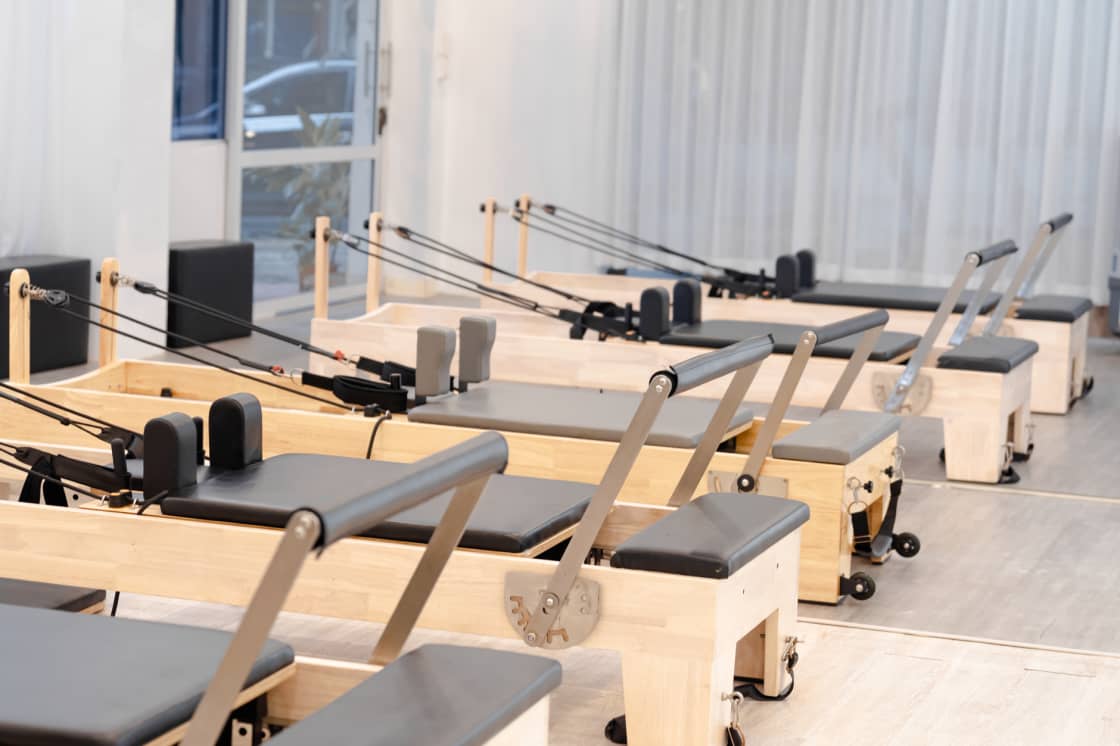
Reformer Pilates uses the machine that most boutique studios are built around. A reformer has a padded carriage that slides along a frame, springs that can be added or removed to change the resistance, a footbar at one end and straps with handles at the other. The springs can make a movement harder or help you through it, which is why reformer work suits both athletes and people coming back from injury. Studios with other apparatus, such as the tower, the chair and the Cadillac, can go further still.
Classical and contemporary are the two broad schools. Classical studios teach the exercises in the order and style Joseph Pilates taught them; contemporary studios adapt the repertoire, often with modern physical-therapy thinking and new exercises. Neither is better, but they feel different, and a studio will usually tell you which it follows.
High-intensity reformer classes are the newest branch. They move faster, hold positions longer and aim for a cardio effect as well as strength. They are hard, and they are popular, but they are a different experience from a traditional class, so read the class description before you book.
Pilates Studios Around the Valley
Again, these are studios we checked against their own websites; there are more, including independent studios in Orem and Provo, and a map search for your own city is worth doing. Our yoga and Pilates studio map lists more of them by city.
Club Pilates is the national reformer franchise, and its own location pages show studios in Lehi, Saratoga Springs and Pleasant Grove. The chain teaches reformer-based classes across several levels and advertises an intro class for newcomers, which makes it an easy first step.
Mountain West Pilates is a studio on Main Street in Pleasant Grove, and its booking listings show a schedule that reaches beyond Pilates into barre, strength, yoga and other classes.
The Park Pilates is also in Pleasant Grove, near the west side of the city, and describes itself on its website as a high-intensity reformer studio with forty-five-minute classes, and says it serves American Fork, Lehi, Lindon, Orem and Provo as well as Pleasant Grove.
Pleasant Grove's concentration of studios is worth noting for anyone living in the north half of the county, but it is not the whole map. Studios come and go quickly in this category, so check that any studio you find is still taking bookings, and look at recent reviews rather than old ones.
Barre: Ballet at the Rail
Barre takes the wooden rail from the ballet studio and turns it into a fitness class. You hold the barre for balance while working through small, controlled movements: tiny pulses, long holds at the edge of fatigue, and slow lifts that target the legs, the seat and the core. Most classes add light hand weights for the arms and a mat section for the abdominals, and the whole thing moves to music. The trademark sensation is the shake, the trembling that sets in when a muscle is worked to its limit, and instructors will usually tell you to welcome it.
The method's roots run back to the Lotte Berk Method, created by a dancer who adapted ballet exercises for general fitness, and later to Callanetics, a program built on small, precise movements. Today's barre studios have blended those roots with Pilates, yoga and strength training, and each chain or studio has its own house style.
Barre is low-impact, with no jumping and little pounding, which makes it popular with people who want strength work that is gentle on the joints. It is also more demanding than it looks. The movements are small, but the muscles work continuously, and a first class usually produces soreness in places you did not know you had.
Barre Studios Around the Valley
Karve Studio in Lindon is a barre studio whose website cites the Lotte Berk Method and Callanetics as the foundation of its classes. Its listings also show Pilates classes alongside barre.
Pure Barre is the national barre franchise; check its location finder for the nearest studio and any intro offer.
Beyond the dedicated studios, barre classes show up on the schedules of many Pilates studios, some yoga studios and several gyms. If a dedicated barre studio is not close to you, search the class lists of the studios that are.
Which One Fits You?
The three methods overlap more than their marketing suggests, but they suit different people.
Choose CrossFit if you want broad strength and conditioning, you like a competitive group, and you enjoy learning skills such as the Olympic lifts and gymnastics movements. It is the most intense of the three and the most social, with a strong culture of members cheering one another on. It asks the most of your joints, so good coaching matters more here than anywhere.
Choose Pilates if you want a strong core, better posture, more control and mobility, or a method that sits comfortably alongside physical therapy. It is quiet and precise, and progress shows up as steadiness and ease of movement rather than bigger numbers on a whiteboard.
Choose barre if you want a low-impact strength class with music, a dance flavor and a predictable structure. It is less technical than Pilates, less intense than CrossFit, and very good at making your legs work.
Many people end up doing two. A CrossFit member who adds a weekly Pilates class for mobility, or a barre regular who adds strength training, is a common and sensible combination.
What a First Class Is Like
At a CrossFit box, expect a fundamentals session or a free intro class first. A regular class typically opens with a warm-up, moves into a strength or skill segment, finishes with the workout of the day, and closes with a stretch. The coach will ask about injuries and scale your workout. You will probably be tired, and you will probably be sore two days later. Bring water, wear flat shoes, and do not try to keep pace with the regulars.
At a Pilates studio, expect a small class with an instructor who will show you how to set the springs, where to put your feet and how to move the carriage safely. The movements are slow, and the instructor will correct your alignment, sometimes with a light touch. Many studios ask you to wear grip socks, which have rubber pads on the soles, and to arrive early for your first visit. You will leave feeling taller, and your core will tell you about it the next morning.
At a barre studio, expect a music-driven class that moves from a warm-up to arm work with light weights, then to the barre for the legs and seat, then to the mat for the core. Grip socks are common here too. The instructor will call out small adjustments, and the shake will arrive sooner than you expect. Most people find the first class humbling and the third one fun.
How the Pricing Works
We do not print prices, because studios change them constantly and run promotions year-round, but the structure is almost universal.
Drop-in classes are the most expensive way to attend, priced per class. Class packs bring the per-class price down and usually expire after a set period. Unlimited memberships are billed monthly and pay off if you attend several times a week, and many require a minimum commitment and notice to cancel. Intro offers, such as a free first class, a discounted first week or a new-member rate, are nearly universal, and they are the right way to try a studio.
Read the cancellation terms before you sign. Late-cancel and no-show fees are common in capped classes, and membership contracts vary widely in how easy they are to end. Some studios also sell through class-booking apps, which can be a good way to sample several studios before committing to one.
Safety, Injuries and Pregnancy
All three methods are safe for most healthy adults when they are coached well, and all three can hurt you when they are not.
Tell the coach about injuries before the first class, every time you visit a new studio. A good instructor will modify the work without making a fuss.
Scale honestly. In CrossFit especially, the temptation to lift the prescribed weight or keep pace with the fastest member causes most injuries. The scaled workout is the workout.
Watch for real warning signs. Sharp pain, numbness and pain that lingers are reasons to stop and see a medical professional, not reasons to push harder.
Ask about pregnancy and postpartum work. Pilates and barre are often adapted for pregnancy, and many CrossFit coaches are experienced at modifying programs, but check with your own doctor or midwife first and tell the instructor before class.
Cheaper Ways In
A studio is not the only way to learn these methods. The valley's city recreation centers run group fitness classes as part of a membership or day pass, and their schedules often include formats in the same family, from core and strength classes to mat work. Our comparison of Utah Valley's recreation centers covers which cities have which facilities. A beginner can build a base there and then decide whether a specialist studio is worth the extra cost.
Online classes and videos can teach the vocabulary, but they cannot correct your form, which is the thing a coach is for. If you start at home, consider booking a few studio classes to have an expert check your technique.
Questions to Ask Before You Sign Up
- Is there an intro offer, and what does it include?
- How big are the classes? Capped classes of a dozen or so get far more coaching than packed ones.
- What training do the coaches or instructors have, and how long have they taught?
- Is there a beginner path, such as a fundamentals program or a level-one class?
- What are the late-cancel and membership-cancellation rules?
- Do the class times fit your week? The best studio is the one you can get to.
- For CrossFit, does the gym appear in CrossFit's official finder?
Then take a class and pay attention to how the coach treats the newest person in the room. That is the best single test of any studio.
The Short Version
CrossFit, Pilates and barre are all coached, small-group methods, and they all cost more than a gym membership because the coach is the product. CrossFit is broad, intense and social; confirm any box in CrossFit's official finder, where Rock Canyon CrossFit in Provo, Put It Up CrossFit in Orem, CrossFit Lehi and Elevated CrossFit American Fork are among the gyms we checked. Pilates builds core strength and control, mostly on reformers; Club Pilates has studios in Lehi, Saratoga Springs and Pleasant Grove, and Pleasant Grove also has Mountain West Pilates and The Park Pilates. Barre is low-impact strength work at the ballet rail; Karve Studio in Lindon and Pure Barre in Highland are two established places to start. Take the intro offer, tell the coach about any injury, read the cancellation terms, and choose the studio whose coaches pay attention to the beginner.
Related Guides
- Gyms and Fitness Options in Provo
- Yoga Studios in Provo
- Every Rec Center in Utah Valley, Compared
- Adult Rec Leagues in Utah Valley
- Swim Teams and Swim Clubs in Utah Valley
- The Provo Recreation Center Guide
- Archery Ranges and Bow Shops in Utah Valley
Frequently Asked Questions
How do I know a gym is an official CrossFit affiliate?
Is CrossFit safe for beginners?
What is the difference between reformer Pilates and mat Pilates?
What is barre?
Where are there Pilates studios in Utah Valley?
Where can I take a barre class in Utah County?
How much do CrossFit, Pilates and barre cost in Utah Valley?
Which is better for me: CrossFit, Pilates or barre?
Sources
The facts in this guide were checked against these sources. Hours, fees and rules change, so confirm anything time-sensitive with the source before you go. How we make Provo.com.
- Club Pilates location search, Club Pilates. Checked October 12, 2026.