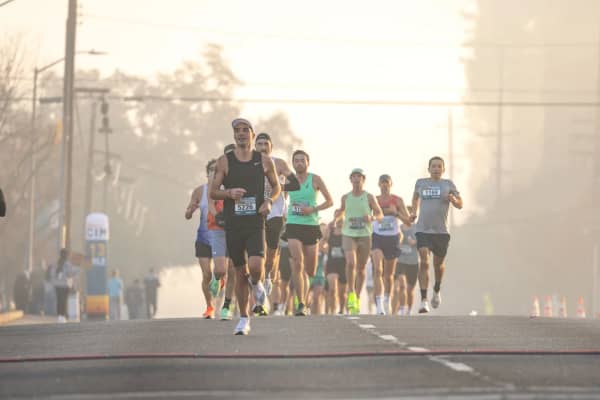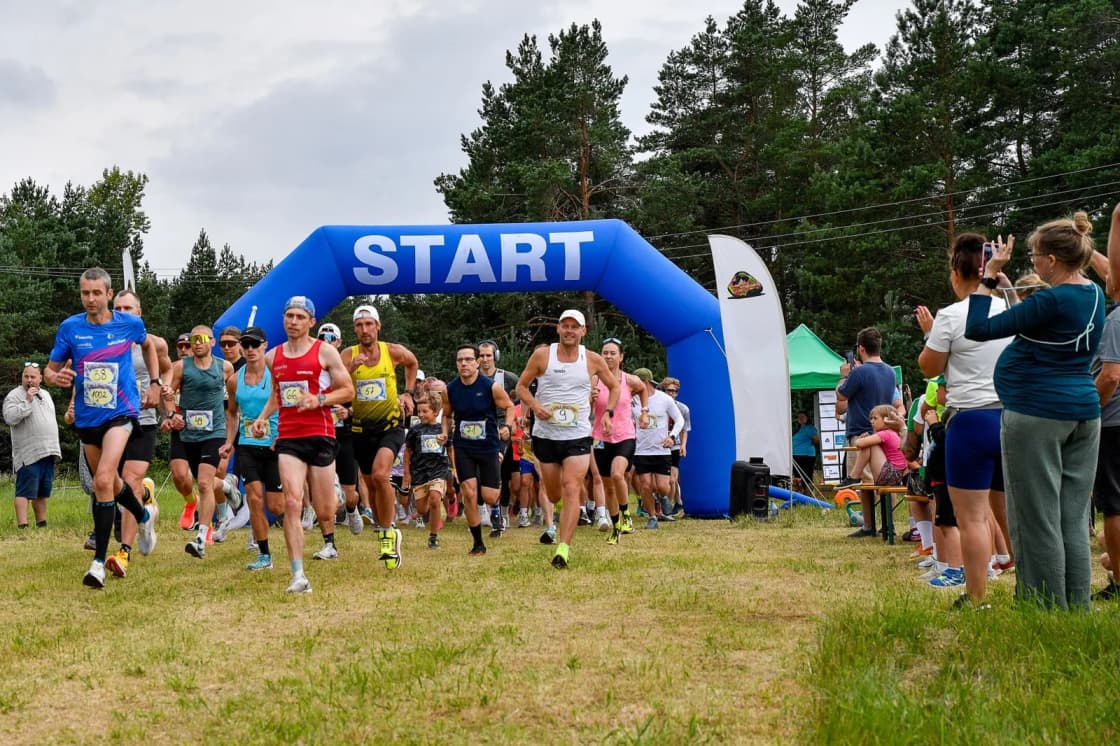

There is a joke among Utah Valley runners that the county's race directors own one course — a canyon road, pointed downhill at a town — and rent it to each other by the month. It is not far wrong. The valley floor sits at about 4,500 feet, and on three sides the canyons climb to 6,000 with a paved road and a river trail in each; a race that starts at a canyon park or a reservoir and finishes on a city street is fast, scenic and certifiable, and the calendar has a dozen of them. Around those canyon halfs sits the rest of the year: the spring 5Ks, the Fourth of July run, the trail ultras, the Halloween costume race, the Turkey Trots, and a charity-5K circuit so dense that nearly every Saturday from March to November has one.
This is the annual calendar of the valley's recurring races — what each one is, when it falls, which ones sell out, and how a runner builds a season out of them. It is an evergreen page: the dates given are the announced 2026 and 2027 ones or the historical pattern, and they shift by a week year to year, so each race's own site is the source for the current date. Our Utah Valley Marathon guide covers the year's biggest race in full; our running routes guide covers where to train for all of them; and the indoor tracks guide covers the months when the canyons are closed.
Why the Canyons
A note on the geography before the calendar, because it explains the shape of the year.
Provo Canyon, the big one, carries US-189 and the paved Provo River Trail from Deer Creek Reservoir down to the mouth above Orem and Provo, dropping about 1,400 feet over twenty miles. Hobble Creek Canyon above Springville, American Fork Canyon above the north valley, Spanish Fork Canyon, and the Nebo loop road above Payson each offer a similar descent to a town. A half marathon that starts at a canyon park and finishes at a city center is net-downhill by several hundred feet, USATF-certifiable, and fast; the Utah Valley Marathon's 1,444-foot drop was engineered to sit just under Boston's 1,500-foot no-penalty line, and the halfs that run the lower canyon inherit the same grade.
The consequence is a calendar in which most of the valley's half marathons are downhill canyon runs with point-to-point logistics — shuttles to the start, a canyon road closed for the morning, a finish in a town — and a runner who has done one of them knows the format of all of them. The consequence for training is the one every downhill-race veteran repeats: the descent is fast on the clock and hard on the quadriceps, and the flat last miles are where an untrained runner discovers it.
The Calendar, Month by Month
January and February
The quiet months. A Provo 5K in mid-January and a scattering of resolution runs; the Bonneville Backyard Ultra, a last-runner-standing event in Provo that has been held in late January and again in spring in recent years; treadmill and indoor-track events at the rec centers. Most valley runners are on the indoor tracks and the plowed river trail, building for spring.
March
The season opens with the charity 5Ks. The BYU Cougs vs. Cancer 5K in early March on campus; the Ice Breaker 5K in American Fork and the Run for Precious Hearts in Pleasant Grove around the third weekend; the first school-fundraiser runs at the city parks. Cold, sometimes snowy, and the first chip-timed miles of the year for most of the field.
April
The 5Ks multiply and the first bigger events arrive. The Thanksgiving Point Tulip Festival 5K runs through the Ashton Gardens in late April, during the Tulip Festival, and is the valley's prettiest 5K by a distance; the Blossom Run 10K and 5K in Santaquin runs among the orchards on the same weekend; the Happy Trails Marathon and Half in Lehi in mid-April is the first long-distance road race of the year; the Singles Mingle 5K in Provo is exactly what it sounds like. The Bonneville Backyard Ultra has run a spring edition in late April.
May
The Provo City Half Marathon, the valley's own spring half, on the first Saturday of May (May 2 in 2026; the nineteenth edition; announced for late April in 2027, which is the kind of one-week shift this calendar makes). It starts at South Fork Park in Provo Canyon at 7 a.m., runs the canyon trail and University Avenue, and finishes at University Avenue and Center Street downtown, with a 5K alongside. It is the accessible canyon half: cheaper than the June race, easier to get into, and the same grade. The same weekend has the South Mountain Half in Lehi. Mid-May brings the Timp Trail Marathon and Half on the foothill trails above Orem — the valley's entry-level trail race — and the late-spring school 5Ks.
June
The month the calendar was built for. The Utah Valley Marathon, half, 10K, 5K and kids' 1K on the first Saturday (June 5, 2027): Wallsburg to the courthouse, the 4 a.m. shuttle, the closed canyon, the biggest field of the year. The Squaw Peak 50, one of the West's oldest mountain ultras, has historically run out of Provo on the same weekend or the next, climbing and descending the peaks above the city on a course that ultrarunners treat as a rite. The Runtastic Timp Half and its 10K and 5K out of American Fork Canyon, and the Medal Madness series in Highland, land on the third Saturday (June 20 in 2026). The Snow Peaks 50 trail run is mid-June. By the end of the month the canyons are hot by nine and the start times move earlier.
July
The Freedom Run on the morning of the Fourth — a 10K, 5K and kids' race through downtown Provo that finishes near the parade route before the parade, part of the Freedom Festival and one of the larger Independence Day runs in the West. It is a family race more than a competitive one, the course is flat and the crowd is the point, and it is the one race on this page a first-year resident should do. Mid-July has the Hobbler Half in Springville (July 11 in 2026) and the Temple to Temple 5K in Provo on Pioneer Day (July 24), which runs between the two Provo temples; late July has the High Uinta Half up the road in the Uintas for runners who want cool air.
August
The canyon-half month. The Provo Canyon Half (PC2PG), from the canyon to Pleasant Grove, in mid-August (August 15 in 2026); the Hobble Creek Half out of the canyon above Springville and Mapleton the following weekend (August 22 in 2026), the fastest of the small canyon halfs and a local favorite; the Runtastic Nebo Half down the Nebo loop road into Payson at the end of the month (August 29 in 2026), the highest start and the longest descent of the lot; the Splash Summit Triathlon at the water park in Provo; and the trail crowd's Not Your Grandma's Marathon in the Provo foothills. August starts are early — 6 a.m. — because the valley floor is in the 90s by ten.
September
The Moonlight Half Marathon, run in the evening under a full moon in Mapleton (September 25 in 2026), is the valley's most atmospheric race and its only night half; the Handcart Days races in the north valley; the Ability 1st Run, Walk & Roll in Provo, an inclusive event for athletes of every ability; and a dense weekend of school and charity 5Ks as the fall fundraising season starts. Cooler mornings, and the best racing weather of the year.
October
The Runtastic Haunted Half — Utah's largest Halloween run, with a Provo edition down Provo Canyon on or next to Halloween (October 31 in 2026, with a Friday-night 5K the evening before) and a Salt Lake edition two weeks earlier. It is a costume race and a party: a downhill canyon half in a full costume, a group-costume contest, a 5K and a kids' run on the Saturday morning. It fills by early fall. Mid-October has the Haunted 5K/10K/half/full series in Orem and the school 5Ks; the canyon color is at its peak.
November
The Traverse Mountain Half in Lehi in early November; the Gobbler 5K, 10K and half in Orem a week before Thanksgiving (November 21 in 2026); and the Turkey Trots on Thanksgiving morning across the valley — Provo, Orem, Lehi, American Fork and Spanish Fork have each run one in recent years, most of them 5Ks at a park at 8 a.m., stroller-friendly, with a pie at the finish. The Temple to Temple series and the hospital-foundation runs close the charity season. The canyon roads are open but cold, and the last downhill halfs of the year are behind.
December
The holiday 5Ks — the ugly-sweater runs, the jingle runs, the Santa runs at the sports complexes — and the rec centers' indoor events. The valley's runners move inside, and the season's planning turns to the June half, whose registration is already open.
The Anchors, in One Place
If the calendar above is too much, these are the six races that define a valley running year:
- Provo City Half — first Saturday of May. The spring canyon half.
- Utah Valley Marathon and Half — first Saturday of June. The big one; the half sells out.
- Freedom Run — July 4 morning. The family race.
- Hobble Creek Half — late August. The locals' canyon half.
- Haunted Half, Provo — Halloween. The costume race; fills early.
- Turkey Trot — Thanksgiving morning, in your own city.
And two for the trail runner: the Timp Trail Half in May as the entry, and the Squaw Peak 50 in June as the summit.
Registration, Cost and the Sell-Out Pattern
The big canyon halfs run $60 to $130 depending on distance and how early the registration; the 5Ks $20 to $40; the ultras more. The Utah Valley Marathon's cheapest tier for the following June expires in early September, and the half sells out sometimes months ahead. The Haunted Half's Provo edition fills by early fall. The Provo City Half and the August canyon halfs stay open longer but climb in price. The 5Ks almost never close.
The working rule: register for the June and October races the season before, the May and August halfs by spring, the Freedom Run when it opens in spring, and the 5Ks the week of. Most races defer rather than refund; read the policy, because a June injury is common and the deferral fee is the difference.
The Logistics That Repeat
Because most of the valley's halfs are downhill point-to-point canyon runs, the logistics repeat, and a runner who learns them once knows them all.
Shuttles. The start is up a canyon that is closing for the race; the runner parks near the finish and rides a bus up in the dark. The last shuttle is the last shuttle.
Cold starts. A canyon park or a reservoir at 5:30 a.m., even in August, is in the 40s or 50s. Throwaway layers, gloves in June, a space blanket in the early-season races. The gear-check truck carries a bag to the finish.
The closed road. The canyon highway closes for the morning, and a spectator cannot drive up the course. Watching happens at the canyon mouth, along the city street, and at the finish. Residents route around; our marathon guide explains the Provo Canyon version, and the same applies to Hobble Creek and the Nebo road on their mornings.
The finish. A city center — Provo's courthouse, Springville's Main Street, Payson's park — with a festival attached. The valley does finish lines well.
Altitude and dry air. A visiting runner from sea level feels the 5,000-to-6,000-foot start more than the valley's own runners do; the practical answers are two days early, more water than feels necessary, and a conservative first three miles.
The Trail and Ultra Scene
The Bonneville Shoreline Trail runs the length of the east bench above Provo and Orem, and it is the valley's trail-running artery: the training ground for the Timp Trail races in May, the Squaw Peak 50 in June, the Not Your Grandma's Marathon in August and the fall trail 5Ks in the foothills. The Timpanogos trails above Aspen Grove and Timpooneke are the summer long-run country; the canyon's side trails and Rock Canyon are the after-work climbs. The trail community runs weekly group runs from the trailheads, announced in the local running groups, and the running stores in Provo and Orem host them.
For a road runner curious about trail, the pattern most people follow: a foothill 5K in the fall, the Timp Trail half the next May, and — if the bug bites — a summer of Timpanogos and a crew spot at Squaw Peak to see what the ultra crowd is doing before signing up for one.
The Charity 5K Circuit
The base of the calendar, and the way most of the valley races, is the charity 5K: the school fundraiser at the city park, the hospital foundation run, the color run and the glow run at the sports complex, the ward and stake fun run, the police and fire memorial runs, the runs for a family's medical bills that the valley organizes at a speed that surprises newcomers. They cost $20 to $40, they welcome walkers and strollers, they rarely have chip timing, and they are on nearly every Saturday from March to November. They are listed on the race-aggregator sites and the cities' calendars rather than anywhere central, and a runner who wants a 5K on a given Saturday will find one within twenty minutes of home. The youth sports world runs on them, too; a family with school-age children will be asked to run three or four a year.
Building a Season
For a new runner in the valley, a first year that most people would recognize:
March: a charity 5K to start. April: the Tulip Festival 5K, for the flowers. May: the Provo City Half, if the winter training happened, or the 5K alongside it. June: the Utah Valley 10K, or the half if the registration was made in winter. July 4: the Freedom Run, with the family. August: a canyon half — Hobble Creek if the summer went well. October 31: the Haunted Half, in costume, because everyone should once. Thanksgiving: the Turkey Trot in your own city.
That is seven or eight races, three of them downhill halfs, a family run and a costume run, and it is roughly what a committed recreational runner here does. The Utah Valley Marathon itself is a second-year goal, and the reason is in our marathon guide: the descent needs its own training, and the first year is for learning the canyons.
The Short Version
Utah Valley's race year is built around the canyons: the Provo City Half in early May, the Utah Valley Marathon and Half on the first Saturday of June, the Timp, Hobble Creek, Provo Canyon and Nebo halfs across the summer, the Moonlight Half in September and the Haunted Half on Halloween are all downhill point-to-point runs with shuttles, cold starts and closed roads. Around them sit the Freedom Run on the Fourth, the Squaw Peak 50 and the Timp Trail races for the trail crowd, the Turkey Trots, and a charity-5K circuit that fills nearly every Saturday. The June half and the Halloween half sell out early; the 5Ks never do. Register the big ones the season before, learn the shuttle rules once, train the quads for the descent, and do the Freedom Run in your first year.
Related Guides
- The Utah Valley Marathon: Runner's and Spectator's Guide
- Running Routes in Provo
- Indoor Tracks and Winter Running in Utah Valley
- Provo Freedom Festival: The Complete Guide
- The Tulip Festival at Thanksgiving Point
- Mount Timpanogos: The Hiking Guide
- Provo Canyon: The Complete Guide
- Sports Medicine in Utah Valley
Frequently Asked Questions
What are the biggest races in Utah Valley each year?
Why are so many Utah Valley races downhill?
Which races sell out, and when should I register?
Is there a trail-running and ultra scene?
What is the Freedom Run?
What about winter?
How do the charity 5Ks work?
How should a new runner in the valley build a season?