
Most Utah Valley kids who end up on a swim team get there the same way. They finish swim lessons, pass a test that amounts to one length of the pool without stopping, and spend a summer on a city recreation team where practices are early, meets are optional and the whole thing is built around having fun in the water. Some of them stop there, happily. Others discover that they love following the black line on the bottom of the pool, and that is when the real questions start: year-round club or not, which club, how much of the family's week it will take, and what happens at a swim meet.
This guide walks up that ladder from the bottom rung to the top, and then keeps going, because adults swim on teams here too. It covers the city summer leagues, using Provo's program as the worked example; the year-round clubs registered with USA Swimming in Utah County; high school and college swimming; masters teams for grown-ups; and the practical questions parents ask most often, from readiness to cost to what to pack for meet day. Schedules and fees change from season to season, so treat any detail here as a starting point and confirm it with the program before you register.
The Short Answer
If your child is new to competitive swimming, start with a summer recreation team. Provo's Piranhas are the clearest municipal example, and cities with public pools across the valley run programs of their own. If your child already swims well and wants more, look at the year-round clubs: Cougar Aquatics and Utah Valley Aquatics in Provo, Hilltop Aquatic Swim Team in American Fork, and Lehi Aquatics Team in the north county all appear on Utah Swimming's list of member clubs. Teenagers can also swim for their high school in the winter season. Adults have a coached masters team at the Provo Recreation Center, and U.S. Masters Swimming lists other masters groups around the county.
Three Kinds of Swim Team, and Why the Difference Matters
The phrase "swim team" covers several very different commitments in this valley, and families who mix them up tend to sign up for the wrong one.
Summer recreation teams are seasonal. They run for roughly the length of the school summer break, practice in the mornings, and compete, if they compete at all, in friendly meets against other city and neighborhood teams. They are designed as a taste of the sport, and the entry bar is low. In Provo's case it is a single length of the pool swum with ease.
Year-round clubs are the competitive track. They are registered with USA Swimming through its local swimming committee, which in this state is Utah Swimming, and their swimmers race in sanctioned meets with certified officials, published time standards and official results. Practice runs most of the year, several days a week, with swimmers grouped by age and ability.
School teams belong to the high schools. High school swimming in Utah is a winter sport, run on its own calendar of dual meets and invitationals and building toward region and state championships. Many high school swimmers also train with a club, and many do not.
A fourth kind sits off to one side: masters swimming, which is coached training for adults. Racing is optional, and plenty of masters swimmers never enter a meet.
The distinction matters because the commitments differ enormously. A summer rec team asks for a few weeks of mornings. A competitive club, at its upper levels, asks for most afternoons and some early mornings for most of the year, plus weekends at meets. Neither is better. They are built for different swimmers, and many children move from one to the other as their interest grows.
Summer Rec Teams: Where Most Kids Start
Provo's Piranhas
Provo Parks and Recreation runs the Piranhas Summer Swim Team out of the Provo Recreation Center, and it is the most complete example in the valley of how a municipal team works. The city describes it as a summer recreational league that gives young swimmers a chance to improve their technique, get a taste of competitive swimming and have a lot of fun. A few features are worth knowing before you register.
The age range is wide. The main Piranhas team takes swimmers from four through eighteen and splits them into practice groups by age. That means a family can often put several children on the same team, sometimes with their practice blocks stacked back to back on the same morning.
There is a skills test on the first day. Every swimmer has to swim one 25-yard length with ease, in freestyle or breaststroke. The city gives a full refund if a child cannot pass, which takes most of the risk out of registering a borderline swimmer. If you believe your child is well above or well below the usual ability for their age group, the city asks parents to contact the Piranhas head coach for an evaluation.
Meets are optional. The city is explicit that meets are not required, though it calls them a rewarding and fun way for swimmers to see their progress over the summer. That makes the Piranhas unusual among competitive programs, because a child can join purely for the coaching and the company and still belong to the team.
Practices are early and frequent. In the most recent season the city posted, the main team practiced Monday through Friday in hour-long morning blocks by age group, from the start of June into late July, with a few holiday breaks. The earliest groups start before most of the valley is awake, and the pool deck at that hour is one of the more cheerful sights in town.
Registration opens in the spring and fills. For its most recent season the city opened Piranhas registration in April and closed it at the end of May or whenever the team filled, whichever came first. Our swim lessons guide makes the same point in a sentence worth repeating: if your child is aiming at the Piranhas, that is an April decision, not a June one.
The Junior and Adaptive Teams
The Piranhas program has two smaller branches that answer the two most common questions parents ask.
The Junior Piranhas exist for younger and less experienced swimmers, ten and under. The city frames the goal simply: learn the basics of freestyle and backstroke, come to love the sport, and come back next season, either to keep refining skills on the junior team or to move up. The tryout is a single length, and the city spells out what counts. The swimmer has to cross the 25-yard pool safely and comfortably without help, which means no stopping on the wall and no holding or pulling on the lane line. The junior team practices four mornings a week rather than five, which suits younger children.
The Adaptive Piranhas are a recreational team for swimmers ages five to eighteen with special needs or disabilities. The idea is the same as on the main team: better technique, a taste of competition and a lot of fun. The entry bar is the same single length swum with ease. For families who have come up through the city's adaptive swim school, this is the natural next step, and it lets a child belong to the same team, in the same caps, as siblings and neighbors.
Year-Round Practice at the Rec Level
For children who finish the summer wanting more, but who are not ready for a competitive club, Provo also runs Piranhas Year-Round Swim Practice. It is a recreation-level group that meets on Saturdays in multi-week sessions, starting in the fall. Coaches work on strokes, technique and endurance, and practices include dry-land work alongside the water workouts. The entry bar is, once again, 25 yards with ease, and the age range runs from five to eighteen. There is an adaptive version as well.
It is a sensible bridge. One weekly practice keeps a swimmer's skills from fading over the winter without committing the family to a club schedule, and it gives both child and parents a season to decide whether competitive swimming is really the goal.
Other Cities and Private Pools
Provo is not the only city in the business. Cities across the valley with public pools run lessons and recreational swimming, and several field summer teams of their own. The program names, age groups and registration windows change often enough that each city's own recreation or aquatics page is the place to check, and it is worth checking early, because summer programs everywhere cap their numbers. Our comparison of the valley's recreation centers covers which cities have which pools, and the pools shape what each city can offer.
Private clubs run summer teams too. If your family belongs to a private club or pool association anywhere in the valley, ask whether it fields a team. These teams tend to compete in friendly summer meets, and they can be a gentle introduction for a child who would find a large city program overwhelming.
Year-Round Clubs: USA Swimming in Utah County
When a child outgrows summer swimming, the next step is a club registered with USA Swimming, the national governing body for the sport. Every USA Swimming club belongs to a local swimming committee, and here that is Utah Swimming. Its published list of member clubs and club contacts is the authoritative place to see who operates where, and the most recent list shows four clubs with Utah County addresses.
Cougar Aquatics is registered in Provo.
Utah Valley Aquatics is registered in Provo.
Hilltop Aquatic Swim Team is registered in American Fork.
Lehi Aquatics Team rounds out the list in the north county.
Other clubs have appeared on Utah Swimming rosters over the years, and new clubs form, merge and fold. Before choosing, check the current list on Utah Swimming's site, and use USA Swimming's national Find a Team search, which works by location, to see which clubs practice closest to you. Families at the north end of the county sometimes look at clubs in southern Salt Lake County as well, and the same Utah Swimming list covers those.
What we have deliberately not done is rank the clubs. A club's quality depends heavily on its coaches and on which practice group your child lands in, and both of those change from year to year. The questions later in this guide are a better tool than any ranking we could publish.
How Club Swimming Actually Works
Families coming from summer rec swimming quickly find that a year-round club runs on its own set of rules. Here is the vocabulary that will come up in the first month.
Membership. A club swimmer registers with USA Swimming through the club, and the club handles that registration along with its own dues. The membership is what allows a swimmer to race in sanctioned meets and have official times recorded. It also brings the sport's safety and athlete-protection policies with it.
Seasons and courses. Club swimming generally splits the year into a short-course season, swum in 25-yard pools through the school year, and a long-course season, swum in 50-meter pools in the summer. The distinction matters because times in yards and times in meters cannot be compared directly, and qualifying standards are published separately for each course.
Time standards. Utah Swimming publishes the time standards that decide which meets a swimmer can enter, and USA Swimming publishes national motivational standards that many clubs use to set goals. For a new swimmer, the only time that really matters is their own last one, and the pleasure of the sport at this stage is watching that number fall.
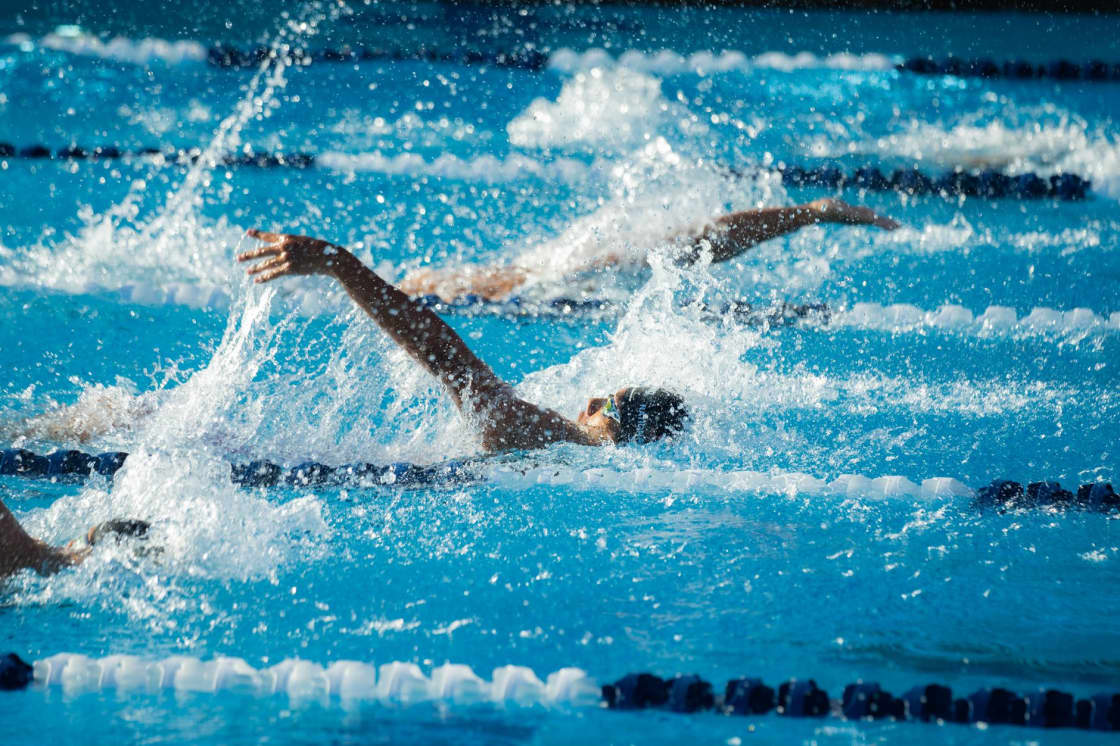
Meets. Sanctioned meets are run under USA Swimming rules with trained officials on the deck. A typical age-group meet runs over one to three days, with swimmers entered in a handful of events each session and long stretches of waiting in between. Most meets group swimmers by age, so a ten-year-old races other ten-and-unders.
Practice groups. Clubs sort swimmers into groups by age and ability, and each group has its own schedule. Entry-level groups might practice a few afternoons a week; senior groups at a competitive club practice most days, sometimes twice, with early sessions before school. Moving up a group is usually tied to attendance, technique and times, and the club should be able to tell you exactly how it works.
Coaches. USA Swimming requires its coaches to be members, and coach membership comes with background screening, athlete-protection training and safety certification. It is entirely reasonable to ask a club how its coaches meet those requirements. Good clubs answer the question easily and without offense.
Is Your Child Ready?
The single most useful benchmark in this valley is the one Provo uses for all its teams: can the child swim one 25-yard length of the pool with ease, without stopping or grabbing the lane line? If the answer is no, that is a swim-lessons problem rather than a swim-team problem. Our guide to swim lessons in Provo explains how the city's swim school ladder leads up to a pre-swim-team level built for exactly this transition.
Beyond the length test, a few signals suggest a child will enjoy a team rather than endure it. They like being in the water for an hour at a stretch. They can follow instructions from a coach standing on the deck rather than an instructor standing beside them in the water. They are comfortable putting their face in the water and turning to breathe. And they want to go, which is the signal that matters most. A summer rec team is a low-risk way to find out, because it ends in a few weeks whichever way it goes.
For a year-round club, readiness looks different. Most clubs evaluate new swimmers before placing them in a group, and they usually want to see legal freestyle and backstroke at a minimum, with breaststroke and butterfly still developing. Ask the club how it evaluates newcomers and whether a child can try a practice before the family commits.
Picking a Club: Questions Worth Asking
When you contact a club, a handful of questions sort the options quickly.
- Where and when does my child's group practice? A great club an extra half hour away can become the reason a family quits.
- How are groups assigned, and how does a swimmer move up?
- What attendance does the group expect? Some groups expect nearly every practice; others are flexible.
- Which meets does the group attend, and how many in a season?
- What does a full season cost? Ask about dues, registration, meet entry fees, suits and any fundraising or volunteer requirements.
- What is expected of parents? Many clubs require families to work a set number of meet sessions.
- Can we try a practice first?
Talk to parents on the pool deck, too. Families who have spent a few years with a club know which groups are well coached, how the club communicates, and whether its culture suits a child who swims for fun as well as one who swims for times. That last point matters more than it sounds. A club that is wonderful for a driven twelve-year-old can be exhausting for a sociable nine-year-old, and the right answer for a family can change as a child grows.
The Cost Question
We do not print fees here, because they change every season, but the shape of the costs is predictable.
A summer rec team is the least expensive organized swimming there is: a single program fee for the season, plus a suit, goggles and a cap. Provo charges residents less than non-residents, as most Utah Valley cities do for their programs, and the junior and adaptive teams cost a little less than the main team.
A year-round club costs more because it runs longer and does more. Expect monthly or seasonal dues that rise as a swimmer moves into higher groups, an annual USA Swimming registration handled through the club, entry fees for each meet, and equipment. Competitive swimmers eventually want technical racing suits for championship meets, and those are the expense that most surprises families new to the sport. Travel adds up quickly if a club attends meets outside the valley.
For adults, the math is friendlier. At the Provo Recreation Center, the masters team is covered by a membership or a daily admission rather than charged as a separate program fee, which makes coached swimming about as affordable as fitness gets.
High School Swimming
Utah's high schools field swim teams in the winter season under the Utah High School Activities Association, with dual meets, invitationals, and region and state championships at the end. High school swimming is a team-first experience, built around relays, team scores and school spirit, and it tends to be shorter and more social than club swimming.
Many of the valley's strongest high school swimmers also train with a club, but plenty of teenagers swim only for their school, and a teenager who spent a few summers on a rec team can often make the jump. Ask the school's coach about tryouts and about where the team practices, since not every high school has a pool of its own and teams often train at a nearby city or district facility.
Swimming in College
BYU sponsors men's and women's swimming and diving in NCAA Division I, with its home pool in the Richards Building on campus. For a high school swimmer hoping to swim in college, the path runs almost entirely through club swimming, because college coaches recruit on the strength of times swum in sanctioned meets. Utah Swimming's athlete pages include a college-swimming section with resources for families starting that process, and club coaches are usually the best guides to it.
Adults: Masters Swimming
Swim teams are not only for children. Masters swimming is organized, coached training for adults, and it welcomes everyone from former college swimmers to triathletes to people who learned to swim recently and want some structure.
At the Provo Recreation Center, the city runs a masters swim team in the competition pool for adults eighteen and over. The city describes it as an adult-style team for competitive and non-competitive swimmers, triathletes and fitness swimmers of all levels, led by a qualified coach and designed to help swimmers improve their fitness or train for specific goals. It is covered by a membership or daily admission. In the most recent schedule it met two weekday evenings and three weekday mornings each week, with the morning sessions shifting later in the summer.
Beyond the city program, U.S. Masters Swimming's online club and workout search lists other registered masters groups in Utah County. Registering with U.S. Masters Swimming is what lets an adult enter masters meets and sanctioned open-water events, but joining a workout group does not require racing, and most masters swimmers treat it as the most sociable way to do laps.
Triathletes in particular find masters groups useful, because a coach on the deck fixes in a month the stroke habits that years of solo laps have built. Our guide to adult rec leagues covers the rest of the valley's grown-up team sports.
A Summer Season, Week by Week
For a family new to it, a summer rec season tends to follow a familiar arc.
The first week is sorting. Coaches test swimmers, adjust groups and learn names. Children who passed the length test on day one sometimes find the first practices long and tiring; that is normal, and it passes within a week or two as their conditioning catches up.
The middle weeks are the heart of the season. Practices settle into a rhythm of drills, laps and games, and swimmers start learning the pieces that make competitive swimming its own sport: racing starts, turns at the wall and legal strokes. If the team races, the first meets usually land here, and the ribbons start coming home.
The final weeks build to a finish. Many teams close with a championship-style meet or a team celebration, and then the season ends ahead of the back-to-school rush. The question every family faces then is what comes next: another summer, the Saturday year-round group, a club evaluation, or a well-earned rest.
Meet Day, Demystified
If your child does race, the first meet can be bewildering. A few pointers make it easier.
Arrive in time for warm-ups. Swimmers warm up in the competition pool before racing begins, and missing warm-ups means racing cold.
Find the heat sheet. A heat sheet lists every event, heat and lane. Many families write their swimmer's event, heat and lane numbers on the swimmer's arm or hand, so the child can find their place behind the blocks without a parent.
Pack for waiting. Swimming is mostly waiting. Bring two towels, a spare pair of goggles, the team cap and suit, warm clothes to wear between events, water, snacks, and something quiet to do.
Expect disqualifications. Officials disqualify swims for technical faults, such as an illegal kick or a one-hand touch at the wall in breaststroke or butterfly. For young swimmers a disqualification is a lesson rather than a failure, and coaches will explain what happened.
Let the coach coach. Parents cheer from the stands, and coaches handle technique. The fastest way to take the fun out of swimming is a second coach in the car on the way home.
Parents on Deck
Swim meets run on volunteers. Summer rec teams and year-round clubs alike need timers, and sanctioned USA Swimming meets also need certified officials: stroke-and-turn judges, starters, referees and administrative officials. Utah Swimming trains and certifies officials, and many clubs expect parents to work a share of meet sessions each season.
It is also the best seat in the house. A parent who times a lane or trains as a stroke-and-turn judge learns the sport quickly, understands why a swim was disqualified, and gets to watch from the edge of the water instead of the back of the bleachers. Swimmers notice when their parents are part of it.
Open Water, and Where to Swim Between Practices
Swim team is not the only way a strong young swimmer can enjoy the water here. Open-water swimming in the valley's lake and reservoirs appeals to many older swimmers and triathletes, but it comes with real cautions about water quality, cold water and boat traffic, and our where-to-swim guide covers those in detail. For ordinary summer swimming between practices, the same guide lists the valley's indoor and outdoor pools, splash pads and the waterpark.
The Short Version
Start with the length test: a child who can swim 25 yards with ease is ready for a summer rec team, and Provo's Piranhas, with their junior and adaptive branches, are the model, with registration in the spring and meets that are entirely optional. A child who wants more can bridge the winter with Provo's Saturday year-round group, then look at the USA Swimming clubs on Utah Swimming's list, which currently shows Cougar Aquatics and Utah Valley Aquatics in Provo, Hilltop Aquatic Swim Team in American Fork, and Lehi Aquatics Team. Teenagers can add high school swimming in the winter. Adults can join the Provo Recreation Center's masters team with a membership or day pass, or another U.S. Masters Swimming group in the county. Whatever the level, confirm schedules and fees with the program before you commit, and ask the questions above before you choose a club.
Related Guides
- Swim Lessons in Provo
- Where to Swim in Utah Valley
- The Provo Recreation Center Guide
- Every Rec Center in Utah Valley, Compared
- Youth Sports in Utah Valley
- Adult Rec Leagues in Utah Valley
- Gymnastics, Tumbling and Cheer Gyms in Utah Valley
Frequently Asked Questions
What is the difference between a summer swim team and a year-round swim club?
How well does my child need to swim to join a swim team?
Does Provo have a summer swim team?
Which year-round swim clubs are in Utah County?
Is there a swim team for children with disabilities in Utah Valley?
Are there swim teams for adults?
When should I register for a summer swim team?
Do swimmers on a rec team have to compete in meets?
Sources
The facts in this guide were checked against these sources. Hours, fees and rules change, so confirm anything time-sensitive with the source before you go. How we make Provo.com.
- Aquatic Programs | Provo, UT, Provo City Parks and Recreation. Checked October 12, 2026.
- FAQs: Do you have a year-round swim team or swim club?, Provo City. Checked October 12, 2026.
- Fees / Memberships | Provo, UT, Provo City. Checked October 12, 2026.
- 2026 LC Senior Championships team scores, Utah Swimming. Checked October 12, 2026.