
Utah Valley children get three kinds of stuck-inside day: the snow day, the red-air day when the winter inversion keeps everyone in, and the July afternoon when it is too hot to be outdoors. Each one calls for a different kind of craft. Snow days can start outside. Red-air days have to stay inside and should not add smoke to the house. Hot days work best with an early outdoor start and a cool, quiet indoor afternoon. Here are three lists, with the weather facts behind each one.
For what is open, how schools decide closures and where the sledding hills are, see our snow days guide. This page is the craft drawer.
Know which day you are having
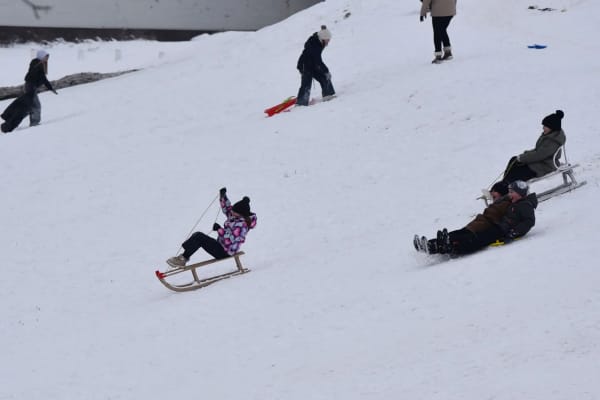
Snow. NOAA's 1991 to 2020 climate normals for the Provo BYU station average 44.9 inches of snow a year, most of it from November through March, with January (12.5 inches) and December (11.2) the snowiest months. The station averages about 111 days a year with a low at or below 32 degrees. The National Weather Service issues a Winter Storm Warning for "a significant winter weather event including snow, ice, sleet or blowing snow," when travel may become difficult or impossible.
Red air. The Utah Department of Environmental Quality explains that winter inversions form when snow cools the ground, nights are long and clear skies warm the upper air, leaving warmer air on top of cold air. With calm winds, that warm layer acts as a lid and traps fine-particle pollution (PM2.5) in the valleys, which is why "Utah inversions often occur after a snowstorm." The state's recess guidance for schools sets the thresholds families can borrow: below 35.4 micrograms per cubic meter, all students go out; from 35.5 to 55.4, students with respiratory symptoms and sensitive students (such as those with asthma) stay in; above 55.5, everyone stays in. Check air.utah.gov, choose Utah County and look at "Current," or use the UtahAir app. Our allergy and asthma guide covers the medical side.
Heat. The same NOAA normals for Provo BYU average 73.5 days a year at 90 degrees or hotter and 9.3 days at 100 or hotter, with a normal July high of 95.2. When the National Weather Service issues a Heat Advisory, its advice is to consider postponing outdoor activities, especially during the heat of the day, and to stay somewhere cool. An Extreme Heat Warning means "avoid outdoor activities." Our Provo weather guide explains the seasons in more detail.
The snow-day list: start outside, finish at the table
The advantage of a snow day is that the best material is free and falling. The plan is a short burst outdoors while everyone has energy, then warm projects inside.
- Snow painting. Fill squeeze bottles or a spray bottle with water and a few drops of food coloring and let the kids paint the snow in the yard. It washes away with the next storm.
- Ice ornaments. Fill a pie tin or shallow plastic lid with water, drop in pine needles, berries, cut paper shapes or small plastic toys, lay a loop of string in the edge and set it outside overnight. NOAA's normals put Provo's average overnight low at 24.4 degrees in December and 23.8 in January, often cold enough on a clear night. Hang them from a tree in the morning.
- Snow-block molds. Pack wet snow into sand-castle buckets, loaf pans or plastic food containers to build a fort or a row of "bricks." Wet, heavy snow packs best.
- Paper snowflakes. Back inside, fold a square of copy paper into a triangle twice, cut notches along the edges and unfold. Coffee filters cut easily for small hands. Tape them to a window facing the real thing.
- Jar snow globes. A clean jar with a tight lid, a small plastic figure glued to the inside of the lid with waterproof glue, water, a few drops of glycerin (from a pharmacy or craft store) and a pinch of glitter. An adult handles the glue.
- Pinecone bird feeders. Spread a pinecone with shortening or a nut butter and roll it in birdseed; hang it from a branch. Skip the nut butter if anyone in the house has an allergy.
- Mitten-and-hat matching. Trace each family member's mitten on paper, have kids decorate a "matching" pair, and use them as a game of memory. A good wind-down after cold fingers.
Before you go out: our snow days guide has the cold-weather safety rules, and our list of things to do in Provo in the snow covers the outings.
The red-air-day list: stay in, keep it smoke-free, keep them moving
Red-air days come in runs, and they follow the snow. The state's recess guidance asks schools to consider active options for indoor recess, which is a useful rule at home too: mix a sitting craft with one that gets kids moving. And because the Department of Environmental Quality asks Utahns to avoid burning wood and solid fuels, especially on action days, save the candle, wood-burning and fireplace projects for a clear week.
- Cardboard city. Every box in the recycling bin becomes a building. Add paper-towel tubes, tape and markers. Older kids can add doors that open and a cardboard road for toy cars. It can grow for days, which suits a multi-day inversion.
- Salt dough. A common ratio is two cups of flour, one cup of salt and about three-quarters of a cup of water, kneaded smooth. Roll, cut shapes, poke a hole for hanging, and air-dry or bake at a low temperature. Paint them the next day.
- Cardboard-loom weaving. Cut notches along the top and bottom of a piece of cardboard, wrap yarn around it top to bottom to make the warp, and weave yarn or fabric strips over and under. It teaches the same thing a real loom does.
- Paper-plate rackets and balloon tennis. Tape a craft stick to the back of two paper plates, decorate them, blow up a balloon and play in the hallway. A craft that ends in movement.
- Sock puppets and a box theater. Old socks, buttons, felt and glue; a cardboard box with a window cut out becomes the stage.
- A "clean air" catcher. Smear a thin layer of petroleum jelly on two index cards; put one outside on a sheltered windowsill and one indoors, and compare them after a day or two with a magnifying glass. It turns the inversion into a question kids can look at, and it pairs well with checking the PM2.5 number on air.utah.gov together.
- Paper beads. Cut long, skinny triangles from magazines, roll each around a toothpick from the wide end, glue the tip and string them when dry.
If you need to get out of the house without going outside for long, our indoor activities guide and trampoline parks and indoor play guide list the places families go.
The 100-degree-day list: early outside, cool inside
On Provo's hottest days, the afternoon is the problem. The rhythm that works: outdoor crafts right after breakfast, a cool indoor project through the hottest hours, and water play in the evening. For bigger summer projects, from u-pick flowers to where you may legally collect rocks, see our summer craft ideas.
Early morning, outside (before it heats up):
- Water painting. A bucket of water and a big paintbrush on a fence, sidewalk or the side of the house. It dries quickly in summer heat, so there is always a fresh canvas.
- Sidewalk chalk murals. On the shady side of the driveway, before the concrete gets hot.
- Sun prints. Sun-print paper (sold at craft stores) and leaves, keys or cut-out shapes laid on top; a few minutes in direct sun, then rinse in water. A quick job on a clear morning.
- Frozen paint. Freeze washable paint and water in an ice-cube tray with a craft stick in each cube the night before, then paint on heavy paper outside. Kids enjoy that it melts as they go.
Midday, indoors (the cool, quiet stretch):
- Friendship bracelets. Embroidery floss, a safety pin to anchor the end to a pair of jeans, and a simple knot pattern. Good for a long, still afternoon.
- Rock painting. Rocks collected on the morning walk, washed and painted with acrylic paint markers. A clear coat helps them last outside.
- Shoebox dioramas. A habitat, a favorite book scene or a mini room.
- Origami. A library book or printed diagrams and a stack of square paper.
Evening, as it cools:
- Ice-block treasure dig. Freeze small toys in a large container of water the night before, then let kids free them in the yard with spoons, squeeze bottles of warm water and salt.
The National Weather Service's heat advice comes down to the same rhythm: drink plenty of water, take breaks in the shade, and stay in a cool place during the heat of the day. For a free cool-off between projects, see our splash pads guide.
Stock the drawer once
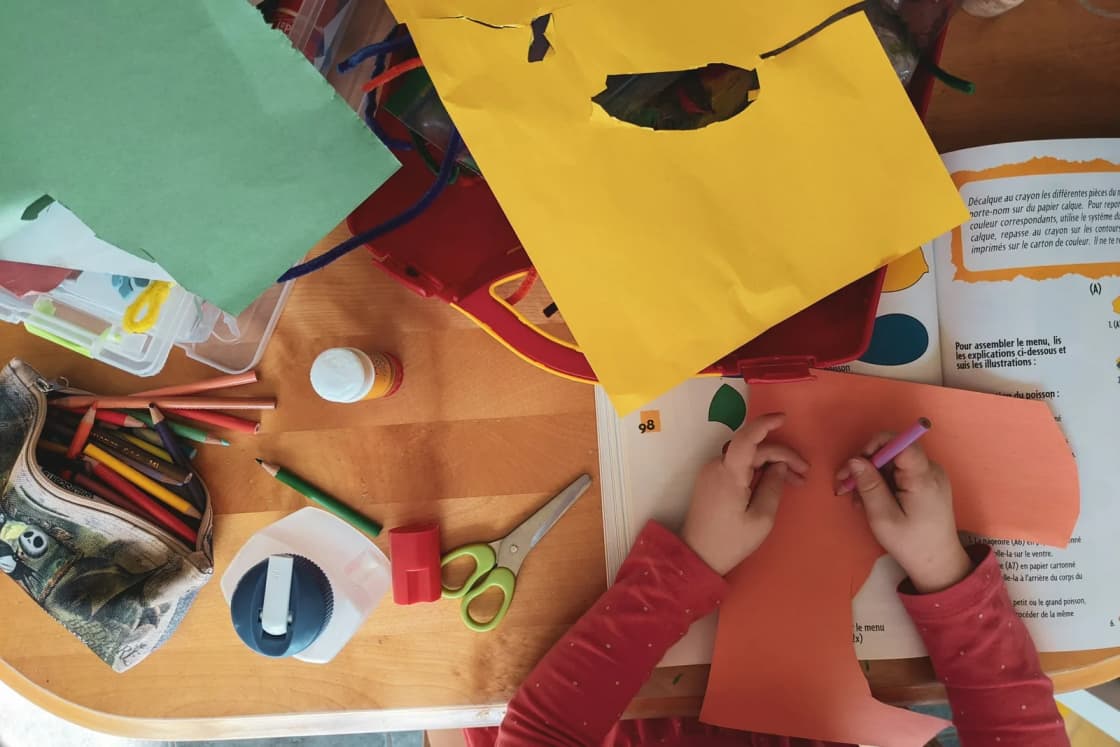
A craft drawer that covers all three lists: copy paper, cardstock, coffee filters, washable markers and paint, glue sticks and white glue, tape, child-safe scissors, yarn, embroidery floss, craft sticks, paper plates, a bag of flour and salt, food coloring, a spray bottle, ice-cube trays and a stack of clean jars and boxes.
You do not need to buy it new. Making Space Thrift in Provo sells donated craft supplies, and its Google reviewers mention a free art supplies room that children enjoy; our guide to thrifting craft supplies covers it and the other secondhand sources. For classes outside the house, see our guide to kids' art, music and craft classes.
Frequently Asked Questions
How do I know if it is a red-air day in Utah County?
Why are winter inversions worst right after a snowstorm?
How many 100-degree days does Provo get?
How much snow does Provo get in a year?
What crafts should we skip on a red-air day?
What should kids do outside on a 100-degree day?
Can we make ice ornaments outside in a Utah Valley winter?
Where can I get cheap craft supplies for kids in Utah Valley?
Sources
The facts in this guide were checked against these sources. Hours, fees and rules change, so confirm anything time-sensitive with the source before you go. How we make Provo.com.
- Winter Weather Warnings, Watches and Advisories, National Weather Service. Checked October 19, 2026.
- Understanding Heat Alerts, National Weather Service. Checked October 19, 2026.
- Utah's Inversion Season Frequently Asked Questions, Utah Department of Environmental Quality. Checked October 19, 2026.
- Air Quality Current Conditions, Utah Division of Air Quality. Checked October 19, 2026.
- Recess Guidance for Schools, Utah Department of Health and Human Services (Asthma Program). Checked October 19, 2026.
- Making Space Thrift home, Making Space Thrift. Checked October 19, 2026.
- U.S. Climate Normals 1991-2020, monthly, Provo BYU (USC00427064), NOAA National Centers for Environmental Information. Checked October 19, 2026.
- U.S. Climate Normals 1991-2020, annual, Provo BYU (USC00427064), NOAA National Centers for Environmental Information. Checked October 19, 2026.