
Utah County has hot springs of its own, and our guide to them covers the canyon soaks and crater dives within an hour of Provo. But ask Utah families where they go when they want a real hot-springs town, with developed pools, a river running through the middle and a main street built around the whole thing, and a surprising number point north across the Idaho line to Lava Hot Springs. The town sits in a narrow valley along the Portneuf River, about three hours from Provo, and for generations it has been the classic long day or easy overnight for Wasatch Front families who want to soak in the winter and float the river in the summer.
This guide covers the drive, the hot pools and what makes them different, the swimming complex and water park, tubing the Portneuf, the town's rules and how to plan the trip. Hours, prices and seasonal openings change, so check the Lava Hot Springs Foundation's calendar and the town's chamber of commerce before you go.
The Short Answer
Drive I-15 north into Idaho and take US-30 east from McCammon to the town, roughly three hours from Provo. Soak in the World Famous Hot Pools, run by the Lava Hot Springs Foundation, where the natural mineral springs range from roughly 102 to 112 degrees with no sulfur odor by the Foundation's account; they are open every day except Thanksgiving and Christmas. In summer, add the Foundation's outdoor pools and slides and a float down the Portneuf River, which the chamber says runs from June through mid-September. The indoor swimming pool is open year-round. Mind the town's open-container law, pack for a long day, and consider staying the night. If you are weighing Lava against Crystal, Mystic or Homestead, see hot springs beyond Utah Valley, compared.
Getting There From Provo
The route is simple. Take I-15 north through Salt Lake City, Ogden and Brigham City and on into Idaho, then leave the interstate at McCammon and follow US-30 east up the Portneuf valley to the town. The Lava Hot Springs Foundation describes the town as about two hours north of Salt Lake City, so from Utah County, plan on roughly three hours each way, more if you hit Salt Lake traffic.
A few practical notes:
Time zone. Southeast Idaho is on Mountain Time, the same as Utah, so there is no clock change to think about.
Winter driving. The route climbs through higher country in northern Utah and southern Idaho, and winter storms can make I-15 slow. Check road conditions before a winter trip, carry winter gear, and allow extra time.
Fuel and food. The towns along I-15 have plenty of services, and Lava Hot Springs itself has restaurants and shops, but a full tank before the last stretch is always sensible.
Stops on the way. Lagoon in Farmington, the Ogden area and Brigham City all sit along the route, and our guides to Lagoon and to Ogden cover those if you want to break up the drive.
The Hot Pools
The heart of the town is the World Famous Hot Pools, run by the Lava Hot Springs Foundation. What sets them apart from many hot springs in the region is the water itself.
No sulfur smell. The Foundation describes the water as bubbling out of natural underground springs, laden with minerals but with no sulfur odor. That is a real difference from the rotten-egg smell many people associate with hot springs.
Constantly refreshed. By the Foundation's count, more than two and a half million gallons of water a day flow through the hot springs and are diverted into the Portneuf River, which keeps the pools, in its words, ever-changing and clean.
A range of temperatures. The Foundation says the springs range from approximately 102 to 112 degrees Fahrenheit, and the pools are set at different temperatures, so you can start somewhere comfortable and work up to the hottest pool, or the other way round. Most people find the hottest water takes some getting used to, and the cooler pools are better for children.
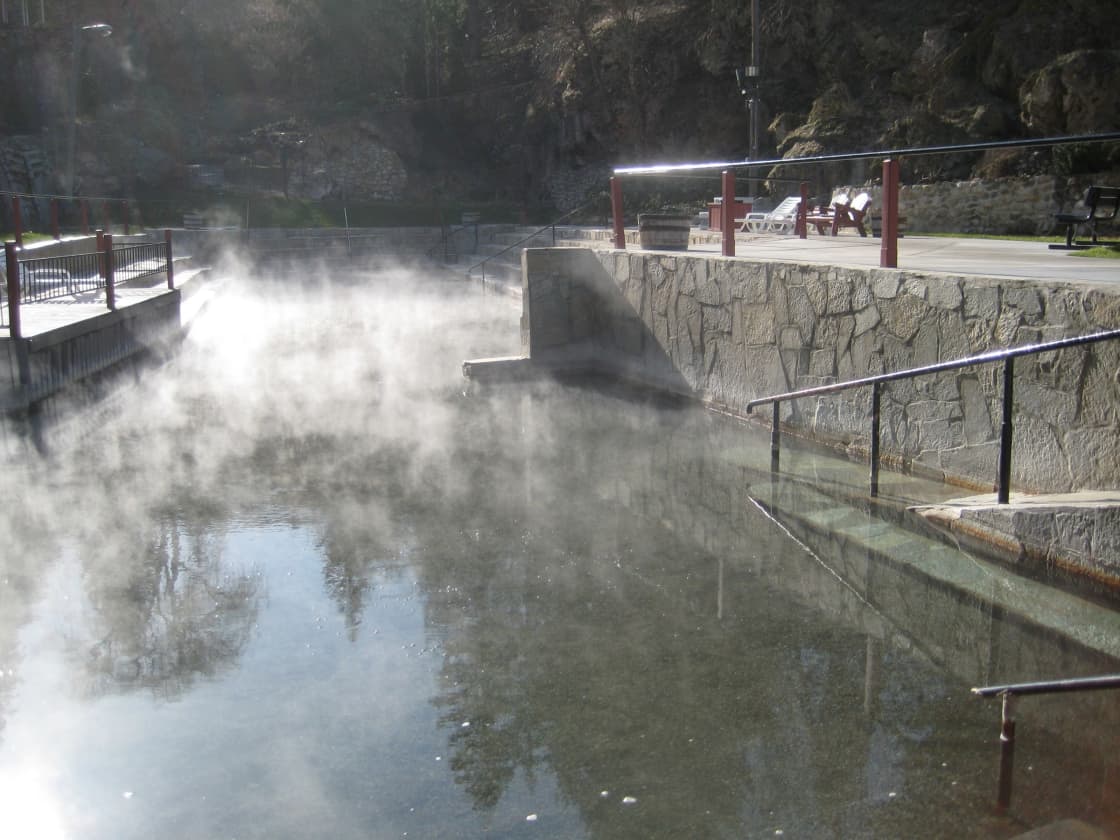
Built for all seasons. The Foundation notes that the deck around the pools has a snow-melt system, a cold-water deck shower and canopies for sun or rain. That makes the hot pools a genuine winter destination: sitting in hot water with snow on the hillsides and steam rising into cold air is the whole point of a January trip.
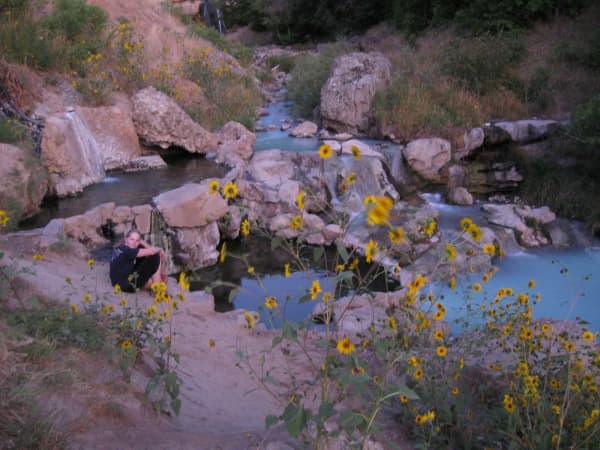
Recently rebuilt. The Foundation announced that construction of its new hot pools is complete, so the pools you see today are newer than the photograph at the top of this page and than many of the older photos online.
Open almost every day. The Foundation says the hot pools are open every day of the year except Thanksgiving and Christmas Day, with longer hours in summer and shorter hours on some winter days, and an early close on Christmas Eve. Check its calendar for current hours before you set out.
Accessibility. The Foundation's answers to common questions say that two of the five hot pools, along with restrooms and dressing rooms, are accessible. Contact the Foundation ahead of time if you need specific accommodations.
Passes and family days. You can buy passes online or at the door. The Foundation has offered a Wednesday family deal for parents and their dependent children, excluding some holidays; check its current rates before you go.
Where the Heat Comes From
Hot springs form where groundwater sinks deep into the earth, is heated by the rock around it, and rises back to the surface along faults and fractures. The Portneuf valley around the town is lined with dark volcanic rock, and the town's name nods to that landscape. The Foundation's description of the springs, water rising naturally from underground, carrying minerals, and flowing through the pools at more than two and a half million gallons a day, is the practical result: a supply large and steady enough to run developed pools without recirculating the same water.
That constant flow is also why the pools stay warm in the depths of an Idaho winter. The water arrives hot and keeps arriving, and the snow-melt deck and canopies make a January soak comfortable rather than an endurance test.
The Swimming Complex and Summer Water Park
A few blocks from the hot pools, the Foundation runs a separate swimming complex, and for families with children it is often the main event.
The indoor pool is a six-lane, twenty-five-yard pool that the Foundation describes as offering year-round fun for all ages, with a diving board, a climbing wall, a hot pool and a children's cove. It is the reliable option in any season and a good backup on a stormy day.
The outdoor pools and slides are the summer draw. The Foundation's outdoor facilities, including its slides, open for the summer season and close in the fall, so check the calendar if you are planning around them.
Lap swimming and water aerobics are also on the schedule at set times for swimmers who want exercise rather than play.
The hot pools and the swimming complex are priced separately, and the Foundation has offered combination passes in summer. If your family wants both in one day, look at the combination options before you buy.
Tubing the Portneuf River
In summer, the Portneuf River running through town becomes a floating lane of inner tubes. The Lava Hot Springs Chamber of Commerce describes it as a quick, rapid-filled stretch that can be floated once or twice an hour from June through mid-September, with tube rentals, shuttles and life jackets available from local businesses, and a walking path with marked entry and exit points.
The chamber is also clear about the risks: the Portneuf is a natural, unpredictable river, and tubing is at your own risk. A few habits keep the float fun.
Wear a life jacket, especially children and anyone who is not a strong swimmer, and wear shoes you can walk and swim in, since the riverbed is rocky.
Know your exit. Check where the take-out is before you put in, and do not float past it.
Watch the water level. Early-summer flows can be fast and cold; late-summer water is lower and gentler. Ask the rental business about current conditions.
Keep children close, and do not let young children float alone.
Leave glass and alcohol at home. The town's open-container rules apply on the streets and sidewalks, and glass and rivers do not mix.
The Town Itself
Lava Hot Springs is small, and that is part of its charm. The main street runs along the river, lined with places to eat, shops and lodging, and the pools, the swimming complex and the river are all within walking distance of one another. The chamber lists hotels and motels, bed-and-breakfasts, vacation rentals, and campgrounds and RV parks, along with parks, museums and galleries and a calendar of annual events.
Mind the open-container law. The Foundation warns that the city has an open-container law and that the Bannock County Sheriff can and will cite anyone caught with alcohol on the streets or sidewalks. It adds that alcohol in its parks must stay in the park.
Parking. Summer weekends are busy, and parking near the pools and the river fills up. Arriving early, or walking from your lodging, saves frustration.
Day Trip or Overnight?
With about six hours of driving round trip, Lava Hot Springs is a long day from Utah County, and many families make it an overnight.
As a day trip, it works best on a long summer day, when you can leave early, float the river in the afternoon heat and soak in the hot pools in the evening, or as a winter soak, when a few hours in hot water justifies the drive. Plan to eat dinner on the road home and share the driving.
As an overnight, it relaxes into something much better. You can soak in the evening and again in the morning, float the river without watching the clock, and drive home rested. Summer weekends and holidays book up, so reserve lodging early.
As part of a longer trip, Lava Hot Springs pairs well with Bear Lake, which is reachable by continuing east through southeast Idaho, and with a trip toward Yellowstone, which the Foundation places about three hours north of the town. Our Bear Lake guide covers that lake and its raspberry-shake tradition.
A Winter Day, Start to Finish
Morning. Leave Utah County early, after checking I-15 conditions, and stop for breakfast along the way.
Late morning. Arrive, change and head straight for the hot pools while they are quiet. Start in a cooler pool and work your way up.
Afternoon. Take a long lunch break in town to rehydrate and cool off, then return to the pools, or spend an hour in the indoor swimming pool if the children want to swim rather than soak.
Evening. Soak once more as the light fades and the steam thickens, then head home, or better, stay the night and soak again in the morning before the drive.
A Summer Day With Children
Morning. Arrive early to claim parking and get to the outdoor pools and slides when they open, before the afternoon crowds.
Midday. Eat lunch in town, then rent tubes and float the Portneuf in the warmest part of the day, wearing life jackets and water shoes.
Late afternoon. Rinse off and soak in the hot pools, which feel entirely different in summer, as the day cools.
Evening. Have dinner in town and either start the long drive home or, if you booked ahead, walk back to your lodging and save the drive for the morning.
Budgeting Without the Numbers
We do not print prices, which change often, but the costs fall into predictable buckets. The hot pools and the swimming complex are priced separately, with the Foundation's combination and family options worth checking before you buy. River tubing is a separate rental from a local business, usually with a shuttle. Lodging is the largest cost of an overnight, and it rises sharply on summer weekends and holidays. Add fuel for a round trip of several hundred miles and meals for the day, and a Lava Hot Springs trip lands closer to a weekend getaway than an afternoon outing, which is exactly why so many families make a night of it.
Sharing the Pools
The hot pools are a shared space, and a few courtesies make them pleasant for everyone. Rinse off before you get in. Keep voices and music low, especially in the evening. Leave glass at home. Keep children within arm's reach and in the pools suited to them, and follow any posted time limits or pool rules. And if a pool is crowded, move to another rather than squeezing in; with several pools at different temperatures, there is usually room somewhere.
If the Weather Turns
Weather rarely ruins a Lava Hot Springs trip, because the town has a good answer for most of it. Rain and light snow are part of the fun in the hot pools, which the Foundation equips with canopies, and the indoor swimming pool is a reliable fallback when the outdoor facilities are closed or a storm rolls through. Summer thunderstorms are the one real exception: get out of the water and off the river when you hear thunder or see lightning, and wait until the storm has passed before going back in. In winter, the bigger weather question is the drive, so keep an eye on the forecast for northern Utah and southern Idaho and be ready to stay an extra night rather than drive home in a storm.
Safety in Hot Water
Hot pools are relaxing, but water above body temperature affects the body quickly.
Limit your time in the hottest pools. Take breaks, cool off, and move between pools of different temperatures.
Drink water. Soaking dehydrates you faster than you expect, especially at altitude and in summer.
Take extra care with children and older relatives. Young children overheat quickly, and the hottest pools are not suitable for them.
Check with a doctor if you are pregnant or have heart or blood-pressure conditions before soaking in very hot water.
Skip alcohol. Alcohol and hot water together raise the risk of dizziness and fainting, quite apart from the town's rules.
How It Compares to Utah's Hot Springs
Utah County's own hot springs are wilder and closer. Fifth Water Hot Springs up Diamond Fork is a hike to natural pools in a canyon, Homestead Crater in Midway is a dive-and-soak inside a limestone dome, and our hot springs guide covers those and the access issues around them. Lava Hot Springs is a different kind of trip: developed, family-friendly pools with changing rooms and a whole town built around them. If you want a hike and a natural pool, stay in Utah. If you want to spend a day moving between hot pools, a water park and a river float with children in tow, Lava Hot Springs is hard to beat.
Planning Checklist
- Check the Foundation's calendar for hot-pool and swimming-complex hours and seasonal openings.
- Check the chamber's river information if you plan to float, and the river conditions on the day.
- Book lodging early for summer weekends and holidays.
- Pack swimsuits, towels, water shoes, sunscreen, water and warm layers for evenings and winter.
- Bring cash and a card, and life jackets if you have your own.
- Check I-15 road conditions before winter trips.
The Short Version
Lava Hot Springs, Idaho, is roughly three hours from Provo by I-15 and US-30. Its mineral hot pools, run by the Lava Hot Springs Foundation, range from about 102 to 112 degrees with no sulfur smell and are open every day except Thanksgiving and Christmas; the Foundation's indoor pool is open year-round, and its outdoor pools and slides open in summer. The chamber says the Portneuf River can be tubed from June through mid-September, with rentals, shuttles and life jackets in town. Respect the open-container law, soak sensibly, and turn the long drive into an overnight if you can.
Related Guides
- Hot Springs Near Provo and Utah Valley
- Bear Lake From Provo
- Lagoon From Provo
- Ogden From Provo
- Day Trips From Provo
Frequently Asked Questions
How far is Lava Hot Springs from Provo?
How hot are the Lava Hot Springs pools?
Are the Lava Hot Springs hot pools open year-round?
Does Lava Hot Springs smell like sulfur?
Can you tube the river in Lava Hot Springs?
Is there a swimming pool as well as the hot springs?
Can I drink alcohol in Lava Hot Springs?
Is Lava Hot Springs worth it as a day trip from Provo?
Sources
The facts in this guide were checked against these sources. Hours, fees and rules change, so confirm anything time-sensitive with the source before you go. How we make Provo.com.
- Lava Hot Springs Hot Pools, Swimming Pool & Water Park, Lava Hot Springs Foundation. Checked October 12, 2026.
- World Famous Hot Pools, Lava Hot Springs Foundation. Checked October 12, 2026.
- Map, Driving Directions and Transportation, Lava Hot Springs Foundation. Checked October 12, 2026.