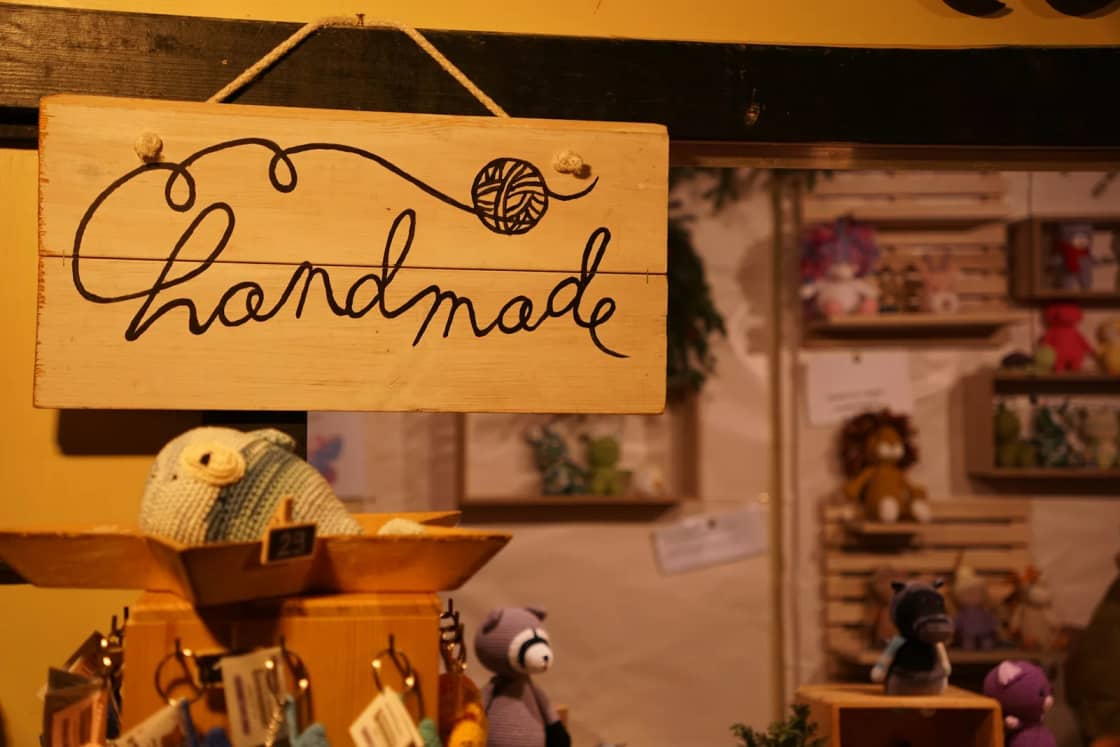

There are four ways to sell handmade work in Utah Valley: boutiques and craft fairs, shared booth stores, markets, and online. Each has its own costs, and each triggers a different combination of tax and license rules. Most new sellers learn those rules after their first show. This guide sets them out before it, using the Utah State Tax Commission, the IRS, the Utah Department of Agriculture and Food (UDAF) and the cities' own pages.
It is a how-to for sellers. For the buyer's side (when people shop, how they judge quality and price), see our guide to local makers in Utah Valley. For the show calendar itself, see Christmas boutiques and craft fairs.
None of this is legal or tax advice. It is what the agencies publish, so you know what to ask.
The rules, channel by channel
| Channel | Sales tax | Who collects | Watch for |
|---|---|---|---|
| Boutique or craft fair | Temporary special-event license | You (or event agent) | Special Event Tax ID first |
| Booth or consignment store | Depends on who is the seller | Ask the store | Commission plus rent |
| Etsy or other marketplace | Facilitated sales | The marketplace | Income still reportable |
| Your own website or in person | Regular sales tax account | You | Rate by location |
1. Boutiques and craft fairs
This is the channel the valley is known for, and it is seasonal. The valley's holiday boutique circuit runs from October through December, and spring and fall shows fill in the rest of the year.
How a boutique works, using one real example
The Beehive Bazaar in Provo, which says it has run for more than 20 years and holds four markets a year with more than 150 Utah makers, publishes its vendor terms in detail. For its Holiday 2026 show:
- Dates: two five-day weeks, December 1 to 5 and December 8 to 12, 10 a.m. to 8 p.m., at The Beehive, 1595 North Freedom Boulevard. Each week has its own vendor lineup.
- Applications: closed by October, with backup vendors still accepted and the lineup announced by October 17. There is a separate youth vendor application.
- Rules: everything must be handmade by the vendor; artwork or products featuring imagery made with generative AI are not accepted; and vendors must not take part in another Utah County show that overlaps the dates.
- Booths: 3 by 4, 3 by 6 or 3 by 8 feet, no more than 3 feet deep; vendors bring their own displays and should plan lighting.
- Selling: central checkout. Vendors do not staff their booths. Every item must carry a price and vendor ID, or the vendor gets no credit for the sale.
- Money: a commission of 20 percent of gross sales, plus a per-week booth fee that depends on booth size, due by October 24 and non-refundable. Sales are paid by direct deposit within five business days after the show; vendors provide bank and W-9 information.
Other shows work differently. Senior-center fairs, as our boutique guide describes, typically charge a flat table fee and have you staff your own table. Read each show's terms for four things: the fee model, the jurying, the exclusivity rule, and who handles sales tax.
The sales tax rule for events
The Utah State Tax Commission's special-events page is short and firm: all vendors participating in special events are required to obtain a Temporary Sales Tax License. A special event is a one-time event or one that runs six months or less where taxable sales occur, such as fairs, festivals, swap meets and seasonal mall stands.
How it works:
- Get a Sales Special Event Tax ID before your first event. Since April 2025, vendors need one before attending events in Utah; new vendors apply once.
- The promoter reports you. Event promoters must collect each vendor's name, address, phone, tax ID, product and email, and submit the list to the Tax Commission on Form TC-791.
- You receive a temporary license and return (Form TC-790C) good only for that event.
- File and pay. File the TC-790C online through the Taxpayer Access Point (TAP) or by mail, at the tax rate where the sales occurred, and pay in full within 30 days after the event. In some cases agents collect on the last day.
If you already hold a regular sales tax license, the Tax Commission explains how to report event sales on your regular return so they are not counted twice. Local governments may also check your sales tax number before issuing a business license for an event.
2. Booth stores and consignment
Shared retail spaces let your work sit on a shelf on a Tuesday afternoon. The trade-offs, as our local makers guide puts it, are that the person at the counter did not make your work and you lose contact with buyers.
In Utah County, The Farmhouse Peddler at 280 South State Street in Orem is a large store that shoppers describe as full of vendor booths of decor, vintage, jewelry, art and gifts; it is open Monday to Saturday 11 a.m. to 7 p.m. and Sunday noon to 5. Our guide to wood signs and farmhouse decor lists other decor shops, and the antique malls work on similar booth models.
Before signing, ask:
- Rent, commission or both? Monthly booth rent, a percentage of sales, or a mix.
- Who is the seller for sales tax? If the store rings the sale under its own license, it may collect the tax; if you are the seller, you may need your own account. Get the answer in writing.
- Payout schedule and reporting. How often you are paid and whether you get an itemized sales report.
- Theft, damage and minimum terms. Many stores accept no liability; most want a minimum commitment.
3. Markets
Farmers markets and summer markets mix produce, food and crafts. Rules on handmade goods vary by market, and food has its own rules (below). Our guide to Utah Valley farmers markets by day lists each market; ask its manager about craft vendor spaces, fees and how sales tax is handled for vendors.
4. Online: Etsy and your own site
Marketplaces. Since October 1, 2019, Utah treats marketplace facilitators with Utah nexus as the seller for the sales they facilitate: they charge the tax, file the returns and handle audits. The Tax Commission says marketplace sellers do not need a Utah sales tax license for facilitated sales unless they have Utah nexus, and are not liable for tax the facilitator must collect. A seller who also sells at boutiques still needs the event licenses above.
Your own website. Direct online sales are your sales. Selling to Utah buyers generally means a regular sales tax account through TAP. New businesses estimate their liability when applying; those with $50,000 or less in annual sales tax liability file quarterly, and returns are due the last day of the month after the period.
Fees. Marketplaces charge listing, transaction and payment fees that change; read the current fee page before you price, and include fees in your cost per item.
The city license
Business licenses are local. Provo states that if you own or operate a business in the city, you need a license. Home businesses fall into Minor Home Occupations (Provo City Code 14.41.050), which the city says cost nothing, or Major Home Occupations (14.41.060), which carry fees and generally need a conditional use permit unless the applicant gathers signatures of support from all property owners within 300 feet. Provo's packet lists the factors that make a business Major, including more than two customers an hour at the home, and says residents of BYU-contracted housing need an approval letter from their landlord.
Utah law sets a ceiling on those fees. Utah Code 10-1-203, as amended in 2018, says a city may not charge a resident any fee to operate a home-based business unless its combined offsite impact materially exceeds that of the home alone, though a city may charge an administrative fee if an exempt owner asks for a license anyway.
Orem, Lehi, Spanish Fork and the other cities run their own versions. Our guide to getting a business license in Provo covers Provo step by step, and starting a business the year you graduate covers entities and DBA names.
Federal income tax
- All income is reportable. The IRS says that whether or not you receive a Form 1099-K, you must report the income.
- The 1099-K threshold for payment apps and online marketplaces is payments over $20,000 in more than 200 transactions.
- Self-employment tax. You must file a return if your net earnings from self-employment were $400 or more.
- Hobby or business. Without a profit motive, the IRS treats the activity as a hobby: report the income on Schedule 1, line 8, and you cannot use a loss to offset other income. The IRS weighs whether you run it like a business, expect a profit and depend on the income.
Keep receipts for materials, booth fees, commissions and mileage from the first sale.
If you sell food
Treats sell at almost every boutique, and Utah has three separate paths for home cooks. They are not interchangeable.
| Path | Who oversees it | Can sell to stores or on consignment? |
|---|---|---|
| Home Consumption and Homemade Food Act | Sold direct; no UDAF permit | No; direct to consumers only |
| Cottage Food registration | UDAF | Yes, within Utah |
| Microenterprise home kitchen | Local health department | Food served from a permitted home kitchen |
- Homemade Food Act (2018). Utah State University Extension summarizes it as allowing a broad range of foods sold directly to consumers, with no UDAF permit or food-safety training required, but no sales through commercial establishments or consignment. Labels must say the food is not for resale and was made without state or local inspection. A business license is still required unless the seller is 19 or younger. Our guide to selling homemade food in Utah reads the statute closely.
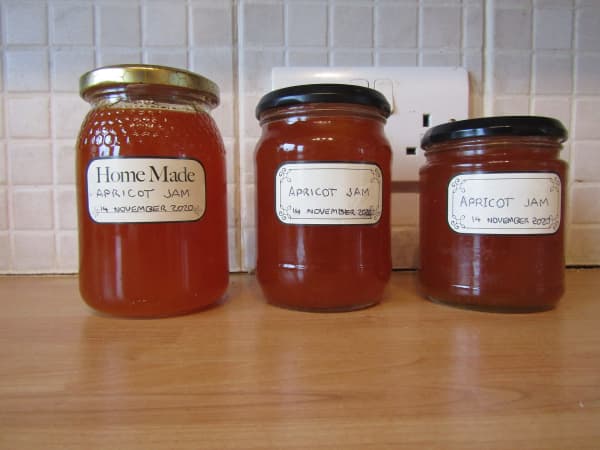
- Cottage Food. UDAF registration, after an inspection, lets a person with a valid food handler's permit make shelf-stable, low-risk foods at home (baked goods with limits on fillings, candies, granola, jams with limits, honey and more) and sell them within Utah directly or to stores. Labels must include the words "Home Produced." Foods that need refrigeration are excluded, and USU Extension notes that shipping is not allowed.
- Microenterprise home kitchen. Under Utah Code 26B-7-416, an operator needs a permit from the local health department, which inspects the kitchen; in Utah County that is the Utah County Health Department.
Separately, many boutiques set their own food rules, from requiring proof of a registration to banning homemade food outright. Ask before you bake.
A first-season checklist
- Pick one channel and learn it. A smaller show is a cheaper teacher than a big one.
- Get the Special Event Tax ID before your first event.
- Sort out the city license where you live and work.
- Price with every fee in: commission, booth fee, marketplace fees, materials and your time. Our Cricut side-business guide walks through the cost-per-item math.
- Keep it original. No licensed characters or logos without a license.
- Track every sale and receipt for taxes.
- Apply early for next year. Holiday shows close applications long before the holidays.
Related Guides
- Christmas Boutiques and Craft Fairs in Utah Valley
- Local Makers in Utah Valley
- Selling Homemade Food in Utah
- Getting a Business License in Provo
- Cricut, Vinyl and Heat-Press in Utah Valley
- Utah Valley Farmers Markets, by Day
Frequently Asked Questions
Do I need a sales tax license to sell at a Utah craft fair or boutique?
Do I collect Utah sales tax on Etsy sales?
Does Etsy report my sales to the IRS?
Do I need a city business license to sell crafts from home?
How do Utah County boutiques charge vendors?
Can I sell homemade cookies or jam at a Utah boutique?
Can I sell things I make with a Cricut or with licensed fabric?
When do Utah Valley boutiques take vendor applications?
Sources
The facts in this guide were checked against these sources. Hours, fees and rules change, so confirm anything time-sensitive with the source before you go. How we make Provo.com.
- Special Event Sales Tax, Utah State Tax Commission. Checked October 20, 2026.
- Marketplace Facilitators, Utah State Tax Commission. Checked October 20, 2026.
- Sales and Use Tax (licensing, filing frequency), Utah State Tax Commission. Checked October 20, 2026.
- Home-Based Business Permit, Provo City. Checked October 20, 2026.
- Commercial Business License packet (home business criteria, fees), Provo City. Checked October 20, 2026.
- Understanding your Form 1099-K, Internal Revenue Service. Checked October 20, 2026.
- Self-Employed Individuals Tax Center, Internal Revenue Service. Checked October 20, 2026.
- Know the difference between a hobby and a business, Internal Revenue Service. Checked October 20, 2026.
- Cottage Food Production, Utah Department of Agriculture and Food. Checked October 20, 2026.
- S.B. 158 (2018), Municipal Licensing of Home-based Businesses, enrolled copy amending Utah Code 10-1-203, Utah Legislature. Checked October 20, 2026.
- Utah Code 26B-7-416, Microenterprise home kitchen permits (effective 5/7/2025), Utah Legislature. Checked October 20, 2026.
- Utah's Value-Added Food Processing Options (Dec. 2025, updated Feb. 2026), Utah State University Extension. Checked October 20, 2026.
- Beehive Bazaar home page, Beehive Bazaar. Checked October 20, 2026.
- Beehive Bazaar: Holiday 2026 vendor application and terms, Beehive Bazaar. Checked October 20, 2026.
- Beehive Bazaar: About, Beehive Bazaar. Checked October 20, 2026.
- Selling things you've made using Cricut designs: Angel Policy, Cricut (blog). Checked October 20, 2026.
- Google Places listings: The Farmhouse Peddler (Oct. 2026), Google Maps (Places). Checked October 20, 2026.