Upcoming dates

More on Lehi: every guide we have published there, in one place.
Lehi is the town everyone now calls the capital of Silicon Slopes, and there is a reasonable chance your mental image of it involves an Adobe campus, a data center, and traffic on Timpanogos Highway. All of that is real. It is also about fifteen years old.
For one week at the end of June, the older Lehi asserts itself completely. Streets close for a parade of horses. A PRCA rodeo runs four consecutive nights on a patch of dirt that has hosted rodeo for generations. Volunteers staff a burger stand. None of it is staged for visitors, which is precisely why it is worth seeing.
The bones of it: 1937
The Lehi Round-Up Rodeo has run since 1937. That figure alone puts it among the most durable community traditions in Utah Valley — older than the interstate, older than the tech corridor, older than most of the neighborhoods the spectators drive in from.
Lehi City's own historical society marked the rodeo's 85th year in 2022, and the city keeps every program, ball cap and belt buckle from it in the archives display room at 99 West Main.
It is a PRCA-sanctioned rodeo, which is a meaningful distinction. The competitors are professionals working a circuit and accumulating standings points, not local volunteers putting on an exhibition. The stock is contracted accordingly. What you are watching is a real stop on a real tour that happens to be run by a small city.
Two organizations, and why you should care
Round-Up looks like one event and is administered as two, which trips up anyone trying to get a question answered.
Lehi City runs Round-Up Week: the parades, the community programming, the events in the parks. The rodeo operates separately from the city and is managed by the Civic Improvement Association. The city's own materials make this distinction explicitly, and they publish a separate contact route for rodeo matters.
The practical translation is simple. Ticketing, seating, stock and anything happening inside the arena goes to the rodeo organizers via lehirodeo.com. Parade registration, road closures, park events and the chalk festival go to the city. Asking either one about the other's business gets you a polite redirect.
When it happens
Round-Up occupies the last full week of June. The rodeo itself runs four nights, Wednesday through Saturday, at the back end of a week that opens the previous weekend with tournaments and smaller events.
In 2026 the rodeo ran June 24–27, with the all-horse Stock Parade on Thursday the 25th, and the city's Round-Up Week ran June 20–28. The rodeo has posted June 23–26 for 2027. Because the last full week of June moves with the calendar, the specific dates change every year, and neighboring cities schedule around it — Eagle Mountain's Pony Express Days rodeo has typically run about a fortnight earlier, and Pleasant Grove's Strawberry Days sits in the middle of the month.
That clustering means a June visitor with stamina can catch two or three Utah County celebrations in a single trip. It also means the last week of June is not a quiet time to try to drive through central Lehi.
Three parades
Most city celebrations manage one parade. Lehi runs three, and they are different events rather than variations on a theme.
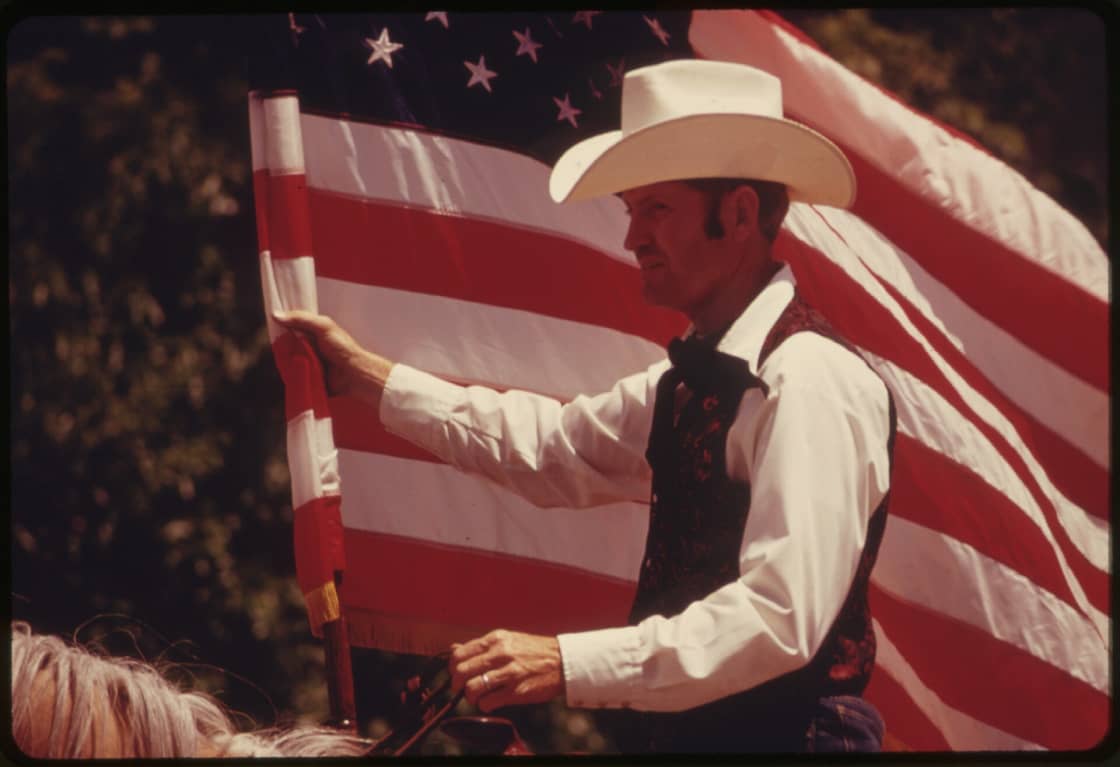
The Stock Parade is the all-horse parade, and it is the one that most clearly signals what kind of celebration this is: no floats, no fire trucks, just horses and wagons. In 2026 it ran Thursday at 6 p.m., beginning at Wines Park at roughly 600 North and 100 East and finishing near 300 West Main, close to the rodeo grounds. Riding clubs, wagons, royalty entries and specialty entries register in advance.
The Grand Parade is the Saturday-morning centerpiece, running at 10 a.m. from Wines Park to Lehi High School, followed by Family Fun Day and entertainment back at Wines Park from about 11 a.m. to 5 p.m.
The miniature float parade is for children, with its own handbook and its own registration, and organizers ask entrants to check the previous year's sign-ups to avoid duplicating themes.
The free-rodeo-ticket trick nobody advertises
Here is the single most useful thing in this guide, and it appears on a city page most visitors never open.
Anyone who rides in the all-horse Stock Parade on horseback or by wagon is admitted free to the Thursday night rodeo, and parade participants are seated together in the southeast section. Registration runs in advance through the city, and lineup numbers go out by email around the middle of June.
If you keep a horse — and plenty of households in Lehi, Alpine, Highland and Cedar Hills still do — that converts an evening's participation into a free ticket and a reserved seat. It is the kind of arrangement that only survives in a celebration still run largely by the people who attend it.
The Rodeo Burger, and why it is not just a burger
Local accounts of Lehi Round-Up mention the Rodeo Burger with a seriousness that seems disproportionate until you understand the structure behind it.
The concessions at the rodeo are prepared and staffed by volunteers rather than an outside contractor.
So the burger is made by someone's neighbor. That is why people talk about it the way they do. The line is part of the point.
This is also the clearest expression of what separates Round-Up from a commercially produced festival. The concessions run on volunteer labor, and the whole thing would be unrecognizable if it were outsourced.
The rest of the week
Round-Up Week has quietly accumulated a lot of programming that has nothing to do with horses.
Chalk It Up, a chalk art festival, has run at the Adobe Lehi campus on 3900 Adobe Way — a detail that captures modern Lehi neatly, with a rodeo week event hosted on a software company's campus. Free beginner chalk art classes have been offered with materials provided.
Elsewhere across recent schedules: a comedy night with ComedySportz at Skyridge High School, an outdoor movie at the Family Park Amphitheater, community meals such as a $5 Family Western BBQ and a $6 Chuck Wagon Breakfast benefiting the Lehi High School Booster Club, a doubles tennis tournament, a golf tournament, and a rodeo watch party at the Family Park Amphitheater for people who would rather see it on a screen with room to spread out.
Some events carry a resident/non-resident split, with certain activities free to Lehi residents and a modest fee for everyone else. That is standard practice for city recreation programming here and is not aimed at discouraging visitors.
Tickets and what a night costs
Rodeo tickets are sold in advance online through lehirodeo.com, and buying ahead is the right move for the busier nights.
The 2026 schedule listed Saturday's Tough Enough to Wear Pink night at $20 — a breast cancer awareness night that many PRCA rodeos run, where the crowd is asked to wear pink. A Family Dirt Dance follows immediately after the rodeo on the arena floor, which is a tradition that surprises first-timers: the stock leaves and the audience comes down onto the dirt.
Around the ticketed rodeo, most of the week is free or close to it. A family can do the parades, the chalk festival, Family Fun Day and the outdoor movie without buying a rodeo ticket at all, though they would be skipping the thing the week is named after.
What you are watching: a rodeo decoder
A large share of the people now living in Lehi moved to Utah for a job in software and have never been to a rodeo. The program will not explain itself, so here is the shape of a standard PRCA night.
Bareback riding usually opens. The rider has a single rigging handle, no stirrups and no rein, and must stay on for eight seconds while marking out — having both heels above the horse's shoulders on the first jump. It is widely considered the most physically punishing event on the circuit.
Steer wrestling is the fastest event on the card and is often over before newcomers have worked out what happened. A mounted competitor slides off his horse onto a running steer and turns it onto its side. Winning times are frequently under five seconds.
Team roping is the only event with two competitors. A header ropes the steer's horns and turns it; a heeler ropes the hind legs. The clock stops when both ropes are tight and the horses face each other, which is why a run that looks finished sometimes keeps running.
Saddle bronc riding is the classical event, and the one judges treat as the purest test of form. It looks slower and more controlled than bareback because it is — the rider works in rhythm with the horse using a thick rein, and the scoring rewards that rhythm.
Tie-down roping and breakaway roping both start with a calf and a rope. In tie-down the roper dismounts and ties three legs; in breakaway, which is the fastest-growing women's event in professional rodeo, the run ends the instant the rope breaks free of the saddle horn.
Barrel racing is a timed cloverleaf around three barrels, decided in hundredths of a second, and knocking a barrel adds a five-second penalty that ends any chance of placing.
Bull riding closes the night, because it is the one everybody stays for. Eight seconds again, one hand, and a score split evenly between the rider and the bull.
Scoring in the riding events runs to 100 points, split between rider and animal, with the mid-70s respectable and the high 80s exceptional. In the timed events, the lowest number wins. That single difference — some events score high, others score low — is the thing that most confuses a first-timer reading the board.
What a night at the grounds is like
It is an outdoor arena in late June at roughly 4,500 feet. The afternoon can be hot and the moment the sun drops behind the Lake Mountains the temperature falls faster than visitors expect. Bring a layer even if it seems absurd when you park.
Seating is bleachers. A cushion or a folded blanket is the difference between enjoying the last two events and thinking about your back through them. The surface is dirt and the arena is worked between events, so anything you would mind getting dusty should stay in the car.
The crowd skews local and multigenerational, and it is loud in the right places and quiet in others — the moment before a chute opens is a hush, and the pause after a hard fall while the rider gets up is a longer one. Nobody is performing enthusiasm.
Between events there is programming aimed squarely at children: a calf scramble or mutton bustin' in some years, sponsor giveaways, and a rodeo clown whose actual job during bull riding is protecting the rider rather than telling jokes. If you have brought young children, the between-event material is a genuine part of the value and not filler.
A town that keeps the receipts
Lehi's historical society and archives, at 99 West Main, keep a display cabinet devoted to the Round-Up Rodeo: every program, each year's ball cap, belt buckles, and scrapbooks of the rodeos and the queens who reigned over them. For a town with a sugar factory and a historic main street in its past, that is a telling choice of what to put on display.
Where to go and how to not fight the traffic
The Lehi Rodeo Grounds sit at the west end of Main Street near 300 West. Wines Park, around 600 North and 100 East, is the other anchor and is where all three parades begin.
On parade mornings, the streets between the two are closed or heavily congested. The reliable approach is to park several blocks off the route on the side away from the arriving crowd and walk in. Main Street itself is the worst possible plan on Saturday morning.
For the rodeo, arrive earlier than the posted start. Concessions are volunteer-run and the burger line is real, and the pre-rodeo atmosphere — the stock, the chutes, the crowd assembling — is part of what you came for.
The week is also an argument about what Lehi is
It is difficult to spend a June evening at the rodeo grounds without noticing the tension the week embodies.
Lehi's population has multiplied within living memory. The farmland that fed the celebration's agricultural character has been substantially built over, much of it with the campuses and subdivisions that arrived alongside the tech corridor. A meaningful share of the people in the bleachers on any given night have lived in the city for under a decade.
Round-Up does not resolve that tension so much as hold it in one place for a week. A chalk art festival on a software company's campus and an all-horse parade down the same street, in the same seven days, is not a contradiction the city is embarrassed by — it is closer to a statement of intent. The newcomers are invited to the rodeo. The rodeo is not moving.
Whether that balance survives another twenty years of growth is an open question, and one that residents argue about. What is not in question is that the celebration is currently doing more civic work than a parade normally does.
The honest assessment
Lehi Round-Up is the most authentically agricultural of Utah County's city celebrations, and it is not a polished visitor product.
If you want a festival that has been designed around your convenience, with clear signage and an app, this is not it. Dates move, two organizations run different halves, and the best pieces of information are buried on city pages.
But if the appeal of a city celebration is watching a town be itself, Round-Up is the strongest example in the valley. A professional rodeo running since 1937, three parades including one that is nothing but horses, volunteers cooking burgers — none of that is a heritage performance. It is simply what Lehi has always done in late June, and it happens to now take place fifteen minutes from a data center.
Come on the Thursday for the all-horse Stock Parade and stay for the rodeo, or come Saturday for the Grand Parade and the full-day version. Either way, buy the burger.
Related Guides
- Things to Do in Lehi: Thanksgiving Point, the Outlets & More
- Living in Lehi: The Complete Guide
- Steel Days: How American Fork Takes Over a Week in July
- Fiesta Days in Spanish Fork: Rodeo, Parade & the Full Week
- Golden Onion Days: Inside Payson's Labor Day Celebration Since 1929
- Summer Activities in Provo & Utah Valley
- Thanksgiving Point: The Complete Guide
Frequently Asked Questions
When is the Lehi Round-Up Rodeo?
How long has the Lehi Round-Up Rodeo been running?
Who runs the Lehi Round-Up?
What is the Rodeo Burger?
How many parades does Lehi Round-Up have?
Is Round-Up Week free?
Can I get into the rodeo free by riding in the All Horse Parade?
Where is the Lehi Rodeo Grounds?
Sources
The facts in this guide were checked against these sources. Hours, fees and rules change, so confirm anything time-sensitive with the source before you go. How we make Provo.com.
- Lehi City: Round-Up Week, Lehi City. Checked October 12, 2026.
- Parade Routes and Registration, Lehi City. Checked October 12, 2026.
- Round-Up Schedule, Lehi City. Checked October 12, 2026.
- Getting to know the Historical Society and Archives, Lehi City. Checked October 12, 2026.
- Lehi Round-Up Rodeo: Stock Parade, Lehi Round-Up Rodeo. Checked October 12, 2026.


