Upcoming dates

More on American Fork: every guide we have published there, in one place.
Most Utah Valley cities do a summer celebration. American Fork does something closer to a season. Steel Days stretches across roughly two weeks in July with well over thirty events on the schedule, and it has been growing steadily — more days, more programming, more of the city given over to it each year.
It is also the celebration people are most likely to get wrong on the calendar, because most listings compress it into a weekend and it has not been a weekend for a long time.
The short answer
Steel Days runs mid-July in American Fork, with the city promoting the 2026 celebration across July 11 to 26. Most events are free. The two Saturdays are the anchors:
- Opening Saturday — car show, Steel Days Fair, youth market, car cruise and burnout contest on Main Street, opening night concert, and a drone show with a balloon glow at night.
- Closing Saturday — the Grand Parade at about 9:00 a.m. on Main Street, the carnival all day, the Big Show concert in the evening, and fireworks around 10:00 p.m.
Everything centers on Mary and Art Dye Park and Main Street.
The name, and the much older celebration under it
Steel Days is named for the steel industry that defined American Fork's twentieth century, and the name dates to the mid-1940s. But the celebration itself is far older than that, and the layers are genuinely interesting. For where the celebration sits in the wider story of the city, see a short history of American Fork.
The earliest version was Timber Day, beginning around 1865 and held in a grove of trees the town called The Timbers. Families brought food prepared for the occasion, laid it out and shared it. There were horseshoe competitions, foot races and ball games. That ran until roughly 1904.
Then came Liberty Day, which had no fixed date and alternated between July 4 and July 24 — marking the nation's founding and the pioneers' arrival in alternating years, which is a very Utah solution to a scheduling problem. The picnic moved to Central Park, now Robinson Park. There was a parade of decorated horse-drawn flatbed wagons, and once automobiles arrived they were decorated and driven the length of Main Street. Until 1910 the roads were dirt and gravel, which made that more of an undertaking than it sounds. Themes were chosen each year — 1925 honored the states of the union.
For a period it was also Poultry Day. The through-line across all of it is a town that has found a reason to gather in July for around 160 years and has simply renamed the occasion as its economy changed.
What actually happens on the opening Saturday
The first Saturday sets the tone and is more Main Street–focused than the closing one.
Daytime runs a car show at Rotary Park, senior games at the senior center, and by late afternoon the Steel Days Fair and a youth entrepreneur market open at Mary and Art Dye Park. The evening is the interesting part: a car cruise down Main Street and a burnout contest in the city administration building parking lot, which is exactly as loud and as popular as it sounds.
Then an opening night concert at the park, opening ceremonies, and a drone show to close it out — in 2026 programmed as an America 250 drone show paired with a hot air balloon glow, both at the park, starting late in the evening.
The drone show has become a headline attraction in its own right since it was introduced in 2023. It is free, it is genuinely impressive, and it draws a crowd that has nothing to do with the rest of the day's programming.
The closing Saturday, hour by hour
This is the day to come if you are only coming once.
Early morning brings the Steel Days Run — a 5K, 10K and kids' race starting from the fire station at around 7:00 a.m. — and, in some years, a marching band breakfast.
The Grand Parade is the centerpiece, stepping off around 9:00 a.m. on Main Street at roughly 100 East. It is a full community parade: floats, bands, city entries, candy for the kids along the route. Note that published start times have appeared as both 9:00 and 9:30 a.m. on different city pages, so build in a margin.
Through the middle of the day the carnival runs at Mary and Art Dye Park, alongside an art show at the library, a quilt show at the senior center, a garden tour, live entertainment and a food and vendor market that runs into the night.
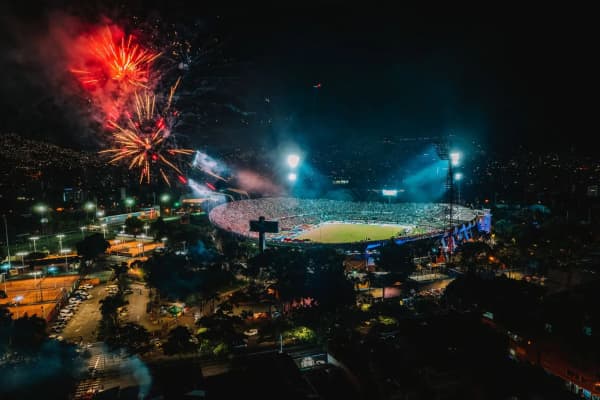
The evening stacks: an opening act at the park, then the Big Show — the headline concert, an actual full-production show rather than a community stage — and fireworks at around 10:00 p.m., synchronized to music for people at the park.
Mary and Art Dye Park — the name to know
Most of the celebration happens at Mary and Art Dye Park, at 1000 North 550 East in American Fork.
Worth flagging: a great many listings, including some of ours historically, refer to it simply as Art Dye Park. The city's own current materials use the fuller Mary and Art Dye Park. Both refer to the same place and locals use both, so do not second-guess a listing that uses the shorter form — but if you are searching a map, either will find it.
It is a large park with substantial parking, ball fields and open space, which is why the carnival, the fair, the concerts, the drone show and the fireworks can all be staged there without colliding.
Parking and crowds
For park events, the lots fill early and neighborhood streets take the overflow. Everything is free. The pressure point is the hour before the Big Show and the fireworks on closing Saturday, when the largest single crowd of the celebration arrives at once.
For the Grand Parade, the answer is different: park several blocks off Main and walk in. Main Street is closed along the route and the surrounding grid gets congested for about an hour on either side.
The local custom worth knowing — and it applies to nearly every Utah County parade — is that people set chairs along the route well in advance, sometimes the night before. This is normal here. Arriving an hour early to claim a spot is standard practice, not overkill, and chairs left overnight are generally respected.
What is new, and why the schedule keeps growing
Steel Days has been in a sustained expansion for several years, and the committee is fairly aggressive about adding things.
The recent additions give a sense of the direction: the variety show returned as American Fork's Got Talent in 2021; a cornhole tournament and teen pool party in 2022; the drone show, a Mario Kart tournament and an extended parade route in 2023; a second Saturday added to the schedule in 2024 along with the return of the burnout contest; a pickleball glowdown in 2025.
For 2026 the city listed a beach party and marina day, a youth entrepreneur market, a night golf tournament and a battle of the bands, plus the return of a Huck Finn fishing challenge.
The practical implication: do not plan from last year's schedule. The anchors are stable; everything in between moves and multiplies.
The Big Show
The headline concert closes the celebration on the final Saturday evening at Mary and Art Dye Park, typically with an opening act beforehand and the main set starting around 8:00 p.m.
The booking tends toward high-energy party and cover-band acts rather than chart headliners — 2026 brought Red Hot Revolution to the stage — which fits a free-or-cheap community event better than a name booking would. It is staged as a real concert with real production, not a bandstand.
The fireworks follow at around 10:00 p.m., and for people at the park they are synchronized to a music soundtrack. From elsewhere in the city you get the display without the audio, which is how a large share of American Fork watches.
Bringing kids
Steel Days is one of the more child-friendly celebrations in the valley, largely because the free programming is genuinely aimed at families rather than at adults with children in tow.
The parade, the drone show, the fireworks, the fair and the various tournaments are all straightforwardly kid-appropriate. The carnival is the main paid attraction and the main negotiation — wristbands are the usual approach and are worth it only if you are committing to a real block of time.
Two practical notes. Bring ear protection for toddlers if you are close to the fireworks or anywhere near the burnout contest. And the late-night events are properly late — a drone show that starts near 10:00 p.m. means a bedtime conversation, so decide in advance which of the two Saturdays you are doing in full.
Food, and where to eat around it
The park hosts a food and vendor market running most of the day on the big Saturdays, and for a lot of families that is the whole plan.
If you would rather eat sitting down, American Fork's own restaurant scene has improved considerably and is a short drive from the park — our guide to the best restaurants in American Fork covers it. The one thing to avoid is trying to get a table on Main Street during the parade window.
The Smoke and Steel cookoff at Rotary Park has appeared on recent schedules and is worth checking for if you are there on the right day.
The events people plan their week around
Beyond the two Saturdays, a handful of items on the schedule have developed their own followings and are worth knowing by name.
The burnout contest is the one that surprises visitors. Held in the city administration building parking lot on the opening Saturday evening, it is exactly what it sounds like — cars, tires, smoke, and a crowd. It was dropped for a period and brought back by popular demand in 2024, which tells you where it sits in local affection.
The car cruise down Main Street runs the same evening and is the gentler companion to it: decorated and restored cars moving slowly through town while people watch from the sidewalk. It is a direct descendant of the Liberty Day tradition of driving decorated automobiles the length of Main Street, which is a nice piece of continuity for something that looks entirely modern.
The pickleball tournament takes over courts across multiple days and is far more serious than a festival tournament sounds. The garden tour sends people around private gardens across the city. The quilt show and art show run at the senior center and the library respectively and are among the quieter, better things on the schedule.
None of these are aimed at tourists. All of them are why the celebration lasts two weeks.
Weather, heat and the practical stuff
Mid-July in Utah Valley means afternoon highs that routinely sit in the nineties, and most of Steel Days happens outdoors on open ground.
The morning events — the parade, the run, the early market — are comfortable. The middle of the day at the carnival is not, and shade at Mary and Art Dye Park is partial rather than comprehensive. Families generally split the day: parade in the morning, home or indoors through the afternoon, back for the concert and fireworks in the evening. That is the pattern locals use and it is the right one.
Evening cools off substantially, which catches people out in the other direction — a family that leaves the house at 6:00 p.m. in shorts is often cold by the time the fireworks finish. Layers.
Afternoon thunderstorms are a genuine possibility in July and can move fast. The city communicates weather calls on the celebration's channels rather than leaving people to guess.
What it costs, realistically
A Steel Days Saturday can cost nothing or a fair amount, depending entirely on the carnival.
Free: the Grand Parade, the drone show, the fireworks, the Big Show concert, the car show, the car cruise, the burnout contest, the art and quilt shows, the fair, live entertainment and the vendor market as a thing to walk through.
Paid: carnival rides, food and vendor purchases, race entry for the 5K and 10K, and entry fees for the tournaments.
The carnival is where a family budget goes. Wristbands are the standard approach and are worth it only if you are committing to several hours; buying individual tickets for a handful of rides is the expensive way to do it. Plenty of families do the whole day and simply skip the carnival, and nothing about that feels like missing out.
Accessibility
The park events are the easier half. Mary and Art Dye Park is flat with paved paths and substantial parking, and the concert and fireworks areas are open ground where you can position wherever suits.
The Grand Parade is harder. The route along Main Street has curbs and a dense crowd, and prime spots are claimed early — sometimes the night before. If someone in your group needs a specific viewing position, the practical answer is to go early enough to place chairs rather than hoping to find a gap on the morning.
Restrooms at the park are the park's own facilities plus temporary units during the big events. Along the parade route, plan ahead — Main Street businesses are the only real option and they are busy.
How it fits the July calendar
July in Utah Valley is congested, and Steel Days sits in the middle of it.
It follows the Freedom Festival week in Provo at the start of the month and overlaps the run-up to Pioneer Day on July 24 — which in Spanish Fork means Fiesta Days is happening the same week as the Steel Days finale. If you are trying to do both, they are 30 minutes apart and the marquee events do not entirely collide, but it is a full week.
For what else is around, things to do in American Fork covers the city, and American Fork Canyon is fifteen minutes up the road if you want the mountains in the same trip.
The honest assessment
The two Saturdays are excellent and the weekdays between them are not aimed at you unless you live there.
That is not a criticism — a city celebration serving its own residents with pickleball tournaments and garden tours is doing exactly what it should. But it does mean a visitor planning a trip around "Steel Days" should be planning around a specific Saturday, not around the fortnight.
Pick the closing Saturday if you want the full traditional package: parade, carnival, concert, fireworks. Pick the opening Saturday if the car culture and the drone show appeal more, and if you would rather have a slightly smaller crowd.
For families in the north end of the valley it is the summer's default. For anyone in Provo or south, it is worth the twenty-five minutes once, on the right day.
Related Guides
-
Colonial Days in Orem: The Living-History Festival Locals Underrate
-
Golden Onion Days: Inside Utah's Oldest Labor Day Celebration
-
The Timpanogos Storytelling Festival: What It Is and How to Do It Right
-
The Utah Valley Parade of Homes: How It Works, How Tickets Work & How to Actually Tour It
Frequently Asked Questions
When is Steel Days in American Fork?
When is the Steel Days parade?
Where are the Steel Days fireworks?
Is Steel Days free?
Why is it called Steel Days?
What is the drone show?
Where do you park for Steel Days?
Is Steel Days worth traveling for from elsewhere in the valley?