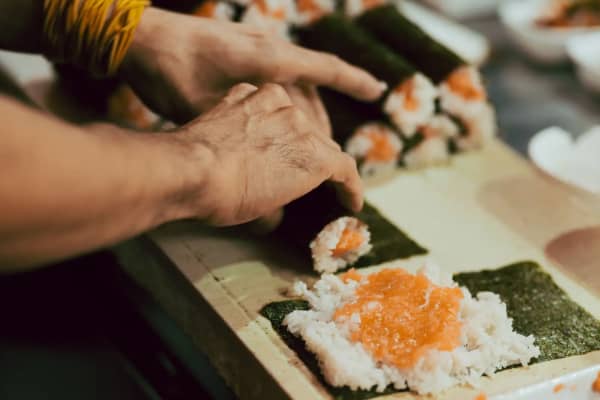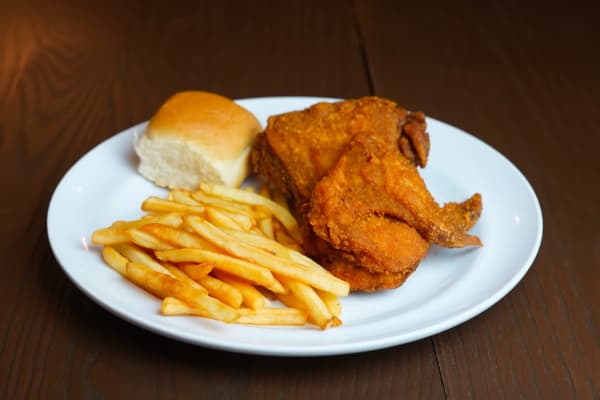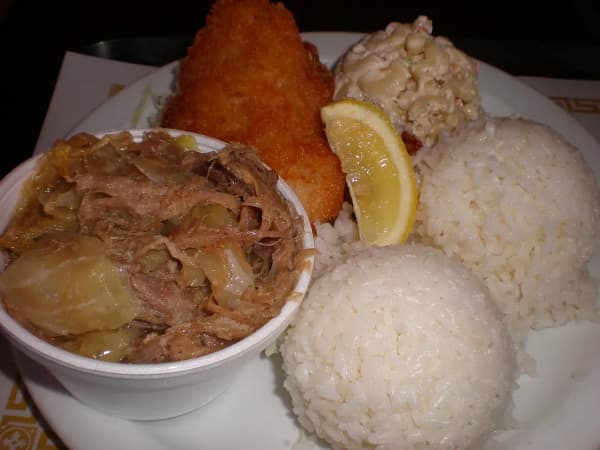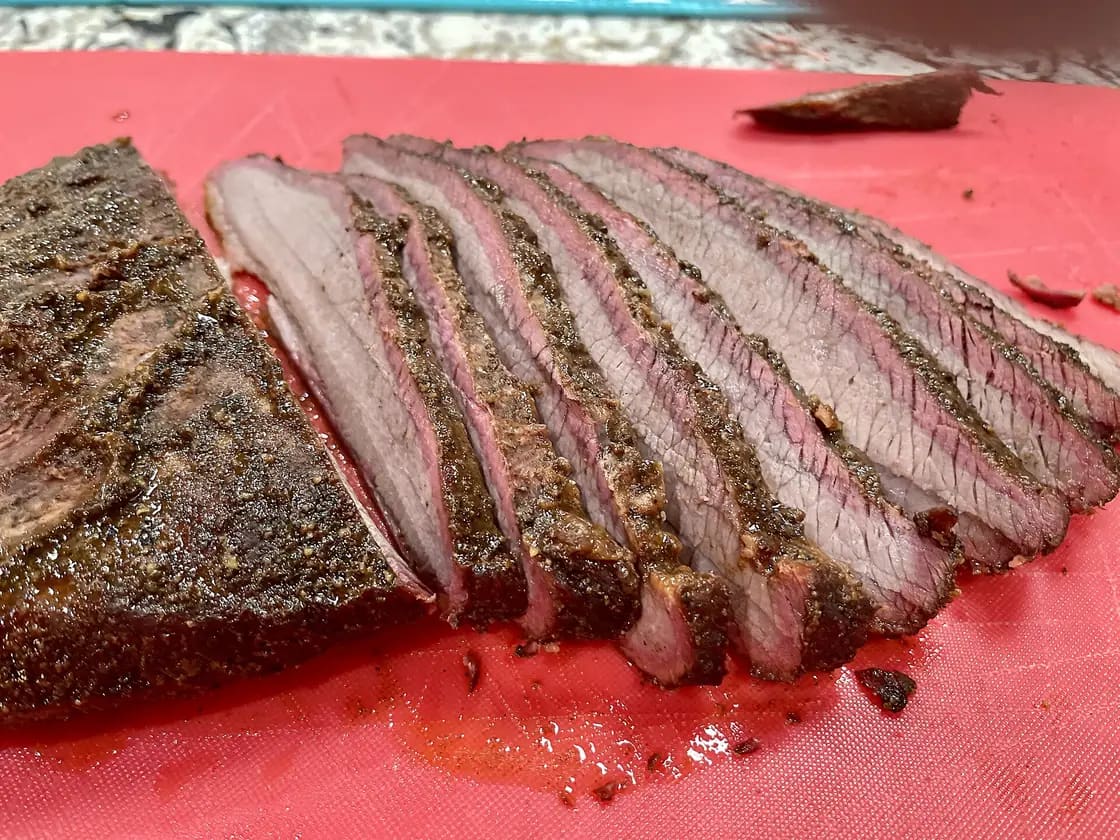

Type "barbecue" into a map search anywhere in Utah Valley and the results will hand you five different kinds of restaurant as though they were interchangeable. A Central Texas brisket counter. A Korean grill built into the table. A Japanese yakiniku buffet. A Hawaiian plate lunch. A fried chicken shop. They share a word and almost nothing else — not the cooking method, not the price, not how long you will be sitting there, and not whether you are the one doing the cooking.
This is the same problem the best steakhouses guide runs into, for the same reason: a serving format got filed as a cuisine.
So the useful question is never "where is the best barbecue in Provo." It is "which of these five things did I want tonight." This guide is organized by format, because that is the decision.
Format one: the Texas-style smokehouse
This is what most people mean, and the valley has two independents worth the drive. Both are in Orem.
Bam Bams BBQ sits at 1708 South State Street in Orem and is the brisket specialist. The reviews divide along a revealing line: people who have lived in Texas either rate it as the best brisket in the state or dock it for seasoning, with very little in between. That split is itself the useful signal. It means the smoke and the bark are being done seriously enough to be judged against Austin rather than against Utah, which is not a comparison most regional barbecue survives being invited into.
Hours run 11:00am to 9:00pm Monday through Saturday, and it is closed Sunday. Phone is 801-225-1324. Portions come up constantly in reviews as larger than expected, so ordering by the pound rather than by the plate is worth considering for two people.
5 Star BBQ at 70 North Geneva Road in Orem earns its following on breadth rather than on one cut. The house signature is the sauce lineup, poured at the table rather than cooked into the meat, which is a Southern convention rather than a Texas one and tells you where the kitchen's loyalties are. Fried okra, creamed corn and cornbread come up as often as the brisket does.
It is also the only place in this guide that operates as a live music venue and carries a bar listing, which makes it the outlier in a category that is otherwise counter service and paper trays. Hours are 11:00am to 8:00pm Monday through Thursday, to 9:00pm Friday, noon to 9:00pm Saturday, and it is closed Sunday. Phone is 801-225-2685.
There is no independent smokehouse of this caliber inside Provo city limits. That is a real gap rather than an oversight in this guide, and it is worth saying plainly, because Provo residents searching for local barbecue are going to end up in Orem or at a chain regardless of what a listing implies.
Format two: the chain that solves Sunday
R&R BBQ is a Utah chain with four Utah County addresses, and its practical value here is availability rather than transcendence.
- Provo — 4801 North University Avenue, Suite 490, up at the Riverwoods. Around 4.3.
- Pleasant Grove — 1977 West Pleasant Grove Boulevard. Around 4.3.
- Lehi — 1628 West Traverse Parkway. Around 4.4, and the busiest of the four by review count.
- Spanish Fork — 852 North 700 East. Around 4.0, the weakest of the set.
All four run 11:00am to 10:00pm most days and 11:00am to 9:00pm on Sunday, which makes R&R the only smoked-meat option in this guide that is open on the valley's quietest restaurant day. On a Sunday afternoon in Provo, that is not a small thing — it is the difference between barbecue and no barbecue.
The reviews are more mixed than the independents', and in a consistent direction: portions and speed draw praise, brisket trimming and rib dryness draw complaints, and several longtime customers describe a decline against their own memory of the place. Read that as what it is. A chain producing at volume across four kitchens will have more variance than a single pit run by the person who bought the meat, and the star average conceals which kitchen you are walking into. The Lehi and Provo locations currently rate above the Spanish Fork one by a meaningful margin.
Format three: Korean tabletop grill
Completely different evening. You are handed raw marinated meat and a live grill in the middle of the table, and the meal takes as long as you take.
Ombu at 147 North State Street in Orem is another option; check its current hours. Ordering is done from a tablet at the table with a time limit on the all-you-can-eat window, which reviewers describe as generous rather than rushed. Phone is 801-224-6667.
Yummy's Korean BBQ & Sushi at 360 South State Street in Orem runs the all-you-can-eat format with a sushi menu alongside it. Note the service pattern before you go: Monday through Thursday it splits into a lunch window and a dinner window with a gap in the middle, opens straight through Friday and Saturday, and is closed Sunday.
KGB Korean Grill Barbeque at 69 State Street in Orem is the smallest of the three, runs the same split lunch-and-dinner shape on weekdays, and — usefully — opens Sunday afternoon from 2:00pm to 9:00pm.
All three are within a few minutes of each other on the State Street corridor in Orem, which means the Korean grill scene here is geographically concentrated in a way the smokehouses are not.
Format four: Japanese yakiniku
Umami Japanese Barbeque at 568 North Mill Road, Suite 107 in Vineyard is the valley's yakiniku room, sitting beside the cinema off Geneva Road. The mechanics resemble Korean barbecue — you cook at the table — but the cuts, marinades and accompaniments follow a different tradition, and the format here is buffet-style selection rather than table ordering.
Check its current hours, including Sunday. Two menu tiers operate at different price points, and reviews are fairly consistent that the difference between them is real, so choosing the cheaper tier and then judging the meat quality is a predictable disappointment. Note also that this is Vineyard rather than Provo or Orem, which matters if you are relying on a map estimate from campus.
Format five: the Korean-Hawaiian plate lunch
Confusingly, there is a second Yummy's, unrelated in format to the Orem one, at 198 West Center Street in downtown Provo. It is not all-you-can-eat and there is no grill in the table. It is a plate-lunch counter — kalbi, bulgogi, meat jun, musubi, macaroni salad — and at around 4.8 it is the highest-rated of any name in this guide, on a smaller base of a few hundred ratings.
This is the one to know about if what you want is Korean barbecue flavors on a plate, in twenty minutes, downtown, without committing to a two-hour grilling session. Weekday service splits into lunch and dinner windows, Tuesday is dinner only, and it is closed Sunday.
The one that keeps appearing and is not barbecue
Bumblebee's at 1254 North State Street in Provo shows up on nearly every barbecue list for the area, often still under an old name that included the letters KBBQ. It is a Korean fried chicken and loaded-fries counter. There is no grill in the table and nothing is smoked. It rates around 4.4 and is perfectly good at what it is; it is simply not what a barbecue search is looking for.
Worth a broader warning here. Aggregator lists for this category are unusually unreliable because restaurants tag themselves with every keyword that might bring traffic. One widely circulated "best barbecue in Provo" list includes a restaurant that is located in Indiana. Check the address line, not the headline.
Brazilian churrasco, and why it is not in this guide
Rodizio Grill and Tucanos both grill large quantities of meat over fire and both are excellent, but the all-you-can-eat skewer format is a different proposition again — fixed price, continuous table service, no smoking involved. Both are covered properly in the steakhouses guide rather than split across two pages.
The Sunday problem, which decides most of this
Utah Valley closes on Sunday to a degree that surprises visitors, and barbecue is one of the harder-hit categories. Of the ten places named above:
- Open Sunday: R&R BBQ (all four locations), Ombu, KGB.
- Closed Sunday: Bam Bams, 5 Star BBQ, Umami, both Yummy's, Bumblebee's, Western Hills Meats.
That is seven closed against three open, and the three that are open are one chain and two Korean grills. If you want smoked brisket on a Sunday in Utah County, R&R is the answer, and there is no second answer. Hours change — particularly around holidays and BYU's academic calendar — so treat this as the shape of the week rather than a guarantee.
The option most guides leave out: cook it yourself
Western Hills Meats / BBQ Pit Stop at 701 South Main Street in Spanish Fork is a butcher counter and barbecue supply store rather than a restaurant, and for a certain kind of weekend it is the better answer than any of the above. It carries cuts selected for smoking, a substantial rub and sauce range, and pellet-grill and pizza-oven brands. It holds a 4.9, on a small base of a few dozen ratings, and the reviews are dominated by staff walking first-time smokers through trimming, cook temperature and rest time.
That last part is the point. South Utah County lacks restaurant barbecue, and the gap is filled by a strong home-smoking culture rather than by anyone opening a pit in Payson. It is closed Sunday.
Why smoking here is not the same job it is in Texas
This is the part that explains the valley's barbecue scene better than any list of restaurants, and it applies whether you are eating out or running your own smoker on a Saturday.
Provo sits at roughly 4,550 feet, and Orem a little higher. At that elevation water boils around 203°F rather than 212°F, and the air across Utah Valley is dry for most of the year. Both facts bear directly on brisket, because the notorious mid-cook plateau that pitmasters call the stall is an evaporative-cooling effect — the meat sweats, the surface moisture carries heat away, and the internal temperature stops climbing for hours while the fire is doing everything right. Dry air pulls that moisture off faster.
Home smokers at this elevation generally report that the stall behaves differently here than at sea level and that bark forms faster and harder, which is why wrapping technique comes up so often in local barbecue conversation. Treat that as the shared experience of people who cook here rather than as settled physics, because the interaction of pressure, humidity and airflow in a specific smoker is not something a guide can pin down for you.
What it means practically is that the valley's good smokehouses are solving a slightly harder problem than their Texas equivalents, and that a brisket which comes out with a deep bark and a moist interior at 4,550 feet represents real work. It is also part of why the difference between an eleven o'clock tray and a seven o'clock tray is larger here than you might expect.
Groups, catering and the large-order question
Barbecue is the category people turn to for a ward activity, a team lunch or a family gathering, and the formats split cleanly on how well they handle it.
R&R BBQ is built for volume and runs catering across all four Utah County locations, which combined with Sunday hours makes it the default for a large group on short notice. 5 Star BBQ operates as an event venue as well as a restaurant and has the upstairs space to absorb a big table, which is not obvious from the street. Bam Bams sells by the pound, which is the most economical way to feed a crowd from any of the independents — a few pounds of brisket, a stack of sides and your own table beats a per-plate order comfortably.
The tabletop formats are the opposite. Korean barbecue and yakiniku are all-you-can-eat per person with a time limit and a fixed grill count, so a group of fifteen means multiple tables, multiple grills and a longer evening. They are excellent for eight friends and awkward for a crowd. If the point is feeding people rather than an event, order smoked meat by weight and skip the grills.
Reading the ratings in this category
The rating counts here span two orders of magnitude, and comparing averages without the denominator produces bad decisions.
A busy restaurant and a small butcher counter can both rate well, and the numbers mean different things. A very high average on a small base tells you that the people who seek the place out love it, which is a strong signal for a deliberate trip and a weak one for a random Tuesday. A solid average across a very large base tells you the kitchen holds up under volume, which is the opposite trade.
Volume also hides variance in a way that matters specifically for barbecue. Brisket is a product with a shelf life measured in hours; a place that sells out by seven is serving something different at eleven than at eight. That is why the same restaurant draws reviews describing both the best brisket in Utah and a dry, disappointing tray, sometimes in the same week. Going early is worth more here than in almost any other category, and several of these kitchens sell out of specific meats before closing.
Why some barbecue needs a variance and most does not
Barbecue is the one category in this valley where a kitchen can cross from ordinary cooking into a regulated process that requires written permission before it starts. Knowing where the line sits explains a lot about which places sell what.
Utah runs on the 2022 FDA Food Code as incorporated by Utah Admin. Code R392-100-4. Under Food Code § 3-502.11, a food establishment must obtain a variance from the regulatory authority before engaging in certain specialized processing methods — among them curing food, smoking food as a method of food preservation rather than as a method of flavor enhancement, using food additives or adding components such as vinegar to render a food non-TCS, and operating a reduced oxygen packaging process for a food requiring control of Clostridium botulinum or Listeria monocytogenes.
Read that carefully and the barbecue line appears. Smoking a brisket for flavor is not a specialized process. Smoking as preservation — the cold-smoked end of the craft — is. Curing is. Vacuum-sealing cooked meat for later sale, the thing a barbecue operation naturally wants to do with a Tuesday surplus, is reduced oxygen packaging and lands squarely in the variance list.
What a variance application contains
Utah did not leave the application to local discretion. R392-100-4(3)(o) rewrites Food Code § 8-103.11 to require ten specific items before a variance is approved: the business name; a designated point of contact and contact information; the location; the citation of each Food Code section or paragraph for which the variance is sought; a statement of why the applicant cannot comply; the nature and duration of the variance; a statement of how the intent of the code will still be met and why public health would not be endangered; technical justification for each provision; a full description of the policies, procedures, active managerial controls or equipment proposed to offset the added risk; and the operation and maintenance requirements, including a HACCP plan where one is required under ¶ 8-201.13(A).
That is a serious document, and it is the reason a small operation will often choose flavor smoking and same-day service over curing and packaging. It is also why the barbecue you buy vacuum-sealed from a Utah Valley smokehouse, where it exists, sits on top of a written plan filed with a health department.
Utah added a second wrinkle worth knowing: R392-100-4(3)(n) provides that an establishment with retail food locations in more than one local health department jurisdiction submits its variance request to the state department rather than to each county. A smokehouse with a Utah County location and a Salt Lake County location applies once, at the state level.
The temperature rules that decide what a low-and-slow cook is allowed to be
Barbecue lives at the awkward end of the cooking chart, and Food Code § 3-401.11 is where the numbers are.
Comminuted meat — anything ground, chopped, flaked or minced, plus injected or mechanically tenderized cuts — must reach 155°F for 17 seconds, with equivalent combinations allowed at 158°F instantaneous, 150°F for one minute or 145°F for three minutes. Whole cuts of meat not otherwise specified, along with pork and fish, are 145°F for 15 seconds. Poultry is 165°F, instantaneous.
The provision that matters for a smokehouse is ¶ 3-401.11(B), the roast table, which permits whole beef roasts and pork roasts to be cooked to as low as 130°F held for 112 minutes, with a chart of shorter times at higher temperatures. That is the rule under which a properly run brisket or pork shoulder program operates: the lethality comes from time at temperature rather than from a single high reading. It is also why "is it done" is a worse question than "how long has it been there."
Once the meat comes off, two more provisions take over. Anything held for service must sit at 135°F or above under § 3-501.16(A)(1). Anything cooled for tomorrow must follow the two-stage cooling rule at § 3-501.14 — from 135°F down to 70°F within two hours, then from 70°F down to 41°F within four more hours, six hours total. Meat that misses the first stage may be reheated to 165°F and cooled again; meat that misses the six-hour total is discarded. A large cut is the hardest thing in a kitchen to cool inside those windows, which is why serious operations break down and pan out rather than refrigerating whole.
What to ask
The useful questions at a barbecue counter are not about wood. Ask when the meat came off, because a brisket that has been holding since eleven and one that came off at two are different products and the answer is never a secret. Ask whether anything is cured or vacuum-packed, because that answer tells you there is a variance and a written plan behind the operation. And if a place sells sealed meat to take home, look for a date — the seven-day date-marking rule at § 3-501.17 applies to refrigerated ready-to-eat food held more than 24 hours, and reduced oxygen packaged food is carved out of it precisely because it is running under its own plan instead.
For the permitting layer underneath all of this, see food permits and inspections in Utah County.
Does barbecue deliver well?
Barbecue is one of the better categories for it. Smoked meat is cooked low and slow and holds temperature in a closed container better than almost anything else on a delivery menu — brisket and pork in particular arrive close to how they left. The casualties are the sides: fries go soft, cornbread dries, and anything fried is worse for the trip. Ask for sauce on the side where the option exists, because sauced meat sitting in its own steam for twenty-five minutes loses the bark that justified the smoke. Sunday is the valley's structural problem. Delivery demand peaks on the day a large share of independent kitchens close, so a Sunday app search returns a shorter and more chain-weighted list than a Saturday one. For a group order, compare the restaurant's own catering or family-pack pricing against the app — barbecue is sold by the pound and the platform markup scales with the order in a way it does not for a single plate.
Related Guides
- The Best Steakhouses in Utah Valley
- Best Korean Food in Provo & Orem
- The Best Restaurants in Provo
- The Best Restaurants in Orem
- Restaurants Open on Sunday in Provo
- Restaurants for Groups in Provo
- The Best Burgers in Utah Valley
- Best Food Trucks in Provo & Orem
- The Provo & Orem restaurant directory — every place we cover in these two cities, with its address, filterable by cuisine
- Best Fried Chicken in Utah Valley
Frequently Asked Questions
What is the best barbecue in Utah Valley?
Which barbecue places are open on Sunday in Utah Valley?
Is Korean BBQ the same thing as barbecue?
Where can I get Texas-style brisket near Provo?
What is yakiniku and where can I try it in Utah Valley?
Is there good barbecue in south Utah County?
Why do so many barbecue lists for Provo include places that are not barbecue?
Do any Utah Valley barbecue restaurants serve alcohol?
Sources
The facts in this guide were checked against these sources. Hours, fees and rules change, so confirm anything time-sensitive with the source before you go. How we make Provo.com.
- Restored booths and other relics (Midtown 360 plaza), The Salt Lake Tribune. Checked October 12, 2026.