Ask whether you can eat halal in Utah Valley and you will get two answers that both sound confident and point in opposite directions. One says the valley is a dead zone and you should plan on driving to Salt Lake County. The other pulls up a review site, shows you a list ten deep, and declares the question settled. Neither is right, and the gap between them is where most of the useful information lives.
The honest position is that Utah Valley has a real and slowly growing set of places to eat halal, concentrated in a few predictable pockets, and a thin supply of places to buy halal meat to cook at home. Those are different problems with different solutions, and lumping them together is what produces the two bad answers above. This guide separates them, explains why the search results mislead, and gives you a way to ask questions that get reliable answers.
The Short Answer
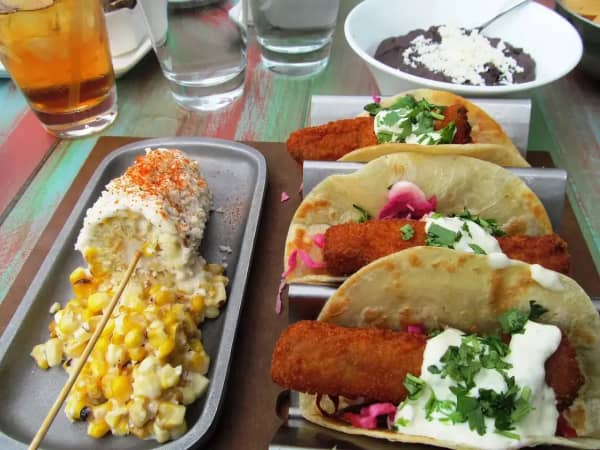
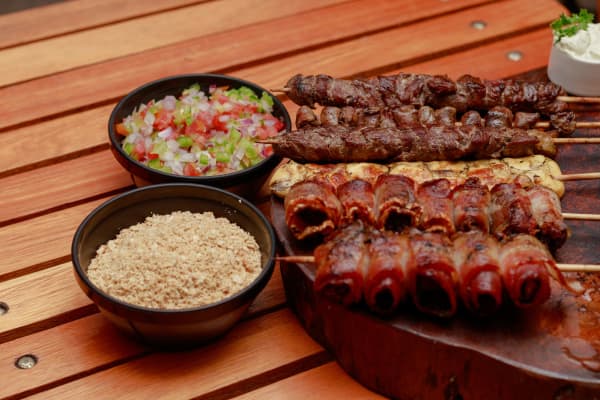
Eating out is manageable. Downtown Provo, State Street in Orem and the south-Provo mall area carry kebab and shawarma counters, Indian and Pakistani kitchens, Afghan cooking and a halal American burger kitchen. Shopping for raw meat is harder: the dedicated halal groceries that dominate search results are almost all in Salt Lake County, and the local options come down to packaged chicken at large supermarkets, frozen lamb and goat at a warehouse club, and a custom butcher order. Al Sahaba Mosque, the Utah Valley Islamic Center, sits in south Orem and functions as the community's actual information network, which is more current than any published list including this one.
What the Word Is Doing on a Menu
Before the addresses, the vocabulary, because it is where most confusion starts.
Halal describes what is permitted. Applied to meat, it covers both the animal and the method of slaughter. Applied to a restaurant, it can mean the whole kitchen is halal, or it can mean one protein on the menu is sourced halal while the rest is not.
Zabiha refers specifically to meat slaughtered according to the prescribed method. Some Muslims require it; others accept meat from other sources under a broader reading. Neither position is unusual, and a restaurant cannot know which one you hold. This is why "is it halal?" is often the wrong question and "who supplies your meat?" is the right one.
Certified means a third-party body has inspected and attested. Certification is common in larger markets and uncommon in a valley this size, where the more usual arrangement is an owner who buys from a distributor they trust and will tell you the name if you ask.
Halal-friendly is a review-site label, not a claim by the business. It gets attached loosely, sometimes because a reviewer mentioned the word, sometimes because a menu has vegetarian dishes. It carries no weight. When you see it, treat it as a prompt to call, not as an answer.
One more practical point that catches visitors: a restaurant serving halal meat may still serve alcohol, and for some diners that changes whether the place works. If it matters to you, it is a separate question and worth asking separately.
Where to Eat
The valley's halal dining clusters in three areas, and the pattern follows the student population and the State Street commercial corridor rather than any one neighborhood.
Downtown Provo carries the densest concentration of the small independent kitchens. A shawarma counter, a fried-chicken kitchen working from a South Asian recipe base, and an Afghan kitchen on Main Street all operate within a short walk of Center Street. These are small rooms with short menus and owner-operators behind the counter, which is exactly the situation in which asking about sourcing gets you a straight answer rather than a shrug.
South Provo, out by the mall on Towne Centre Boulevard, is where you will find a long-running kebab house that shows up on essentially every list of halal food in the county and has done for years. It is the closest thing the valley has to a default answer.
Orem spreads along State Street. An Indian restaurant on South State Street has appeared on the mosque community's own resource list as a halal option, which is a meaningful endorsement even though that list has not been refreshed in some time. Nearer the mosque itself, a halal American kitchen serves burgers and fried chicken on a nonprofit model, with proceeds directed to a meal-delivery effort. That kind of place did not exist in the valley a few years ago and its arrival says something about how the community has grown.
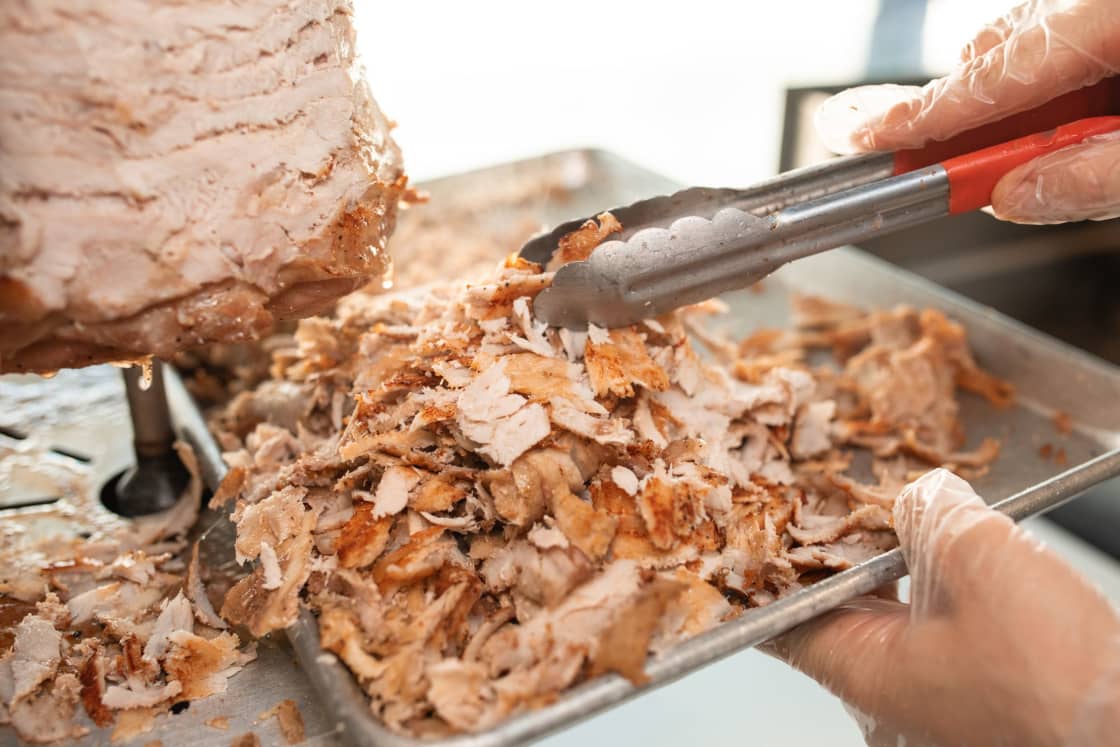
Doner and kebab counters turn up in more than one part of the valley and turn over faster than any other category. A doner express window that was thriving on one visit can be gone the next. This is not pessimism about any particular business; it is the normal churn of small food service, and it is why no published list of halal restaurants in a valley this size stays accurate for long.
Chains are the trap. Some national fried-chicken and pizza brands operate halal locations, and Utah has a few. But sourcing is frequently a franchisee decision, which means the brand tells you nothing. A location in one city can be fully halal while the one in the next city over is not. Ask the specific store, and if the answer matters, ask a second question about whether the halal meat shares fryer oil or grill space with anything else.
The County-Line Problem
Here is the thing that wastes the most time, and the reason this guide exists in the shape it does.
Search any of the big review platforms for halal food, halal meat, or a halal market with Utah County as your location, and the results will look encouraging. A list of eight to ten businesses comes back, several with strong ratings and multiple reviews. It reads like a healthy local scene.
Check the addresses and the picture changes. A large share of those results sit in Salt Lake County — West Valley City, Murray, South Jordan, Salt Lake City proper. The platforms search by radius from a point, not by county boundary, and because the halal grocery trade clusters along the Redwood Road corridor and the west side of the Salt Lake Valley, that radius reaches up and pulls them in. The listings do show a city, but it appears in small type next to the rating, and it is easy to scroll past when everything else on the page implies these results are near you.
The practical consequence is a wasted afternoon. Someone reads a list titled as if it covers Utah County, picks a market with good reviews, drives forty minutes up the interstate without realizing it, and concludes that halal shopping in the valley is worse than it is — or better, depending on which way they got confused.
The fix is mechanical: read the city on every listing before you commit to a trip. Not the title of the list, not the search box you typed into. The city on the individual business.
This is not a knock on the Salt Lake County stores, several of which are good and worth a trip on their own terms. It is a warning about how the trip gets scheduled.
Buying Meat to Cook at Home
Separate the problem into three tiers and it becomes manageable.
Tier one: packaged halal chicken at a large supermarket. The big-box stores in Orem have carried packaged halal chicken, and this is the lowest-friction option in the county. It is chicken only, the selection is narrow, and stocking decisions change without notice, so it is worth a phone call before a special trip. For weeknight cooking it covers a lot of ground.
Tier two: frozen lamb and goat at a warehouse club. The Orem warehouse club has been a known source for frozen lamb and goat within the local Muslim community. Warehouse-club inventory is seasonal and regional by nature. Treat it as a windfall when it is there rather than a reliable staple.
Tier three: a custom butcher order. For fresh beef, lamb and goat — including animals for sacrifice and for aqiqah — the community has historically pointed to a meat processor in Springville that will handle a custom order. This is the option that solves the problem for people who need whole animals or specific cuts, and it is invisible to every search engine because a processor like that does not market itself as a halal business. It is a butcher who will work to your requirements if you ask.
The etiquette on the third tier matters. Call well in advance, be specific about what you need and what standard you are asking them to meet, and understand that you are booking a service rather than shopping a shelf. Prices, lead times and what they are willing to take on all vary, and none of it should be treated as fixed from a web page.
When the Drive North Makes Sense
Given the above, there is a real case for a periodic stock-up run to Salt Lake County, planned deliberately rather than stumbled into.
The west-side stores carry what a valley supermarket cannot: a butcher counter working entirely in halal meat, spice and pantry ranges that go several layers deeper than an international aisle, frozen breads and pastries, and the specific brands people grew up with. A store on the Redwood Road corridor in West Valley City, a specialty market in Murray, a South Asian grocery in South Jordan and a Middle Eastern market on the west side of Salt Lake City are the anchors people mention most.
Treat it as a monthly or seasonal trip with a cooler in the car, not a weeknight errand. Bundle it with anything else that pulls you north. The drive is roughly forty minutes from Provo without traffic and meaningfully longer when the Point of the Mountain is backed up, which it reliably is at commute hours.
Our guide to Asian markets and grocers in Utah Valley covers a parallel case — two good stores locally, a bigger one up north, and a decision about when the drive is worth it — and the reasoning transfers directly.
The Mosque, and Why It Is the Best Source
Al Sahaba Mosque, which also goes by the Utah Valley Islamic Center, is in south Orem, near State Street. It has anchored the valley's Muslim community for well over a decade. Friday congregational prayer runs in the early afternoon; published start times have shifted over the years, which is a good argument for confirming rather than trusting any page including this one. Parking is behind the building and on the surrounding streets.
Beyond prayer, the mosque functions as the community's clearing house. It has maintained a community resource list naming halal restaurants and meat sources, and while that page has not been updated recently, the underlying network absolutely is current. People there know which doner counter closed, which market started carrying goat, and which butcher is taking orders this season. No published guide competes with that, and the sensible use of an article like this one is to give you enough vocabulary and context to ask a good question when you get there.
Eid prayer timing is set locally by a valley moon-sighting committee rather than by a fixed calendar, which is another reason the mosque rather than an app is the right source for anything dated.
Ramadan in a Valley Built Around Other Rhythms
Ramadan in Utah Valley runs against a local grain in ways worth planning for. Restaurant hours here skew early, a great many places close on Sunday, and the general assumption built into the valley's food landscape is a household that eats dinner at six.
For a fasting household that means the useful questions are about hours, not menus. Which kitchens are open late enough for iftar. Which will take a group booking. Which will do volume for a community meal. The mosque coordinates community iftars, and the answer to "where do we eat after sunset" is more often "at the mosque or at somebody's house" than "at a restaurant," which is true in most American cities and especially true in one where the commercial dinner service winds down early.
The flip side is that Utah Valley is unusually well set up for the daytime half. A culture that does not build socializing around alcohol, a huge population of students on irregular schedules, and a normal expectation that people have dietary rules they keep for religious reasons all make fasting less socially awkward here than it might be elsewhere. That is a genuine local advantage and it does not show up on any restaurant list.
Cooking Around the Gap
If the meat supply is the binding constraint, the practical move is to cook around it rather than against it, and the valley is well stocked for that.
Vegetarian South Asian cooking sidesteps the problem entirely, and the valley's Indian restaurants generally carry deep vegetarian menus. Seafood is unrestricted under most readings and every supermarket in the county sells it. Dairy, legumes, grains and produce need no special sourcing at all.
For pantry depth, the international aisles in the valley's larger supermarkets have widened considerably, and our guide to grocery stores in Provo and Orem covers which stores go deepest. The Latino markets and panaderías in Provo carry overlapping spices, rice, legumes and fresh produce at good prices, and are worth knowing for reasons that have nothing to do with the cuisine on the sign.
The one hard substitution is gelatin, which appears in more products than people expect — sweets, some yogurts, marshmallows, capsules. Reading labels is the only reliable approach, and it is a skill that transfers.
How to Ask So You Get a Real Answer
A short script, because the phrasing changes the quality of the answer.
Do not ask "is this halal?" It invites a yes, because the person answering wants to help and may not know what standard you hold.
Ask "where do you get your meat?" An owner who sources halal will name a distributor immediately. An owner who does not will say something vague, and the vagueness is your answer.
Ask about the specific protein. Kitchens frequently source one protein halal and not others. "Is the chicken halal?" gets a more accurate answer than a question about the restaurant.
Ask about shared equipment if cross-contact matters to you. Fryer oil and grill surfaces are the usual places it comes up.
Ask the community before the internet. For anything that changes — hours, stock, whether a place is still open — the mosque network is more current than any review platform.
Practical Notes
Call before you drive. This applies to every business named or implied in this guide. Small independent food businesses change hours and close permanently with no warning, and halal stock at a big supermarket is a shelf decision that can reverse any week.
Read the city on the listing. The single most useful habit in this whole guide.
Expect churn. A guide to halal food in a valley this size is a snapshot. Some of what is described here will be wrong within a year, and the pattern — where the clusters are, who to ask, how the tiers of meat sourcing work — will outlast the specifics.
Students have an easier time than they expect. The international student population at both universities has faced exactly this problem and solved it, and our guide to international students in Provo covers the wider set of arrival questions this one sits inside.
The Short Version
Eating halal in Utah Valley works. Downtown Provo, State Street in Orem and the south-Provo mall area carry enough kebab, shawarma, South Asian, Afghan and halal American cooking to make ordinary life straightforward, and asking about sourcing at a small owner-operated counter gets you a real answer. Buying raw halal meat is the harder half: packaged chicken and frozen lamb locally, a custom butcher order in Springville for anything serious, and a planned stock-up run to the Salt Lake County markets when depth matters.
The single most valuable habit is reading the city on every search result, because the platforms will cheerfully hand you a store forty minutes away and let you assume it is nearby. And the single best source is not a list at all — it is the Utah Valley Islamic Center in Orem, where the people who have already solved this problem are happy to tell you how.
Ordering Halal for Delivery
Delivery introduces a specific problem for halal ordering that is worth being direct about: a platform tag is not a certification.
When an app labels a restaurant or a dish halal, that label originates with the restaurant's own menu entry. It reflects what the business told the platform. It is not verified by the platform, it carries no standard behind it, and it does not distinguish between a kitchen that is entirely halal, a kitchen that sources halal meat but shares equipment, and a kitchen that has one halal item on an otherwise conventional menu. Those are three very different situations for anyone observing dietary law seriously.
Establishing which of the three a kitchen falls into is a conversation. It means asking where the meat is sourced, whether fryers and grills are shared, and whether alcohol is used in any preparation. Those questions get answered on the phone or in person, and they get answered once — after which you know, and you can order from that kitchen with confidence for years.
That is why the sensible pattern here is to do the verification in person, then use delivery for the places you have already established. In that order the app handles logistics rather than trust, which is what an app is good at.
It also helps that the valley's halal-serving kitchens are a small enough group to work through properly. This is not a city where you need to evaluate fifty options before you can order dinner.
Our food delivery guide covers how the platforms operate locally.
Related Guides
- Asian Markets and Grocers in Utah Valley
- Latino Markets and Panaderías in Provo
- Grocery Stores in Provo and Orem, Compared
- The Best Mediterranean and Greek Food in Utah Valley
- International Students in Provo
Frequently Asked Questions
Is there halal food in Provo and Orem?
Why do halal searches for Utah County return Salt Lake addresses?
Where can I buy halal meat in Utah County?
What is the difference between halal and halal-friendly?
Is there a mosque in Utah Valley?
Does zabiha matter, or is any halal label enough?
Are there halal options at chain restaurants in Utah Valley?
What should I do during Ramadan in Utah Valley?
Sources
The facts in this guide were checked against these sources. Hours, fees and rules change, so confirm anything time-sensitive with the source before you go. How we make Provo.com.
- Utah Middle Eastern & North African Community List, Utah Division of Multicultural Affairs. Checked October 12, 2026.
- Mosque to be built in Orem, Daily Herald. Checked October 12, 2026.