
There are two ways to get a real Christmas tree near Provo. One is the way most of the country does it: drive to a lot or a nursery in late November, pick a sheared Fraser fir that was cut in Oregon two weeks ago, and tie it to the roof. The other is the way a large share of Utah families do it: buy a $20 federal permit in early November, drive an hour or two to a national forest, hike into a designated cutting area with a saw and a thermos, and bring home a subalpine fir that no one has ever pruned.
This guide covers both, with an honest accounting of a third option that people ask about and that barely exists here — the cut-your-own tree farm. Utah County has a permit tradition, not a farm tradition, and the reasons are geography and water. So the spine of this page is the permit: what it costs, where it is valid, what the rules are, and how to do the trip without a citation or a stuck truck.
Dates below are the pattern of recent seasons. For 2026, Forest Service in-person sales start November 9; the BLM's online sales run from November 17 through December 24. Confirm the specifics on the agencies' pages before you plan the Saturday.
The Forest Service Permit
The Uinta-Wasatch-Cache National Forest is the forest that surrounds Utah Valley — the Wasatch above Provo, the Uintas to the east, the Stansburys to the west — and it sells Christmas tree permits every year. The basics, from the forest's own permits page:
- $20 per tree, one permit per household. A $2.50 fee is added for online sales.
- Sold on recreation.gov. Search "Uinta-Wasatch-Cache National Forest Christmas Tree Permit." Some district offices have sold in person; online is the primary channel, and for some districts the only one.
- Valid only for the forest and district you bought it for. A Heber-Kamas permit does not work on the Evanston district.
- Up to a 20-foot tree; no topping. You cut the whole tree at the base.
- No cutting in campgrounds, trailheads, or administrative sites, within 200 feet of lakes and streams, in wilderness, or in planted areas.
- Permits and trees may not be resold.
- Print it or carry it on your phone. A payment confirmation is not a permit, and there is no cell service in most cutting areas, so print it.
- State and BLM permits are not valid on Forest Service land.
The 2026 details are already posted on recreation.gov: in-person sales begin November 9, 2026, and Heber-Kamas permits are being sold in three identical batches because they sell out fast; if Heber-Kamas is gone, the forest points buyers to Evanston-Mountain View. Five districts are open this year: Heber-Kamas, Evanston-Mountain View, the Stansburys on the Salt Lake district, Logan and Ogden. In 2025, permits went on sale online November 10 at 8 a.m. and were valid through the end of December; in earlier years the sale opened in the first days of November and ran through December 25. Expect the same window.
Which Districts, and Where You Can Cut
This is the part that surprises Provo families. The ranger districts closest to Utah County — Pleasant Grove, which covers American Fork Canyon and the Alpine Loop, and Spanish Fork, which covers Hobble Creek, Diamond Fork, and the Nebo Loop — have not been on the forest's Christmas tree permit list in recent seasons. Their canyons are steep, heavily used, and largely closed to tree cutting. Neither is on the 2026 list.
The districts that have sold permits in recent years, and what each allows:
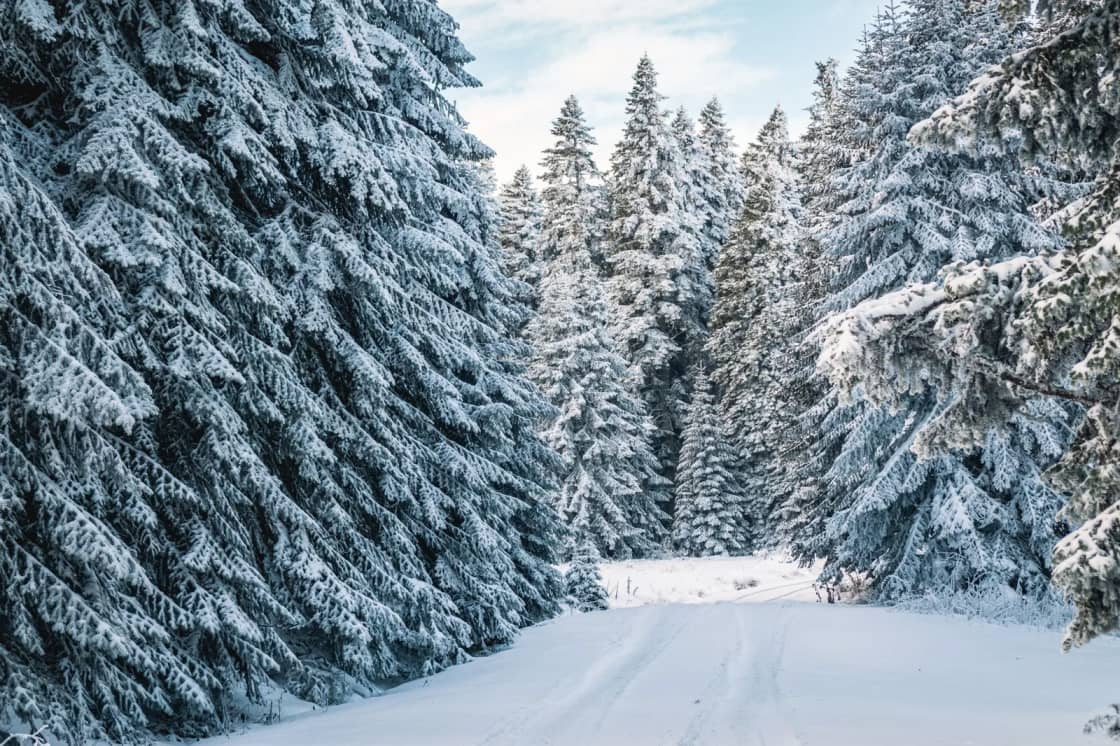
Heber-Kamas Ranger District. The realistic choice for a Provo family. Cutting areas are along the Mirror Lake Highway (Utah 150) above Kamas and in the Strawberry area east of Heber, with maps for each on the forest's site and recreation.gov. Only subalpine fir, 20 feet or shorter, may be cut; no cutting within 200 feet of lakes, streams, campgrounds, picnic areas, or U.S. 40. The Mirror Lake Highway closes at its winter gates, and the cutting areas are below them. Drive time from Provo: about an hour and a quarter to the Kamas side via Heber and U.S. 40, a bit less to Strawberry. Offices in Heber and Kamas.
Evanston-Mountain View Ranger District. The north slope of the Uintas, on the Wyoming side. Any species of evergreen, up to 20 feet; lodgepole pine dominates. Season early November to December 25. It is a two-and-a-half-hour drive from Provo via I-80 and Evanston, which puts it in the category of a full-day trip or a combination with a visit to family in Evanston. Offices in Evanston and Mountain View, Wyoming.
Salt Lake Ranger District. Cutting is limited to the Stansbury Mountains in Tooele County, and only juniper may be cut; limber pine may not. It is about an hour and a half from Provo. The tree is a juniper, which is a very different tree from a fir; see below.
Logan Ranger District. Cache Valley; online sales only; roughly two and a half hours from Provo. Not a Utah Valley trip unless you are already going.
Ogden Ranger District. Also on the 2026 list. Like Logan, it is a long drive north and mainly useful if you are already in Weber County.
The forest's page for each district links a map of the cutting area. Print it. The permit is only valid inside the lines.
The BLM Permit: Pinyon and Juniper
The Bureau of Land Management sells its own Christmas tree permit, and it is the drier, more western alternative. The BLM's current Utah page does not list a single price; each field office sets its own fee, so check with the Fillmore or Salt Lake office. Permits are sold online at the BLM's permit site and in person at field offices during business hours, beginning in mid-November — November 17 in a recent year — and running through December 24.
The trees are pinyon pine and juniper, the trees of Utah's high desert. The nearest BLM cutting areas to Provo are managed by the Fillmore Field Office, which has opened all BLM-managed land in Juab and Millard counties to cutting with a permit, and by the Salt Lake Field Office in Tooele County. From Provo, that means a drive south on I-15 past Nephi and west toward the Sevier Desert, or west on I-80 and south through Tooele — an hour to two hours, on dirt roads at the end.
The BLM publishes a cutting-area map and a downloadable offline map package for phones, which matters because there is no signal out there. A BLM permit is not valid on Forest Service land, and a Forest Service permit is not valid on BLM land; the boundaries are on the maps.
A juniper or pinyon Christmas tree is dense, fragrant, irregular, and often broader than it is tall. Families who grew up with one will not have anything else; families expecting a fir are sometimes surprised.
What the Trees Are Like
A tree from the forest is not a tree from a lot, and it helps to know what you are choosing.
Subalpine fir (Heber-Kamas) is the classic Utah cut tree: soft, flat, blunt needles that do not prick, a narrow, spire-like shape, a pleasant fir scent, and good needle retention if you cut it fresh and keep it in water. Because it grew wild in a crowded stand, it will be thin on one or two sides and may have gaps between whorls. The tradition is to find one with a good face and turn the bad side to the wall. Subalpine fir needles are soft and flat; spruce needles, which you are not supposed to cut on that district, are sharp and square and roll between your fingers.
Lodgepole pine (Evanston) is fuller and rounder with longer needles, and it drops them faster indoors; it is a two-to-three-week tree, not a five-week tree.
Juniper (Stansburys, BLM) and pinyon pine (BLM) are bushy, dense, and strongly scented, with tiny scale-like or short bundled needles. They hold up well and they smell like the West. They are also heavy and prickly to handle.
None of them will look like the sheared, symmetrical Fraser or noble fir on a lot, which was pruned annually for eight years to look that way. That is the trade: a tree with a story and a bad side, or a tree with neither.
The Trip: What to Bring, When to Go, How Not to Get Stuck
Bring a handsaw (some districts allow chainsaws; the permit says), rope or ratchet straps, a tarp for the roof or bed, work gloves, a tape measure so you do not cut a 14-foot tree for a 9-foot ceiling, a printed permit, a printed map, and warm layers for everyone, including the child who will refuse the coat until the second hour. Snacks and a thermos are not optional with children. A sled for hauling the tree out is a good idea if the snow is deep.
Drive something that can handle a snowy forest road. The cutting areas are reached by dirt roads that are plowed sporadically or not at all, and a two-wheel-drive sedan on all-season tires is how people end up calling for a tow with no cell service. Our winter tires and canyon driving guide is the honest version of that conversation. Check road conditions the morning you go.
Go early in the season. The accessible trees near the roads are cut in the first two weekends; by mid-December the good ones are a long walk in deeper snow. Weekdays and early Saturday mornings are quiet.
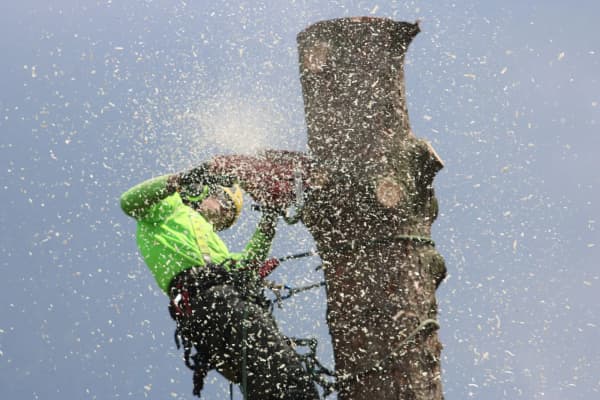
Cut correctly. Cut the whole tree at the base and leave a stump no taller than 6 inches. Do not top a tall tree for its crown; that is prohibited on every district and it kills the tree. Stay inside the mapped area and out of the buffers around water, roads, and campgrounds. Keep the permit with you; forest officers do check, and a payment confirmation on a dead phone does not count.
Get it home. Tie the tree trunk-forward on the roof with the branches streaming back, wrapped in the tarp; a tree tied crown-forward arrives bald. When you get home, make a fresh cut an inch above the old one and get it into water within an hour or two. A forest fir that is cut fresh and watered will outlast anything from a lot.
The Tree Farms That Barely Exist
People ask every year where the cut-your-own farms are, and the answer, for Utah County, is that there is almost nothing. Christmas trees take eight to ten years to grow to size, need water in a dry state, and occupy land that in Utah County is worth far more as houses. The Wasatch Front has a handful of small farms — one in Alpine that has opened on weekends in past seasons and announces on Facebook whether it will open at all, a couple in Morgan and Davis counties that grow Colorado spruce and fir and sell out in days — and none of them is a sure thing in any given year.
We are not listing them as open for 2026 because we cannot confirm it in September, and a family that drives to Alpine on a Saturday in December to find a closed gate has had a worse day than one that bought a permit. If you want the farm experience, watch the Wasatch Front farms' social pages from mid-November, call before you go, and expect to pay more than a lot tree for the privilege. Have the permit plan as the backup.
The Lots
For a fresh tree without a hike, Utah County's seasonal lots open the week of Thanksgiving and run until they sell out, usually a week or two before Christmas.
Nurseries, orchard stores and seasonal lots in Orem, Payson and the south county have sold trees in recent years; confirm any of them by phone before driving. The home-improvement chains and several grocers sell pre-cut trees, and at least one Salt Lake-based operation delivers fresh-cut trees to addresses across Utah County, from Alpine to Eagle Mountain to Payson.
Lots sell Fraser fir, noble fir, grand fir, Nordmann fir, and Douglas fir, most of it trucked from Oregon and Washington. Buy early for selection, ask when the trees arrived, check that the needles bend rather than snap, and make a fresh cut at home.
Keeping It Alive Until New Year's
Whichever tree you bring home, the first hour decides how long it lasts. Make a fresh cut across the base — a half-inch to an inch, straight — because a trunk that has been out of water for more than a few hours seals over with resin and will not drink. Get it into a stand that holds at least a gallon, fill the stand, and check it twice a day for the first three days; a fresh tree can take a gallon in the first 24 hours. Keep it away from heat vents, fireplaces, and south windows. Skip the additives; plain water does the job.
A subalpine fir cut fresh and kept watered holds its needles well; a lodgepole drops sooner. Lot firs vary with how long ago they were cut, which is why asking the lot when the truck came in matters.
When the season ends, most Utah County cities run a curbside tree pickup or a drop-off site in the first two weeks of January, and several turn the trees into mulch or sink them in reservoirs as fish habitat; the city's public-works page has the dates. Do not leave one in the canyon.
A Realistic Timeline for a Provo Family
Now: read the 2026 details on recreation.gov and pick Heber-Kamas or Strawberry, with Evanston as the backup. November 9: in-person sales begin, and Heber-Kamas batches sell out fast; buy one, download and print the map. November 17: the BLM's online sales open for the pinyon-and-juniper crowd. Thanksgiving week: the lots open. The first or second Saturday after Thanksgiving: the trip — leave by 8, cut by 11, home by 3. Late December: the permit expires; the lots are empty. First two weeks of January: the city picks up the tree.
The families who do this every year are the ones who bought the permit the morning it went on sale and went the first good Saturday. The families who regret it are the ones who went December 20.
The Permit as a Tradition
The reason so many Utah families do the permit instead of the lot is not money, though $22.50 for a tree is hard to beat. It is that the permit turns a purchase into a day: the drive up the canyon, the argument about which tree, the child who finds the perfect one and is overruled, the hot chocolate at the truck, the tree on the roof, and the same photo taken every year in the same spot. The tree is thinner than a lot tree and it does not matter.
It also keeps the forest healthier — thinning crowded young stands of fir is why the agencies sell the permits at all — and it is one of the few things a family can do on public land in December that costs less than a movie.
Buy the permit the week it goes on sale. Print two copies. Go early.
Related Guides
- Christmas in Provo: Holiday Events & Lights Guide
- Winter Tires and Canyon Driving in Utah
- Heber Valley and Midway from Provo
- Snowshoeing Near Provo
- Sledding in Utah Valley
- Santa in Utah Valley: Breakfasts, Photos, Runs and Parades
Frequently Asked Questions
How much is a Christmas tree permit in the Uinta-Wasatch-Cache National Forest?
Where near Provo can I cut a tree?
What is the BLM Christmas tree permit, and is it different?
What are the cutting rules?
Are there real cut-your-own Christmas tree farms in Utah County?
Where are the tree lots near Provo?
What kind of tree will I get from the forest?
What should I bring, and when should I go?
Sources
The facts in this guide were checked against these sources. Hours, fees and rules change, so confirm anything time-sensitive with the source before you go. How we make Provo.com.
- Uinta-Wasatch-Cache National Forest — Permits (Christmas Tree Cutting), USDA Forest Service. Checked October 12, 2026.
- Uinta-Wasatch-Cache National Forest Christmas Tree Permit, Recreation.gov (USDA Forest Service). Checked October 12, 2026.
- Utah Christmas Tree Permits, Bureau of Land Management, Utah. Checked October 12, 2026.