
Dance in Utah Valley operates at two volumes. There is the loud version — competitive studios, costume orders, weekend-long competitions in hotel ballrooms in Salt Lake — and there is a much quieter version that a lot of families never find, in which a child takes one class a week in a city-run studio for a modest term fee and enjoys it enormously.
Both exist here in unusual abundance, and the loud one markets far better than the quiet one. This is an attempt to describe the whole field.
The option most people miss
Provo's city arts center, the Covey Center for the Arts on West Center Street downtown, runs a full community dance school. Not a token class or two — a properly laddered program with a studio coordinator and a bench of instructors, most of them trained dancers with university degrees in dance or dance education and professional or company experience behind them.
The range is genuinely broad. On the children's side there is parent-and-child movement, preschool and kindergarten ballet, creative movement, kinder combo, children's ballet across multiple days and levels, tap, hip hop, ballroom, children's folk dance, teen beginning technique, intermediate ballet, and pointe preparation into intermediate pointe. There is an all-abilities class for dancers with disabilities. On the adult side there is beginning ballet, daytime intermediate ballet, advanced ballet, beginning and intermediate contemporary, jazz, tap, hip hop, folk dance and an adult combo class. There is also Middle Eastern dance, taught by an instructor with decades in the form.
The reason this matters financially: because it is a municipal arts program rather than a competition studio, it does not carry the layered costume and performance fees that dominate the real cost of private studio dance. Our reporting on the Covey Center's pricing covers the same pattern on the performance side of the building.
It is not the right answer for a child aiming at a professional track. For the very large number of children who want to dance once a week and have a good time doing it, it is close to the best value in the valley, and it is downtown, which for anyone in central Provo is a meaningful convenience.
Why the ballroom is so good here
If you have moved to Provo from elsewhere, the amount of serious ballroom dancing around you will be surprising.
Brigham Young University runs one of the most successful collegiate ballroom programs anywhere, with touring formation teams, a showcase company and a competitive apparatus that has been winning internationally for decades. That program has consequences well beyond campus.
Its dancers teach. They teach in community studios, in city programs, in elementary-school intro classes, and privately. There is a youth ballroom pipeline that trains children locally with the expectation that some will feed the university teams. Social dance and country dance nights are a normal part of the calendar rather than a novelty. The valley also supports folk dance at an unusual level — the university's international folk dance ensemble tours, and its alumni turn up teaching children's folk dance in community programs.
For a family, the practical upshot is that if your child develops a genuine interest in ballroom, the instruction available here is deeper than in most cities several times Provo's size. For an adult, it means beginner social dance is easy to find and nobody will think it odd that you have never done it.
Reading a private studio without getting caught out
Utah Valley has a lot of private dance studios, several of them long-established with strong reputations and serious training. The question is not whether they are good. It is whether the model they run matches what you actually want.
The recreational model charges tuition by month or term, runs one or two classes a week per student, and finishes with a spring recital. Costs are predictable.
The competition model looks similar on the tuition line and is a different financial animal. Layered on top come choreography fees per routine, a costume for each routine, competition entry fees per dancer per routine, travel and hotels for out-of-town events, required additional technique classes, and often a summer intensive. A studio may be entirely honest about all of this and it will still not be visible in the number quoted on the website.
The single question that resolves it: what did a family in this level pay in total last season, including costumes, competition fees and travel? A studio that answers that plainly and in writing is one you can trust on everything else. A studio that deflects to the monthly tuition figure has told you something.
Other things worth asking before enrolling:
Is there a contract, and what is the exit? Some competitive programs commit you for a season. Find out before, not in January.
When are the costume charges billed? Frequently in a lump, frequently in autumn, frequently a surprise.
What is the class size and who actually teaches it? A named senior instructor on the website is not necessarily the person in the room on Tuesday at four.
How is placement decided? A studio that moves children by age alone and one that moves them by readiness produce very different experiences for a child who is ahead or behind.
Choosing a style for a young child
Parents often ask which style to start with as though it were a long-term commitment. It is not, and the early years are more alike than different.
Creative movement and pre-ballet, roughly ages three to five, are about following a class, moving to a beat, and taking turns. Technique is barely present and should not be. Choose entirely on the teacher.
Ballet is the standard foundation and the one that transfers most cleanly into other styles later, because it builds alignment, turnout and a vocabulary. It is also the most likely to feel slow to a child who wants to move fast.
Tap is loud, immediately rewarding and excellent for rhythm. Children who find ballet dull often love it.
Jazz and contemporary generally start a little later, once there is some technical base.
Hip hop has the lowest barrier to enjoyment and the widest quality range between teachers, because the style has no standard syllabus.
Ballroom and folk are the local specialties, both partner-based, both social in a way solo styles are not, and both unusually well taught here. They also solve a problem parents of boys run into constantly: a boy who will not go near a ballet class will frequently go to ballroom without complaint, because it is framed as a partnered skill rather than a performance art, and because the local culture treats it as entirely ordinary for boys to do. Several local programs run explicitly mixed boys-and-girls classes in ballroom, ballet, tap and hip hop for exactly this reason.
All-abilities classes deserve a mention of their own, because families often assume they do not exist. Provo's city program runs one, taught by an instructor who has trained specifically in dance education, and the point of it is participation rather than modified technique. If a child has been turned away from a mainstream class or has simply never been offered one, this is the place to ask first.
The one rule worth holding: for a child under about six, the teacher matters more than the style by a wide margin. Watch a class before you enroll. A good teacher of small children spends a lot of the hour on the floor at their eye level.
Adults, from nothing
The adult dance provision here is better than most people assume, and the barrier is almost entirely psychological.
Adult beginner classes are genuinely for beginners. The Covey Center's adult ladder starts at beginning ballet, contemporary, jazz, tap and hip hop, and its folk dance and combo classes assume nothing. Several private studios run adult evening sessions. Fitness-format dance classes at the Provo Recreation Center sit at the informal end and are covered by a membership or day pass.
Turning up alone is normal. So is being the oldest person in the room, and so is being visibly bad at it for several months. Nobody is watching you; they are watching themselves in the mirror and worrying about the same thing.
Social and country dance are the easiest entry of all, because they are designed to be learned by adults with no background and taught at the start of the evening.
For anyone returning after years away, look specifically for a daytime intermediate or adult intermediate class rather than dropping into beginner — the Covey runs a daytime intermediate ballet, and returning dancers are usually happier there than starting from the barre exercises they already know.
Pointe, and the question parents get pushed on
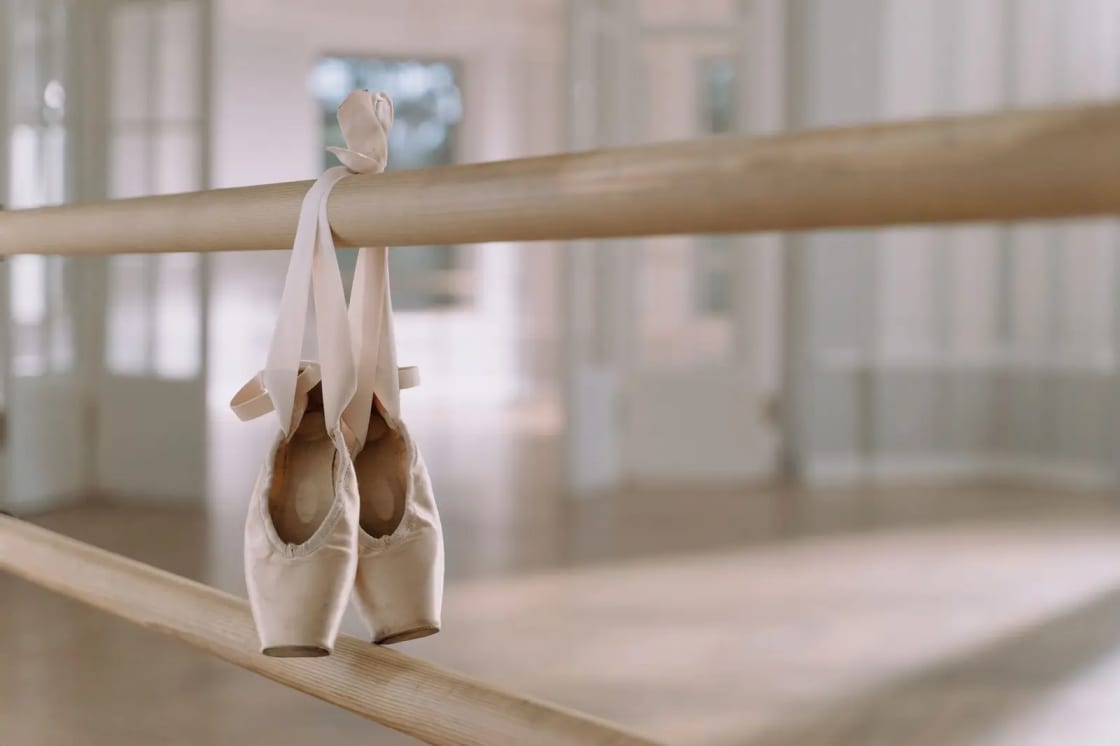
At some stage a ballet student and her friends start talking about pointe shoes, and a parent is asked to approve something with real physical consequences and no obvious way to evaluate it.
The short version: pointe is a readiness decision, not an age or a reward. The considerations that matter are how many years of consistent ballet training the student has behind them, whether the ankles and feet are strong enough to hold alignment without rolling, whether the growth plates in the feet have matured enough — which is why teachers generally will not begin before roughly eleven or twelve — and whether the student is training often enough to maintain the strength safely.
Good local programs handle this properly. Pointe preparation is a class in its own right — the Covey Center runs pointe prep as a distinct step before intermediate pointe, and that structure is the right shape. A teacher who puts a student on pointe because she has turned twelve, or because the rest of her class went up, or because a parent asked, is not a teacher to trust with the next decision either.
The other half of it is fitting. Pointe shoes are fitted to a specific foot by someone trained to do it, and the correct answer to "can I order these online" is no. Expect the first fitting to take a while and expect to be told to come back as the foot changes.
If a teacher is cautious and says not yet, that is the answer you want to hear, even when your daughter does not.
Watch some dance before you choose any
The cheapest research available is going to see dance in this valley, and there is a great deal of it.
End-of-year recitals and spring showcases are largely open, and forty minutes at one tells you more about a studio than any conversation. Watch how the youngest children look — at ease or anxious — and whether the teachers are warm with them in the wings. Watch whether the repertoire has variety or whether every group is doing a version of the same thing.
University performances are the high end and mostly inexpensive: ballroom showcases, folk dance productions, contemporary concerts and student choreography evenings run through the academic year, and the standard at the top of the collegiate ballroom and folk programs here is genuinely international.
Local theater carries a surprising amount of dance. Productions at the Covey Center downtown, and at the SCERA and Hale Center Theater in Orem, are staffed by choreographers and performers who also teach around the valley — several of the instructors in the city program appear in these shows. Seeing a teacher perform is a legitimate way to judge them.
Community and folk performances turn up at festivals through the summer, which is a low-commitment way to show a child what a style actually looks like before signing up for a year of it.
Taking a five-year-old to watch dancing is not a substitute for a class. It is, however, the most reliable way to find out which style they actually want, as opposed to which one you assumed.
What it actually costs, in shape rather than figures
Rates change; the ordering does not. From least to most expensive over a full year:
Municipal and community programs — term-based, single weekly class, minimal extras. The floor.
Recreational private studios — monthly tuition, one recital costume, predictable.
Multi-class recreational — two or three classes weekly, proportionally more.
Pre-competitive and competitive tracks — where the real money is, and where the tuition figure stops being informative.
Private lessons and coaching — usually additional to class rather than instead of it, and the standard route for serious ballroom partnerships.
Budget separately for shoes, which need replacing as feet grow and differ by style; required uniform, where a studio has one; and performance costs at whatever level they apply. Buy shoes after the first class, never before, and used shoes for a growing child are entirely normal.
Timing your enrollment
The season runs broadly with the school year. Late summer is the main enrollment window, the new year is the secondary one, and short summer sessions fill the gap.
Community and municipal programs register by term with a published deadline and a hard cap on places. The classes that fill first are exactly the ones you want — children's classes at convenient after-school hours, on weekdays, at the level most children are at. If you have a specific class and hour in mind, register the day the window opens.
Competitive studios usually run auditions or placement in spring for the following season, which is a year earlier than most families expect to be thinking about it.
And if the class you want is full, ask about the waiting list and ask when the term restarts. Dance rosters churn — children change activities, families move, schedules break — and a full class in September is often not a full class in October.
If you are mapping out what else is available for children locally, the family guide to Provo, our round-up of music lessons in Provo and the guide to toddler activities in Utah Valley cover the adjacent ground.
The one legal duty that reaches every adult in the room
There is a piece of Utah law that applies to a dance teacher, a studio receptionist, a costume volunteer and the parent driving four children home, identically and without any credential attached to it. Most people in a studio have never heard of it, and it is the strongest single protection a child in a private program has.
Utah Code § 80-2-602 provides that if a person has reason to believe that a child is, or has been, the subject of abuse or neglect, or observes a child being subjected to conditions or circumstances that would reasonably result in abuse or neglect, the person shall immediately report the suspected abuse or neglect to the division or to the nearest peace officer or law enforcement agency.
Read the subject of that sentence again. Not "a mandated reporter." Not "a licensed professional." A person. Utah is a universal-reporter state, which puts it in a minority nationally: most states list occupations, and everyone outside the list is encouraged rather than required. Here the duty attaches to knowledge, not to a job title. A volunteer at a competition weekend carries the same legal duty as a pediatrician.
The exceptions are narrow and specific. Utah Code § 80-2-602(3) excepts a
member of the clergy as to a confession made directly to them while functioning
in a ministerial capacity, without the confessor's consent, where canon law or
church doctrine binds them to confidentiality — and the statute adds that a
clergy member may report ongoing abuse even so. It also excepts an attorney,
or an attorney's employee, where the knowledge arises from representing a
client, unless the Utah Rules of Professional Conduct permit disclosure to
prevent reasonably certain death or substantial bodily harm. There is no
exception for "I wasn't sure," for "it wasn't my student," or for "I told the
studio owner instead."
What the rest of the part does
The surrounding sections matter as much as the duty itself, because they answer the objections that stop people reporting.
Utah Code § 80-2-608keeps the identity of the person who reports confidential.Utah Code § 80-2-610grants immunity from liability for making a report, subject to a stated exception.Utah Code § 80-2-609makes willful failure to report a class B misdemeanor, and separately addresses threats and intimidation aimed at someone who reports.Utah Code § 80-2-611covers false reports, so the system is not one-directional.
The current text is the renumbering carried out by Laws of Utah 2022, Chapter 334, as amended since; the clergy exception in particular has been worked on repeatedly, including by S.B. 72 in 2023 and H.B. 432 in 2024.
What to actually do with this
The practical translation for a dance family is short. A studio's written child protection policy should say that every adult in the building is a reporter under Utah law and that reports go to the division or law enforcement — not "to the director, who will decide." A policy that routes concerns internally first is describing a chain of command, not the statute, and the statute wins.
Ask to see the policy before the competition season, when nobody is under pressure and the answer tells you something useful about how the studio is run.
Related Guides
- The Osmonds and Utah Valley: How a Family From Ogden Built a Hollywood in Orem
- Swim Lessons in Provo: Levels, Registration Timing, and the Trick Almost Nobody Uses
- Youth Sports in Utah Valley: City Rec, Club Teams & What It Actually Costs
- Childcare & Daycare Options in Provo (2026)
- Tutoring in Utah Valley: What It Costs, Who's Actually Qualified, and When You Need It
- Homeschooling in Utah Valley: The Affidavit Is Gone, and Most Guides Haven't Caught Up
- Kids' Art, Music and Craft Classes in Utah Valley
Frequently Asked Questions
Where can I take affordable dance classes in Provo?
What is the difference between a competition studio and a recreational one?
What age can children start dance in Provo?
Can adults with no experience take dance classes in Provo?
Why is Provo such a strong place for ballroom dance?
What should my child wear to a first dance class?
When do dance classes in Provo enroll?
How many classes a week does a serious young dancer need?