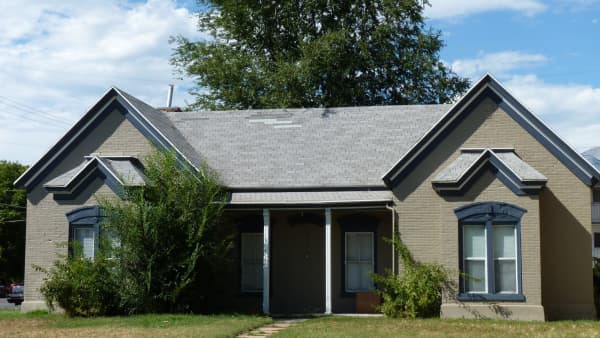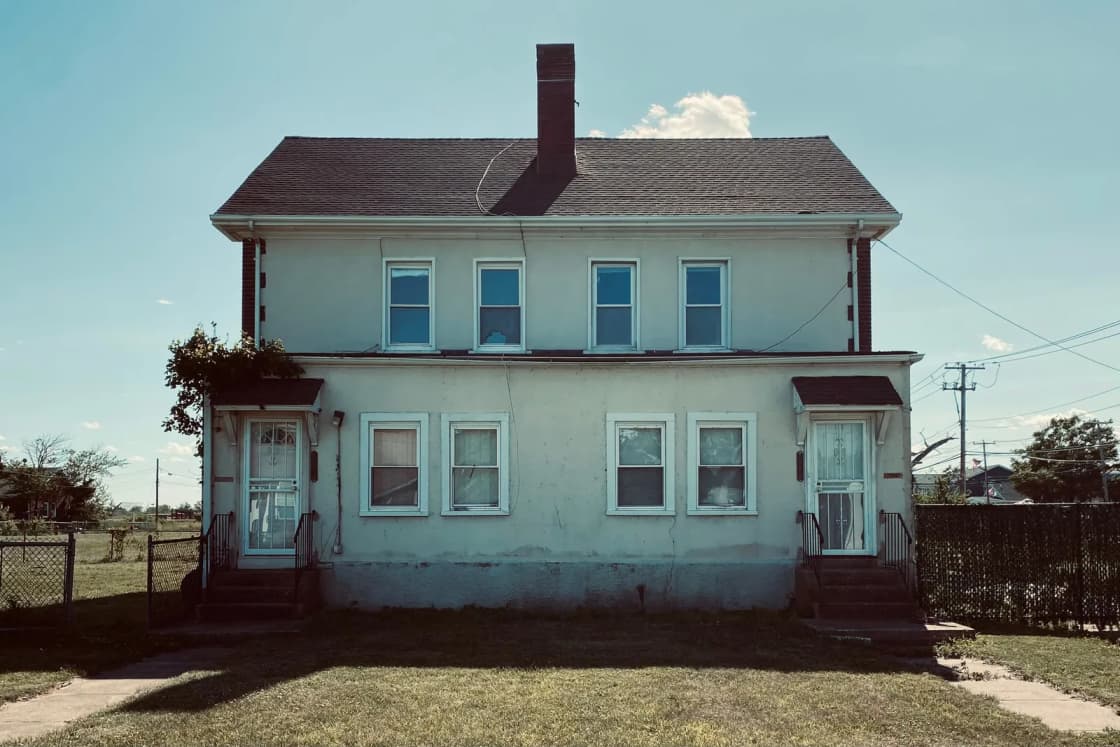

House-hacking means buying a home with a second unit, living in one part and renting the other so the tenant's rent covers some of your mortgage. In Provo, with two universities and a deep rental market, it is an obvious plan for graduate students, young families and first-time buyers. But the legality of the second unit, not the rent it could bring, is what makes or breaks the purchase, and Provo is stricter about that than most cities.
There are two versions. A duplex (or triplex or fourplex) has separate units by design. A single-family home with an accessory apartment, usually a basement, has one primary home and one smaller unit the city has approved as an accessory dwelling unit, or ADU. They are financed differently and regulated differently. This guide covers both, with Provo's rules as published in its municipal code in October 2026. It is general information, not legal or financial advice; before buying, get the city's written word on the specific address.
Start here: the city decides, not the listing
A listing that says "mother-in-law apartment," "separate entrance" or "income potential" is describing a floor plan. Whether a tenant can legally live there is a separate fact, recorded in city and county records. Our Provo zoning guide explains the zones where ADUs are permitted and why one commercial summary site got Provo's owner-occupancy rule wrong. Our BYU-area rental investment guide describes buyers who paid for basement kitchens and then had to remove them.
The rule of thumb: buy on what the city says in writing, not on what the seller has been doing.
The basement apartment: Provo's ADU standards
Provo's ADU development standards are in City Code 14.30.030, last amended by Ordinance 2025-60. Here is what they require, in the order that tends to kill deals.
Owner occupancy. Either the main dwelling or the ADU must be occupied by an owner-occupant, "or no ADU is permitted." This is the line that separates a house-hack from an investment property. You cannot buy a house with a legal basement apartment and rent both halves. The exception is narrow: a temporary absence for a job assignment, sabbatical, or military or voluntary service of three years or less, or a stay in a hospital or care facility, filed with the city before you leave, after you have lived there at least a year. Indefinite absences do not count.
Provo's rental code defines an owner-occupant as a person with at least 50 percent ownership whose primary residence is the dwelling, or a family trust set up for estate planning whose trustor lives there.
One ADU, in the right zone. One ADU per single-family detached dwelling, in zones where the city allows them. Provo's zoning office (801-852-6427) confirms the zone for an address.
Occupancy. The main unit is limited to one family, and when the ADU is occupied, that family loses the two extra unrelated individuals Provo's family definition otherwise allows. The ADU may house no more than three adults, related or not, plus their minor children.
Parking. At least four off-street spaces. Two may be tandem (one behind the other) on a driveway. Driveway parking in the front yard is allowed only if the driveway leads to the required covered spaces or the property is on Provo's Landmarks Registry. There must be enough spaces for every vehicle kept on the property. On a narrow older lot, count the spaces before anything else.
Appearance. The house must keep its single-family look. Only one front entrance visible from the front yard; the ADU entrance goes on the side or rear. No visible sign of a second household from the street, such as two front doors.
Interior connection. The rental license application requires floor plans showing the interior connection between the two units.
Utilities. An internal ADU may have one or two meters each for water, gas and electricity, all in the owner's name. A detached ADU needs its own separate meters, also in the owner's name.
Address. The ADU gets its own address from Provo City.
Building codes and permits. Existing construction must meet the codes in effect when it was built or remodeled; new ADUs must meet current codes. Building permits may be required in addition to the license. Our guides to finishing a basement and building permits in Provo cover egress windows and the permit process.
No outstanding violations. No ADU is allowed on a property with unresolved ordinance violations.
The deed restriction. The owner must cooperate with Provo's Development Services Department in recording a deed restriction with the Utah County Recorder. It runs with the land for as long as the property has an ADU. That recorded document is also one of the best pieces of evidence a buyer can find that an apartment was approved.
Detached ADUs (a backyard cottage or a unit over a detached garage) have extra standards: smaller than the main house in footprint and height, at least 200 square feet, at least 10 feet from property lines unless the house's own setback is less, and permanently attached to a foundation. Utah's 2026 law on detached ADUs, which binds cities from October 2026, is covered in our detached ADU explainer and the news update on Provo's ordinance.
The rental license, and why it does not come with the house
Anyone operating an ADU in Provo must hold a rental dwelling license under City Code Chapter 6.26. The ADU code adds conditions on top of the general license:
- a scaled site plan and floor plans with the application;
- the fee from Provo's Consolidated Fee Schedule;
- annual renewal, with proof each time that the home is the owner's primary residence;
- and the license expires one year after approval or when the property is transferred, whichever comes first.
That last rule matters most to a buyer. The seller's license does not convey with the house. Provo's general rental code, 6.26.020, also says licenses are not transferable between persons and that a new owner must obtain a new one. When you buy a home with a legal ADU, you are buying a property the city has approved for an accessory apartment, plus the right to apply for a license as its new owner-occupant.
Two more points from the city's rental FAQ: a license is required even when renting to relatives and even when no rent is charged, and short-term rentals are not permitted in residential zones. A basement Airbnb is not a Provo house-hack. Our guide to short-term rental rules in Utah Valley explains where they are allowed.
The duplex: separate units, different questions
A true duplex is two dwelling units on one lot, typically in a zone that allows two-family dwellings or as a legal nonconforming use from an earlier zoning era. The ADU owner-occupancy rule does not apply to a duplex as such, because neither unit is an accessory apartment. The questions are different:
- Is it legally two units? Ask Provo for a zone verification, which confirms the permitted use and occupancy. An old house split into two apartments without approval is not a duplex.
- What is each unit's legal occupancy? Each dwelling unit carries its own limit. "It's always been rented to five" describes a violation, not an entitlement.
- Is there a rental license? Any unit occupied by someone other than an owner needs one.
- Does the parking work? Provo's rental parking standards in 6.26.110 require the greatest of what was required when the dwelling was created, the number of legal spaces on August 17, 2004, or one space for each occupant vehicle.
Our guide to student rental economics explains how per-bed student pricing changes the math on a duplex near campus.
Financing a house-hack
The loan is where a house-hack beats a pure investment purchase, because living in one unit makes it a primary residence.
FHA. HSH lists Utah County's 2026 FHA limits at $601,450 for one unit, $769,950 for two, $930,700 for three and $1,156,650 for four. HUD's flyer describes FHA down payments "as low as 3.5 percent." You must occupy one of the units. For three- and four-unit FHA purchases, lenders apply a self-sufficiency test, which in broad terms requires that a vacancy-discounted share of the property's expected rent (75 percent is the figure lenders describe) cover the full mortgage payment. Our FHA, VA and USDA guide covers FHA's mortgage insurance, which on a minimum-down loan lasts for the life of the loan.
VA. VA.gov lists single-family homes of up to four units among eligible property types, with occupancy required.
Conventional. Fannie Mae has allowed as little as 5 percent down on owner-occupied two- to four-unit homes since November 2023, according to National Mortgage Professional's report on the change. Under Fannie Mae's gift guideline, a borrower with more than 80 percent financing on a two- to four-unit home must put in 5 percent from their own funds before gifts can cover the rest.
Utah Housing Corporation. UHC's FHA/VA program has a two-unit, owner-occupied version with an income limit of $165,200 plus annual qualifying rental income in Utah County. Our Utah Housing guide covers the program and its down payment loans.
Provo City's down payment loans. Provo's down payment assistance lists "homes with a legal accessory apartment" among eligible properties and says the home cannot be rented while the loan is in place except for a legal ADU. For a lower-income first-time buyer, that makes a Provo basement apartment house-hack one of the few rental arrangements the city's own assistance supports.
Counting the rent. Whether a lender will count the expected rent from the second unit toward your income, and how much of it, varies by loan type and by whether the unit is a legal ADU or a second unit in a duplex. Ask each lender the same question in writing: how will you treat the rent from this specific unit? Our guide to shopping a mortgage lender in Utah covers how to compare the answers.
Due diligence, in order
The Utah REPC gives you a due diligence window to investigate "regulatory use restrictions or violations." For a house-hack, this list is the investigation:
- Ask the seller for the paper. The current rental dwelling license, the ADU approval, building permits for the basement finish, and any notices from the city. Section 7 of the REPC requires the seller to disclose known building or zoning code violations; our guide to seller disclosures explains that duty.
- Get the city's answer. Apply for a zone verification through Provo's web portal or call Zoning at 801-852-6427. Ask the zone, whether an ADU or two-family use is permitted, and the legal occupancy.
- Search the county. The Utah County Recorder's online document search shows recorded documents on a parcel, including an ADU deed restriction if one exists. The office is at 100 East Center Street, Suite 1300, in Provo.
- Count the parking. Four off-street spaces for an ADU, meeting the city's standards.
- Check egress and safety. Basement bedrooms need proper egress. Have your inspector look at the apartment as carefully as the main house. Our guide to inspections and appraisals covers what an inspector does and does not check.
- Read the existing lease. Under REPC Section 6.1(a), you take title subject to long-term leases that run past closing. If the current tenant's lease runs through August, you inherit it.
- Plan the license. Your new license application needs your proof of primary residence. Apply right after closing; the seller's license ends at transfer.
Our guide to REPC deadlines explains why all of this needs to be done, or the contract canceled in writing, by the Due Diligence Deadline.
When the plan changes
Plan the exit at purchase, because the rules that govern it are fixed before you close:
- If you move out and want to rent both units, a legal ADU cannot do that under Provo's owner-occupancy rule, beyond the temporary-absence exception. A true duplex can, with licenses for each rented unit.
- If you sell, the next buyer must qualify as an owner-occupant to keep the ADU in use, which shapes who your buyers are. Our guide to selling a home in Provo covers the rest of that process.
- If you refinance, any assistance loans recorded behind your mortgage have their own rules about subordination. Our guide to refinancing in Utah covers what to ask.
Frequently Asked Questions
Is it legal to rent out a basement apartment in Provo?
Does the rental license transfer when I buy a house with an ADU?
Can I buy a house in Provo and rent both the upstairs and the basement?
How many people can live in a Provo house with a basement apartment?
What is the FHA loan limit for a duplex in Utah County?
Can I use a conventional loan with 5 percent down on a duplex?
Can I Airbnb my basement apartment in Provo?
How do I check whether a house's basement apartment is legal before I buy?
Sources
The facts in this guide were checked against these sources. Hours, fees and rules change, so confirm anything time-sensitive with the source before you go. How we make Provo.com.
- Rental dwelling license FAQ, Provo City. Checked October 19, 2026.
- Provo City: Zoning FAQ, Provo City. Checked October 19, 2026.
- FHA-insured Mortgages are Good Choices (consumer flyer, rev. 8/7/2025), HUD. Checked October 19, 2026.
- VA purchase loan, U.S. Department of Veterans Affairs. Checked October 19, 2026.
- Down Payment Assistance, Provo City. Checked October 19, 2026.
- Utah County Recorder, Utah County. Checked October 19, 2026.
- Provo City Code 14.30.030, ADU Development Standards, Provo City. Checked October 19, 2026.
- Provo City Code 6.26.020, License Required, Provo City. Checked October 19, 2026.
- Provo City Code 6.26.050, License Fee, Provo City. Checked October 19, 2026.
- Provo City Code 6.26.110, Minimum Parking Requirements, Provo City. Checked October 19, 2026.
- FHA self-sufficiency test, Neighbors Bank. Checked October 19, 2026.
- B3-4.3-04 Personal Gifts, Fannie Mae Selling Guide. Checked October 19, 2026.
- Income and purchase price limits, Utah Housing Corporation. Checked October 19, 2026.
- Real Estate Purchase Contract (effective Dec. 4, 2024), Utah Division of Real Estate. Checked October 19, 2026.
- Fannie Mae slashes down payment requirements for multifamily homes to 5%, National Mortgage Professional. Checked October 19, 2026.
- 2026 FHA Loan Limits for Utah, HSH.com. Checked October 19, 2026.