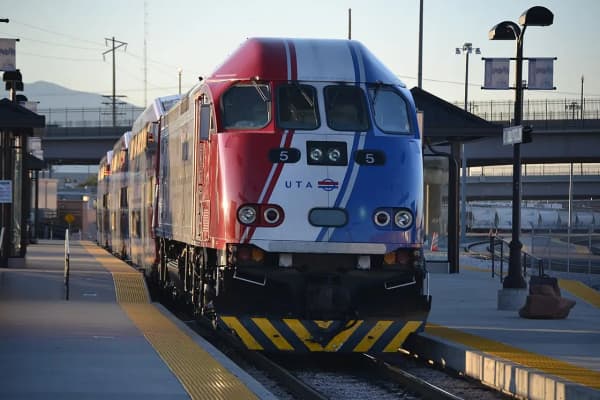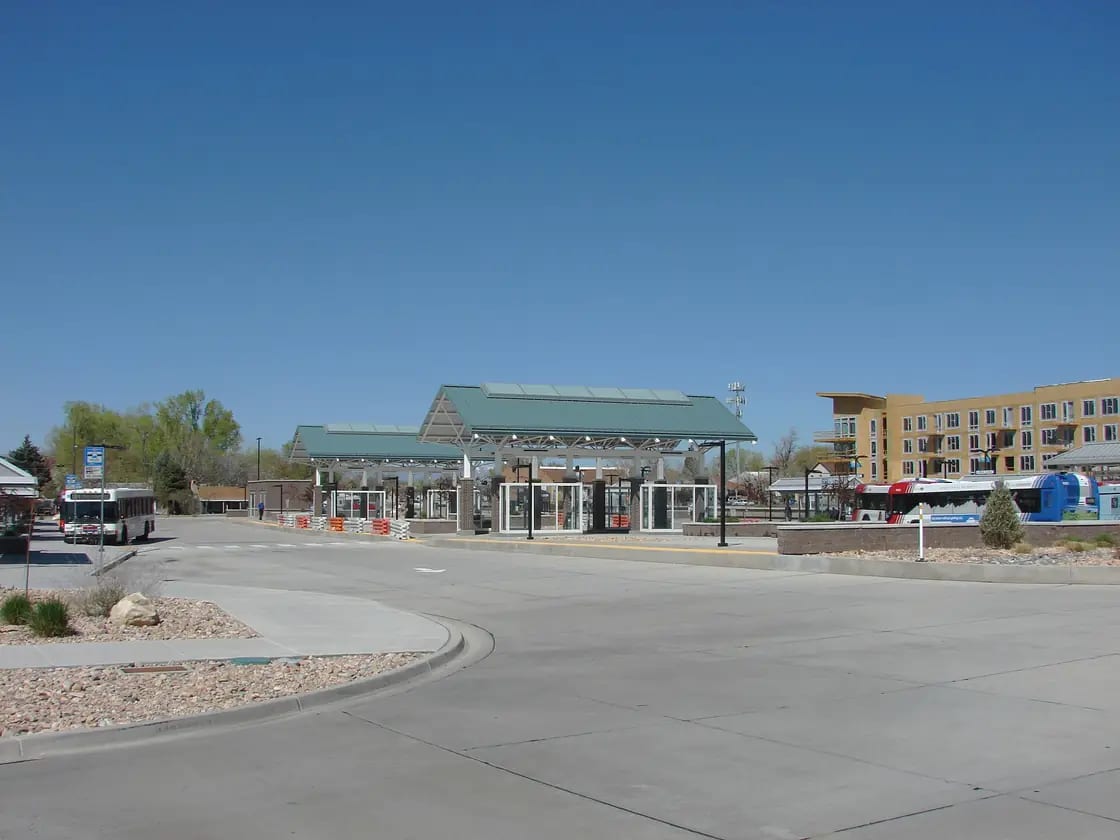

Utah County has a form of public transit that a lot of people who live here have never heard of, do not know they are standing inside the service area of, and would use tomorrow if somebody explained it in one sentence. So here is the sentence: in parts of the county you can open an app, ask for a van, and be picked up near your door and dropped near your destination for $2.50.
It is called UTA On Demand. It has run on the west side of Provo and Orem since April 2025. And on Fall Change Day — 16 August 2026 — UTA switched on a second, substantially larger zone across the north end of the county. Because On Demand does not operate on Sundays, the north-county zone's first actual day of service was Monday the 17th, which is a small piece of trivia that also tells you something useful about how the service works.
What it is
The formal term is microtransit, and the honest description is that it is a shared van you summon.
You enter a pickup and a destination in the UTA On Demand app. The system matches you with other riders heading in a similar direction, routes a vehicle, and shows you where to meet it. The meeting point is usually close but not always literally your address — the app may ask you to walk to the corner, because a vehicle that never has to turn around serves more people per hour. UTA contracts the operation to Via, which supplies the drivers and the vehicles.
The important structural fact is that it is not a taxi and it is not a fixed route. It has no timetable, so it cannot be late in the way a bus is late. It also has no guaranteed direct path, so it can take longer than the same trip by car, because it may collect somebody else on the way. What you are buying for $2.50 is coverage in places where running a scheduled bus every thirty minutes would mean running an almost-empty bus every thirty minutes.
That is the actual policy problem it solves. Utah County's west side and its northern cities have grown faster than the fixed-route network, and a lot of that growth is low-density subdivision where a bus route pencils out badly. Microtransit is the answer transit agencies across the country have converged on for exactly that geometry.
The West Provo and Orem zone
This is the one that has been running quietly for over a year, and it is the one most Provo readers can use.
Service began in April 2025. The zone covers about 8.6 square miles across the west side of both cities. The published boundary runs north from Lakeview Parkway on the west side of Provo up to the south side of University Parkway, directly across from Utah Valley University.
The destinations UTA named when it launched the zone are a good map of who it is for: Provo Airport, a sports park, Provo High School, Centro Hispano, Provo City Hall, and both the Provo and Orem Central FrontRunner stations. Three further stops sit just outside the zone proper but are still served — Utah Valley Hospital, Orem Central Station and the Provo Rec Center.
Read that list again and the design intent is obvious. This is a zone built to connect the least transit-served quadrant of Provo to the three things people in it most need to reach: a train station, a hospital, and city hall. The airport is a bonus that gets a disproportionate share of the attention.
Within the same footprint UTA also runs FrontRunner's Provo and Orem stations and several fixed bus routes. On Demand is the connective tissue between those and the neighborhoods around them.
One detail worth flagging, because our sources disagree and we would rather say so than pick one. UTA's own Utah County system map labels Zone 581 West Provo as operating Monday through Friday, 6 a.m. to 9 p.m. Via's rider-facing page and contemporaneous news coverage of the launch both say Monday through Saturday, 6 a.m. to 9 p.m. We have not been able to reconcile those, and the difference is a whole Saturday. If you are planning a Saturday trip, confirm in the app before you rely on it — the app reflects live dispatch and a printed map does not.
The new north-county zone
The 2026 Fall Change Day zone is the larger of the two by a wide margin: about 77 square miles, against 8.6.
It covers portions of Eagle Mountain, Saratoga Springs, Lehi, American Fork, Pleasant Grove, Lindon, Highland, Cedar Hills and Alpine. The word portions is doing real work in that sentence — a zone this size across nine municipalities is not a blanket over all of them, and the app's own boundary check is the authority on whether a specific address is inside it. Service is sponsored by Utah County and the Utah Department of Transportation.
Two rules govern this zone that are worth knowing before you plan around it. First, the maximum trip distance is about six miles, with exceptions made to connect riders directly to FrontRunner stations. Second, during peak hours eligible riders may be matched to a Lyft vehicle instead of a Via van — you do not need the Lyft app for this, and it is a capacity valve rather than a different product.
The six-mile ceiling is the one that surprises people. It is a deliberate statement that this is a local-connection service, not a county-wide substitute for a car. A ride from a Saratoga Springs subdivision to the Lehi FrontRunner station is exactly the trip it was built for. A ride from Eagle Mountain to American Fork Hospital probably is not.
What it costs, and the transfer that makes it worth it
The fare is $2.50 for a standard adult one-way, and $1 for riders who qualify for reduced fare.
The number that matters more is the transfer window. That single fare includes transfers to bus, TRAX or FrontRunner within two hours. So the real product is not a $2.50 van ride. It is a $2.50 van ride plus the train, which reframes the whole thing: On Demand is the first-mile leg of a FrontRunner commute for people who currently drive to the station and park.
Payment runs through the app using a credit or debit card, a FAREPAY card, or a pass linked to your account — an Eco Pass or a Student Pass both work. You can also pay with a valid UTA paper or mobile ticket by selecting the paper-ticket option under payment methods and showing it when you board. Cash is not accepted.
If you do not want to use the app, or you are helping somebody who cannot, UTA takes bookings and account setup by phone at 385-217-8191.
How it compares to the alternatives
The honest way to evaluate this is against what a west Provo resident would otherwise do, not against an idealised transit system.
Against driving. A car wins on speed and on Sunday. It loses on parking at the FrontRunner station, on the second-vehicle payment, and on the days somebody else in the household needs it. The realistic framing is not car versus van — it is whether a household can go from two cars to one, or from one to none, and On Demand only ever removes the marginal trips at the edges of that decision.
Against a rideshare app. Uber or Lyft will take you anywhere, at any hour, on Sunday, without a zone boundary. It will also cost several times as much, and the gap widens on short trips where the base fare dominates. For a two-mile hop to the train, $2.50 against a typical rideshare minimum is not close.
Against the bus. Where a bus route already runs frequently, the bus is usually better — it is more predictable and it does not detour to collect anybody. The app enforces this preference on your behalf. On Demand is for the trips where the nearest useful stop is a fifteen-minute walk in February.
Against walking or biking. In good weather across a flat west-side grid, a bike is competitive for the short trips, and the Provo River Parkway and Lakeview Parkway trails make more of the zone rideable than people expect. The van's advantage is weather, cargo, and anyone who cannot cycle.
The history behind the zone
UTA did not invent this for Utah County. The agency first tested microtransit in southwest Salt Lake County in 2019, in an area with the same problem — recent, spread-out growth that fixed routes served badly. The pilot became permanent two years later, and the model then spread to Salt Lake City's west side, southern Davis County and Tooele County before it reached here.
UTA called the West Provo/Orem zone its fourth On Demand zone and the first in Utah County when it opened in April 2025, and the launch was marked at Provo Airport with the mayors of both cities present. Provo's Michelle Kaufusi framed it as getting ahead of growth rather than reacting to it; Orem's David Young described it as the piece that ties the city's existing FrontRunner, bus rapid transit and conventional bus service together. Whatever one makes of launch-event language, the framing was accurate about the gap being filled: Orem already had three layers of transit and still had neighborhoods that could not reach any of them without a car.
The 2026 north-county expansion is the same logic applied to the fastest-growing municipalities in the state. Eagle Mountain and Saratoga Springs have added population at a rate no fixed-route plan has kept up with, and a 77-square-mile flexible zone is a far cheaper answer than the bus network that geography would otherwise demand.
Who this is good for
After a year of the Provo zone running, the use cases that hold up are narrower and more specific than the marketing suggests, which is normal for microtransit and not a criticism.
People connecting to FrontRunner. This is the strongest case by a distance. If you live on Provo's west side and work in Salt Lake, the weak link in your commute has always been the two miles between your house and Provo Central Station. A $2.50 van that includes the transfer removes the parking question entirely.
Households running one car. A very common Utah County arrangement is two working adults and one vehicle. On Demand does not replace the second car, but it covers the specific gap where one person needs to be somewhere the other cannot drive them, inside a defined area, on a weekday.
Anyone who cannot drive right now. Post-surgery, a suspended license, a teenager before sixteen, an older adult who has stopped driving at night. The zone's inclusion of Utah Valley Hospital as a served destination is not accidental.
Riders who use mobility devices. The accessible-vehicle option is built in rather than bolted on, and the Provo zone launched with a fleet UTA described as fully ADA-accessible.
People flying out of Provo Airport. With the airport inside the zone, a $2.50 curb-to-curb ride to your gate is a good deal against long-term parking, provided you are starting from inside the boundary and traveling on a day the service runs.
Who it is not for
Being straight about this saves people a frustrating first attempt.
It will not take you across the county. It will not take you to BYU from the west side, because the campus corridor is outside the zone and is already served by UVX. It does not run on Sunday. It does not run late at night in Utah County — the 6 a.m. to 9 p.m. window is shorter than the hours some Salt Lake County zones run. And if a bus already does your trip well, the app will tell you to take the bus.
That last behavior reads as a bug the first time it happens and is, on reflection, the system working correctly.
How to start
Download the UTA On Demand app, set up an account with your name, phone number and email, and add a payment method before you need one — the setup is the only slow part, and doing it at the curb in the rain is how people conclude the service is difficult. Enter your pickup and destination, check that both are inside the zone, choose the ride, and watch for the meeting point the app assigns you. If you use a mobility device, turn on wheelchair accessibility in your profile first, because that setting governs dispatch.
Then give it two or three trips before you judge it. Shared microtransit has a variance problem that averages out: the ride that takes nine minutes and the ride that takes twenty-two are the same service on different days, and one sample of either tells you very little.
What to watch next
The interesting question for Utah County is whether these two zones stay two zones. UTA's pattern elsewhere has been to launch a modest pilot, watch the ridership, and then widen the boundary or extend the hours rather than add wholly new areas, and some Salt Lake County zones now run longer hours than either Utah County zone.
The other thing to watch is the gap between the two Utah County zones. Orem's north edge and Lindon's south edge are close enough that a rider looking at the map will reasonably ask why they are separate. The answer today is funding and sponsorship — the north zone is county- and UDOT-sponsored — rather than geography. That is the kind of answer that changes.
What on-demand service changes about the rest of your week, and what it does not
The sections above cover the zones, the fare and who benefits. The question that decides whether this becomes part of your life or stays a curiosity is a different one: which of your trips does it actually absorb?
The useful way to think about it is that a fixed route is a promise about place and an on-demand service is a promise about coverage. A bus route tells you exactly where it will be and roughly when. An on-demand zone tells you it will come to you somewhere inside a boundary, with a wait that varies. Those suit different trips, and the mistake is expecting one to behave like the other.
Trips it absorbs:
- The trip that starts or ends more than a comfortable walk from a route. This is the whole point, and it is where the service is not competing with anything — the alternative was a car or not going.
- The connection. Reaching a frequent route or a rail station is where on-demand is strongest, because the unpredictable part is short and the reliable part carries the distance. The transfer arrangement described above is what makes this arithmetic work.
- The off-peak errand. Midday trips, when fixed-route frequency is thinnest, are when the comparison flatters on-demand most.
- The one-way trip. Getting a lift one direction and taking on-demand back is a very common real pattern and a completely legitimate one.
Trips it does not absorb, and pretending otherwise leads to disappointment:
- Anything with a hard arrival time and no slack. A variable wait is fine for an errand and unsuitable for a shift start or a flight. If the consequence of being fifteen minutes late is serious, this is not the tool, or it is the tool with a very large buffer.
- Anything crossing a zone boundary in an awkward direction. Zone edges are real, and a trip that straddles one is often worse than either a pure fixed-route trip or a car.
- The trip with a lot of cargo, or with small children and their equipment. Physically possible; rarely the thing you want to be doing repeatedly.
The honest way to try it
Give it a fortnight rather than a trip. The first ride teaches you almost nothing except the mechanics of the app, and first rides skew negative because everything is unfamiliar. What you learn in two weeks is the actual distribution of wait times at the times you travel, which is the only number that matters and is not knowable in advance. Then decide, with data about your own week rather than someone else's.
Related Guides
- Getting Around Provo: FrontRunner, UTA & Commuting Guide
- The UVX Is the Best Thing About Getting Around Provo
- FrontRunner from Provo: What to Know Before You Ride
- The UVU Commuter Survival Guide
- Car Ownership in Utah Valley
- Flying from Provo Airport (PVU): The Complete Guide
- SLC to Provo: Getting Here from the Airport
- Working at Provo Airport: Who Actually Hires There
- The Complete Guide to Provo Neighborhoods
- UTA Fares and Passes Explained for Utah County
Frequently Asked Questions
What is UTA On Demand?
How much does UTA On Demand cost?
Which parts of Utah County have UTA On Demand?
Does UTA On Demand run on Sunday?
Can I take UTA On Demand from Provo to Lehi?
Is UTA On Demand wheelchair accessible?
Do I need a smartphone to use UTA On Demand?
Why did the app give me a bus instead of a van?
Is UTA On Demand a realistic replacement for driving in Utah County?
Sources
The facts in this guide were checked against these sources. Hours, fees and rules change, so confirm anything time-sensitive with the source before you go. How we make Provo.com.
- Utah Transit Authority: UTA On Demand, Utah Transit Authority. Checked October 12, 2026.
- UTA launches On Demand service in northern Utah County, Utah Transit Authority. Checked October 12, 2026.
- Utah Transit Authority to highlight new On Demand service in West Provo/Orem at the Provo Airport, Utah Transit Authority. Checked October 12, 2026.
- Provo, Orem leaders hope new UTA service will fill 'gaps' in fast-growing county, KSL.com. Checked October 12, 2026.
- New way to get around: UTA ride share service launched in northern Utah County, Daily Herald. Checked October 12, 2026.