
For fifty years, the Delta Center's problem for Utah County has been the same: it is 45 miles north, up the most congested freeway in the state, and every event starts right when the freeway is worst. That has not changed. What has changed, since 2024, is everything else — the arena has a second major tenant in the Mammoth, the building has been gutted and rebuilt around it, a new garage is opening on its corner, and downtown Salt Lake is being rearranged around a sports district that will keep changing through 2034.
So the trip needs a fresh plan. This is it: the three ways to get there and the last-train problem that decides between them, the six parking lots by name and price, the arena as it is now, the bag policy, the food, and the honest timing math for a family leaving Provo at 5 on a Tuesday.
Prices and hours are the most recent the arena and UTA have published; garage rates and train schedules change by season and by event. Confirm the specific night before you leave.
The Three Ways Up
There are three realistic routes from Utah County to a seat at the Delta Center, and each has a cost you pay in a different currency.
Drive and park. Fifty minutes from Provo to downtown in clear traffic, 80 or more at the weekday peak, then a garage at about $20 and a walk of a block or three. You pay in traffic and parking; you get to leave when you want.
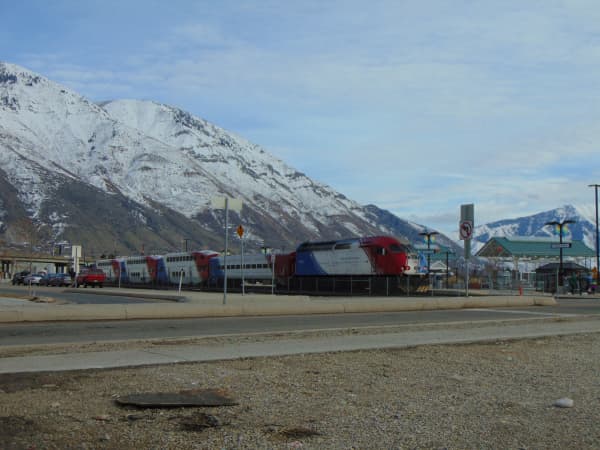
FrontRunner. UTA's commuter rail runs from Provo Central and Orem Central (and Lehi, American Fork, and Vineyard) to Salt Lake Central in about an hour, and the arena is a ten-minute walk or a free TRAX hop from there. You pay in schedule; you get to skip I-15 and the garage entirely. The catch, and it is a real one, is the return train.
Drive to TRAX. Park at a TRAX station on the south end of the line — the Draper, Sandy, or Murray park-and-rides on the Blue Line — and ride light rail to the Arena station beside the Delta Center. You pay in a longer total trip; you skip downtown parking and the worst of the I-15 stretch, and TRAX runs until around midnight.
Which one wins depends on the start time, the day of the week, and how late you are willing to be on a platform.
The FrontRunner Plan, and the Last-Train Problem
FrontRunner is the civilized option for a Salt Lake game, and Utah Valley residents underuse it. From Provo Central, at 600 South and Freedom Boulevard, or Orem Central, off University Parkway near the UVU campus, the train runs north hourly on weekday evenings and less often on Saturdays, reaching Salt Lake Central at 600 West and 250 South in roughly an hour. From Salt Lake Central, the Delta Center at 301 West South Temple is a ten-minute walk north and east, or a one-stop ride on the Blue or Green Line TRAX to Arena, which is free because both stations are inside UTA's downtown free-fare zone. Our FrontRunner from Provo guide has the stations, fares, and the app.
Going up, it is nearly perfect: a 5:30-ish departure from Provo lands at 6:30 for a 7 p.m. tip, with time to walk over and clear security.
Coming back is the problem. FrontRunner's last southbound departures from Salt Lake Central run late in the evening on weekdays but not late enough for every event, and a Jazz game that tips at 7 rarely ends before 9:30; add the walk and a Mammoth overtime and you are on the platform at 10:15 hoping. On some nights the last train leaves before that; on Saturdays the schedule thins; on Sundays FrontRunner has not run at all. A concert with an opener and an encore ends at 11 and is not a FrontRunner night.
So the rule: before you buy the game ticket, open the UTA app, find the last southbound FrontRunner from Salt Lake Central on that date, and subtract 45 minutes. If the game will plausibly end after that, drive.
The Drive, and When to Leave
The drive from Provo to the Delta Center is I-15 north to the 600 South or 400 South exits, then a few blocks west. In free-flowing traffic it is 50 minutes from the University Parkway on-ramp. On a weekday between 4 and 6 p.m., it is not; the Point of the Mountain and the stretch from 2100 South into downtown are where a 50-minute drive becomes 80, and a crash anywhere on the Utah County side adds more. Saturday afternoons are fine; Friday evenings are worse than Tuesdays.
For a 7 p.m. weeknight game, leave Provo by 5. For a weekend game, 5:30. For a 5 or 6 p.m. Mammoth start on a weeknight — which the NHL schedules more often than the NBA does — treat the drive as the evening commute, which it is, and leave by 3:30 or accept the second period. Add fifteen minutes for the garage and ten for the walk and the bag check.
Coming home, the freeway is empty at 10 p.m. and the drive is 45 minutes. This is the drive's real advantage over the train: the return is the easy half.
Two small things. Northbound I-15 through Lehi and the Point has express lanes that are toll for solo drivers and free for carpools of two or more with a transponder or the app, and a family of four qualifies. And the arena is on the west side of downtown, which means the 600 South exit and a westward run on 200 South or 400 West beat the 400 South exit into the heart of it.
The Six Lots, by Name
The Delta Center's parking page lists its lots, and knowing them by name saves the circling. All are within about three blocks.
Park Place, 50 North 300 West. 1,260 uncovered stalls, the closest large lot, immediately northwest of the arena. Game-by-game passes are sold through ParkWhiz; enter the arena at Door 5. This is the one to prebook.
The Gateway, 75 South 400 West. 2,200 covered stalls in the mall's structure directly across the street to the west; enter the arena at Door 8. The biggest, the most reliably available, and the one with restaurants attached. Validation policies at the Gateway's businesses vary by night.
The Triad Center, 50 South 300 West. 1,475 covered stalls in the office complex a block south; enter at Door 2. Good on weeknights when the office tenants have left.
Salt Palace parking, under and around the convention center east of the arena, with entrances on 200 West and West Temple. Convenient when there is no convention.
City Creek, 50 East South Temple. The mall's structure three blocks east; a longer walk but a good dinner-then-game option.
The Hyatt House, 300 West 140 South. A smaller structure a block south with game-night rates.
Beyond these, the arena's page notes a lot at 118 North 300 West with about 200 stalls where a $35 spend at Crown Burger on game night has earned a parking pass, and another at 241 North 300 West with variable pricing. Metered and free street parking exists on the downtown blocks for the patient, but the marked spaces in front of the arena are used by police and support vehicles on game nights and should not be counted on.
Expect around $20 for a structure within three blocks, more for the nearest on a big night. The new 450-stall garage on the arena's southwest corner at 200 South and 400 West was announced to open before the 2026-27 season; check the arena's parking page for whether it has and what it charges.
The Drive-to-TRAX Compromise
For families who do not want to pay downtown parking and do not trust the last train, the middle path is to drive to a TRAX park-and-ride on the south end of the Blue Line — Draper Town Center, Sandy Civic Center, or Murray Central are the usual ones — park free, and ride light rail to the Arena station, which is directly beside the Delta Center. The ride from Draper is about 40 minutes; TRAX runs until around midnight, which covers any game and most concerts; and the fare is UTA's standard rate since those stations are outside the free zone.
The total trip is longer than driving all the way — the drive to Draper is 30 minutes from Provo, then 40 on the train — but it removes the two worst parts of the trip, the downtown stretch of I-15 and the garage, and it lets a teenager or a group ride without a driver's attention. On a Friday night in December it is often the fastest door-to-seat option of the three.
The Arena Now
If your last Delta Center visit was before 2024, the building has been rebuilt around you.
The Mammoth's arrival in 2024 forced a hockey configuration into an arena designed for basketball, and the first summer's work reset the lower bowl for both sports. The full renovation began in April 2025 and rebuilt the lower bowl with a new seating layout that fixed hockey sight lines, added clubs, dining, and social areas, and revamped all six levels. Summer 2026 work targeted the north end of the upper bowl and the southwest garage; the south upper bowl is slated for the 2027 offseason; concourse and plaza changes were teased without dates. Through at least 2027, expect fencing on the plaza and a building that is finished on one end and not on the other.
Capacity is about 18,200 for basketball and roughly 16,000 for hockey, with the renovation targeting about 17,000. The arena's app handles tickets, mobile ordering, and the map; more than 400 televisions and arena-wide wi-fi were part of the first renovation. The premium tiers — the Delta Sky360 club, the Toyota Club, the Gallagher Club, the suites — have their own entrances at Doors 2, 5, and 8 with wristbands.
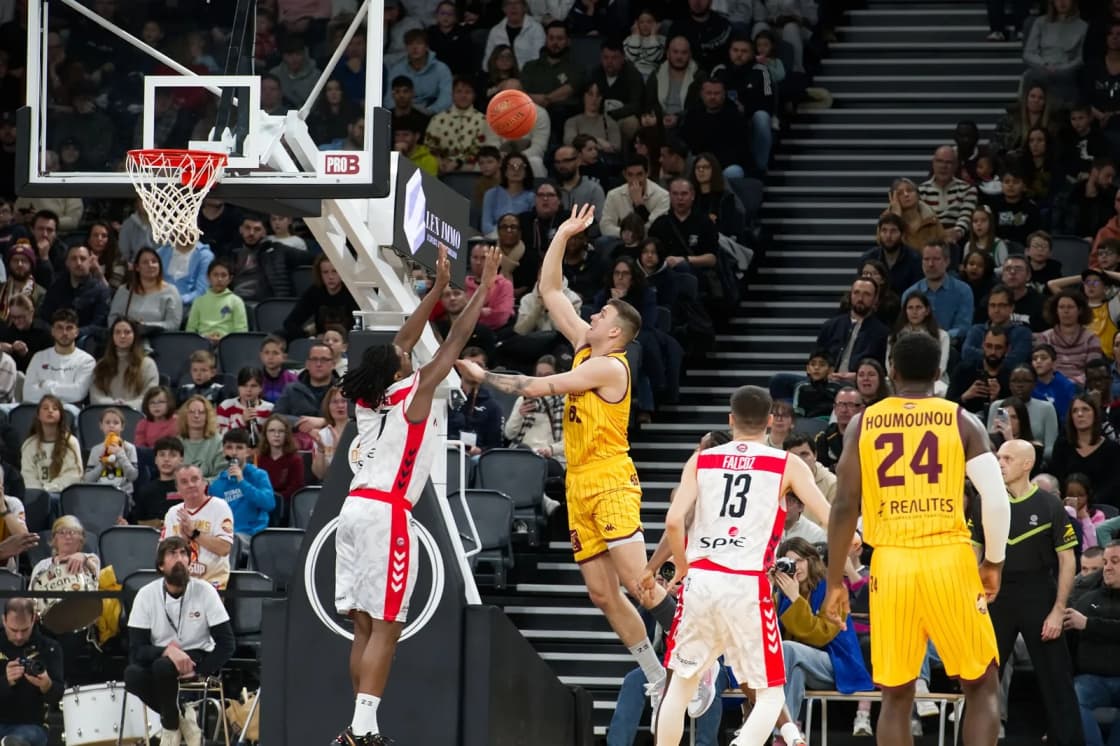
The tenants: the Utah Jazz, the Utah Mammoth (who made the NHL playoffs for the first time in April 2026), and a concert calendar that runs year-round. Our Jazz 2026-27 preview has the basketball schedule to pick from; the Mammoth's schedule posts in July.
Bags, Doors, and the Security Line
The Delta Center enforces a bag policy: small clutches and clear bags within a stated maximum size are allowed, backpacks and large purses are not, and diaper and medical bags are inspected. The exact dimensions are on the arena's guest-services page and are worth reading the day of, because they have changed. There are no lockers. A bag that fails the check goes back to the car, which from the Gateway is five minutes and from City Creek is twenty. Leave it in the trunk.
Doors open 60 to 90 minutes before tip or puck drop. The security line at Door 5 (facing Park Place) and Door 8 (facing the Gateway) is longest in the fifteen minutes before the start; arriving 45 minutes early gets you through it and into the concourse with time for food. Tickets are mobile through the arena's app and the team apps; screenshots have been refused.
Eating
The blocks around the arena have the densest cluster of pre-game restaurants in Utah, and they know the schedule. The Gateway, directly west across 400 West, is the casual cluster: chains, a food hall, and the places that turn tables fast. City Creek, three blocks east, is the upscale one. 300 West and 400 West between South Temple and 200 South have the sit-down spots that fill by 6 on game nights. Inside, the arena's concessions are the standard arena mix with local vendors and mobile ordering.
For a Utah County family, the honest alternative is to eat before leaving — the family restaurants in Provo at 4:30 are empty — and skip the downtown dinner rush entirely. Post-game, the same downtown blocks stay open until 11, and the I-15 drive-throughs at Lehi and American Fork are the 10:45 p.m. option that most families end up at.
And if the trip falls through — a school night, a storm, a sold-out game — the where-to-watch-sports guide has the Provo restaurants that will have the game on.
Concerts Are a Different Animal
Everything above assumes a game, which has a known length. A concert does not. Doors are often at 6:30 for an 8 p.m. headliner who goes on at 9:15 and plays until 11, and the Delta Center hosts the largest touring acts that come through Utah, which means 20,000 people leaving at once onto the same three blocks.
For a concert from Utah County: FrontRunner is out unless the last train is very late, which it rarely is; the drive-to-TRAX plan works only if the show ends by 11:30, and the platform at Arena after a sold-out show is a crush; driving and parking is the default, and the Gateway or the Triad Center, which empty onto 400 West and 300 West with multiple exits, beat Park Place, which funnels. Budget an hour from encore to freeway. And the bag policy is enforced more strictly at concerts than at games, with the clear-bag rule and a limit on size; a purse that passed at a Jazz game may not at a show.
Winter Adds a Variable
December through February, the trip up I-15 has one more input: the weather. A snowstorm on a game night turns the 50-minute drive into two hours and the Point of the Mountain into a parking lot, and it is the one condition under which the FrontRunner plan is unambiguously better, since the train runs on time in snow and the freeway does not. If the forecast is snow, take the train up and accept the last-train constraint, or leave Provo at 3. Our winter tires guide is about canyons but the advice about the Point applies. Downtown's garages are covered; the walk from them is not, and the sidewalks on 400 West ice over.
The Mammoth's season runs through the worst of it, which is another argument for their early weeknight starts: a 5 p.m. puck drop in January has you home before the roads freeze.
The Family Trip, Timed
A worked example, for the Jr. Jazz ticket night that most Utah County families do once a year: a Tuesday Jazz game, 7 p.m. tip, two adults and two kids from Provo.
4:30 p.m.: early dinner in Provo. 5:00: leave, I-15 north, express lane with the family in the car. 5:50 to 6:10: arrive downtown, into the Gateway garage, prebooked. 6:20: walk across 400 West, Door 8, bag check with nothing to check. 6:30: seats, popcorn, warm-ups. 7:00 to 9:30: the game. 9:45: out of the garage, which empties faster than Park Place because it has more exits. 10:30: home, kids asleep in the car since Draper.
The FrontRunner version: 5:15 train from Provo Central, 6:15 at Salt Lake Central, free TRAX to Arena or the walk, seats by 6:45, and — check the app — a last southbound train that leaves after 10:15, or it does not work. On the nights it works, it is the better evening. If you are doing it for the Jr. Jazz voucher, our Jr. Jazz guide covers how the voucher games are chosen.
Related Guides
- FrontRunner from Provo: The Complete Guide
- Utah Jazz 2026-27 Season Preview
- Where to Watch Sports in Provo
- Provo vs. Salt Lake City: Living in Each
- Jr. Jazz in Utah Valley
- Day Trips from Provo
- Family Restaurants in Provo
- Utah Valley's Pro Sports Options From Provo
- Lagoon from Provo: The Drive, the Tickets, the Days to Avoid
Frequently Asked Questions
What is the easiest way to get from Provo to the Delta Center for a game?
Where do you park at the Delta Center, and how much is it?
Can I ride TRAX to the game for free?
What is the Delta Center like after the renovation?
How early should I leave Provo for a 7 p.m. game?
What is the bag policy at the Delta Center?
Where should we eat before a game if we're driving up from Utah County?
Is it worth going to a Jazz game from Provo on a weeknight?