
Every fall, a very specific piece of paper starts circulating through Utah Valley elementary schools. It comes home in a backpack, it has a Jazz logo on it, and it sets off the same scramble in thousands of households: when is the deadline, how much is it, do we know anyone who will coach, and can he be on a team with the neighbor kid.
That piece of paper is Jr. Jazz, and it is one of the biggest youth sports programs in Utah. It is also one of the least explained. Every city runs its own version, every city posts its own dates and fees, the rules for how teams get built differ from one side of a city line to the other, and at least one city page in the valley was still showing the previous season's dates when we read them in early September. This guide is an attempt to put the whole thing in one place: what Jr. Jazz is, when and where to register in the cities that publish their windows, what it costs, how the draft works where there is one, and what you are signing up for if you check the "I'll coach" box.
A word on dates and dollars before we start. Everything below is the most recent figure a city has published as of early September 2026. Cities revise these pages every season, sometimes late, and a fee schedule can change at a council meeting. Treat the numbers as a map of the terrain, then confirm the specific deadline on your city's own page before you plan around it.
What Jr. Jazz Actually Is
Jr. Jazz is not a Utah Jazz program in the way people assume. The Jazz do not run it, do not hire the coaches, and do not own the gyms. It is a partnership: the team lends its name, its logo, a reversible jersey design, a voucher to a game, and a bit of coordination, and a network of city recreation departments across Utah, Idaho, and beyond do everything else. When you register your child for Jr. Jazz in Orem, you are registering with Orem Recreation. When you register in Provo, you are registering with Provo Parks and Recreation. The Jazz branding is the same; the program underneath it belongs to the city.
That single fact explains almost everything that confuses parents. It is why Provo and Orem open registration three weeks apart. It is why one city drafts its 7th-graders and the neighboring city assigns them by neighborhood. It is why fees differ by ten or twenty dollars across a street. And it is why a family that moves from Lehi to Saratoga Springs discovers that the whole calendar has shifted on them.
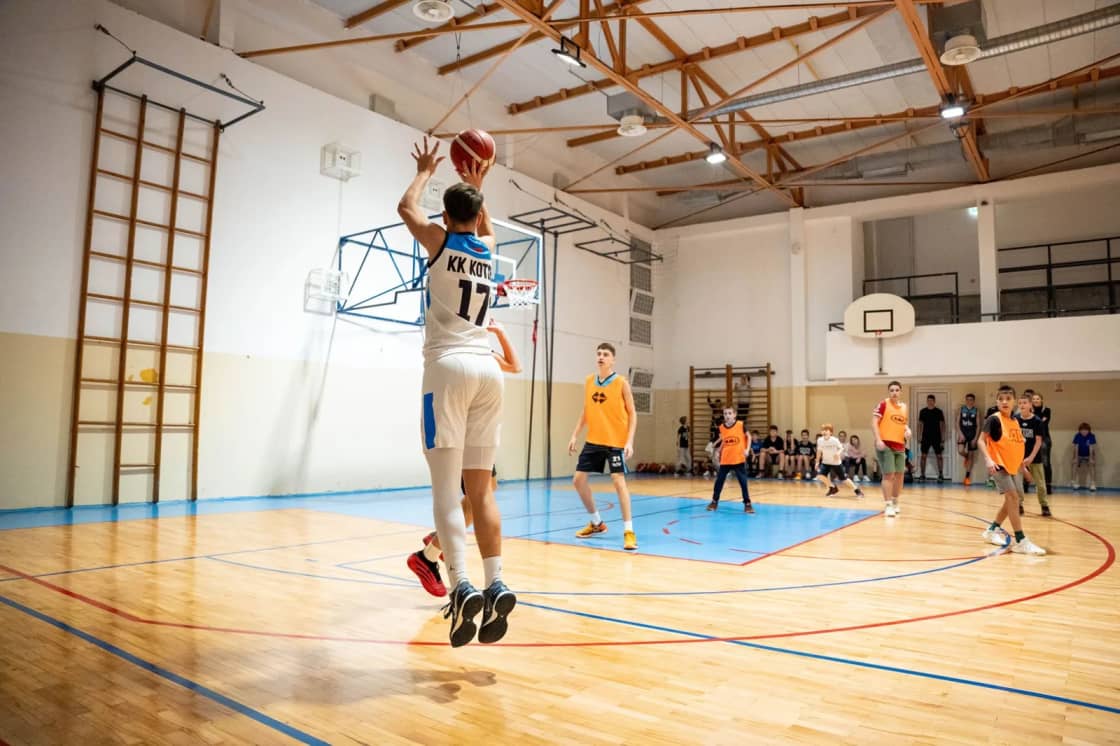
The shape of the program is consistent, though. Kids are grouped by grade, not age. The youngest divisions — kindergarten through 2nd grade — are instructional, with lowered hoops, smaller basketballs, and more practice than play. Grades 3 through 6 play a real league schedule, usually seven or eight Saturday games. Grades 7 and 8 play a longer season, often with weeknight games and a post-season tournament. Some cities run a 9th-through-12th-grade high school division that registers by team rather than by individual. Every participant gets the jersey and a voucher to a Jazz game, and every team is coached by a volunteer parent.
Who Runs It Where You Live
Because the program belongs to the city, the first question is which city's program you are eligible for. The answer is almost always the one you live in, and every city charges a non-resident surcharge — typically $10 to $25 — for families who register somewhere else. A few smaller cities combine divisions with a neighbor when they do not have enough kids to fill a bracket; Saratoga Springs notes that its older grades may play against Pleasant Grove, American Fork, Lehi, and Eagle Mountain depending on registration numbers, and Provo and Orem have combined their high school girls' leagues in recent seasons.
In Utah County, the programs you are most likely to be dealing with are run by Provo Parks and Recreation, Orem Recreation (out of the Orem Fitness Center), Lehi City Parks and Recreation (out of the Legacy Center), American Fork, Pleasant Grove, Lindon, Spanish Fork, Springville, Mapleton, Payson, Salem, Santaquin, Eagle Mountain, Saratoga Springs, Vineyard, Highland, Alpine, and Cedar Hills. The last three often coordinate with each other or with Lehi. Each has a parks and recreation page, and each posts Jr. Jazz under youth sports, basketball, or simply "Jr. Jazz."
If you have a choice — a child who attends school in one city while living in another, say — the tiebreakers are the calendar (which city's season fits your life), the format (draft or neighborhood teams), and where the games are played. Most cities play at their own junior highs and elementary schools; a 3rd-grader's Saturday game in Provo will be in a Provo gym, not across the valley.
Provo: The September 2 Window
Provo's program is run out of the Provo Recreation Center at 320 West 500 North, and it is one of the two largest in the county. Its most recent posted structure looks like this.
Little Jazz, kindergarten through 2nd grade. This is the instructional league. Registration has been running in August and September — the last posted window was August 5 to September 25, or until the league fills — with a season that runs late October into late November on Tuesdays, Thursdays, and Saturdays. The fee was posted at $55 for residents and $65 for non-residents, jersey included. Boys and girls play separately unless there are not enough girls' teams to sustain a separate league.
Grades 3 through 6. Registration opens September 2 and closes October 30. Teams are formed by school and grade; boys are separated by grade, girls play in combined 3rd-4th and 5th-6th divisions. Each player gets seven organized games, a Utah Jazz jersey, and tickets to a Jazz game. The posted fee was $65 for residents in grades 3 and 4 and $70 in grades 5 and 6, with non-residents paying $10 more. Those posted fees include a $10 early-bird discount for signing up before the registration deadline, so a late sign-up pays more. Practices start the week of November 17 and games are on Saturdays at gyms around Provo, running through late February.
Grades 7 and 8. Same September 2 to October 30 registration window, $75 for residents and $85 for non-residents, boys and girls separate. This is the division Provo builds by draft, which we cover below. The boys' season runs from mid-November into early March.
High school. Provo registers its 9th-through-12th-grade divisions by team, at a per-team fee (recently posted at $680 for a ten-player maximum), with seven league games and a double-elimination tournament. Boys' registration has run September 2 to October 30; the girls' division registers later and has been combined with Orem's, with a shared coaches' meeting in December.
Provo also runs a free Jr. Jazz Fun Shot and skills challenge for grades 3 through 12 at the Rec Center, with no pre-registration. If you want a preview of the building your kid will be practicing in, our Provo Recreation Center guide covers it.
Orem: The August 11 Window
Orem Recreation runs its program out of the Orem Fitness Center, and its calendar runs earlier than Provo's on the front end and later on the back end. The most recent posted window for grades 3 through 8 was August 11 through November 2, with no refunds after the close and late registration beginning a week later.
Orem forms all of its teams by neighborhood area, not by draft. Games run six to seven weeks at Orem's junior highs and high schools, starting in early January — the last posted season began January 10. Orem's fee has included an Alpine School District participation fee for use of district gyms, and the older division adds a post-season tournament. Check Orem's current posted fees before you register.
Orem's 9th-through-12th-grade league registers by team only. One player, usually the coach, registers and pays, and the rest of the roster signs in afterward; the city checks that no player is on two rosters. Boys play in 9th-10th and 11th-12th divisions; girls combine with other cities. That registration has run from early August into mid-December.
One caution specific to Orem: when we read the city's page in early September 2026, its "play begins" date still referenced January 2026 — last season. The registration window and fees may well be identical this year, but that is exactly the kind of page that gets updated late. Call the recreation office at the Fitness Center if the dates on the page are older than the season you are registering for.
Saratoga Springs, Lehi, and the North County Programs
The fastest-growing cities in the county run the fastest-growing programs, and they are the ones most likely to combine divisions or play against neighbors.
Saratoga Springs publishes one of the clearer structures. Its Instructional Jr. Jazz for kindergarten through 2nd grade includes eight games, a jersey, a Jazz ticket voucher, and a participation medal. Its grades 5 through 8 league is $87 for residents and $113 for non-residents, with a $15 fee for anyone coming off the wait list. Games are at local Saratoga Springs schools; 5th and 6th grade play Saturdays, 7th grade and up play weeknights and Saturdays, and older grades may be combined with Pleasant Grove, American Fork, Lehi, or Eagle Mountain, in which case the season can start as early as December. The city provides one hour of practice time a week at an elementary school; coaches pick the slot.
Lehi runs its program through the Legacy Center and lists Jr. Jazz on its fee schedule by grade band (K-4 is one band, older grades another). Lehi's page is the one to check directly, since the city has revised its youth sports fees in recent budget years.
American Fork, Pleasant Grove, Lindon, Highland, Alpine, and Cedar Hills each post their own program, and several of them share older-grade brackets. Eagle Mountain and Vineyard run their own as well. None of these should be assumed to match Provo's or Orem's dates; some open in July.
South County: Spanish Fork, Springville, Payson, and the Small Towns
South county programs tend to open later and cost a little less. Spanish Fork and Springville each run a full program through their recreation departments; Payson, Salem, and Santaquin run smaller ones, and the very small towns on the county's edges sometimes take registrations in person at the city office with a paper form and a check. Eureka, out on the west side, has historically run a K-through-8 program with sign-ups at the city office from late October into mid-November at around $45, with no late registrations accepted at all.
The pattern in the small towns is worth knowing even if you live in a big one: the program exists only because a handful of volunteers make it exist. More than one small-city flyer says outright that without volunteer coaches, referees, and scorekeepers there will be no Jr. Jazz that year. If you live in a town of a few thousand people and your kid wants to play, the sign-up form and the coach form are, practically speaking, the same form.
The Draft, Explained
Here is the part that generates the most questions at the school pickup line.
Most Jr. Jazz teams in the valley are built by geography. The city takes every registered 4th-grader from a given school or neighborhood area, splits them into teams of roughly ten, assigns a volunteer coach, and honors reciprocal friend requests where it can. This is simple, keeps carpools short, and produces teams that are uneven in exactly the way you would expect: the school with three tall kids who play year-round has a good team, and the school without them does not.
The draft is the alternative some cities use in the older grades to fix that. Provo builds its 7th-8th grade boys' teams this way. The mechanics: players attend a skills evaluation or are otherwise rated; volunteer head coaches gather at the Recreation Center on a draft night in November (Provo lists the date as TBA until it is set) and take turns selecting players in rounds, snake-style, so the coach who picks first in one round picks last in the next. Coaches' own children are typically placed on their team before the draft begins, which is both the reward for volunteering and the reason coaches' kids are sometimes an odd fit for the team's talent level. When the draft ends, every team has been assembled from the same pool with the same information, and the leagues come out far more balanced than neighborhood assignment produces.
What the draft means for you as a parent: friend requests are generally not honored in draft divisions; your child's coach will be a stranger; the team will not be the neighborhood kids; and practices may be anywhere in the city, not at the school down the street. Some families find that a relief — the neighborhood team was never balanced anyway — and some families hate it. The way to opt out is to register with a city that assigns by area, or to coach.
Girls' 7th-8th grade teams in Provo are formed by Parks and Recreation staff rather than by draft, with one friend request allowed. Girls register on a later window than boys, September 2 through November 28, and play in a combined league with Orem, so expect some travel. Orem and Saratoga Springs use no draft at all.
What the Fee Buys
The registration fee, wherever you pay it, covers a fairly standard bundle.
The jersey. Reversible, one color per side, with the Jr. Jazz mark. It is the uniform for every game, and most cities include it in the fee. A few programs charge separately or allow a returning player to reuse last year's if it still fits and meets the league's requirements. Provo's Little Jazz notes an optional $5 jersey for its preschool parent-and-child class.
The games. Seven or eight league games is the norm for grades 3 through 6; grades 7 and 8 get a similar schedule plus a tournament in many cities. The instructional divisions play fewer games and hold more practices.
The Jazz ticket. Every participant gets a voucher for a Utah Jazz game. Cities describe it variously as a ticket, a voucher, or a game card; in practice it is redeemable for a seat at a designated game or set of games, usually weeknights, and the family buys any additional seats. Some cities also schedule a Jazz player appearance or a Jr. Jazz night. The voucher is a real perk and a real logistics question, since it means a school-night drive to the Delta Center; we wrote a separate guide to game night at the Delta Center from Utah Valley for exactly that trip.
The gym. In cities within Alpine School District — Orem is the one that itemizes it — part of the fee is a school district participation charge for the use of school gyms. It is not a city markup; it is what the district charges for the building.
What the fee does not buy is a referee who will call the game the way you think it should be called, a guarantee of playing time, or a coach who knows what a pick-and-roll is. Those come from the volunteers, which brings us to the last section.
Coaching Without Embarrassing Yourself
Every Jr. Jazz program in the valley depends on volunteer head coaches, and most cities are direct about it: you may be asked to coach your child's team, and if enough parents decline, teams get combined or the wait list grows. Head coaches usually get one meaningful perk — the ability to request a small number of additional players beyond the single friend request — and the ability to set the practice time.
The commitment is smaller than most first-time coaches fear. Cities provide the practice slot (one hour a week is standard), the rules packet, a coaches' meeting before the season, and often a practice plan. Games are Saturdays for the younger grades. Background checks are required by some cities and cost nothing. The full season is roughly eight to ten weeks of showing up twice a week.
A few things experienced Jr. Jazz coaches say to first-timers. Read the grade-level rules before the first practice; the instructional divisions have modified rules (no stealing, no pressing, lowered hoops) that a coach who played high school ball will violate by instinct. Plan to run three or four simple drills and one scrimmage in every practice, and repeat them; 9-year-olds do not need variety, they need reps. Rotate players fairly and visibly, because the parents on the bleachers are keeping count. And remember that the referees are teenagers being paid a few dollars a game; the cities say every season that they are hiring officials and scorekeepers, and if you have a high schooler who wants a job, that is one of the easier ones to get.
If your child is in the youngest divisions and you are deciding between Jr. Jazz and something else, our family activities guide and swim lessons guide cover the other fall registrations that land in the same backpack. And if the kid comes home from the first practice hungry, which they will, the kids-eat-free list is organized by night of the week.
The Calendar, Stacked
Put the published windows side by side and the season looks like this. Late July and August: the north county and Orem open. Early September: Provo opens for grades 3 through 12, and the Little Jazz windows in several cities close. Late September through October: most windows close; late registration and wait lists begin. Early-to-mid November: draft nights and coaches' meetings; practices begin in cities with November seasons. December: some cities' seasons start; Orem's and Saratoga Springs' start in early January. February and March: seasons end, tournaments for the older grades, and the Jazz ticket vouchers get used.
Then it starts again, and the paper comes home in the backpack.
Related Guides
- Provo Recreation Center: The Complete Guide
- Game Night at the Delta Center from Utah Valley: Jazz, Mammoth, Concerts
- Family Activities in Utah Valley
- Swim Lessons in Provo
- Kids Eat Free in Utah Valley
- Provo for Families
- Utah Valley's Pro Sports Options From Provo
- Youth Soccer in Utah Valley: Rec, Club, Academy
- Youth Baseball and Softball in Utah Valley
- Youth Sports Registration Calendar — every sign-up window we can verify, by sport, city and age
Frequently Asked Questions
When does Jr. Jazz registration open in Provo and Orem?
How much does Jr. Jazz cost?
What is the Jr. Jazz draft, and which grades use it?
Can my kid play with a friend?
Do parents really have to coach?
What comes with the jersey and the Jazz ticket?
My city isn't listed with dates — where do I find its program?
Is Jr. Jazz competitive, and what if my child is a beginner?
Sources
The facts in this guide were checked against these sources. Hours, fees and rules change, so confirm anything time-sensitive with the source before you go. How we make Provo.com.
- Basketball | Provo, UT, Provo City Parks and Recreation. Checked October 12, 2026.