
Utah Valley sits within a short drive of an unusual concentration of water and country — a river running through the middle of Provo, a shallow lake covering most of the valley floor, alpine reservoirs an hour east, and canyon country beyond. A lot of people move here and decide to start fishing or hunting.
Then they hit the licensing system, which is logical, well documented, and organized around a few rules that are not obvious from the outside. The most common failures are not about skill. They are about buying the wrong thing, or the right thing in the wrong order.
Rule one: 365 days, not the calendar year
Utah licenses run for 365 days from the date of purchase.
If you buy a fishing license on 12 August, it runs until the following August. It does not expire on 31 December, and there is no advantage to waiting for January.
This is the reverse of how a lot of states still work, and it is the single most common misconception among people who moved here from elsewhere. It also has a pleasant consequence: there is no such thing as buying a license too late in the year to get value from it.
Short-term options exist for visitors and occasional anglers — three-day and seven-day licenses valid for consecutive days beginning on a date you specify at purchase. Utah does not currently sell a one-day fishing license, so three days is the shortest available unit. Residents can also buy multi-year licenses covering up to five years, priced per year.
Rule two: fishing starts at twelve
Children eleven and younger do not need a fishing license in Utah.
The guidebook goes further than mere exemption. An unlicensed child under twelve may fish, use two poles, use a setline, and take a full daily limit. That is a more generous position than many states take, and it makes Utah unusually easy to take small children fishing in.
From twelve upward, a license is required. Rates are tiered — one reduced band for ages twelve to thirteen, another for fourteen to seventeen, then adult rates, with senior and disabled-veteran categories below the adult rate. Non-resident rates run substantially higher at every tier.
Two carrying rules apply to everyone licensed: you must have the license with you while fishing, and you may not alter it or transfer it to another person.
Rule three: the license is not the permit
This is where money gets wasted.
In Utah, a hunting license makes you eligible to hunt. A permit or tag authorizes you to hunt a specific species on a specific hunt. They are separate purchases and, for most of what people want to hunt, you need both.
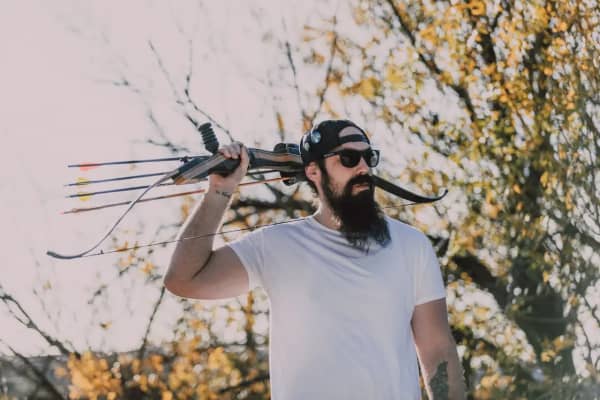
Deer, elk, turkey, bear and cougar all require a permit beyond the base license. Many of those permits are limited in number and distributed by draw rather than sold over the counter.
The failure pattern is consistent: someone buys a basic hunting license in late summer, assumes they are set for the autumn, and discovers in September that the deer permit they needed went through an application process in the spring.
Rule four: the 1965 cutoff
Anyone born after 31 December 1965 must complete hunter education before buying a hunting license.
That is a fixed date, not a rolling age. It does not move. Which means the share of Utah hunters required to complete the course grows every year, and by now it covers everyone under about sixty.
The course itself covers safety, ethics, skills and technique, wildlife identification, and hands-on exercises, and it concludes with a written test and a live-fire shooting exercise. There is an online instruction option, but the hands-on exercises, the final test and the shooting exercise are covered at a required in-person field day. Online alone does not complete it.
The sequencing trap in hunter education
Here is the ordering detail that catches people, and it is not intuitive.
You purchase a Hunter Education Registration Certificate first — available through the DWR licensing portal, at a DWR office, or from a license agent — and that certificate is what registers you into the system. It costs a modest amount, more for non-residents, and it is valid for 365 days from purchase.
Then you take the course. The online course carries its own separate fee paid to the course provider.
So there are two payments to two places, in a specific order, and a certificate with its own expiry clock. Somebody who takes an online course first and then tries to buy a license discovers the registration piece was supposed to come first.
Plan the field day around the calendar, not the other way round
The written test and live-fire exercise happen at scheduled in-person field days, and those fill.
Autumn is the wrong time to start this. Field day availability tightens as hunting seasons approach, and a certificate with a 365-day clock does not help if the sessions near you are booked out. Anyone intending to hunt next autumn should be looking at course and field day schedules in the winter or spring before it.
Parents getting a teenager certified should plan on the same timeline, and should note that the live-fire component means this is a hands-on commitment rather than a box-ticking exercise.
The draw, and why spring matters more than autumn
Utah allocates limited big game permits by application draw, and the application window falls in the spring — months before the hunts themselves.
The mechanics worth knowing:
- For most species you may apply for either a permit or a bonus point, not both in the same year. Bonus points accumulate to improve future odds.
- Group applications are allowed for certain hunts, generally up to four hunters, but not for management buck hunts or once-in-a-lifetime species.
- Residents and non-residents can apply together in a group, though if no non-resident permits are available for the selected hunt the application will not be considered.
- The application platform itself changes periodically — Utah moved to a new application vendor for a recent big game draw cycle, and applicants were advised to log in early and confirm account access.
If you are new to Utah and want to hunt deer or elk, the practical advice is blunt: the decision point is in spring, and missing it costs you a year.
Migratory birds have their own layer
Waterfowl and other migratory game birds add requirements on top of everything above.
You need HIP registration — the Harvest Information Program — to hunt migratory game birds. Hunters sixteen and older additionally need a Federal Duck Stamp, which is a federal requirement rather than a state one and is bought separately.
This matters locally because Utah Lake and its associated wetlands are significant waterfowl habitat, and the marshes at the south end of the valley are hunted. Somebody who works out the state license and forgets the federal stamp is not legal.
The access rule almost nobody knows
This one surprises even people who have lived here for years, and it applies to non-hunters.
Wildlife management areas in Davis, Salt Lake, Utah and Weber counties require anyone eighteen or older to hold a valid hunting, fishing or combination license, or a free digital access permit, simply to be on the property, regardless of what you are doing there. Walking. Photographing. Watching birds. The free permit option began on July 1, 2026.
Utah County is a populated county. This is directly relevant to the wetland areas around Utah Lake, which are among the better birding sites in the valley and are managed as wildlife areas rather than as parks.
Check the specific area before you go. A non-angler can get the free access permit from the DWR instead of buying a license; either one is cheaper than a citation. Our guide to birdwatching at Utah Lake and the Provo River Delta covers which sites this affects.
Reduced-cost and free categories
Utah maintains several categories worth checking before paying full price:
- Youth licenses and combination licenses for those under eighteen, at reduced rates.
- Senior rates for resident older adults.
- A discounted 365-day fishing license for resident veterans with a qualifying service-connected disability at or above a defined threshold, applied for through the DWR.
- Free fishing licenses for residents with certain qualifying physical or mental disabilities or a terminal illness, by application.
- Free licenses for children in the custody of the state under a court order.
Utah also holds an annual free fishing day, typically in early June, on which no license is required — though every other rule, including limits and water-specific regulations, still applies. Confirm the current year's date with the DWR.
Resident or non-resident is not a guess
Residency changes your price, your application category and sometimes your eligibility, and the gap between resident and non-resident rates in Utah is large — non-resident fees run several times the resident equivalent at most tiers.
Utah's official definition of a resident for licensing purposes turns on establishing an actual fixed place of residence in the state rather than on how you feel about where you live. It is a defined status with defined evidence behind it, not a self-assessment.
Do not guess here, and do not assume that because you pay Utah rent you qualify. If your situation is ambiguous, ask the DWR before you buy rather than after, because buying under the wrong category is a licensing problem rather than a refund problem.
The student question, which comes up constantly here
Utah Valley has tens of thousands of university students, a large share of whom are from out of state, and "am I a Utah resident for a fishing license?" is one of the more frequently asked questions in this county.
It is also one of the ones this guide will not answer for you. University residency for tuition purposes and residency for wildlife licensing are separate determinations under separate rules, and qualifying for one does not establish the other. Students routinely assume that in-state tuition status settles the question. It does not.
The safe move for a student is to ask the DWR directly about your specific circumstances, and to buy the non-resident license if the answer is unclear. A non-resident three-day fishing license for an occasional trip up the canyon is a small amount of money and removes the question entirely. Our guide to in-state tuition and residency for students covers the separate university-side rules, which are not transferable to this.
Setlines and the gear rules that vary
Utah permits some gear methods that visitors from other states do not expect, and each carries its own paperwork.
Setlines — a stationary line with multiple hooks, left in place — are legal on certain Utah waters with a setline permit, which is purchased separately and requires that you also hold a valid fishing license. Resident and non-resident setline permits are priced differently, as with everything else.
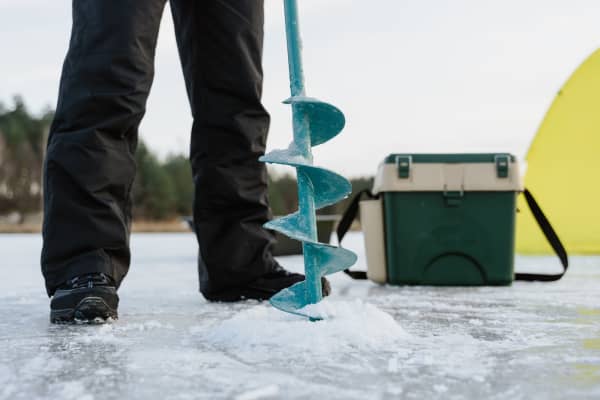
The number of poles you may use, the use of live or dead bait, ice-fishing specifics, and whether a second rod is permitted all vary by water and sometimes by season. This is another reason the specific-waters section of the guidebook is the operative document rather than any general summary.
The Dedicated Hunter Program
Worth knowing about because it changes the economics for anyone serious.
Utah runs a Dedicated Hunter Program that trades a longer commitment and volunteer conservation work for extended hunting opportunity. Participants commit to completing conservation service projects, and the program bundles in a 365-day fishing license.
It is not the right entry point for a casual hunter, and it carries obligations that a standard permit does not. But for someone intending to hunt Utah consistently over several years, it is a different structure rather than merely a different price, and it is worth reading the program's own terms before defaulting to the annual draw cycle.
Where the money goes
Worth knowing, because it reframes the purchase.
The Division of Wildlife Resources is funded largely by the sale of hunting and fishing licenses, supplemented by federal aid derived from an excise tax on fishing rods and related equipment. There is no large general-fund appropriation underwriting this.
Which means the license is not a permission fee so much as the funding mechanism for the habitat work, fish stocking, access agreements and enforcement that make the fishing and hunting possible. The DWR stocks fish into local waters, including channels around the Provo River delta.
Buying it, and carrying it
You can buy online through the DWR, by phone through a local DWR office, in person at a DWR office, or through an authorized license agent — which includes major sporting goods retailers along the Wasatch Front, with locations in northern Utah County among them.
A transaction fee applies to card payments, online and in person alike, which is why the total at checkout is slightly above the listed fee.
For carrying, the DWR publishes a Utah Hunting and Fishing mobile app that holds digital licenses for an entire family on one phone or tablet. For a household where one adult manages everyone's paperwork, that solves the carry requirement neatly.
A note on the guidebooks
Utah publishes annual guidebooks — a fishing guidebook and separate hunting guidebooks by category — and they are the actual authority, not summaries like this one.
They matter more than usual in Utah because water-specific rules are extensive. General statewide limits apply to most fisheries, but individual waters carry their own bag limits, size restrictions, seasonal closures and gear rules, and the guidebook devotes substantial space to listing them water by water. A limit that is correct at one reservoir may be wrong at the next one over.
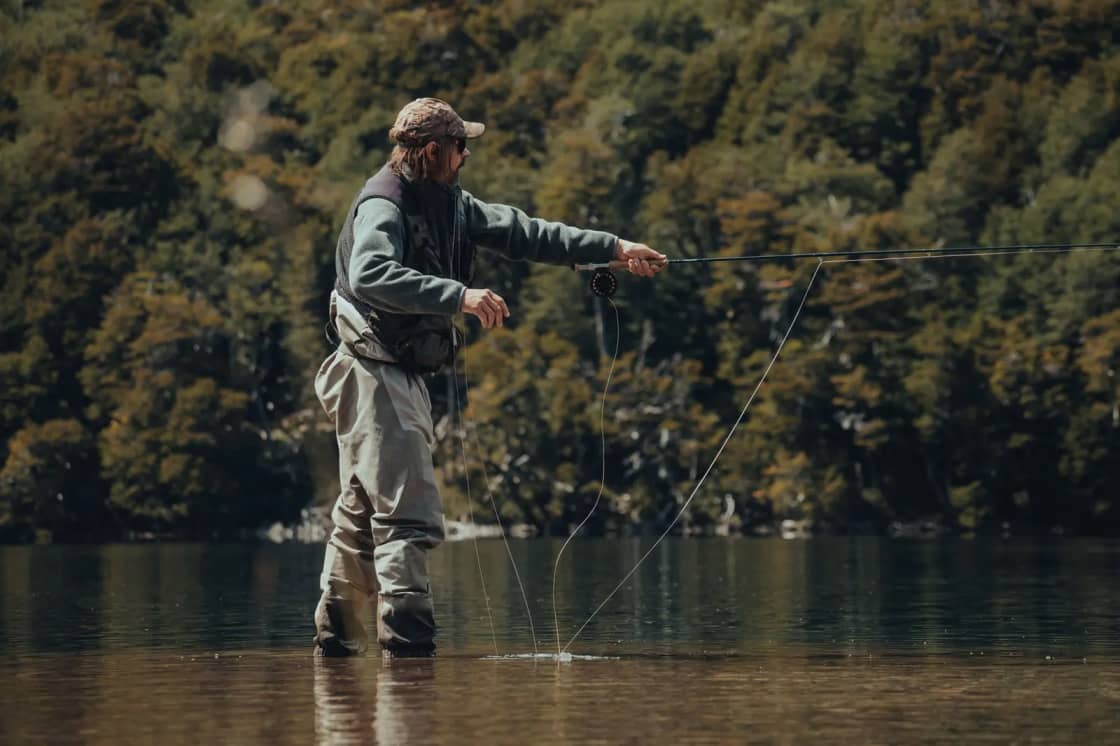
Read the specific-waters section for wherever you are going. Our guides to fishing near Provo and fly fishing the Provo River cover the local waters, and our hunting near Provo guide covers where the hunts happen once the paperwork is done.
The order to do this in
For fishing, starting from nothing:
- Confirm whether anyone in your group is under twelve — they need nothing.
- Decide between a 365-day license, a short-term license, or a combination license if hunting is also in scope.
- Buy online or from an agent; add it to the app.
- Read the specific-waters rules for your destination.
For hunting, starting from nothing, and assuming you were born after 1965:
- Buy the Hunter Education Registration Certificate.
- Complete the course and book a field day early — this is the long pole.
- Buy the base hunting or combination license.
- Work out whether your intended species needs a permit, and whether that permit comes from the spring draw.
- Add HIP registration and a federal duck stamp if migratory birds are in scope.
- Read the relevant guidebook for your hunt.
Prices, dates and application platforms change annually. Verify everything against wildlife.utah.gov before you buy, and treat any figure on any guide page, including this one, as a description of the structure rather than a current price list.
Related Guides
- Fishing Near Provo
- Hunting Near Provo
- Fly Fishing the Provo River
- Birdwatching at Utah Lake and the Provo River Delta
- Utah Lake: The Complete Guide
- Utah Residency and In-State Tuition
- Ice Fishing Near Provo: Which Water Freezes, and the Four-Inch Rule
Frequently Asked Questions
Do Utah fishing licenses expire at the end of the year?
What age do you need a fishing license in Utah?
Who has to take hunter education in Utah?
Is a hunting license the same as a permit in Utah?
How does the Utah big game draw work?
Do I need a license just to walk on a wildlife management area in Utah?
What is a combination license in Utah?
Where do I buy a Utah fishing or hunting license?
Sources
The facts in this guide were checked against these sources. Hours, fees and rules change, so confirm anything time-sensitive with the source before you go. How we make Provo.com.
- Wildlife/Waterfowl Management Areas, Utah Division of Wildlife Resources. Checked October 12, 2026.
- 2026 Utah Fishing Guidebook, Utah Division of Wildlife Resources. Checked October 12, 2026.