
Every October a certain number of Utah Valley families get in the car, drive thirty-five minutes north on I-15, and spend a Saturday somewhere in the southern half of Salt Lake County. They are not going to a theme park or a haunted house. They are going to look at witches arranged along the paths of a historic mill village, or to watch adults paddle across a lake inside hollowed-out pumpkins the size of small cars.
Both of these are real, both are decades old, and neither has an equivalent in Utah County. This page explains what they actually are, who each one suits, what the drive gets you, and — the part most seasonal write-ups skip — when it is honestly not worth making.
Utah Valley has a good October of its own. Cornbelly's runs two sites in the county, the pumpkin patch and fall farm network is dense, and the broader Halloween circuit runs from mid-September to the end of the month. So the question is not whether there is anything to do here. It is what the drive north buys that staying home does not.
WitchFest at Gardner Village
What it actually is
Gardner Village is a historic site in West Jordan, built around a nineteenth-century flour mill and now occupied by boutiques, restaurants and experience-based businesses. It operates year-round, Monday to Saturday, closed Sundays. For six weeks each autumn it becomes something else.
WitchFest fills the village paths with large-scale witch displays — figures in hats and cloaks, arranged in scenes, propped on brooms, tucked into corners and hung from things. There are dozens of them, and finding them is formalized into a scavenger hunt. Around that core the village runs a program of ticketed events: a musical dinner theater, a breakfast show, an escape room, a magic show with dinner, a run, and a series of themed evenings.
WitchFest 2026 runs September 18 through October 31. It has been running since 2000, which makes it one of the older Halloween traditions on the Wasatch Front and explains the unusual density of people who treat it as an annual fixture rather than an outing.
The most important thing to know about it
It is not scary. This trips people up constantly, because "witch festival" reads as a horror proposition to anyone who has not been. The witches are whimsical — closer to elaborate seasonal scarecrows than to anything threatening — and the register throughout is gentle. Small children do very well here. Teenagers looking to be frightened will be bored, and should be pointed at something else entirely.
The second thing to know is that the free part is most of it. Admission to the village costs nothing. The displays, the paths, the shopping and the general atmosphere are all included in turning up. The ticketed attractions sit on top of that, and you can have a complete and satisfying visit without buying one.
The ticketed attractions, and which are worth planning around
Witchapalooza Dinner Theater is the marquee event — a musical dinner show at The Gathering Place running from late September through Halloween, with evening performances and matinees on selected Saturdays. It is recommended for ages twelve and up, and children under three are not admitted at all. Tickets start above fifty dollars and the good nights sell out; this is the one to book weeks ahead rather than days.
Breakfast with a Witch is the family-facing equivalent: a buffet breakfast with a witch performance attached, historically running Friday and Saturday mornings through October. It suits the age group Witchapalooza excludes.
Witches Night Out is the one that has developed a genuine culture around it. It runs on a Saturday evening, roughly five to nine, and the village fills with women in full witch costume — not a handful, a crowd. There is a family costume parade in the early evening and a grand parade for adults later, led by the village's own witches. If you have seen photographs of a few hundred people in pointed hats moving through a lit-up village at night, this is where they came from.
Beyond those sit an escape room, a magic show with dinner, a run, and smaller themed weekends aimed at younger children. All are separately ticketed, and the sensible approach is to pick one rather than assembling a day out of four.
Timing it properly
The village is compact and paved. That is pleasant when it is quiet and genuinely congested when it is not, and October Saturdays are the busiest hours of the year here.
One structural fact makes this worse than it would otherwise be: Gardner Village is closed on Sundays, year-round. The entire weekend crowd is therefore compressed into Saturday. A seasonal attraction that would ordinarily spread its weekend traffic across two days spreads it across one.
The consequence is simple. An October weekday morning and an October Saturday afternoon are not variations on the same visit; they are different experiences. If you have any flexibility at all, take a weekday in the first half of the season. Parking is free on quieter days and charged on peak October days, and the village publishes the current arrangement itself — check there rather than trusting a number you read in September.
The Ginormous Pumpkin Regatta
What it actually is
Once a year, at Daybreak in South Jordan, a crowd gathers on the north shore of Oquirrh Lake to watch people race across it inside pumpkins.
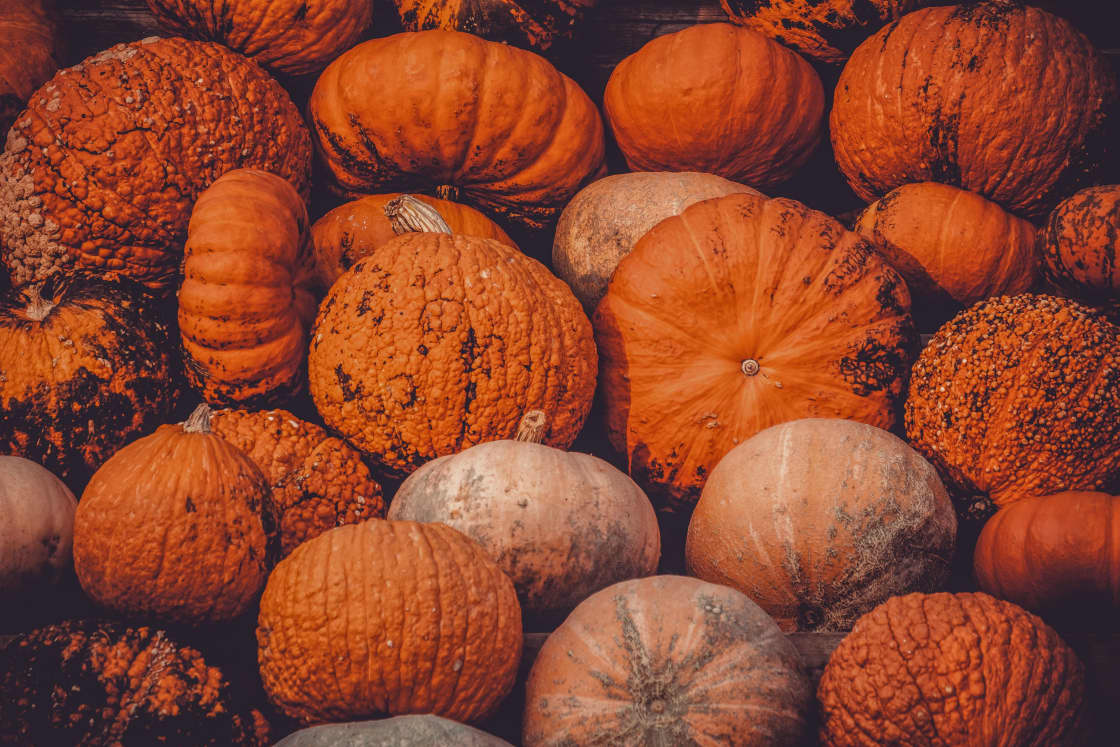
This is not a figure of speech. Growers associated with the Utah Giant Pumpkin Growers produce gourds running from several hundred pounds to well over a thousand. The pumpkins are hollowed out, a forklift lowers each one into the water, and costumed paddlers climb in and race. Giant pumpkins float — the shell is buoyant and the hollowed cavity is enormous — but they are also round, unstable, and steer like nothing else on earth, which is the entire appeal.
The 2026 edition is the fifteenth, on October 17, from 10 a.m. to 1 p.m., at the North Shore in South Jordan. It is free and requires no registration to attend.
The pumpkins are the headline, but the program has expanded around them: races in cardboard boats built by entrants, on paddleboards, and in porta potties. A fall farmers market runs alongside.
Why it is worth the drive, specifically
Most seasonal events are things you participate in. This one is a spectator sport, and that changes who it suits.
It is very good for a certain kind of family — children old enough to find absurdity funny, adults who appreciate a well-executed silly idea, anyone who likes watching a thing that should not work almost work. The course runs near the shore, so viewing is genuinely good rather than distant. It is free, it is three hours rather than a whole day, and the farmers market gives the adults something to do between heats.
It is less good for very small children, who will not follow what is happening and will be cold by the lake, and for anyone expecting a festival with rides and attractions. It is a race and a market. That is the whole proposition, and it is enough.
Getting it right
Arrive at the start rather than the middle. The schedule moves through its classes and the giant pumpkins are the draw, so a mid-morning arrival that seems safe can miss the thing you drove for. Bring layers — mid-October mornings by open water on the Oquirrh side of the valley run cold well past sunrise. Parking is neighborhood parking in a master-planned community, which means it works but it fills, and walking a few blocks is the normal outcome.
The drive, honestly
Both of these sit in the southern half of Salt Lake County, which is the part of it closest to us. West Jordan and South Jordan are roughly thirty-five to forty-five minutes from Provo in ordinary traffic, and materially less from the north end of Utah County — a family in Lehi or American Fork is looking at about twenty-five minutes.
That is worth stating plainly because "Salt Lake" reads as an hour-plus expedition to a lot of people here, and for these two it is not. Neither involves downtown, neither involves the canyons, and both are straight up the interstate with ordinary suburban parking at the end.
The traffic caveat is the obvious one. October Saturdays northbound are not the same as October weekdays northbound, and an event that starts at 10 a.m. means leaving Provo well before nine on a Saturday if you want to park without stress.
Choosing between them, and against them
These two events do not compete with each other. They compete with staying in Utah County.
Take WitchFest if you have small children, if someone in the group likes seasonal shopping, or if you want an evening out with a show attached. It is the more flexible of the two — it runs for six weeks, it has a free tier and a paid tier, and you can spend ninety minutes or a whole day.
Take the regatta if you want a single, specific, genuinely unusual spectacle, and if October 17 works. It is a fixed date and a three-hour window; there is no second chance at it, and no version of it closer to home.
Stay in Utah County if what you actually want is a corn maze, a pumpkin patch, a hayride or a farm. We have those in quantity and they are good, and driving to Salt Lake County for a version of something that exists fifteen minutes away is how a nice October Saturday becomes a tiring one. The county's own fall farm festivals cover that ground thoroughly.
Practical notes that apply to both
Book the ticketed things, turn up for the free things. At WitchFest the displays and the village need no planning and the shows need a great deal. At the regatta nothing needs booking at all.
Weekday over weekend, early over late, wherever the calendar allows it. This is the single highest-value decision available for either event.
Dress for standing still outdoors. Both are outdoor events in the second half of October on the Wasatch Front, and both involve long periods of not moving — looking at displays, watching heats. The temperature that is fine while walking is not fine while standing.
Check the operator's own page before you drive. Dates, hours, parking arrangements and ticket availability all change, sometimes late and sometimes for weather. The village and the regatta both publish their own current information, and that is the source — not a listing site, and not this page in three weeks' time.
Why a giant pumpkin floats, and why that is harder than it sounds
The regatta looks like a stunt, and mechanically it is a fairly elegant one.
A giant pumpkin is mostly shell. The flesh is thick, dense and fibrous, and the seed cavity inside is enormous — which means that once the cavity is cleaned out and a person climbs in, you have a rigid hull displacing a great deal of water with relatively little mass inside it. That is a boat. A crude, extremely heavy boat, but a boat.
What makes it difficult is that it is a boat with no keel, no bow and no flat bottom. A hull shape exists to make a vessel want to go in one direction and resist rolling in the others. A sphere wants to do neither. It rotates freely around every axis, it has no preferred heading, and every paddle stroke on one side induces a spin as readily as forward motion. Paddlers spend much of a heat correcting rotation rather than making distance, which is precisely what makes the racing funny to watch and genuinely hard to do.
The second difficulty is freeboard — the height of the shell above the waterline. Load a pumpkin with a heavier paddler and the waterline climbs toward the cut edge. Water comes in over the rim rather than through the shell, and a pumpkin that takes on water does not sink slowly and gracefully; it becomes unstable all at once. This is why the entrants are adults, why the course is short and close to shore, and why there is always safety cover on the water.
None of this happens without the growers. Pumpkins at this scale are not incidental garden produce — they are the output of a season of deliberate work by people who do this seriously, weigh their results competitively, and then donate the fruit of that season to be hollowed out and paddled around a lake. The weigh-off culture and the regatta culture are the same culture, and the second would not exist without the first.
Photographing both of these, since nearly everyone does
These are two of the most heavily photographed seasonal events in the region, and both reward a small amount of forethought.
At the village, the displays are built for the camera and the light is the constraint. Mid-morning on a clear day gives you even light and empty paths; late afternoon gives you warmth and color in the leaves but also the day's largest crowds. The evening events are the hardest — the village lights beautifully but a phone camera in a moving crowd after dark is working against everything at once. If the lit village is what you want, arrive in the last half hour of daylight and let it fall dark around you rather than turning up into full night.
At the lake, the useful discipline is to pick a spot and stay in it. The course runs close to the shore, so almost any position along it is workable, but drifting along with the crowd chasing a better angle generally means arriving everywhere a few seconds late. Set up once, accept the angle you have, and shoot the heats rather than the search.
Accessibility, and what to ask before you go
The two sites are quite different underfoot.
Gardner Village is paved throughout and broadly level, which makes it one of the easier seasonal attractions in the region for a wheelchair, a walker or a stroller. The complications are crowding rather than terrain: the paths narrow in places and on a peak Saturday the practical width drops considerably. The individual ticketed venues each have their own seating and access arrangements, and those are worth a direct question when booking rather than an assumption.
The regatta is a shoreline event on grass and path in a public open space, which means the ground is uneven in places and can be soft after rain. Viewing is standing viewing unless you bring a chair, and mid-October by the water is cold enough that a long stationary period needs planning for. Bringing your own seating is normal and sensible.
For both, the reliable approach is the same one that works everywhere: ask the operator a specific question in advance rather than a general one, and get the answer before you commit to the drive.
What six weeks does to a seasonal attraction
One thing worth understanding about any long-running seasonal event is that it is not the same in week one as in week six, and the difference cuts both ways.
Early in a season, everything is intact. Displays are freshly built and undamaged, staff are not yet tired, and the crowds have not arrived because the public has not started thinking about Halloween. The trade-off is that the surrounding atmosphere is thinner — in mid-September the leaves have not turned, the evenings are not properly dark, and a Halloween event is running slightly ahead of the season it belongs to.
Late in a season the reverse applies. The last ten days of October are when everything lines up: the weather is right, the light is right, and the whole valley is in the mood. They are also when every attraction is at maximum load, when displays have taken six weeks of weather and handling, and when the tickets that remain are the ones nobody wanted.
The practical sweet spot, for almost any visitor to almost any of these, is the first half of October. The season has caught up with itself and the crowds have not yet peaked. It is a narrow window and it is not a secret, but it remains materially better than either end.
Related Guides
- Things to Do in West Jordan and Taylorsville, Utah, From Provo
- Halloween in Utah Valley — the full October circuit, closer to home
- Cornbelly's at Thanksgiving Point and Spanish Fork — the county's own corn mazes
- Pumpkin patches and fall farms in Utah Valley
- Every haunted attraction on the Wasatch Front, ranked by scare level — for the frightening end
- Trunk-or-treats and little-kid Halloween — for under-sixes
- Every fall farm festival in Utah Valley
Dates, hours and ticket arrangements are set by each operator and change without notice, including for weather. Every date here is as published for the 2026 season; confirm on the operator's own site before you drive.
Frequently Asked Questions
What is WitchFest at Gardner Village?
When is WitchFest 2026, and what does it cost?
What is the Ginormous Pumpkin Regatta?
How far are these from Provo?
Is WitchFest scary?
Do I need tickets in advance for the Witchapalooza dinner theater?
Is there anything like this closer to home in Utah Valley?
What is the best time of day to go to WitchFest?