
Most Halloween guides for this valley are a list of pumpkin patches with the dates copied from last year. This one starts somewhere else, because the most consequential fact about Halloween 2026 in Utah Valley has nothing to do with pumpkins.
Halloween 2026 falls on a Saturday — and BYU hosts Arizona State that same day.
That is a 62,073-seat stadium emptying into north Provo on the evening when the largest number of children in the year are walking in the road, in dark clothing, in the dark. The kickoff time is still TBA, which means the collision could be mild or it could be almost total. Everything else in this guide is downstream of that.
The one date that changes the whole evening
BYU's 2026 home schedule puts Arizona State at LaVell Edwards Stadium on Saturday, 31 October 2026. As of this writing the kickoff time has not been set — BYU's schedule release states that kickoff times and network selections are made later in the year by the Big 12's television partners.
Here is why that single unknown matters so much:
- An early kickoff — say 10 a.m. or noon — empties the stadium in the mid-afternoon. Traffic is largely gone by five, and trick-or-treating happens in a normal, if slightly tired, valley. This is the good outcome.
- A late-afternoon kickoff is the bad one. A game that ends between six and seven puts tens of thousands of vehicles onto Canyon Road, University Avenue, Bulldog Boulevard and the residential grid precisely inside the 6-to-8 p.m. trick-or-treating window.
- A night kickoff pushes the exit past nine, which is after most Utah Valley porch lights have gone off. Arrival traffic, though, builds through the afternoon and lands in the same neighborhoods where families are getting ready.
If you live in the Joaquin, Oak Hills, Rock Canyon or Tree Streets areas, or anywhere your route crosses a stadium arterial, watch for the kickoff announcement and plan the evening around it. If you are coming to the game from out of town, understand that the residential streets you are tempted to park on will have children on them.
The rest of the valley — Orem, Springville, Spanish Fork, Payson, Lehi, American Fork — is far enough from the stadium that this is a non-issue. This is a north-Provo problem specifically.
The October circuit, and what each part is
Utah Valley's October runs on four separate tracks that people tend to lump together. They have different calendars, different costs and different audiences.
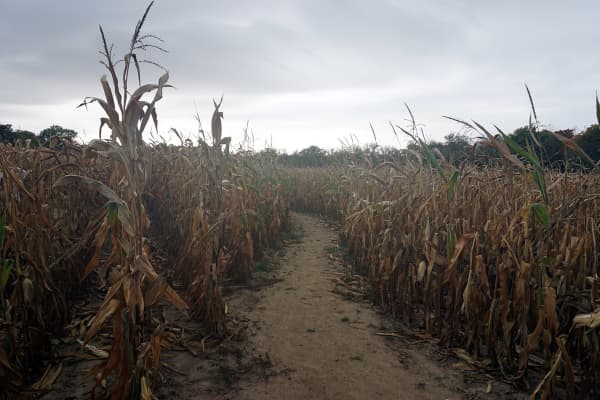
Ticketed fall festivals. Corn mazes, hayrides, pumpkin cannons, sunflower fields. These are commercial operations that publish their dates months out because they are selling admission. Cornbelly's is the giant, and it runs two separate locations with different seasons and different prices — the Lehi site at Thanksgiving Point and a quieter, cheaper, more rural site in Spanish Fork.
Pumpkin patches and farm stands. Overlapping with the above but not the same thing. A pumpkin patch may be a corner of a working farm with a card table and an honesty box, or it may be a full agritourism operation with a maze and a petting pen. The legal position of a visitor differs between the two, which is covered in our pumpkin patches and fall farms guide.
Haunted attractions. Staffed, ticketed, built to frighten adults and older children. Frightbelly's at Cornbelly's Lehi is the largest in Utah County — twenty-three scenes on a thirty-minute trail through the corn, recommended for ages twelve and up, with under-twelves requiring a chaperone. These are entirely distinct from the valley's haunted places, which are historical sites, many of them private property.
Community events. Trunk-or-treats, ward parties, school carnivals, city recreation events, library programs. Free or nearly free, family-shaped, and — this is the frustrating part — announced late.
Trunk-or-treats, and why this valley runs so many
A trunk-or-treat is a parking lot with cars arranged in a ring, trunks open and decorated, candy handed out from the tailgate. Children walk the circle instead of walking a street.
Utah Valley does an unusual number of them, and the reason is structural rather than cultural preference. Congregations here are geographically compact and meet in buildings with large parking lots, which is exactly the infrastructure a trunk-or-treat needs. Add the number of apartment complexes housing student families with small children and no front door to knock on, and the format solves a real problem.
What it solves, specifically:
- No road crossings. The whole event happens on one closed surface.
- Lighting. A parking lot is lit; a residential street in Provo often is not.
- Density. Forty cars in a circle is more candy in less time and less walking, which matters enormously with a three-year-old.
- Weather. It is easier to abandon a parking lot than a two-mile route.
The catch is that most are not publicly listed. They are announced through the host congregation, school or complex, usually in the two weeks before Halloween. If you are new to the valley and unattached to a congregation, the reliable route in is your city's recreation department calendar and your children's school, not a search engine.
The law that decides who is at fault
This is the section other Halloween guides do not have, and it is worth reading once because it is counterintuitive.
Halloween puts an unusual number of pedestrians into the roadway, at night, at exactly the hour when drivers are commuting home. Utah's traffic code allocates responsibility between those two parties in a way that neither side generally understands.
Start with the pedestrian's duty. Under Utah Code § 41-6a-1003(1), a pedestrian crossing a roadway at any point other than within a marked crosswalk — or within an unmarked crosswalk at an intersection — shall yield the right-of-way to all vehicles on the roadway. Subsection (5) makes a violation of that section an infraction. The child cutting diagonally between two parked cars is, in the statute's terms, the one in the wrong.
Then read § 41-6a-1003(3), which is the one that catches out families on busy streets. Between adjacent intersections where traffic-control signals are operating, a pedestrian may not cross at any place except in a marked crosswalk. On a stretch like University Avenue or Center Street, mid-block crossing is not a judgment call — it is prohibited outright.
Now the driver's duty, which overrides all of it. Utah Code § 41-6a-1006 requires the operator of a vehicle to exercise care to avoid colliding with a pedestrian, to give an audible signal when necessary, and to exercise appropriate precaution if the operator observes a child or an obviously confused, incapacitated, or intoxicated person. Subsection (2) then states plainly that this section supersedes any conflicting provision of the chapter or of a local ordinance adopted under § 41-6a-208.
Read those together and the picture is this: the child may be committing an infraction and the driver may still be entirely responsible. The pedestrian's error does not discharge the driver's statutory duty of precaution once a child is observed. If you drive through a residential street on Halloween night, § 41-6a-1006 is the provision that governs your evening.
Two more that apply directly:
- § 41-6a-1002(3) — where a vehicle has stopped at a marked or unmarked crosswalk to let a pedestrian cross, the operator of any other vehicle approaching from the rear may not overtake and pass the stopped vehicle. This is the classic Halloween collision: a driver stops for a group of children, the car behind swings out to get around, and the second car has no sight line at all.
- § 41-6a-1009(3) — where there is no sidewalk and no shoulder, a pedestrian walking along a highway must walk as near as practicable to the outside edge, and on a two-way road must walk on the left side, facing traffic. A great many streets in the older parts of Provo, Springville and Payson have no sidewalk. Walking your children on the left, facing oncoming cars, is both the safer choice and the one the statute specifies.
None of this is legal advice, and none of it substitutes for a flashlight and a reflective strip. But it does reframe the evening: the law does not treat Halloween as a special case, it treats children as one, and it does so all year.
Practical planning, by age
Under five. A trunk-or-treat or a single friendly cul-de-sac. Go at six, be home by seven. The costume goes over a fleece layer, not under a coat. Expect the child to be finished long before you are.
Five to eleven. The classic door-to-door window works. Pick a route with sidewalks — the numbered-street grid in central Provo and central Orem is better for this than the winding bench neighborhoods, which often have neither sidewalks nor street lighting. Carry a flashlight and put something reflective on the outside of the costume where it will be seen.
Twelve and up. This is the haunted-attraction age. Frightbelly's is the county's serious option; escape rooms are the indoor alternative for anyone who wants the atmosphere without a stranger in a mask following them through corn.
Adults without children. The fall festivals are quieter on weekday evenings by a wide margin, and the last week before Halloween at any corn maze is the busiest of the year. Mid-October on a Tuesday is the whole thing at half the crowd.
The weather, honestly
Utah Valley sits above 4,500 feet, and the thing that surprises newcomers is not how cold it gets but how fast. A pleasant afternoon on 31 October can turn cold by eight in the evening, because dry air at altitude sheds heat the moment the sun is off the valley floor.
Snow on Halloween happens here. It is not common, and it is not remarkable either.
The design problem this creates is specific: children will not wear a coat over a costume they have spent two weeks planning. The solution every experienced parent in this valley has arrived at is to build the layer underneath — thermals under the costume, proper socks, and gloves that match the outfit closely enough to be tolerated.
What we will and will not publish
Every year, sites publish Halloween event lists in August with dates lifted from the previous October. Those lists are wrong by early November and stay online for years.
We will not do that. The ticketed attractions in this guide carry dates because their operators have published them for 2026. Neighborhood trunk-or-treats, ward parties and school carnivals do not carry dates here, because in August those dates do not exist yet — not because we could not find them.
For the events that are scheduled, the Utah Valley events calendar carries them with confirmed dates, and the families view filters to the ones built for children. For the ticketed fall festivals, go to the operator: dates and hours move, and an operator's own calendar page is the only source that updates when they do.
The short version
Halloween 2026 is a Saturday. There is a home football game the same day and the kickoff time is not yet set, so if you are anywhere near LaVell Edwards Stadium, that is the first thing to check — the street-by-street version of that problem is in Halloween night in north Provo. Trick-or-treating here runs early, roughly six to eight. Trunk-or-treats are a genuine main event rather than a consolation prize, and they are announced late. The commercial fall festivals publish months ahead and are half as crowded on a weekday. Dress in layers under the costume, put something reflective on the outside, and walk facing traffic where there is no sidewalk — which, in this valley, is more streets than you would think.
The observance that follows, and is not part of this
Halloween ends on 31 October. Día de los Muertos falls on 1 and 2 November, and it is a separate observance rather than a continuation — a family remembrance of specific named dead, kept at home and at the graveside, with its own history and its own etiquette. A meaningful part of this valley keeps it. It has its own guide, because treating it as a Halloween appendix is the single most common way it gets described wrongly.
The indoor and low-sensory alternatives
Not every child wants a stranger in a mask to jump out at them, and not every family wants to spend the evening walking in the cold. The valley has a genuine set of alternatives, and they are worth knowing before the last week of October when everything books out.
Escape rooms are the standard answer for the twelve-and-up group who want atmosphere without being chased. They are indoor, climate-controlled, booked by the hour, and the difficulty is chosen rather than imposed. Our roundup of escape rooms in Utah Valley covers which ones suit which group size.
Library and city recreation programs run pumpkin-decorating, storytimes and small carnivals through October, usually free and usually aimed squarely at under-eights. They are also the most reliably accessible option for children who find a crowded corn maze overwhelming — smaller rooms, lower noise, and staff who are used to it.
Daytime fall festivals solve the sensory problem differently. The same corn maze that is loud and dark at eight in the evening is quiet and ordinary at eleven in the morning, and most operations open considerably earlier at weekends than families assume.
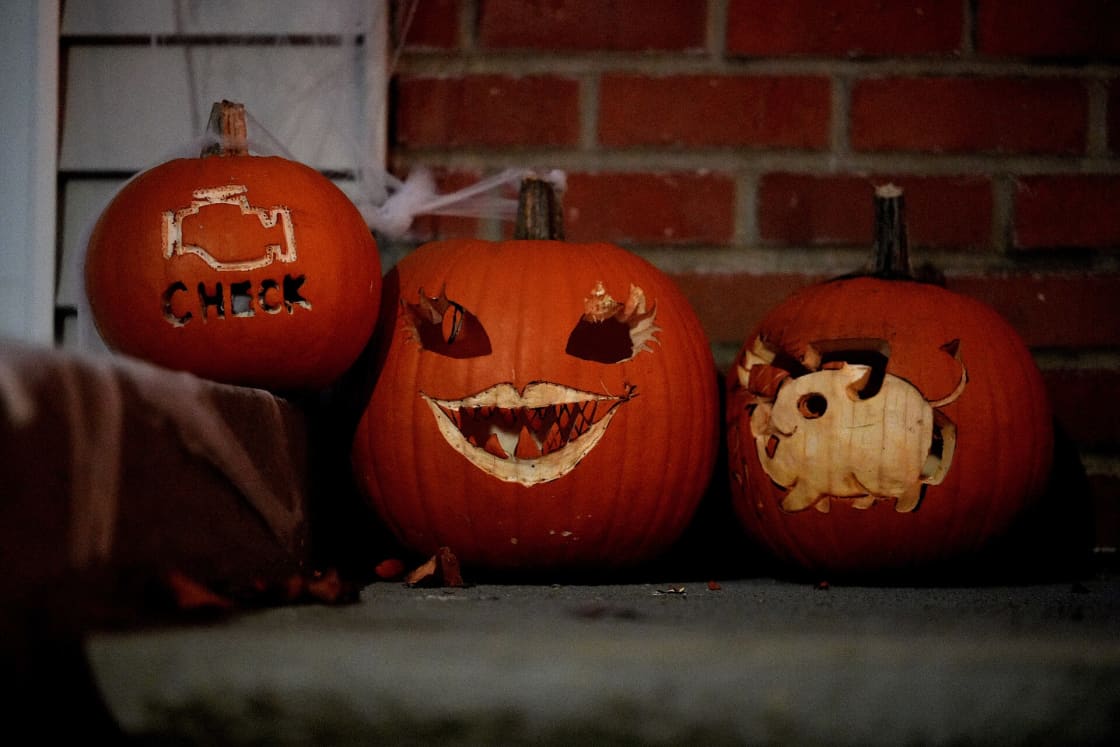
Home-based alternatives deserve a mention because a great many Utah Valley families quietly prefer them. A pumpkin-carving evening with two other households is the most common substitute for door-to-door trick-or-treating among parents of very young children, and nobody has to be dressed by six.
What Halloween costs here, roughly
The community layer of the season is close to free, which is a genuine feature of this valley rather than an accident. Trunk-or-treats, ward parties, library programs and city events are typically free or a nominal charge, and they are where most of the actual October evenings happen.
The commercial layer is not free. A family of four at a large fall festival, with admission, food and a pumpkin, is comfortably a three-figure evening. The haunted attractions sit at the top end because the ticket usually bundles general admission with the trail.
The practical planning point is that these two layers are substitutes for most purposes. A household can do the entire October circuit on the free layer and miss nothing that a child will remember, or can pick one commercial outing as the season's event and do the rest on the community layer. What produces the unpleasant surprise is drifting into three ticketed weekends without deciding to.
A note on the neighborhoods themselves
Trick-or-treating quality in Utah Valley varies more by street layout than by anything else, and newcomers usually work this out a year too late.
The grid neighborhoods — central Provo, central Orem, the older parts of Springville and Spanish Fork — are the good ones. Small blocks, houses close to the street, sidewalks, and short distances between doors. A child covers forty houses without complaint.
The bench and hillside neighborhoods are the difficult ones. Larger lots, long driveways, curving streets that double the walking distance, frequently no sidewalk and often no street lighting. They are lovely places to live and hard places to trick-or-treat, and families who live there overwhelmingly drive down to a grid neighborhood or go to a trunk-or-treat instead. That is not cutting the line; it is the established local pattern and nobody minds.
Student-heavy areas near both campuses are a mixed proposition. Apartment complexes sometimes run their own organized events, which are excellent, but door-to-door in a complex is unreliable. Students planning their own night rather than taking children out have a different set of questions entirely, and those are covered in the student Halloween guide.
Related Guides
- Cornbelly's at Thanksgiving Point and Spanish Fork: the complete guide
- Pumpkin patches and fall farms in Utah Valley
- The Pumpkin Regatta, WitchFest and the Salt Lake County October
- Haunted attractions in Utah Valley: the commercial haunt circuit
- Every haunted attraction on the Wasatch Front, ranked by scare level
- Día de los Muertos in Utah Valley
- Haunted places in Utah Valley: the stories and the history underneath them
- Fall in Provo: the complete autumn guide
- Family activities in Utah Valley
- Thanksgiving Point: the complete visitor guide
- Trunk-or-Treats and Little-Kid Halloween in Utah Valley
- Trick-or-Treat Hours by City in Utah Valley: why nobody sets them, and what each city publishes
- Every Fall Farm Festival in Utah Valley
Frequently Asked Questions
When is Halloween 2026, and does anything else happen that day in Utah Valley?
What time do people trick-or-treat in Utah Valley?
Who is legally at fault if a child steps into the road on Halloween?
Are trunk-or-treats a substitute for door-to-door trick-or-treating here?
Why are Utah Valley's Halloween event dates published so late?
Can my child wear a full costume mask to a Halloween attraction?
What is the difference between a haunted attraction and a haunted place?
What should I expect from the weather on Halloween night in Utah Valley?
Sources
The facts in this guide were checked against these sources. Hours, fees and rules change, so confirm anything time-sensitive with the source before you go. How we make Provo.com.
- Utah Code 41-6a-1003: Pedestrians yielding right-of-way -- Limits on pedestrians, Utah State Legislature. Checked October 12, 2026.
- Utah Code 41-6a-1006: Vehicles to exercise due care to avoid pedestrians, Utah State Legislature. Checked October 12, 2026.
- Utah Code 41-6a-1002: Pedestrians' right-of-way -- Duty of pedestrian, Utah State Legislature. Checked October 12, 2026.
- Utah Code 41-6a-1009: Use of roadway by pedestrians, Utah State Legislature. Checked October 12, 2026.
- BYU, Big 12 announce 2026 football schedule, BYU Athletics (byucougars.com). Checked October 12, 2026.
- Football Facilities, BYU Athletics (byucougars.com). Checked October 12, 2026.