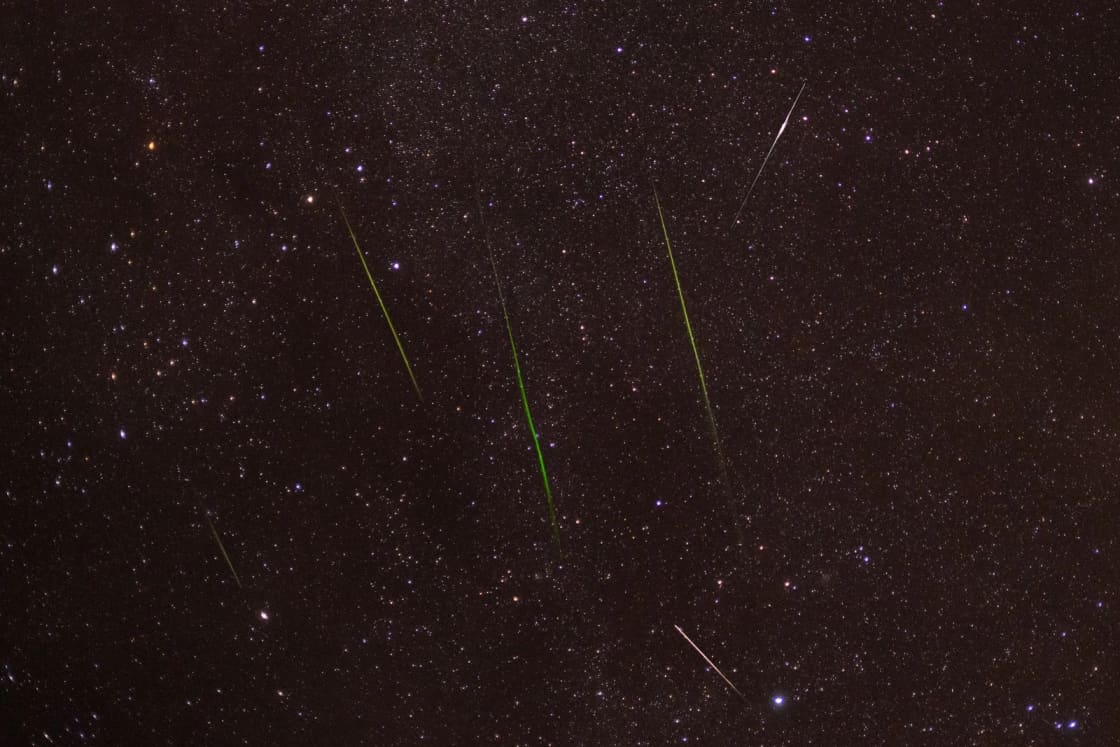
The year's best meteor shower lands on a dark night in 2026. The Geminids peak the night of Sunday, Dec. 13 into Monday, Dec. 14, and the moon is only a thin crescent that sets in the evening. From Utah County, the best hours are after mid-evening, especially around 2 a.m.
This guide uses EarthSky's Geminid guide (January 2026) and Quadrantid guide (January 2026), Space.com's 2026 meteor shower calendar (January 2026) and the U.S. Naval Observatory's moon-phase data, checked Nov. 20, 2026. Times are converted to Mountain Standard Time.
Geminids at a glance
| Peak night | Sun., Dec. 13 into Mon., Dec. 14 |
| Predicted peak | 10:44 p.m. MST Dec. 13 (5:44 UTC Dec. 14) |
| Best viewing | After the radiant rises mid-evening; highest around 2 a.m. |
| Moon | Waxing crescent, sets in the evening (new moon Dec. 9) |
| Rate | Zenithal hourly rate 120; 50+ per hour on a dark night near the peak |
| Source | Asteroid 3200 Phaethon |
How to watch
- Get dark. City lights in Provo, Orem and Lehi wash out the fainter meteors. Our stargazing guide covers darker spots within a drive.
- Look up, not at Gemini. Meteors appear anywhere in the sky; the radiant just tells you where their paths trace back to.
- Give your eyes time. Put the phone away and let your eyes adjust for 20 minutes or more.
- Dress for December. You'll be still for a long time on a winter night. Bring layers, a sleeping bag or blankets, and a reclining chair.
- Check the roads and the air. Canyon roads can be icy, and an inversion can haze the sky; our inversion guide explains when that happens.
The rest of the winter's showers
| Shower | Peak | Moon | Verdict |
|---|---|---|---|
| Geminids | Night of Dec. 13-14, 2026 | Thin crescent, sets early | Best bet of the season |
| Ursids | Night of Dec. 22-23, 2026 | Bright waxing gibbous (full Dec. 24) | Poor; only bright meteors |
| Quadrantids | 10:47 p.m. MST Jan. 3, 2027 (5:47 UTC Jan. 4) | Waning crescent (new moon Jan. 7) | Good, but the peak is only about 6 hours |
The Quadrantids can briefly top 100 meteors an hour and are known for bright fireballs, EarthSky says. Their radiant rises in the north-northeast after midnight, so the hours before dawn on Monday, Jan. 4 are the window.
Related guides
- Stargazing near Provo
- Provo sunrise, sunset and daylight by month
- BYU planetarium shows
- Winter activities in Provo
Frequently Asked Questions
When is the Geminid meteor shower in 2026?
What time should I watch the Geminids from Provo?
Will the moon interfere with the 2026 Geminids?
How many meteors will I see?
What causes the Geminids?
When are the Ursids in 2026?
When are the Quadrantids in 2027?
Where should I go to watch near Provo?
Sources
The facts in this guide were checked against these sources. Hours, fees and rules change, so confirm anything time-sensitive with the source before you go. How we make Provo.com.
- Phases of the Moon, December 2026-January 2027, U.S. Naval Observatory. Checked November 20, 2026.
- Geminid meteor shower peaks December 13-14, EarthSky. Checked November 20, 2026.
- 2027 Quadrantid meteor shower has narrow peak on January 3-4, EarthSky. Checked November 20, 2026.
- Meteor showers 2026: When, where and how to see the best shooting stars of the year, Space.com. Checked November 20, 2026.