
More on Orem: every guide we have published there, in one place.
If you have lived in Utah Valley for a while, you know the building on 400 North in Orem: cramped lobby, seats close enough to the actors that you could see them breathe, and a reputation for putting on more shows a year than seemed physically possible. That building stopped being a theater in 2024.
The company did not close. It moved eleven minutes north to Pleasant Grove, into a purpose-built facility more than double the size, and changed its name. Hale Center Theater Orem is now The Ruth and Nathan Hale Theater — The Ruth, to almost everyone.
This is what moved, what changed, what did not, and how to plan a night there now.
The short version
Same organization, same family, new building, new name, new city. The Ruth opened on January 4, 2025 with a production of Ragtime, on the doTERRA campus at 401 South Pleasant Grove Boulevard. It has two stages instead of one, and it is not the Hale theater in Sandy.
Why the name changed
Ruth and Nathan Hale founded the Orem theater in 1990, alongside their son Cody and his wife Linda and their grandson Cody Swenson and his wife Anne. The renaming honors the founders directly rather than describing the location, which had become inaccurate anyway.
It also solves a problem the family created for itself. There are several Hale-founded theaters across the mountain west, and "Hale Center Theater" was doing too much work as a name. "The Ruth" is unambiguous.
The building it left
The Orem building at 225 West 400 North has a good origin story. The Hales located it, bought it by assuming its mortgage and trading the remainder for an apartment building they owned in Provo, and converted it.
Ruth and Nathan lived in the basement when they were in a show; the newly married Swensons lived upstairs for three years. The building has been retained by the organization as a costume shop and support center rather than sold off.
How the move happened
In February 2022, doTERRA announced it would donate $5 million and the land for a new theater on its Pleasant Grove campus, in collaboration with the Cook Center for Human Connection and the City of Pleasant Grove.
Ground was broken in November 2022 and the building went up over roughly two years. The company kept performing in Orem throughout, closing the old building in 2024 and opening the new one at the start of 2025.
The two stages
The Scott and Karen Smith Grand Theater seats 670. That is close to double the old Orem room's capacity, and it is the main house.
The Lindsay Legacy Theater seats 300 and handles smaller productions, youth shows and work that benefits from a tighter room. Having a second space is the single biggest operational change from Orem, because it lets the company run two things at once rather than sequencing everything through one stage.
What in-the-round means for your ticket
The Hale family's theaters have been built around in-the-round staging since Ruth and Nathan converted a lingerie factory into a 220-seat theater in the round in 1985, and the new building was designed to expand that tradition rather than replace it.
Practically, it means the audience surrounds the playing space and the actors work in all directions. There is no bad side, but there is no single "best" seat either — you will see some moments from behind and others straight on. Sitting closer buys intensity; sitting slightly back buys a clearer view of staging and choreography.
Do not confuse it with Sandy
This is the most common practical error, and it is expensive if you make it at the wrong moment.
Hale Centre Theatre in Sandy — note the British-style spelling, which is a real distinguishing feature — is a separate organization at 9900 South Monroe Street in Sandy. It lists three stages (a 911-seat theater in the round, the 467-seat Jewel Box and the 322-seat Beehive), its own season, its own subscribers and its own box office at 801.984.9000.
Same founding family, different companies. Check the address on your ticket before you drive, because the two venues are about 40 miles apart.
Getting there
The Ruth sits on the doTERRA campus in Pleasant Grove, just off the I-15 corridor in north Utah County. From Provo it is a short run north; from Lehi and American Fork it is closer still. Parking is campus parking rather than street parking, which is a substantial upgrade on the Orem situation.
For anyone coming from further south, the drive is now longer than it was — that is the real trade-off of the move, and south-county audiences noticed it.
Tickets and the box office
Single tickets and season tickets are both sold, along with gift certificates, and the company publishes season announcements ahead of each year. Check the theater's website for box office hours.
It is closed Sundays, which is standard for Utah Valley arts venues and worth planning around if Sunday is your free day.
The Sunday question
The theater does not perform on Sundays. That is a long-standing convention of the company and of most Utah Valley performing arts organizations, and it shapes the week: Friday and Saturday evenings are the peak, weekday matinees exist, and Monday is a working performance night here in a way it is not in most theater towns.
If Sunday is when your household does things together, the arts calendar in this valley will require some adjusting to.
Accessibility and planning
The organization publishes seat maps, accessibility information, parking guidance and theater policies on its own site, along with a concessions menu and the option to schedule a tour.
Because the building is new, the accessibility provision is modern in a way the Orem building's could not be — a genuine improvement rather than a marketing line. If you have specific access needs, the seat map plus a call to the box office will settle it faster than guessing.
The Ruth Academy
The education wing houses the Ruth Academy for the Performing Arts, which runs arts education for youth and adults. There is also a youth stage with its own productions and its own ticketing.
For families in north Utah County this is arguably as significant as the main stage. The company was already one of the more substantial acting and vocal training operations in the region; the new building gave it purpose-designed space to do it in.
What the programming is like
The company built its reputation on family-friendly musicals and comedies produced at high volume — the Orem operation was running on the order of several hundred performances a year, and was repeatedly voted the valley's best live theater.
That identity has carried over. If you want experimental work or challenging contemporary drama, this is not the venue you are looking for. If you want a well-produced musical that three generations of a family can attend together, it is close to the best option in the county.
Who Ruth and Nathan Hale were
The name on the building belongs to two people who started making theater out of necessity rather than ambition.
Asked to lead drama in their congregation in Granger, Utah, the Hales found they could not afford royalties on existing plays, so they wrote their own. Those plays spread to other congregations, and eventually the couple were invited to stage one at Brigham Young University. That is the whole origin: a royalty problem solved by writing.
In 1985, with family help, they converted an old lingerie factory in South Salt Lake into a 220-seat theater in the round. The in-the-round staging that defines every Hale theater today began as a way to fit an audience into an awkward industrial box.
The family's other theaters
Ruth and Nathan founded several theaters across the mountain west, which is the root of the naming confusion that still catches people out.
The Salt Lake County operation is now Hale Centre Theatre in Sandy, in a purpose-built venue there. The Orem theater, founded separately in 1990, is the one that became The Ruth. They are related by family and philosophy, not by management.
If someone in your group says "we're going to the Hale," it is worth asking which one before anybody books.
What a night there is like
The house style has been consistent across buildings for decades and it survived the move. Productions are polished rather than experimental, casts are large, the musicals get full staging, and the audience skews toward families and multi-generational groups.
Arrive earlier than you would for a proscenium theater. In-the-round houses fill from the aisles inward and the walk to a seat is more involved than a normal row. The lobby at The Ruth is a substantial improvement on Orem's, which means arriving early is now pleasant rather than something endured.
Booking, and when things sell out
The company sells season tickets as well as singles, and the season subscriber base has historically been large enough to absorb a meaningful share of capacity before individual tickets go on sale.
The practical consequence: popular titles and December programming go early. If there is a specific show you want on a specific Saturday, book well ahead rather than in the week of. Midweek performances and matinees are consistently the easiest to get and often the more comfortable experience, because the house is less full.
Choosing between the two stages
If you are booking blind, the Grand Theater is the safer choice for a first visit — bigger productions, full musicals, the thing the company is known for.
The Lindsay Legacy Theater at 300 seats is the more intimate room and worth seeking out for smaller work and for youth productions. Because it is the second space, it also tends to be where the less obvious programming lands, which for regular attendees is often the more interesting ticket.
Getting involved
The organization posts auditions publicly and runs volunteer opportunities alongside the Ruth Academy's classes. For a valley with as much performing talent as this one — two universities with theater and music programs, and a deep community-theater tradition — that is a meaningful pipeline.
If your interest is participating rather than watching, the audition and volunteer pages on the theater's own site are the place to start, and the Academy handles the training side for both youth and adults.
The doTERRA campus context
The theater sits on the campus of doTERRA, the essential-oils company headquartered in Pleasant Grove, which donated both the land and $5 million toward construction.
That arrangement is worth understanding because it explains the location. This is not a downtown arts district or a civic center site; it is a corporate campus that has been opened up to house a public arts institution. The upside is space and parking that no downtown site could have offered. The downside is that the theater is not embedded in a walkable district with restaurants around it the way a city-center venue would be — plan dinner deliberately rather than assuming you will find something adjacent.
Where it sits in the valley's theater scene
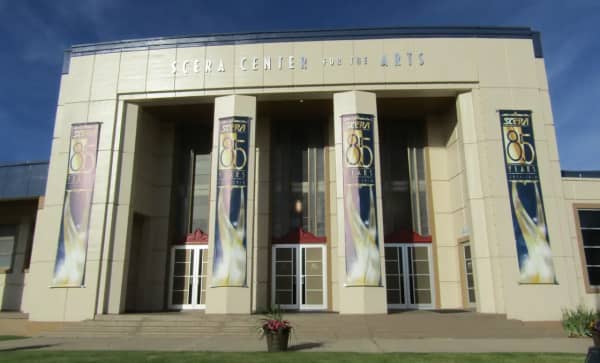
The Ruth is now the largest producing theater company in Utah County by some distance, but it is not the only one. The Covey Center for the Arts in Provo, the SCERA in Orem and BYU's and UVU's theater departments all produce work, and the community theater scene runs deeper than most newcomers expect.
Our guide to live theater in Utah Valley sets out the full landscape. The Ruth is the flagship; it is not the whole picture.
What was lost in the move
It is worth being honest about this rather than writing a press release. The Orem building was too small, structurally awkward and short of parking, and everyone involved knew it. It was also the thing that made the company what it is.
Actors who worked there talk about a room where the audience was close enough that nothing could be faked. A 300-seat house with the front row almost inside the playing space produces a particular kind of performance, and 670 seats — however well designed — is a different proposition. The company has clearly tried to carry the intimacy across, and the retention of in-the-round staging is the mechanism for it, but scale changes things.
The second loss is geographic. For 35 years the valley's principal theater sat in the middle of it. It now sits at the north end, which is excellent for Lehi, American Fork and Pleasant Grove and a longer evening for Springville, Spanish Fork and Payson.
Why the building matters beyond theater
Utah County has grown faster than its cultural infrastructure for two decades. The county has added hundreds of thousands of residents without adding much in the way of purpose-built performance space, and most of what exists — the Covey, the SCERA, campus venues — predates the boom or serves a specific institution.
The Ruth is the largest new performing-arts facility built here in a generation, and it was funded through a private donation and a city partnership rather than a bond. Whatever one thinks of that funding model, it produced a building the valley did not previously have, and it did so in about two years.
Was the move worth it
For the company, clearly. Double the main-stage capacity, a second performance space, a real education wing and modern facilities in exchange for a beloved but cramped building.
For audiences it depends where you live. North county gained a major venue. Orem lost the thing that had been on 400 North for 35 years, and south county gained twenty minutes of driving. That is a real cost and worth naming rather than glossing over — but the building that replaced it is the most significant piece of performing arts infrastructure built in Utah County in a generation.
A note on the name you will still hear
Locals have not switched over cleanly, and probably will not for years. You will hear "Hale Orem," "the Hale," "the new Hale" and "The Ruth" used interchangeably, sometimes by the same person in one sentence, and search results and third-party ticket sites still carry the old name and occasionally the old Orem address.
Two rules keep you out of trouble. If a listing gives an Orem address on 400 North, it is out of date. If it gives a Sandy address on Monroe Street, it is the other company. The one you want is on Pleasant Grove Boulevard.
Related Guides
- Live Theater in Utah Valley: The Complete Guide
- Things to Do in Orem
- Utah Valley Farmers Markets, by Day of the Week
- UTA Fares and Passes Explained for Utah County
- The Best Parks in Provo
Frequently Asked Questions
Is Hale Center Theater Orem still open?
Where is The Ruth?
Is this the same as Hale Centre Theatre in Sandy?
How many seats does The Ruth have?
What was the first show in the new building?
Does it still do theater in the round?
Are there classes for kids?
What kind of shows does it produce?
Sources
The facts in this guide were checked against these sources. Hours, fees and rules change, so confirm anything time-sensitive with the source before you go. How we make Provo.com.
- 'The Ruth' theater opens its doors, The Ruth and Nathan Hale Theater. Checked October 12, 2026.
- Hale Centre Theatre. Checked October 12, 2026.
- New Hale theater in Pleasant Grove looks to accommodate more patrons, Daily Herald. Checked October 12, 2026.