
Here's a thing that surprises people who move here: Utah Valley sees a lot of theater.
Not in the sense of one respectable regional house that gets by. In the sense of a flagship musical-theater company, a city-run arts center running twenty-plus productions a year, a nearly century-old community arts institution with both an indoor complex and an outdoor amphitheater, a university performing-arts center, and a layer of community stages underneath all of it — inside a valley you can drive across in half an hour.
Part of it is the culture. Utah has an unusually deep bench of musical-theater talent and an audience that shows up with the whole family. Part of it is having two universities feeding directors, designers, and performers into the local scene. The result is a market where you can see good work on a Tuesday for less than a movie-and-dinner in a bigger city.
Here's how the scene breaks down.
The Ruth (Hale Center Theater Orem)
401 South Pleasant Grove Boulevard, Pleasant Grove
The valley's flagship for musical theater. Hale Center Theater Orem operated in Orem from 1990 to 2024 and moved to The Ruth and Nathan Hale Theater, a new performing arts building on the doTERRA campus in Pleasant Grove that opened January 4, 2025. Many people still call it "Hale Orem," so check the address when you book.
The theater operates under the Hale Center Foundation for the Arts and Education, a nonprofit with a stated three-part mission: deliver high-quality, intimate theatrical experiences while keeping tickets affordable; give artists a strong venue to develop in; and invest in the community through education. In practice that means the performance calendar is only part of what happens in the building — there are acting classes and costume rentals available to the public, which is a useful thing to know come Halloween or a school production.
The performers are largely semi-professional, and the pipeline is real: Hale alumni turn up on Broadway, in commercials, and on network television. Directors, designers, and crew are frequently drawn from the nearby universities.
One critical clarification. Hale Center Theater Orem is not the same organization as Hale Centre Theatre in Sandy. Different city, different company, different seasons, different box office — and, confusingly, a different spelling of "Centre." People buy tickets to the wrong one every year and discover the mistake forty minutes up I-15. Check the address.
Covey Center for the Arts, Provo
Provo's city-run performing arts center, downtown
If Hale is the specialist, the Covey Center is the generalist — and it's the busiest room in the valley.
Provo City reports the Covey Center Main Stage hosts over 100,000 patrons and 10,000 performers each year, presenting roughly 20 to 30 productions per season: musicals, plays, concerts, tribute shows, dance, and variety programming. That range is the point. In a single season the same stage will host a full musical, a touring tribute act, a local dance company recital, and a community concert. It also just topped Utah Valley Magazine's 2026 "Best Of" as Best Music Venue — our piece on how the Covey Center is bringing Broadway-caliber shows downtown for less covers what that programming costs to see, and the 2026-27 season announcement covers what's coming, from Grand Kyiv Ballet to Whose Live Anyway.
The Covey has been recognized repeatedly as Best Entertainment Venue, Best Concert Venue, and Best Family Entertainment Venue in Utah County by the Daily Herald and Utah Valley Magazine, and has won the SCERA Award for Advocate for the Arts.
The city makes an explicit affordability argument: ticket prices at the Covey run a fraction of what the large Salt Lake houses charge, while the performance quality holds up. For a family of five, that difference decides whether live theater is an occasional splurge or a regular habit.
Its downtown location is also its underrated feature — it sits inside walking distance of a real dinner scene, which makes a show there an easy full evening. Our date night guide and downtown Provo coverage get into the pairings.
SCERA, Orem
Indoor center plus the outdoor Shell
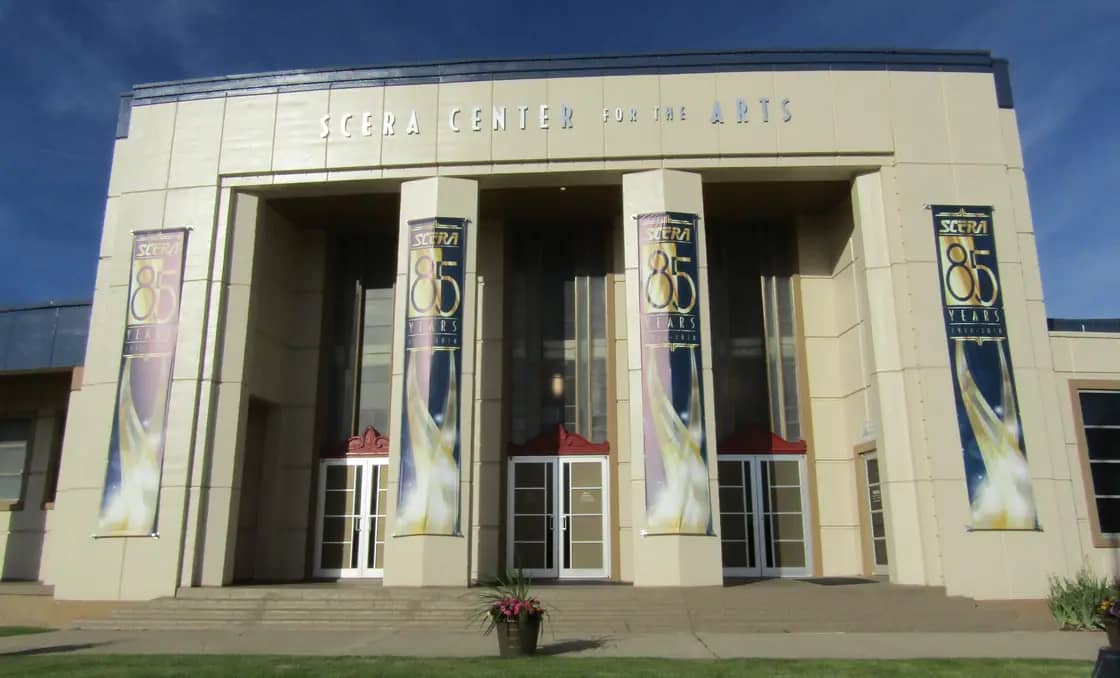
SCERA is the valley's community arts institution, and it operates on two fronts.
The SCERA Center for the Arts on State Street in Orem runs indoor programming year-round — theater, film, concerts, dance, and education.
The SCERA Shell Outdoor Theatre is the summer tradition. A grassy hillside, a stage, and a season of musicals, concerts, and outdoor movies running roughly Memorial Day through the end of summer. It's one of the distinctive things about summer in Utah Valley: blankets on the lawn, families spread out, a show under the mountains. The 2026 season opened with a Memorial Day concert on May 25.
We cover the Shell in depth in the SCERA Shell venue guide, including how the lawn seating works and what to bring.
SCERA skews the most explicitly family-oriented of the valley's major venues, which makes it the default recommendation for anyone introducing kids to live performance.
The Noorda Center, UVU
800 W University Parkway, Orem
The Noorda Center for the Performing Arts on the UVU campus is the valley's newest major arts facility, and it functions as both a student-production house and a presenting venue for touring and professional work.
University venues are frequently overlooked by non-students, which is a mistake here. Ticket prices tend to be modest, production values are high, and the programming reaches into dance, music, and theater that the commercial venues don't typically stage.
BYU likewise produces regular theater, music, and dance work on its campus through its arts programs. Both universities publish their own arts calendars, and both are worth checking alongside the commercial venues — for students especially, campus productions are usually the cheapest live performance in the valley.
Community and smaller stages
The layer beneath the major venues is where a lot of the valley's actual theater culture lives.
The Ruth Theater in Orem has added another room to the valley's roster. Timp Arts Theater in American Fork serves the north end. City arts councils and community theater groups across Utah Valley mount productions in school auditoriums, city halls, and small houses throughout the year.
These are the stages where local performers get their start, where auditions are open, and where a production's cast list reads like a neighborhood directory. Quality varies more than at the flagship venues — that's the nature of community theater — but the ceiling is higher than outsiders expect, and the ticket prices are the lowest around.
Adjacent to theater proper, two Provo institutions round out the live-performance scene: Velour Live Music Gallery on University Avenue, the valley's best-known indie music room, and Dry Bar Comedy on Center Street, which built a national audience out of clean stand-up filmed in Provo.
The season, month by month
Utah Valley theater has a rhythm, and knowing it helps you plan a year of going out.
Fall (September–November) is the heart of the indoor season. Venues open their strongest programming, university productions ramp up, and the calendar is at its fullest.
December belongs to holiday shows. A Christmas Carol and its relatives appear across multiple venues, and family holiday programming sells faster than anything else all year. Book December in October.
Winter (January–March) is the quiet stretch and, for that reason, the best value. Smaller houses, better seat availability, and often the more interesting or ambitious productions — the ones that don't have to fill a thousand seats.
Spring (April–May) brings the end of university seasons, which is when campus productions are at their most polished.
Summer (June–August) moves outdoors. The SCERA Shell season runs, city amphitheaters program, and indoor venues generally lighten their schedules. Sundance keeps a short curated series going at its canyon amphitheater, and the free Rooftop Concert Series takes select Friday evenings downtown — our summer 2026 outdoor concert roundup tracks that side of the calendar. Summer is also when community theater and youth productions are most active.
Getting on stage yourself
One of the distinctive things about theater here is how permeable it is. This isn't a scene where you watch from the outside.
Community theaters hold open auditions throughout the year, and they mean open — no agent, no résumé required. City arts councils and community groups across the valley are routinely looking for cast, crew, and volunteers.
Hale Center Theater Orem runs education programming as part of its foundation mission, including classes, and the same organization rents costumes to the public — useful well beyond theater season.
The universities offer coursework and productions, and UVU in particular draws non-traditional and returning students into its arts programs.
For families, youth theater programs across the valley are numerous and well subscribed. For adults who did theater in high school and have thought about it since, the barrier here is lower than almost anywhere else in the country. Check individual venue sites for current class schedules and audition calls — these move constantly.
Bringing kids to their first show
A few things that make it go better.
Start with a matinee. Younger kids do markedly better at 2 p.m. than at 7:30.
Start with a musical. Music carries attention across the slow parts in a way dialogue doesn't.
Start at SCERA or the Shell. Both are forgiving environments. The Shell in particular — outdoors, on a lawn, where a restless four-year-old can stand up without disrupting a row — is close to an ideal first experience.
Check the recommended age. Venues generally post advisories, and "family venue" doesn't mean every production suits every age.
Sit on an aisle. The escape hatch you don't need is better than the one you needed and didn't have.
How to get tickets
A few practical notes that save money and frustration.
Buy directly from the venue. Every venue listed here sells its own tickets. Third-party resale sites mark up heavily for shows that are rarely sold out.
Season subscriptions are the value play if you go more than twice a year. They typically beat single-ticket pricing and lock in seats before the general public.
Popular musicals sell out; straight plays usually don't. A well-known title at The Ruth can move fast — plan weeks ahead for those. A drama or a less familiar title often has good seats available the same week.
Weeknights and matinees cost less and feel less crowded. Thursday is the quiet sweet spot.
Check content advisories before bringing young kids. "Family-friendly venue" and "appropriate for a six-year-old" aren't the same claim, and venues generally post recommended ages per show.
Prices, seasons, and schedules change every year. We don't publish ticket prices here on purpose — anything we printed would be wrong by next season. Venue box offices are the source worth trusting.
Why the scene is this deep
It's a fair question — why does a metro area of more than 750,000 support this much live theater when comparably sized places elsewhere support one struggling playhouse?
A participation culture, not just an audience culture. Community and church productions have long been a normal part of life here, which means a large share of the adult population has been on a stage at some point. People who have performed buy tickets. They also volunteer, audition, build sets, and bring their kids.
Two universities feeding the pipeline. BYU and UVU graduate performers, directors, designers, and technicians every year, and a meaningful number stay in the valley. That gives local companies access to trained talent at a scale most small markets simply don't have — which is why production values here routinely exceed what the ticket prices suggest.
Family programming has a reliable audience. In a market with one of the youngest median ages in the country and large households, a well-chosen family musical fills seats. That commercial reliability underwrites the riskier work in the rest of a season.
Nonprofit structures and affordability mandates. Several of the valley's key venues are explicitly nonprofit or city-operated, with affordability written into their mission rather than treated as a constraint. That keeps prices low enough for repeat attendance, and repeat attendance is what sustains a scene.
The result is a virtuous loop: cheap tickets build habitual audiences, habitual audiences support more productions, more productions employ more local artists, and the artists' families and friends fill more seats.
It's also worth saying plainly that this depth is not guaranteed. Arts organizations everywhere run on thin margins, and the valley's venues depend on ticket sales, donations, and volunteer labor. The scene is deep because people keep showing up.
Making a night of it
Theater slots neatly into a full evening here, and the geography helps.
A Covey Center show pairs with dinner downtown — our best restaurants in Provo guide covers the walkable options. SCERA sits near Orem's dining corridor and University Place, and The Ruth is a short drive north in Pleasant Grove. A Shell show in summer works as a picnic; bring the blanket and eat on the lawn.
For visitors, live theater is one of the more pleasant surprises Utah Valley offers, and it fits well into a weekend built around the 48-hour Provo itinerary or a stay covered in where to stay in Provo.
Parking and logistics
Small practical notes that make an evening smoother.
The Covey Center sits in downtown Provo, where street parking and nearby lots fill on busy nights — particularly when something else downtown is happening the same evening. Arrive twenty minutes earlier than feels necessary.
The Ruth and SCERA both sit in more suburban settings with easier parking, though popular shows still fill lots close to curtain.
The SCERA Shell is lawn seating: bring blankets or low chairs, and note that high-backed chairs are often restricted so they don't block sightlines. Check the venue's policy before loading the car.
Curtain times are enforced. Intimate houses in particular may hold latecomers until a scene break rather than seating them mid-scene, which can mean missing a chunk of the first act.
The bottom line
For a metro area this size, the theater scene here is disproportionate — deeper, cheaper, and better attended than it has any statistical right to be. The Ruth for musicals. The Covey Center for range. SCERA for family and for summer nights on the grass. The Noorda and the campus stages for work you won't see anywhere else in the valley.
Pick one this month. Tickets are cheaper than you think, and the room is closer than you think.
More to do: Museums in Provo · Outdoor movie nights · Things to do in Utah Valley
Related Guides
- Comedy in Provo: Dry Bar, ComedyBox, and How a College Town Became a Clean-Comedy Capital
- Provo Nightlife & Evening Entertainment: What's Actually Open After Dark (2026)
- Hale Center Theater Orem Is Now The Ruth
- Pottery and Ceramics in Utah Valley
- Community Choirs, Orchestras and Bands in Utah Valley
New on campus: BYU's new Arts Building, with four theaters and six galleries (October 2026).
Frequently Asked Questions
What is the best theater in Utah Valley?
Is Hale Center Theater Orem the same as Hale Centre Theatre in Sandy?
How much are theater tickets in Utah Valley?
Is theater in Utah Valley family-friendly?
Where can I see outdoor theater in Utah Valley?
Can adults take acting classes in Utah Valley?
Sources
The facts in this guide were checked against these sources. Hours, fees and rules change, so confirm anything time-sensitive with the source before you go. How we make Provo.com.
- Annual population estimates (SUB-EST2025), U.S. Census Bureau. Checked October 12, 2026.
- The Ruth and Nathan Hale Theater FAQ, The Ruth and Nathan Hale Theater. Checked October 12, 2026.