
More on Orem: every guide we have published there, in one place.
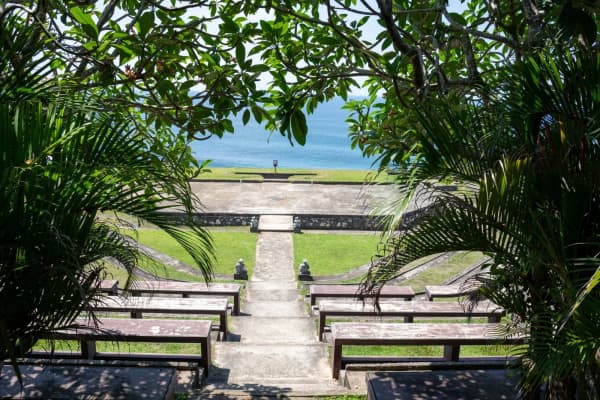
The SCERA Shell is a grass hillside facing a stage in the middle of a public park in Orem, with the Wasatch directly behind it. That description undersells it and also explains it: this is not a hard-seat concert venue with a beer line, it is a town amphitheater where a few thousand people spread out blankets on a hill and watch a musical, a national touring act or a film as the light goes off the mountain.
It is also a venue with an unusually specific rulebook — and almost none of it appears on the listing sites that come up when you search for it. What follows is the operational stuff, first, because that is what determines whether your evening works.
(The Shell is the outdoor half of a deeper scene. For the indoor stages that carry the other nine months, see our guide to live theater in Utah Valley.)
First: Two Addresses, One Organization
The Shell is at 600 South 400 East, Orem, in the middle of SCERA Park.
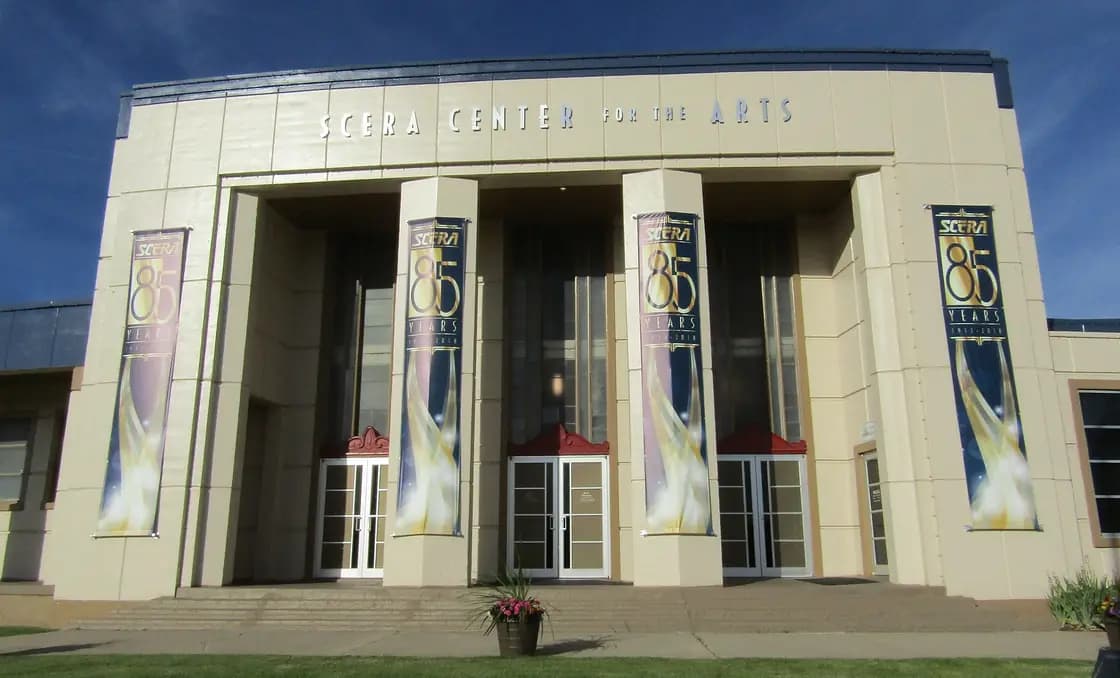
The SCERA Center for the Arts is at 745 South State Street. Different building, different block.
Both are genuinely SCERA addresses, which is why you will find the organization listed under either one depending on the source, and why people occasionally arrive at a locked indoor lobby while a concert is starting in the park. The Center holds the indoor theaters, the gallery and the main box office. The Shell is the outdoor stage. If your ticket says Shell, go to the park.
This is a known trap locally: BYU's Education Week listings have given both addresses for SCERA venues in the same program, which is covered in our Education Week guide.
Parking Is Free, and There Is More of It Than You Think
SCERA publishes six options, all free:
- SCERA Park Pool — 699 S State St
- Orem High School — 175 S 400 E
- The church lot — 631 S 400 E
- SCERA Park Elementary — 450 S 400 E
- SCERA Center — 745 S State
- Along 400 East itself
The closest ones fill first on a big concert night. The school lots a few blocks out almost never do, and the walk is flat.
Gates and Showtimes: the Rule Most People Get Wrong
All live events — plays and concerts — start at 8:00 p.m. Outdoor movies start at dusk.
The entry schedule is where it gets specific, because concerts and everything else run on different clocks:
| Box office opens | Gates open | |
|---|---|---|
| Plays and movies | 90 minutes before | 1 hour before |
| Concerts | 2 hours before | 90 minutes before |
For a concert that means gates at roughly 6:30 p.m. for an 8:00 p.m. start. Turn up at 7:00 thinking you are early and the good hill is already claimed.
The box office at the Shell is at the west entrance, which is also where the main entrance, concessions and restrooms are — all at the top of the hill. Will-call pickup is there too.
Accessibility: the south entrance is the wheelchair-accessible one, with a sidewalk leading to a flat concrete seating area rather than the grass slope. There is a more easily accessible restroom behind the stage building rather than at the top of the hill.
Seating: Pick Your Side of the Hill
General admission is split by what you are sitting on.
- Blankets — northeast side of the hill
- Chairs — southwest side of the hill
Bring the right chair. SCERA's limits are exact: a chair from home may stand a maximum of 32 inches tall with 12-inch back legs, and the venue can refuse anything that blocks the view behind it. A standard camp chair is often over that. If yours does not qualify, you can rent one at the gate for a couple of dollars — but quantities are limited, so bring a blanket as backup rather than assuming.
Reserved seating is a separate tier. Sections A and B sit in the lower center of the hill and include a chair — you are guaranteed a chair but not a specific seat. The Reserved Floor is the concrete area directly in front of the stage and does have assigned rows and seats. You show a reserved ticket to an usher to get in.
And here is the detail worth knowing from both sides: empty seats in Sections A and B are released to the general public at 8:30 p.m. If you paid for reserved, be in your seat before then. If you did not, that is a free upgrade thirty minutes into the show — provided anything is going spare.
Upgrading a general admission ticket to reserved has to be done in advance at the main office during weekday business hours, not at the gate.
Food, Bags and What You Cannot Bring
No coolers of any size. No large bags. No glass. That is SCERA's wording, and the "of any size" is doing real work — a soft six-can cooler is still a cooler.
Concessions are the trade-off, and they are more of a dinner operation than a snack counter: sandwiches, pizza, pretzels, nachos, churros and hot dogs on the savory side, then ice cream, Dippin' Dots, Dole Whip, candy, bottled water, Icees and soft drinks. Cards are accepted as well as cash, so you do not need to hit an ATM first.
Prohibited inside the gates at all times: smoking, alcohol, and pets other than service animals. No flash photography, audio recorders or video cameras without SCERA's authorization.
Dress is informal — shirt and shoes required — and the venue's own advice is to bring a blanket or jacket, because a hot Utah Valley day turns cool fast once the sun is behind the mountains and you have stopped moving.
For families: children of all ages are welcome, but no car seats or strollers inside the venue, and SCERA asks that children not run or roll down the hill during a show. That stroller rule catches parents at the gate more than anything else on this page.
If You Have Never Been: the Shape of an Evening
Park in one of the school lots and walk in — it is flat and it is faster than circling the closest lot. Come through the west entrance at the top of the hill, where the box office, restrooms and concessions all are, and buy food before the light goes, because the queue doubles at dusk.
Then pick your side: blankets northeast, chairs southwest. The hill is comfortable and the sightlines are good almost everywhere, so being fifteen rows further back costs you very little.
The hour before an 8:00 p.m. show is the part people underrate. The sun drops behind the Wasatch, the temperature falls ten or fifteen degrees, families spread out, and on concert nights a small train runs laps of the park. Bring the jacket you did not think you would need. Then the lights come up on the stage and the mountain goes dark behind it, which is the entire reason this venue exists in a valley that could have built an indoor hall instead.
Weather: Assume the Show Is Happening
This is the question everyone asks and almost nobody finds the answer to, so here it is plainly, from SCERA's own policy: in most cases events are not declared a rainout before showtime, and most shows continue regardless of cold, wind or rain. A grim afternoon forecast in Utah Valley very often becomes a fine evening.
So: come prepared for the weather rather than waiting for a cancellation that probably is not coming.
If management does declare an official rainout before intermission, the remedy depends on the event:
- Multi-night events (plays): a raincheck for one of the remaining nights
- One-night events: season ticket holders receive a ticket to a future Shell event of SCERA's choosing; people who bought that event separately can choose a cash refund or an exchange
Either way you need the ticket stub or proof of purchase, and claims have to be settled within seven days, in person at the main office during weekday hours.
Otherwise: there are no refunds or exchanges. And for a multi-night play, your ticket is good on any one night of the run — which is a useful flexibility that goes unused because nobody reads it.
Tickets
Buy ahead. The Shell is ticketed — unlike the free park film nights elsewhere in the valley — and the touring acts do sell.
The main box office is at the SCERA Center, 745 South State, open weekday daytimes and Saturday afternoons; SCERA's published counter hours do not extend to Sundays, and its programming has long avoided them, so plan around a Saturday if you want to buy in person. Major cards are accepted. Online sales and the current calendar run through scera.org.
What's Actually On
The Shell runs a summer season with three recognizable strands, and the shape repeats year to year even as the names change:
- Musicals, staged by SCERA over multi-night runs
- National touring concerts, typically country, classic pop, Broadway and Motown-era acts
- Outdoor movies, family-oriented, starting at dusk
For the 2026 season as it stands in August: the Shell's summer musical is Guys and Dolls, running 31 July to 18 August. Diamond Rio plays 24 August, and Tony and Grammy winner Heather Headley performs with the Utah Valley Symphony on 29 August. Earlier in the season the slate also carried Rachel Platten. Dates and the full calendar live at scera.org — take them from there rather than from an aggregator, which is standard advice for this valley and doubly so for a venue whose season shifts each year.
One nice extra that appears on concert nights: SCERA's concert listings advertise free rides on the Orem Express, a small train that runs a track through SCERA Park, generally from around 5:00 to 8:00 p.m. before a show, starting just north of the Shell box office. It is aimed squarely at families killing the pre-show hour, and it is free.
A pleasing accident of naming: the Orem Express was also the name of the interurban railway that ran through this valley in the early twentieth century — the Salt Lake and Utah Railroad, known locally as the Orem Line. The park train shares its name with a real railroad.
Where SCERA Came From
The venue makes more sense once you know the organization is older than most of the buildings around it.
SCERA was founded in Orem in 1933, when the town held roughly three thousand people and the Depression had taken farms and homes across the valley. Local leaders from the Sharon Stake pooled resources to build a community gathering place; accounts of the founding also cite the drowning of a child in an unprotected canal as part of what galvanized them. The first goal was a swimming pool. Early film screenings were held at Lincoln High School, with families admitted for a dollar a month.
The indoor Showhouse opened on 1 September 1941 with John Wayne in Shepherd of the Hills. Ground had been broken in March 1940 on land donated by the Church, financed by bonds and built substantially by volunteers — and, notably, without government or outside financial backing, which is why SCERA retained full control of its own building. The original auditorium seats about 750.
The outdoor Shell came later, added to take advantage of Utah's dry summer evenings, and local accounts credit the Osmond Brothers with playing its opening — a nice thread, given how much of the Osmond family's story runs through this valley and through Stadium of Fire in particular.
Two numbers are published inconsistently and this guide does not pick between them. The Shell's capacity appears as 4,000 in some accounts and over 5,000 in others. The seating count for the indoor Showhouse appears as both 745 and 756. Take the ranges; the exact figure is not the point.
Even the acronym has drifted. SCERA has been rendered as Sharon's Cultural, Educational, Recreational Association; Sharon Community Education Recreation Association; and several combinations in between — the mechanism being that the middle word appears to have started as Community and become Cultural. Sources copy whichever version they found.
What is consistent: SCERA is a non-profit that runs largely on volunteers, with roughly a thousand people contributing well over a hundred thousand service hours a year, and tens of thousands of people passing through the Shell across a season.
The Rest of SCERA
The Shell is one part of a bigger operation, and a summer ticket is a reasonable gateway to the rest:
- SCERA Center for the Arts — indoor season, feature films and the Clarke Grand
- Gallery 101 — rotating art exhibits
- The Orem Heritage Museum — housed at SCERA, with free tours for families and groups
- Arts education — drama, art, dance and voice classes for children, teens and adults, plus the Acting UP! youth company
- Film programming with a long-standing family-friendly rating policy, plus a summer matinee series and a classics strand
Where It Fits in a Utah Valley Summer
The Shell is the anchor of the valley's outdoor season, and it pairs naturally with the free options rather than competing with them. Rock Canyon Park runs free film nights and Ashton Gardens runs ticketed ones; the Rooftop Concert Series plays free downtown on select Friday evenings. Our roundup of Utah Valley's summer outdoor concerts covers the paid and free calendar together, and outdoor movie nights covers the screenings.
If you are building a summer's worth of evenings around one venue, this is the one to plan around — and then fill the gaps.
Lawn seating, companion seats, and what an outdoor venue owes
An outdoor amphitheater with a hillside is an interesting case under federal accessibility law, because the part of it most people sit on is not seating in the legal sense at all. The 2010 ADA Standards handle that directly, and knowing which provision governs which part of the site explains a lot about how these venues are laid out.
The lawn provision, which is one sentence
Section 221.5 of the 2010 ADA Standards for Accessible Design provides that lawn seating areas and exterior overflow seating areas, where fixed seats are not provided, shall connect to an accessible route.
That is the entire requirement, and its shape is worth noticing. There is no count, no dispersion rule and no reserved position, because none of those concepts apply to an area with no fixed seats — a person can sit anywhere. What the standard requires instead is that the area be reachable. The obligation is about the path, not the destination.
For a venue with a grass or hillside general-admission area, that means the question to ask is a route question: is there a continuous accessible route from accessible parking to the lawn, and where does it enter? On a sloped site that is frequently one specific approach rather than the obvious one, which is why arriving with a plan beats arriving early.
Where fixed seating exists, a different set of rules attaches
Where an outdoor venue does provide fixed seats, Section 221.1 requires wheelchair spaces, companion seats and designated aisle seats complying with Sections 221 and 802, with the number set by Table 221.2.1.1 — 6 spaces plus one for each 150 or fraction thereof between 501 and 5,000 seats, rising to 36 plus one per 200 above 5,000.
Two provisions matter more than the count at an outdoor venue.
Section 221.3 requires at least one companion seat for each required wheelchair space, and Section 802.3.1 requires the wheelchair space and the companion seat to be on the same floor elevation. The 2010 Standards also permit companion seats to be movable, a change from the 1991 standard's requirement of a fixed seat — which is why a folding chair set beside a wheelchair position is compliant rather than improvised.
Section 221.2.2 requires wheelchair spaces to be an integral part of the seating plan, and the advisory is explicit that they must sit within the footprint of the seating area and cannot be segregated from it.
The temporary-platform rule, which is specific to outdoor events
The Department of Justice's own note to the standards, reproducing the assembly area requirements at 28 C.F.R. § 36.406(f) and § 35.151(g), adds a provision written for exactly the situation an outdoor venue creates when it expands for a big show.
Wheelchair spaces and companion seats must not be located on, or obstructed by, temporary platforms or other movable structures — with one exception: where an entire seating section is placed on temporary platforms in an area where fixed seating is not provided, in order to increase seating for an event, wheelchair spaces and companion seats may be placed in that section. And where those spaces are not needed to accommodate people eligible for them, individual removable seats may be placed in them.
The same note requires that in stadiums, arenas and grandstands, spaces and companion seats be dispersed to all levels served by an accessible route, and that venues with seating encircling a performance area disperse spaces around that area rather than clustering them.
The specialty-seating rule, for anything sold as an upgrade
28 C.F.R. § 36.308 requires a public accommodation to ensure that wheelchair spaces and companion seats are provided in each specialty seating area that gives spectators distinct services or amenities not generally available to others. Where that is not readily achievable, the venue must provide those services or amenities at other designated accessible locations at no additional cost. Spaces provided in specialty areas count toward the Table 221.2.1.1 total rather than in addition to it.
For a venue that sells reserved sections, boxes or a premium area alongside general lawn admission, that is the provision that decides whether the upgrade is actually available.
What to do with this before a show here
Ask where the accessible route reaches the lawn, not whether the lawn is accessible. Section 221.5 makes the route the requirement, and on a sloped site the answer is a specific gate.
Ask for the companion seat explicitly and at the same level. Same floor elevation is the standard, and a movable companion seat is compliant.
If you are buying an upgrade, ask what the accessible equivalent is. Under § 36.308 it either exists in that area or must be provided elsewhere at no extra cost.
Seating configuration, gate locations and ticketing arrangements change season to season — confirm current arrangements with the venue rather than any guide. For the ticket-sales side of accessible seating, see our wheelchair-accessible Utah Valley guide.
Related Guides
- Live Theater in Utah Valley
- Things to Do in Orem
- Outdoor Movie Nights in Utah Valley
- Summer Activities in Provo
- Family Activities in Utah Valley
- Free Things to Do in Provo
- Best Restaurants in Orem
- Orem Neighborhoods Guide
- American Fork Amphitheater: Free Monday Concerts, Weddings, and Two Different Addresses
- Comedy in Provo: Dry Bar, ComedyBox, and How a College Town Became a Clean-Comedy Capital
- Utah County's free summer concerts, city by city
Operational details — parking lots, gate and box office timings, chair dimensions, seating layout, bag and cooler policy, concessions, accessibility entrances, the 8:30 p.m. seat release and the rainout policy — verified August 2026 against SCERA's own SCERA Shell general information page. Season dates verified against scera.org the same week. Founding history drawn from SCERA's own about pages and local historical accounts, with the contested capacity, seating and acronym variants recorded rather than resolved. Policies and calendars change; confirm at scera.org before you drive.
Frequently Asked Questions
Where is the SCERA Shell Outdoor Theatre?
Where do you park at the SCERA Shell?
What time do shows start at the SCERA Shell?
What kind of chairs can you bring to the SCERA Shell?
Can you bring food or a cooler into the SCERA Shell?
What happens if it rains at the SCERA Shell?
Can you bring young children and strollers to the SCERA Shell?
How old is the SCERA Shell and who runs it?
Sources
The facts in this guide were checked against these sources. Hours, fees and rules change, so confirm anything time-sensitive with the source before you go. How we make Provo.com.
- SCERA Shell Outdoor Theatre | Summer Season, SCERA Center for the Arts. Checked October 12, 2026.
- General Information, SCERA Center for the Arts. Checked October 12, 2026.