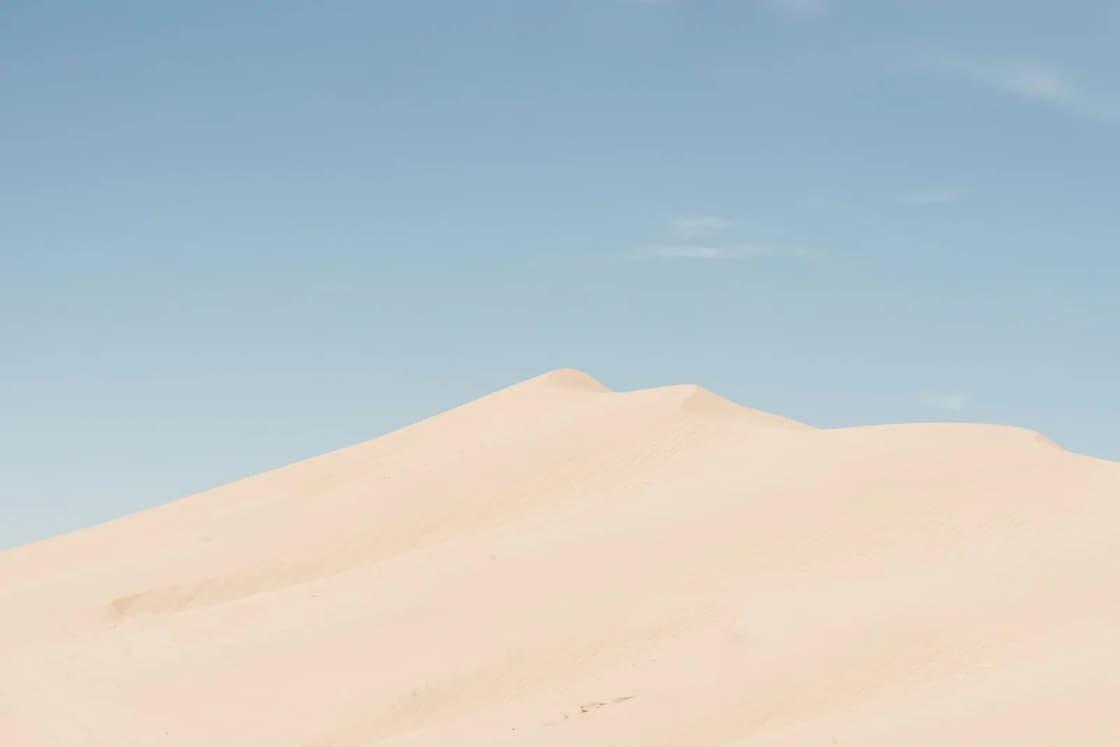

Little Sahara Recreation Area is about 66 miles and an hour and a half from downtown Provo, by an OpenStreetMap routing estimate (OSRM, no traffic). Take I-15 south to Santaquin, then US-6 southwest through Goshen and Eureka to Jericho Junction; the BLM says the entrance road is 4 miles west of the junction. The visitor center address is 27020 W Sand Mountain Road.
It costs $18 per vehicle per night, and that fee includes camping. It is the closest big sand dune field to Utah Valley, and it works for two very different groups: people with dune machines, and families with a sand bucket and no engine at all.
What you will pay
From the BLM's Little Sahara page, as listed in October 2026:
| Option | Price |
|---|---|
| Per vehicle, per night (includes camping) | $18 |
| Annual pass, per vehicle | $120 |
| Annual pass, seniors and people with disabilities | $60 |
| Active military | Ask about discounts |
Where to pay: Recreation.gov (you get a QR code by email that works as your pass until you exchange it for a sticker), the visitor center when open, the BLM Fillmore Field Office, or on site with self-pay envelopes (cash or check) or remote kiosks. Kiosk vouchers need your license plate written on them. The BLM notes there are no processing fees for cash or check.
Cell service is limited and unreliable. The visitor center has free Wi-Fi in its parking lot, but only for reaching Recreation.gov. If you plan to pay online, do it before you leave Provo.
Is the annual pass worth it? At $18 a visit, the $120 pass pays for itself on the seventh visit. A family that rides here every month or two from spring to fall gets there; most first-timers do not.
The rules that get people ticketed or hurt
| Rule | What it says |
|---|---|
| Whip flag | Red or orange, on every OHV, at least 8 feet above level ground (BLM) |
| Helmets | Required on public land for riders under 18 (Utah) |
| Youth riders | Must reach the controls, hold an OHV education certificate, and be under direct adult supervision (Utah) |
| Sober riding | Riding under the influence is illegal, on or off pavement |
| Firearms | Discharging firearms is prohibited in the recreation area |
| Glass, pallets, paintball | Prohibited (BLM) |
| Tunneling in sand | Prohibited; it can collapse |
The education certificate. Utah requires the appropriate OHV education certificate to operate on public land, roads or trails, with separate adult and youth courses. The state describes the online course as free, under 30 minutes, and valid for life. It also says to complete it before renting, which matters if you plan to rent a machine on the way down. Out-of-state machines may also need a non-resident permit; the state treats education and vehicle permits as separate requirements.
Flags are the one item people forget. The BLM's rationale is simple: on a dune, a rider coming up the other side cannot see you until you are on top of them, and an 8-foot flag shows above the crest first. Vendors sell flags on busy weekends, but do not count on buying one in late October.
Scout before you jump. The BLM says many injuries happen when riders fly over unseen drop-offs on the back side of a dune. Walk or idle up to a crest you do not know before you hit it at speed.
Our Five Mile Pass guide covers the closer OHV area in Utah County, and our ATV and UTV rentals guide covers who rents machines and what they require.
Where to ride, by skill
The BLM's own advice, area by area:
- First-timers: the dunes southwest of Black Mountain. Low, less crowded terrain.
- Mixed groups: the White Sand Dunes at the north end, with easy dune access and bowls for all levels.
- Experienced riders: Sand Mountain, which the BLM says rises nearly 700 feet, with hill climbs that test machine and rider.
- Dirt instead of sand: the trail network around Black Mountain, traditional OHV riding through desert terrain.
Main access roads and campground roads are paved; secondary routes and riding areas are not.
Without an engine
This is the part most Utah Valley families do not realize is there.
- Children's sand play areas. The BLM describes two of Utah's largest, near White Sands Campground and Jericho Picnic Area, as motor-free zones for digging and castle building. Fences shift with the sand, so watch the edges, and the BLM asks parents to supervise at all times and not let kids tunnel.
- Sandboarding and sand skiing on the slopes of Sand Mountain.
- Fat biking. Wide tires float on soft sand where regular mountain bikes bog down.
- Rockwell Wilderness Study Area. About 9,000 acres with no vehicles, where the BLM lists mule deer, pronghorn and desert reptiles among the wildlife, and good hiking and birdwatching.
The BLM suggests doing non-motorized activities in the less crowded dune areas or in Rockwell, away from riders. That advice is worth following with small children: an OHV coming over a crest cannot see a child sitting in a bowl.
Camping
Four BLM campgrounds, all listed open in October 2026:
- Oasis
- Jericho
- White Sands
- Sand Mountain
Dispersed camping is permitted outside developed campgrounds. Water fill stations and dump stations at White Sands and Oasis were listed open. Camping is first-come, first-served, no reservations, and there is no charge beyond the entry fee. Toilets: flush in warmer months, vault year-round.
Campfire rules: fires are allowed, but only with appropriate firewood. Burning pallets is illegal (it leaves nails in the sand), and glass and aluminum do not burn, so do not throw them in the fire. Pack out your trash if the bins are full.
Our dispersed camping guide covers the general BLM camping rules that apply here too.
When to go
Fall (now): the BLM lists the visitor center on fall hours, Friday through Sunday, 9 a.m. to 4 p.m. The recreation area itself is always open. Fall is cooler for riding and hiking than summer.
Easter weekend: the busiest weekend of the year. In a past release, the BLM said it expected about 20,000 visitors over Easter and staffed up with up to 80 interagency personnel and officers, with traffic control at the entrance. It is a scene, and some families go for exactly that. It is not the weekend to teach a 10-year-old to ride.
Summer: hot. The BLM tells visitors to bring extra water, dress for the desert and watch the forecast.
Services: the BLM points to Nephi and Delta for fuel, groceries, hotels, medical care and OHV supplies. Coming from Utah Valley on US-6, the simplest plan is to fill up before you leave I-15 at Santaquin.
How the day works
The family sand day (no OHV): leave Provo at 9, pay online before you go, play at the Jericho or White Sands sand area through midday, picnic, and climb a dune in the afternoon. Home by dinner.
The riding weekend: arrive Friday afternoon to claim a campsite (no reservations), ride the beginner dunes Saturday morning before they get busy, move to the White Sand Dunes or Sand Mountain as skills allow, and leave Sunday after lunch.
Pairing it: the Tintic mining district and Eureka are on the way along US-6, and Nephi, the nearest full-service town the BLM names, hosts the Ute Stampede rodeo in the second week of July, which turns a summer dune trip into a weekend. For more trips by distance, see day trips from Provo.
Frequently Asked Questions
How far is Little Sahara from Provo?
How much does Little Sahara cost?
Do I need a whip flag at Little Sahara?
Do kids need a helmet and a certificate to ride?
Can you go to Little Sahara without an OHV?
Can you camp at Little Sahara?
Is Little Sahara open in winter?
What is Easter weekend like at Little Sahara?
Sources
The facts in this guide were checked against these sources. Hours, fees and rules change, so confirm anything time-sensitive with the source before you go. How we make Provo.com.
- Little Sahara Recreation Area, Bureau of Land Management, Utah. Checked October 20, 2026.
- Little Sahara: Recreate Safely and Responsibly, Bureau of Land Management, Utah. Checked October 20, 2026.
- The BLM prepares for thousands of visitors over Easter Weekend (archived), Bureau of Land Management. Checked October 20, 2026.
- OHV laws and rules, Utah Division of Outdoor Recreation. Checked October 20, 2026.
- Utah Division of Outdoor Recreation: OHV education, Utah Division of Outdoor Recreation. Checked October 20, 2026.
- OSRM route service (OpenStreetMap data), driving estimates from Center St & University Ave, Provo, Project OSRM. Checked October 20, 2026.
- Google Places listings (coordinates, addresses, hours), Google. Checked October 20, 2026.