Every one of Utah's five national parks charges an entrance fee, and none of them is close to Provo. That combination is why the pass question matters more here than in most places: the drive from Utah Valley to the nearest park is about 3 hours 35 minutes, so most families go once or twice a year on a long weekend, and the fees add up across a trip that strings two or three parks together. This guide lays out what each park charges, the annual pass options the National Park Service sells, who gets in free, and the local math for a Utah Valley household, including the Forest Service fee in American Fork Canyon that many people here pay without connecting it to the national park pass.
Every price below comes from the National Park Service, the U.S. Forest Service, Utah State Parks or Recreation.gov pages as they read on Nov. 13, 2026. Fees change. Check the park's own fee page on nps.gov before you leave, and for the drive times, seasons and which park fits which month, start with our Utah national parks from Provo, ranked by drive and season.
Quick facts
| Pass or fee | Price | What it covers |
|---|---|---|
| Zion private vehicle | $35 | One vehicle and all occupants, 7 days |
| Bryce Canyon private vehicle | $35 | One vehicle and all occupants |
| Arches or Canyonlands private vehicle | $30 | One vehicle and all occupants |
| Capitol Reef private vehicle | $20 | One vehicle and its passengers |
| Southeast Utah parks annual pass | $55 | Arches, Canyonlands, Natural Bridges, Hovenweep |
| Zion or Bryce park-only annual pass | $70 | That one park for 12 months |
| Capitol Reef annual pass | $35 | Capitol Reef only |
| America the Beautiful annual (U.S. residents) | $80 | Every national park and other federal fee sites |
| America the Beautiful non-resident annual | $250 | Same, plus waives the $100 nonresident fee |
| Senior Pass (62+) | $20 a year or $80 lifetime | Same coverage as the $80 pass |
| Military, Access, 4th Grade, Volunteer | Free | Same coverage, with eligibility rules |
| Nonresident fee, Zion and Bryce | $100 per person 16+ | Added to entrance fee unless you hold an annual pass |
Sources: National Park Service fee pages for each park and the NPS entrance passes page, checked Nov. 13, 2026.
Who this guide is for
Three groups in Utah Valley run into these fees most often:
- Families planning a southern Utah weekend. A Zion-and-Bryce trip, or a Moab trip that takes in both Arches and Canyonlands, is where the choice between paying at the gate and buying a pass makes the most difference.
- BYU and UVU students. Students who are U.S. citizens or residents pay the same as anyone else. International students should read the nonresident section below, because the rules changed in 2026.
- Retirees, veterans and families with a fourth grader. These are the groups most likely to qualify for a free or deeply discounted pass and not know it.
If you visit one park once a year and nothing else on federal land, you can skip the annual pass entirely and pay at the gate. That case is covered below too.
What each Utah park charges at the gate
The National Park Service calls a single-visit entrance a "Standard Pass." Every Utah park sells one for a private vehicle, a motorcycle, and a person arriving on foot or by bicycle.
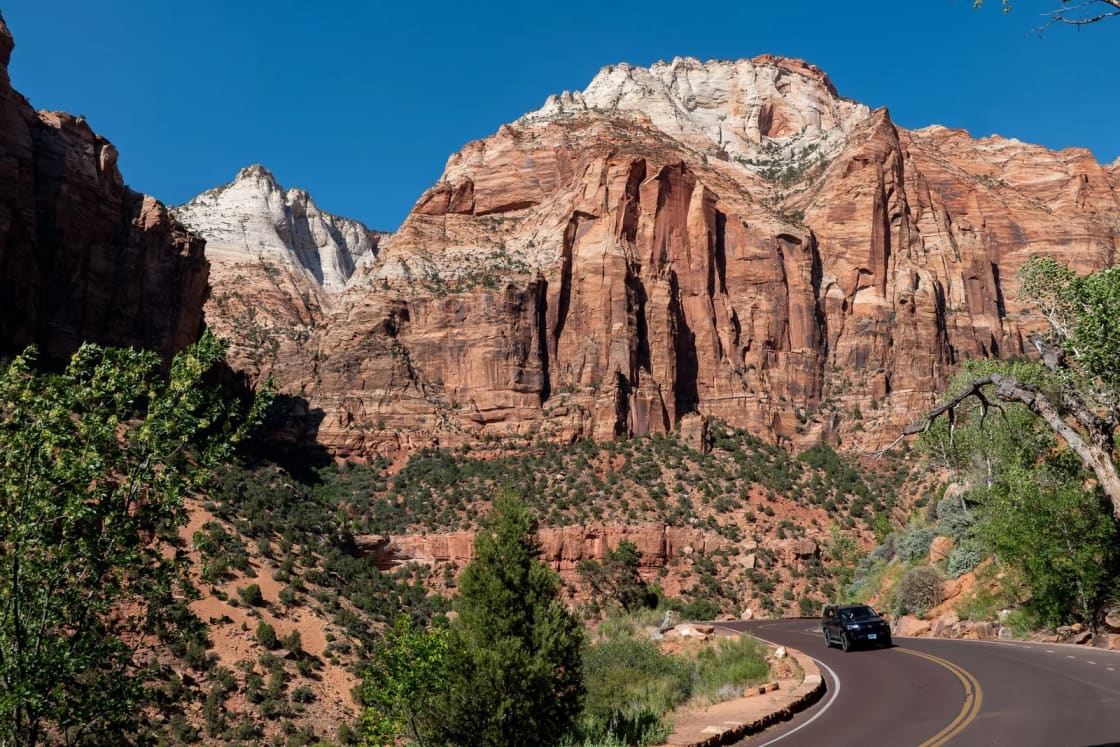
Zion. $35 per private vehicle, which the park says admits a private, non-commercial vehicle with 15 passenger capacity or less and all occupants. Motorcycles are $30 for up to two bikes and four riders. Anyone 16 or older entering on foot or by bike pays $20; youth 15 and under are free. Zion says its standard passes are valid for 7 days. A Zion-only annual pass costs $70 and is valid for 12 months from the purchase month.
Bryce Canyon. $35 per private vehicle, $30 per motorcycle pass (valid 7 days), $20 per person without a vehicle, with youth 15 and under free. The Bryce park-only annual pass is $70, valid for 12 months from purchase. Bryce's fee page does not state how many days the vehicle pass is good for, so ask at the entrance station if you are planning a multiday stay.
Arches. $30 per private vehicle, $25 per motorcycle pass (valid 7 days), $15 per person on foot or bike, youth 15 and under free.
Canyonlands. The same prices as Arches: $30 per vehicle, $25 per motorcycle pass, $15 per person, youth 15 and under free. Both the Island in the Sky and Needles entrance stations sell passes. The Canyonlands fee page does not spell out whether one standard pass covers both districts on separate days; if you plan to visit both on one trip, ask at the first entrance station. Canyonlands also says timed-entry reservations are not required to enter the park.
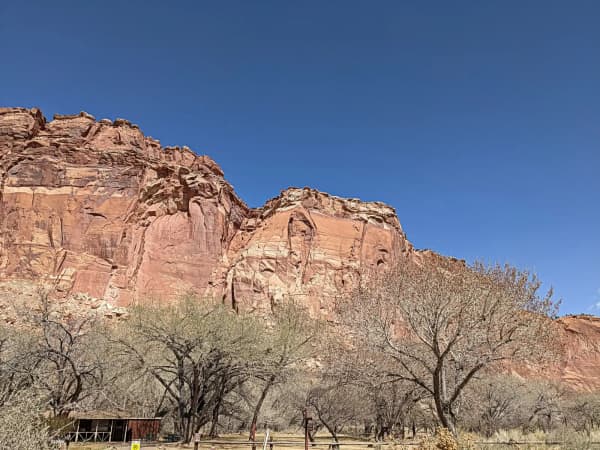
Capitol Reef. $20 per private vehicle, $15 per motorcycle pass (valid 7 days), $10 per person on foot or bike, and visitors under 16 do not need a pass. The park-only annual pass is $35. Capitol Reef's fee page does not list which roads are inside the fee area, so do not assume a drive through on Highway 24 is treated the same as a trip up the Scenic Drive; check with the visitor center.
Only Zion's page gives a validity period for the standard vehicle pass (7 days). The Bryce, Arches, Canyonlands and Capitol Reef fee pages list the motorcycle pass as good for 7 days but do not state a period for the vehicle pass. If you plan to leave and come back on a later day, keep the receipt and ask.
Paying at the gate: bring a card
Several Utah parks have stopped taking cash, and the policies differ:
- Bryce Canyon says it does not accept cash and that fee stations take credit or debit cards only.
- Arches and Canyonlands list entrance station sales as credit or debit only.
- Zion says a credit or debit card is preferred and cash is also accepted.
- Capitol Reef lists "cash or credit/debit" for annual passes sold at the visitor center, and also sells its standard pass online.
- Cedar Breaks National Monument says it does not accept cash.
- Natural Bridges National Monument says it now accepts only mobile or electronic payments for entrance and camping fees, with passes available on Recreation.gov or by phone at 1-877-444-6777.
The practical rule for a Provo family: carry a card that works, and if you already own an annual pass, bring it and photo ID so you do not need to pay at all.
The America the Beautiful pass
The America the Beautiful pass is the federal interagency pass. The Park Service says it covers entrance fees and standard amenity (day-use) fees at lands managed by the National Park Service, U.S. Fish and Wildlife Service, U.S. Forest Service, Bureau of Land Management, Bureau of Reclamation and U.S. Army Corps of Engineers.
The prices, as the Park Service lists them:
- Resident annual, U.S. citizens and residents: $80
- Non-resident annual: $250
- Senior annual, U.S. citizens or residents 62 and older: $20
- Senior lifetime, same eligibility: $80
- Military annual, current U.S. military and dependents: free
- Military lifetime, Gold Star family members and veterans: free
- Access pass, U.S. citizens or residents with a permanent disability: free
- 4th Grade pass, U.S. fourth graders: free
- Volunteer pass, federal recreation volunteers with 250 service hours: free
How coverage works: depending on the kind of fee a site charges, the pass covers either one private vehicle or four per-person fees. At a per-vehicle park like Zion or Arches, that means one car and everyone in it. At a site that charges per person, it means the pass holder plus up to three other people who would otherwise pay. Recreation.gov notes that children 15 and under are always admitted free.
The rules that trip people up, all from the Park Service:
- Passes are non-refundable and non-transferable and cannot be replaced if lost or stolen.
- Holders must show valid photo ID with the pass.
- Senior passes cannot be bought as gifts.
Recreation.gov describes the interagency annual pass as valid for a full year through the month of purchase. In plain terms, a pass bought on Nov. 2 and one bought on Nov. 29 run out at the same time, so if you have a choice, buy early in the month.
The pass math for a Utah Valley household
These are gate prices from the Park Service and Forest Service pages listed at the end. The comparisons are simple addition.
One park, once a year. Pay at the gate: $20 for Capitol Reef, $30 for Arches or Canyonlands, $35 for Zion or Bryce. An $80 annual pass does not pay off on a single visit.
Zion and Bryce on one long weekend. $35 plus $35 is $70 at the gates. That is $10 short of the $80 pass, so the pass wins only if you will use it again within the year anywhere it is honored.
Zion, Bryce and Capitol Reef on one trip. $35 plus $35 plus $20 is $90. The $80 pass is cheaper before you even get home.
A Moab trip to Arches and Canyonlands. $30 plus $30 is $60 at the gates. The $55 Southeast Utah annual pass covers both parks, plus Natural Bridges and Hovenweep, for a year. If Moab is the only place you go, the $55 pass is the cheapest option; if you also plan a Zion or Bryce trip in the same year, the $80 pass covers everything.
Two Zion trips in a year, nothing else. $35 twice is $70, the same as the Zion-only annual pass. The $80 pass costs $10 more and also covers every other national park and federal fee site.
The American Fork Canyon factor. This is the local piece many households miss. The Park Service's Timpanogos Cave fee page lists the Forest Service American Fork Canyon fee at $10 for three days, $20 for seven days and $60 for an annual pass, and it says the U.S. Forest Service honors the America the Beautiful pass. A family that buys the $60 canyon pass every year and also makes one $20-or-more trip to a national park has already spent $80 or more. The America the Beautiful pass would have covered both.
Mirror Lake Highway. The Uinta-Wasatch-Cache National Forest lists the Mirror Lake fee at $10 for a multi-day pass, $20 per week and $60 per season or year. The forest's pass page says interagency passes are accepted at federally managed lands across the country and cover amenities at many day-use sites, but it does not name the Mirror Lake sites specifically, so confirm with the Heber-Kamas Ranger District (Kamas office 435-783-4338) before relying on it. Our Mirror Lake Highway from Provo guide covers that drive.
Two adults, two cars. Because the pass is non-transferable and requires the holder's ID, one pass does not cover two cars traveling separately. Plan to ride together, or expect to pay a second vehicle fee.
Timpanogos Cave: the national monument in Utah Valley
The closest National Park Service site to Provo is Timpanogos Cave National Monument in American Fork Canyon, and it works differently from the big parks. The Park Service says there is no entrance fee: driving through, using the picnic areas and hiking within the monument are free, but a ticket is required to enter the cave system.
Tour prices listed by the Park Service:
- Timpanogos Cave Tour: $12, with tickets ranging from $2 to $12 depending on age
- Lantern Tour: $17, ages 7 and up
- Introduction to Caving Tour: $22, ages 14 and up
The America the Beautiful pass does not make the cave tour free, because the tour is a ticket, not an entrance fee. The one discount: holders of a Senior or Access pass get 50% off the Timpanogos Cave Tour, for the pass holder only. The monument does not accept cash.
If you only visit the cave, the Canyon Nature Trail or the Swinging Bridge Picnic Area, the Park Service says you do not need to pay the Forest Service canyon fee. Going farther up the canyon to Forest Service sites is where the fee, or your America the Beautiful pass, comes in. The tour season, trail and ticketing are in our Timpanogos Cave guide, and the rest of the canyon is in our American Fork Canyon guide.
Free and discounted passes, and how to qualify
Senior Pass
U.S. citizens and permanent residents 62 and older can buy the Senior annual pass for $20 or the Senior lifetime pass for $80. Applicants must provide proof of age and of residency or citizenship. The Park Service says the senior pass may provide a 50% discount on some amenity fees such as camping, swimming, boat launch and specialized interpretive services, but it generally does not cover or reduce special recreation permit fees or concessioner fees.
The older Golden Age and Golden Access passports are no longer sold, but the Park Service says they are still honored and can be exchanged free for a Senior Lifetime Pass in person with the old pass and photo ID.
Access Pass
Free for U.S. citizens or residents of any age who have been medically determined to have a permanent disability. The Park Service says the disability does not have to be 100% but must severely limit one or more major life activities. You need a valid photo ID plus one of these:
- A signed letter from a licensed physician stating the disability is permanent, that it severely limits daily life, and the nature of the limitations
- A federal document, such as one from the Department of Veterans Affairs or the Social Security Administration, showing entitlement to disability benefits
- A state document, such as one from Vocational Rehabilitation, attesting to eligibility for disability-related benefits
Military and veterans
The Park Service lists two passes:
- Military Annual Pass for current service members and their dependents. Pick it up in person with an unexpired Common Access Card (CAC), DD Form 1173 or Next Generation Dependent ID.
- Military Lifetime Pass for veterans and Gold Star families. Veterans can show a Department of Defense ID card (DD Form 2, DD Form 2765 or the Next Generation USID replacement), a Veteran Health Identification Card, a Veteran ID Card (which the VA issues only in digital form), or a veteran designation on a state-issued driver's license or ID card. Gold Star families bring a printed Gold Star Voucher from the Park Service website.
The Park Service notes that digital and mailed military passes are also available through Recreation.gov and the USGS Store, which charge fees, while the in-person pickup is free.
4th Grade Pass (Every Kid Outdoors)
U.S. fourth graders, including home-schooled and free-choice learners who are 10 years old, can get a free annual pass. Timpanogos Cave's Every Kid Outdoors page says the pass is valid for the fourth grade school year through the following summer, Sept. 1 through Aug. 31, and is non-transferable.
The process starts at everykidoutdoors.gov, where the student completes a short online activity and prints a paper voucher. The program says electronic copies are not accepted, so print it. The Park Service says the paper voucher can be exchanged for the pass at federal recreation sites that charge entrance or standard amenity fees. The program also warns that not every site will accept the paper pass, so have an adult call ahead. A Utah Valley fourth grader's pass year that started Sept. 1, 2026, runs through Aug. 31, 2027, which leaves the whole spring and summer for a southern Utah trip.
Nonresidents and international students
Two 2026 changes matter here, and they are relevant in a valley with two large universities and many international visitors.
The $100 nonresident fee. The Park Service says non-U.S. residents 16 and older pay a $100 fee in addition to the entrance fee at 11 parks: Acadia, Bryce Canyon, Everglades, Glacier, Grand Canyon, Grand Teton, Rocky Mountain, Sequoia and Kings Canyon, Yellowstone, Yosemite and Zion. In Utah, that means Zion and Bryce. An annual park pass or an America the Beautiful pass waives it. Arches, Canyonlands and Capitol Reef are not on the list.
The $250 non-resident annual pass. It covers the entrance fee and the nonresident fees for the pass holder and up to 15 passengers in a private vehicle, the pass holder and passengers on two motorcycles, or at per-person sites, the pass holder plus three additional people 16 and older. For a carload of visiting relatives who plan to see both Zion and Bryce, the arithmetic can favor the pass quickly: four adults would owe $400 in nonresident fees at Zion alone before the $35 vehicle fee.
Fee-free days no longer apply to nonresidents. The Park Service says that beginning in 2026, free entrance days are for U.S. citizens and residents only.
The Park Service says all America the Beautiful passes other than the non-resident annual are for U.S. citizens and residents. The pages checked for this guide do not define "resident" for people living in the U.S. on student or work visas. If you are an international student at BYU or UVU, ask the park or call ahead before you buy a pass or pay at the gate, and bring your documents.
Fee-free days
The Park Service listed these free entrance days for 2026: Feb. 16 (Presidents Day), May 25 (Memorial Day), June 14 (Flag Day and President Trump's birthday), July 3 to 5 (Independence Day weekend), Aug. 25 (the 110th birthday of the National Park Service), Sept. 17 (Constitution Day), Oct. 27 (Theodore Roosevelt's birthday) and Nov. 11 (Veterans Day).
As of this guide's date, all of them have passed. The fee-free page did not list 2027 dates when checked on Nov. 13, 2026. Watch nps.gov/planyourvisit/fee-free-parks.htm for the new list. On free days, the Park Service says other fees, including timed entry or reservation fees, may still apply.
What the passes do not cover
The Park Service's military pass page states it plainly: the interagency passes do not cover camping, tours, reservations or concession-operated services. Recreation.gov says the interagency annual pass gives no discounts on camping, permit or ticket reservations. For a southern Utah trip, that means you still pay separately for:
- Campgrounds inside the parks
- Angels Landing permits at Zion; our Angels Landing permit guide explains the lottery
- Fiery Furnace permits and ranger hikes at Arches
- Timpanogos Cave tour tickets
- Boat fees at Glen Canyon. Lake Powell's fee page lists vessel fees separately, starting at $20 a week or $40 a year for personal watercraft 16 feet and under. The Glen Canyon park annual pass says it does not cover the vessel expanded amenity fee, and the page does not list vessel fees as covered by America the Beautiful. Our Lake Powell from Provo guide covers the rest of that trip.
Utah State Parks are a separate system. The state's annual day-use pass costs $125 for Utah residents and $65 for seniors 65 and older, and Utah State Parks says it does not include any national parks. The state parks page checked for this guide does not address whether the federal pass is accepted at state parks; our Utah State Parks pass and reservations guide covers that system.
Other Park Service sites in Utah and their fees
The America the Beautiful pass also covers the smaller units. Fees listed by the Park Service:
| Site | Private vehicle | Park annual pass |
|---|---|---|
| Cedar Breaks National Monument | $25, 7 days | $45 |
| Dinosaur National Monument | $25, 7 days | $45 |
| Natural Bridges National Monument | $20, 7 days | Covered by the $55 Southeast Utah pass |
| Glen Canyon National Recreation Area | $30 per week | $55 |
| Timpanogos Cave National Monument | No entrance fee | Tour tickets $2 to $22 |
Dinosaur's fee page lists the Quarry Entrance Station as the place to pay, by cash or card. Cedar Breaks charges $15 per person for bicyclists and hikers without a vehicle. A summer trip that adds Cedar Breaks to Zion and Bryce comes to $95 at the gates, and our Cedar Breaks and Brian Head guide covers that route.
How to buy a pass, and when
The Park Service lists three ways to get an America the Beautiful pass:
- In person. The Park Service recommends this. Physical passes can be bought or picked up at more than 1,000 federal recreation sites, including park entrance stations. For a Provo family heading to Zion or Arches, the simplest route is to buy it at the first entrance station you reach.
- By mail from the USGS Online Store. Physical passes only, and delivery can take up to three weeks. The Park Service says order receipts cannot be used in place of a pass, so order at least three weeks ahead.
- Digital from Recreation.gov. The Park Service says a digital pass can be saved to a mobile device and used immediately.
One inconsistency: Recreation.gov's own pass page describes the Interagency Annual Pass as a physical pass shipped by mail that must be carried with you, while the Park Service's pass page says a digital version is available through Recreation.gov. If you are counting on a digital pass, check the listing on Recreation.gov before you leave, and keep in mind that phone coverage can be thin in southern Utah. A screenshot or a printed copy, plus your photo ID, is the safer plan.
Park-only annual passes for Zion, Bryce, Capitol Reef and the Southeast Utah group are sold at the parks themselves. Zion says its annual pass is sold at any entrance station.
Getting there from Provo
Drive times below are OpenStreetMap routing estimates from downtown Provo to each park's main visitor center, without traffic, from our parks ranking:
- Capitol Reef: about 3 hours 35 minutes
- Arches: about 3 hours 43 minutes
- Bryce Canyon: about 4 hours 4 minutes
- Canyonlands, Island in the Sky: about 4 hours 11 minutes
- Zion Canyon: about 4 hours 36 minutes
None of these is a comfortable day trip, which is why the pass often comes into play on a multi-park weekend. Our Utah Mighty 5: how many days you need guide lays out how families combine them, and the trip guides for Moab, Capitol Reef, Bryce Canyon and Zion and St. George cover the routes, lodging and seasons.
Timing and seasons
Fees do not change by season at the parks covered here; none of the fee pages checked list a winter discount. What changes is how much of the park you can use. In November and through the winter, road closures after snow, shorter days and icy trails can cut a visit short. The Park Service says America the Beautiful passes are non-refundable, and none of the fee pages checked offer a weather refund on a gate fee. Before you leave Provo, check the park's alerts on nps.gov and road conditions on UDOT's traffic site.
The annual pass clock is the other timing question. Because the America the Beautiful pass and the Southeast Utah pass run through the end of the purchase month a year later, a pass bought at the start of a busy spring season covers the next spring too, if you plan the second trip before the month runs out.
What to bring to the entrance station
- The pass itself, if you have one, and photo ID for the pass holder
- A credit or debit card, since several Utah parks no longer take cash
- For a 4th Grade Pass exchange, the printed paper voucher
- For a Senior or Access pass, proof of age, residency or disability as listed above
- For military or veteran passes, one of the IDs the Park Service lists
- For international visitors, a passport, and a plan for the $100 nonresident fee at Zion and Bryce
Who should skip the annual pass
- One trip a year to one park. Pay at the gate.
- Moab-only visitors. The $55 Southeast Utah pass covers Arches, Canyonlands, Natural Bridges and Hovenweep for less.
- Anyone 62 or older. Skip the $80 pass and get the $20 Senior annual or $80 Senior lifetime pass.
- Families with a fourth grader between Sept. 1 and Aug. 31. The free 4th Grade Pass covers the same ground.
- Current military, veterans, Gold Star families and people with a permanent disability. You qualify for a free pass.
What to check before you go
- The park's fee page on nps.gov, for current prices and payment methods
- Whether your pass or voucher is in your wallet, along with photo ID
- The fee-free day list, if you are planning around one in 2027
- Separate permits or reservations you need, such as Angels Landing, Fiery Furnace or a campsite
- Park alerts for closures, and road conditions for the drive from Provo
- For international visitors and students, whether the nonresident fee applies to you
The short version for Utah Valley
If your household makes two or more trips to federal fee sites in a year, counting American Fork Canyon, the $80 America the Beautiful pass is likely the cheapest choice. If you only go to Moab, the $55 Southeast Utah pass is cheaper. If you are 62 or older, a veteran, in the military, have a permanent disability or have a fourth grader, check the free and discounted passes before paying anything. And whatever you carry, bring a card and photo ID, because the park gates in southern Utah have mostly stopped taking cash.
Fees are set by the National Park Service and other agencies and change. Confirm current prices on the park's nps.gov fee page before you travel.
Frequently Asked Questions
How much does it cost to get into Utah's national parks?
Is the America the Beautiful pass worth it for a Utah Valley family?
What is the cheaper annual pass for Arches and Canyonlands?
Are there free days at Utah national parks?
Do international visitors or international students pay more?
Who gets a free national park pass?
Does the national park pass cover camping or Angels Landing?
Can I pay cash at Utah national park entrances?
Sources
The facts in this guide were checked against these sources. Hours, fees and rules change, so confirm anything time-sensitive with the source before you go. How we make Provo.com.
- Entrance Passes, National Park Service. Checked November 13, 2026.
- National Park Service: Fee Free Days, National Park Service. Checked November 13, 2026.
- Zion National Park: Entrance Fees and Passes, National Park Service. Checked November 13, 2026.
- Bryce Canyon National Park: Fees and Passes, National Park Service. Checked November 13, 2026.
- Arches National Park: Fees and Passes, National Park Service. Checked November 13, 2026.
- Capitol Reef National Park: Fees and Passes, National Park Service. Checked November 13, 2026.
- Canyonlands National Park: Fees and Passes, National Park Service. Checked November 13, 2026.
- Timpanogos Cave National Monument: Fees and Passes, National Park Service. Checked November 13, 2026.
- Timpanogos Cave National Monument: Every Kid Outdoors, National Park Service. Checked November 13, 2026.
- America the Beautiful Access Pass, National Park Service. Checked November 13, 2026.
- Free Access for Veterans and Gold Star Families, National Park Service. Checked November 13, 2026.
- Every Kid Outdoors: Fourth Graders, Every Kid Outdoors (federal interagency program). Checked November 13, 2026.
- Every Kid Outdoors: How It Works, Every Kid Outdoors (federal interagency program). Checked November 13, 2026.
- Recreation.gov: Passes, Recreation.gov. Checked November 13, 2026.
- Cedar Breaks National Monument: Fees and Passes, National Park Service. Checked November 13, 2026.
- Dinosaur National Monument: Fees and Passes, National Park Service. Checked November 13, 2026.
- Natural Bridges National Monument: Fees and Passes, National Park Service. Checked November 13, 2026.
- Glen Canyon National Recreation Area: Fees and Passes, National Park Service. Checked November 13, 2026.
- Uinta-Wasatch-Cache National Forest: Passes, U.S. Forest Service. Checked November 13, 2026.
- Utah State Parks: Park Passes, Utah State Parks. Checked November 13, 2026.