Utah County is mostly mountains, orchards and suburbs, but on its far west side, past Eagle Mountain and Cedar Fort, the land opens into high desert, and one corner of it has been the region's open riding ground for years. Five Mile Pass is where Utah Valley riders take ATVs, side-by-sides and dirt bikes when they want to ride without trailering for hours, and where families and riding groups set up camp on holiday weekends. For dunes instead of desert trails, see our Little Sahara guide.
This guide explains what Five Mile Pass is, how to get there, what the terrain is like, which rules apply, the honest answer on fees, camping, the shooting closure that surprises visitors, other ways to use the area, how to ride safely, and what else is nearby in the historic towns of Cedar Valley.
At a Glance
- Where: The far west side of Utah County near Cedar Valley, west of Eagle Mountain.
- Getting there: I-15 exit 279 in Lehi, then west on SR-73 about 25 miles to the main parking area.
- Managed by: The Bureau of Land Management, which spells it Fivemile Pass; the entry sign names it a Special Recreation Management Area.
- Uses: OHVs, ATVs, dirt bikes, mountain bikes and horses, plus camping.
- Facilities: A large day-use parking area and pit toilets, but no water and little shade.
- Shooting: Listed by the BLM among its recreational shooting closure areas.
- Contact: BLM Salt Lake Field Office, 801-320-8300.
Getting There
From Provo, take I-15 north to exit 279 in Lehi and head west on SR-73. The highway passes Saratoga Springs and Eagle Mountain and continues west through Cedar Valley, past Cedar Fort. The BLM's directions put the main parking area about 25 miles west of the interstate, and the Recreation.gov listing describes the area as within an hour of Salt Lake City. From Provo, plan on roughly an hour, depending on traffic.
Towing. If you are pulling a trailer, SR-73 is a straightforward highway, and the main parking area is sized for trucks and trailers. Top off your fuel before you leave the Eagle Mountain area, since services thin out quickly to the west.
Mind the highway. SR-73 is fast, and traffic has grown along with the cities it serves. Turn in and out of the parking area carefully, and keep off-highway machines off the highway itself.
What the Area Is Like
Five Mile Pass is high desert: rolling hills, dry washes and open benches covered in low brush, with long views across Cedar Valley and toward the Oquirrh Mountains. The trails are mostly hard-packed dirt with loose, chunky rock and light to moderate climbs, and riders describe it as rugged enough to keep experienced riders interested while leaving plenty of easier terrain for newer ones.
Weather changes everything. During and after wet weather, the dirt turns slick and muddy, and the ruts stay for days. In summer, the area is hot, dry and dusty, and there is almost no shade anywhere. Late spring and early fall are the sweet spots, when the ground is firm and the temperatures are comfortable.
It is busy on weekends. Our ATV guide calls it the long-established open riding area for the region, and it lives up to that on Saturdays and holidays. Expect trailers, camps and plenty of machines on the main routes. Weekdays are dramatically quieter.
The Rules That Apply
Five Mile Pass is public land, and both BLM rules and Utah's OHV laws apply. They exist for safety, and they protect the area's access.
Registration or a permit. Off-highway vehicles ridden on public land must be registered in Utah. Machines from out of state need a Utah non-resident OHV permit. Make sure your sticker or permit is current and displayed before you unload.
OHV education. Utah requires every OHV operator to hold an OHV education certificate. Adults 18 and older take a free online course, riders under 18 need the youth certificate, and riders under 16 also need direct adult supervision. Out-of-state riders must complete the course too.
Spark arrestors. A muffler with an approved spark arrestor is required on OHVs, and in a dry desert full of brush, it is one of the most important pieces of equipment on the machine. A single spark can start a wildfire.
Helmets. Utah requires helmets for OHV riders under 18, and experienced riders wear them at every age. Add goggles, gloves, boots and long sleeves for the rocks and the brush.
Stay on routes where they are marked. Follow posted signs and route markers, stay out of closed or restored areas, and do not cut new trails. Where the land changes from BLM to private or state ownership, respect the boundary.
Fire restrictions. Summer and fall often bring fire restrictions on public land in Utah. Check current restrictions before you go, and follow them for campfires, stoves and machines.
Our guide to ATV and UTV rentals in Utah Valley covers where to rent and how the region's riding is organized.
The Fee Question, Honestly
Visitors ask whether they need to pay to ride or camp at Five Mile Pass, and the honest answer is that you should check before you go. The BLM's Recreation.gov listing for the area has described dispersed camping as permitted without a fee, but proposals to charge day-use and annual fees for the area have circulated, and information online disagrees. The safest move is to confirm the current rules with the BLM, at the number on the Recreation.gov listing, or on the listing itself shortly before your trip, and to carry any pass the BLM requires.
Camping at Five Mile Pass
Five Mile Pass is a popular place to camp, especially on holiday weekends, when families and riding groups set up for several days. Dispersed camping is allowed, and the area offers a large parking area and many dirt roads with flat places to set up tents, trailers and toy haulers.
Facilities are basic. The BLM lists five pit toilets in the recreation area, but there is no water and little shade. Bring all the water you need for people and machines, plus shade structures, and plan to pack out every piece of trash.
Be a good neighbor. Dust, noise and generators carry a long way in open desert. Keep camps spaced out, keep generators and music down at night, and keep riding away from other people's camps.
Fires. Where fires are allowed, use existing fire rings, keep fires small, never leave them unattended and drown them completely. When restrictions are in effect, follow them.
Our guide to dispersed camping near Provo covers the general rules for camping on public land.
Target Shooting: Know the Closure
Five Mile Pass surprises some visitors on this point. The BLM's Utah recreational shooting page lists Fivemile Pass among its closure maps and brochures, which means you should not plan on target shooting in the recreation area. Check the current closure map before you bring a firearm for practice, and remember that the area is full of riders, campers and families.
If you do shoot on other BLM land in Utah, the agency's rules are strict and sensible: never shoot from or over a road or highway, shoot in a safe direction with a good backstop, do not use exploding targets or tracer rounds, do not attach targets to plants or place them against rocks, watch for fire restrictions, and carry out your targets, brass and trash. For most people, a designated range is the better choice; our guide to shooting ranges in Utah Valley covers the options, including Provo's city range.
Mountain Biking, Hiking and Horses
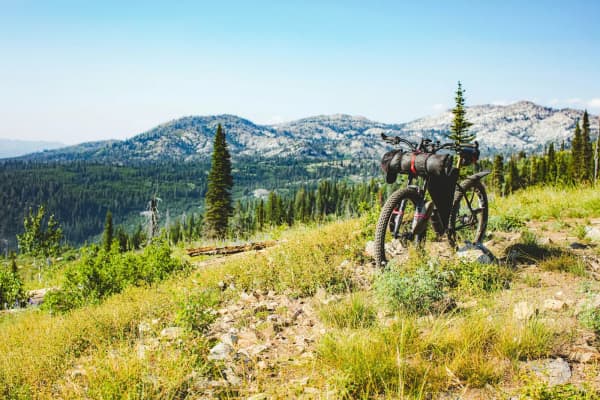
Five Mile Pass is best known for motors, but the BLM lists mountain biking and horseback riding among its uses, and on a quiet weekday the dirt roads and trails make good riding for cyclists and horseback riders who do not mind sharing with the occasional machine. Wear bright colors, ride predictably, and keep an ear out for engines. Our mountain biking guide covers the valley's other trails.
Riding Safely
Ride with a buddy. The desert is big and help is far away. Ride in pairs or groups, and tell someone at home or camp where you are going and when you will be back.
Know your limits. Loose rock, sudden washouts and blind hilltops catch riders who are going too fast for the terrain. Slow down on unfamiliar routes and walk a questionable section before you ride it.
Supervise kids closely. Young riders should ride machines sized for them, wear full protective gear, and ride where an adult can see them. Keep children away from bigger machines and busy main routes.
Beat the heat. Carry more water than you think you need, drink often, and take breaks in whatever shade you can find. Heat exhaustion comes on quickly in summer.
Watch for wildlife. Rattlesnakes live in the desert. Watch where you put your hands and feet, and give any snake plenty of room.
Carry the basics. A first-aid kit, a tire repair kit, basic tools, a tow strap, a charged phone and a paper map cover most of what goes wrong.
Your First Trip: What to Expect
A first visit to Five Mile Pass can feel overwhelming, because the land is wide open and the routes spread in every direction. A little planning turns that into freedom.
Arrive early. The main parking area fills on weekends and holidays, and the morning is the most comfortable time to ride. Unload away from the entrance so trailers can come and go.
Start with a short loop. Ride a short, easy route first to get a feel for the dirt, the rock and your machine, then build longer rides from there. It is easy to lose track of distance and fuel in open country.
Keep your bearings. Note landmarks, check your direction often, and carry a map or GPS track. Dust, similar-looking hills and branching routes make it easy to get turned around.
Plan your fuel. Know your machine's range, and turn back with a comfortable reserve. There is no fuel in the riding area.
Riding With a Group or Family
Choose a leader and a sweep. Put an experienced rider at the front to set the pace and another at the back to make sure nobody is left behind.
Keep your spacing. Dust hangs in the air behind every machine. Drop back far enough to see clearly, and never tailgate.
Use meeting points. Stop at every junction until the rider behind you can see which way you turned, and regroup often.
Ride to the slowest rider. A group day is only as good as its least experienced rider's experience. Pick routes and a pace that suit everyone.
Consider radios. Helmet or handheld radios make it much easier to coordinate a group, especially with children along.
Prepare Your Machine
The desert is hard on machines, and a little preparation prevents most breakdowns.
Air filters. Dust is the biggest enemy at Five Mile Pass. Start with a clean filter, carry a spare on multi-day trips, and check it at the end of each day.
Tires and wheels. Check tire pressure and condition before you ride; loose, chunky rock punishes worn tires. Carry a plug kit and a small compressor or pump.
Brakes, chain and fluids. Inspect brakes, check the chain or drive belt, and top off fluids before you leave home rather than in the parking lot.
The spark arrestor. Make sure it is in place and working. It is a legal requirement, and it matters in dry brush.
What to Bring
- More water than you think you need, for drinking and for cooling off.
- Fuel for your planned riding plus a reserve.
- A tool kit, a tow strap, a tire plug kit and a pump or compressor.
- A first-aid kit, sunscreen and a shade canopy for camp.
- Goggles, gloves and a buff or bandana for the dust.
- A paper map or downloaded GPS track.
- Trash bags to carry out everything you bring.
- Warm layers, since desert nights cool off quickly.
Renting a Machine
Five Mile Pass is mostly used by people who bring their own machines. The established rental fleets that serve Provo are based over the mountains in Heber City and Kamas, and our ATV and UTV rental guide explains why the riding logic points that way and how to rent. If you are new to riding and do not own a machine, a guided or rental day out of Heber is often the easier first experience; Five Mile Pass rewards riders who already know their equipment.
Nearby: Cedar Fort, Fairfield and the Tintic District
Five Mile Pass sits in historic country, and a riding weekend can include some of Utah County's most interesting small towns.
Cedar Fort and Fairfield. The little towns of Cedar Valley have roots in the frontier era, and Fairfield is home to a state park museum and a historic inn tied to the army post that once stood nearby. Our guide to Cedar Fort and Fairfield covers both.
The Pony Express route. The old Pony Express route crossed this country, and historical markers stand in the area around the pass.
Eureka and the Tintic mining district. Farther south and west, the old mining towns of the Tintic district make a fascinating drive; our guide to Eureka and the Tintic ghost towns covers them.
Eagle Mountain. On the way home, Eagle Mountain has restaurants, fuel and its own attractions; our guide to things to do in Eagle Mountain has ideas.
Leave No Trace
Riding areas stay open when riders take care of them. Stay on routes, do not ride in closed or restored areas, avoid muddy trails that will rut, and carry out everything you bring, including cans, bottles, targets and broken parts. Pick up a little extra on your way out. Respect private land and fences at the edges of the public land, and slow down near homes and camps to keep dust and noise down.
Best Times to Go
Spring. Once the ground dries after the snow and spring storms, late spring is one of the best times to ride, with comfortable temperatures and green brush.
Summer. Hot, dry and dusty, with no shade. Ride early in the morning and late in the evening, and spend midday in camp.
Fall. Early fall brings firm ground, cooler air and some of the best riding of the year.
Winter. Cold and sometimes wet or snowy. The ground can be frozen and fast on cold mornings and muddy by afternoon, so pick your days carefully.
The Short Version
Five Mile Pass is the Bureau of Land Management's open riding area on the far west side of Utah County, about 25 miles west of I-15 on SR-73 from Lehi exit 279. It is high desert with rugged, rocky, hard-packed trails, best in late spring and early fall, and hot, dusty and shadeless in summer. Utah's OHV rules apply: registration or a non-resident permit, an OHV education certificate for every operator, a spark arrestor, and helmets for riders under 18. Dispersed camping is popular, with pit toilets but no water, and fee rules have been in flux, so check with the BLM before you go. The BLM lists Fivemile Pass among its recreational shooting closures, so shoot at a designated range instead.
Related Guides
- ATV and UTV Rentals in Utah Valley
- Dispersed Camping Near Provo
- Shooting Ranges in Utah Valley
- Cedar Fort and Fairfield
- Eureka and the Tintic Ghost Towns
- Things to Do in Eagle Mountain
Frequently Asked Questions
Where is Five Mile Pass?
Who manages Five Mile Pass?
What can you do at Five Mile Pass?
Does it cost anything to ride or camp at Five Mile Pass?
Can you camp at Five Mile Pass?
Can you target shoot at Five Mile Pass?
What OHV rules apply at Five Mile Pass?
When is the best time to ride Five Mile Pass?
Sources
The facts in this guide were checked against these sources. Hours, fees and rules change, so confirm anything time-sensitive with the source before you go. How we make Provo.com.
- Fivemile Pass Recreation Area, Bureau of Land Management, Salt Lake Field Office. Checked October 12, 2026.
- OHV Education Overview, Utah Division of Outdoor Recreation. Checked October 12, 2026.
- OHV Laws & Rules, Utah Division of Outdoor Recreation. Checked October 12, 2026.
- Fivemile Pass OHV Area Shooting Closure (map), Bureau of Land Management. Checked October 12, 2026.