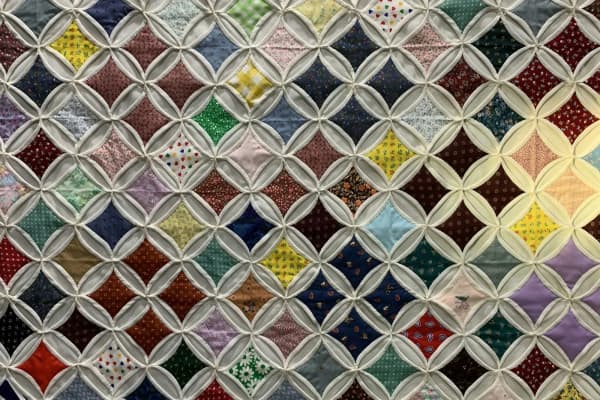
Utah Valley is quilting country. Quilts turn up at baby showers, weddings and missionary farewells, on the beds of college apartments and the backs of grandparents' couches, and at the humanitarian service projects where neighbors tie quilts for people they will never meet. The craft has deep roots in the state's pioneer history, and it is still very much alive: the valley supports a cluster of independent quilt shops, sewing-machine dealers that double as classrooms, longarm quilters who finish other people's tops, and an annual quilt show at Thanksgiving Point.
For a new quilter, that is a lot to navigate. For an experienced one, it is a map worth keeping. This guide covers the quilt shops and sewing dealers from American Fork to Springville, where to get a quilt longarm quilted, the classes, clubs and retreats, the big shows, how to buy a machine, and how to get started. It names only shops and events we could confirm through their own websites.
The Quilt Shops
The Quilter's Crossing, American Fork. On Main Street in downtown American Fork, at 57 East Main, The Quilter's Crossing is a full quilt shop. It lists fabric lines from Moda, Riley Blake Designs, Kimberbell Designs, Poppie Cotton, Andover, Robert Kaufman, Maywood Studios, Henry Glass and Michael Miller, and it offers longarm quilting and a block-of-the-month program. It is a natural first stop for north-county quilters.
American Quilting, Orem. At 426 West 800 North in Orem, American Quilting sells quilting fabrics from favorite brands and designers, notions and quilt kits, and it describes itself as a friendly space to be creative, with teachers working on the floor. The shop is open Monday through Saturday and closed Sundays; check its site for current hours.
Corn Wagon Quilt Company, Springville. Corn Wagon, in Springville, is a quilt shop with an unusually full calendar. Its website lists classes, a block-of-the-month program, retreat information with its own calendar, services, newsletters and free patterns to download. It is a main stop for south-county quilters.
The Fabric Mill, Orem. The Fabric Mill is a broader fabric store rather than a quilt-only shop, and it says it buys its fabrics directly from mills and manufacturers. Its stock is organized by fabric type, which makes it useful for fabrics beyond quilting cotton.
Quilt shops change hands and hours often, and new ones open in home studios and small storefronts every year. Before making a special trip, check the shop's website or social media for current hours, classes and sales.
Sewing-Machine Dealers That Teach
Two of the valley's sewing-machine dealers are also major quilting destinations, because they pair machines with fabric and a steady schedule of classes.
Dave's Bernina, Provo. Dave's Bernina is a Bernina dealer and fabric store with locations in Provo and St. George. Its calendar lists classes and multi-day embroidery events, and it runs a club for regulars. For a quilter shopping for a machine, a dealer that teaches is worth a great deal.
Nuttall's, Pleasant Grove. Nuttall's describes itself as a sewing, quilting and embroidery headquarters, with a store in Pleasant Grove, a full class calendar and events that include two-day sewing, quilting and embroidery workshops. It sells Handi Quilter longarm machines, with financing, and it takes part in the Garden of Quilts at Thanksgiving Point.
Longarm Quilting
A longarm machine is a large quilting machine on a frame that stitches the layers of a quilt together, top, batting and backing, in a fraction of the time it takes by hand or on a home machine. Many quilters piece their tops at home and send them to a longarm quilter to finish.
The Quilter's Crossing in American Fork offers longarm quilting, and independent longarm quilters work out of studios across the valley. The market changes: Utah Valley Quilting in Springville stopped accepting quilts in late 2025 and pointed its customers to other services, including Chelsea Hilton Quilting in Spanish Fork.
When choosing a longarm quilter, ask to see finished work, ask about pricing, which is commonly figured by the size of the quilt and the complexity of the quilting pattern, and ask about turnaround times, which can stretch for weeks before Christmas. Ask whether they supply batting and thread, and what they need you to do to prepare the top and backing.
Some quilters eventually buy a longarm machine of their own, and dealers such as Nuttall's sell them.
Classes, Clubs and Block-of-the-Month
Classes are where most quilters in the valley learn the craft, and nearly every shop and dealer offers them. The range runs from beginning quilting and first-quilt workshops to specific techniques, machine embroidery and classes on using a particular machine.
Block-of-the-month programs are a popular way to learn at a steady pace. Members pick up, or receive by mail, the fabric and pattern for one block each month, and by the end of the year they have everything they need for a full quilt. Corn Wagon Quilt Company and The Quilter's Crossing both run them. They suit beginners, who learn one technique a month, and busy quilters, who like having a project broken into manageable steps.
Many shops and dealers also host clubs and sew-ins, informal gatherings where quilters bring their projects and work together. These are the quickest way to meet other quilters in the valley.
Retreats
For quilters who want uninterrupted time at the machine, a retreat is the answer. Corn Wagon Quilt Company in Springville keeps retreat information and a separate retreat calendar on its website, including day-rate rooms a group can rent to run its own retreat. A retreat gives a group long, uninterrupted sewing time with room to spread out, and our craft retreats guide compares the other options near Provo.
Retreats fill up early, so book well in advance, and ask what is included, what to bring and whether machines are provided. Group retreat options near Provo are compared in craft retreats and cabin weekends.
The Garden of Quilts at Thanksgiving Point
Each September, Thanksgiving Point in Lehi hosts the Garden of Quilts, which combines a quilt exhibit displayed in its gardens with classes. The 2026 event ran September 16 to 19, with the quilt exhibit on display September 18 and 19, and admission is charged. Local shops and dealers take part; Nuttall's lists the event on its calendar.
Seeing quilts hung among the flower beds of Ashton Gardens is a very different experience from seeing them in a convention hall. Our guide to Ashton Gardens covers the gardens themselves, and our Thanksgiving Point guide covers the rest of the campus.
The Utah Quilt Guild and Quilt Fest
The Utah Quilt Guild is the statewide organization for quilters, and it describes Quilt Fest, its annual event, as the largest quilting event in Utah. The guild supports more than 30 quilt groups around the state, from the north to the south, and offers scholarships for classes, retreats and Quilt Fest itself. It also holds a holiday quilt show.
For quilters in Utah Valley, the guild and its local groups are the best way to connect with the wider quilting community, find teachers, enter shows and learn about events beyond the valley. Check the guild's website for Quilt Fest dates, class registration and the group nearest you. Guild chapters and the state quilt-show calendar are in quilting guilds and the Utah quilt show circuit.
Quilting as Service
In Utah Valley, quilting is often a service as much as a craft. Congregations, youth groups, families and service organizations tie quilts for hospitals, shelters, refugees and humanitarian programs, and the simple tied quilt, which uses yarn knots rather than stitching to hold the layers together, is a staple of service projects.
You can see the tradition in the valley's community events. At Mapleton's Pioneer Days, for example, the Humanitarian Fair has included quilt tying among its service projects. For a new quilter, a service project is a gentle introduction: tying a quilt takes little skill, and the result goes to someone who needs it.
Buying a Sewing Machine or Longarm
A good machine makes quilting far easier, and buying from a local dealer brings service and instruction along with the machine. Before buying, try several models at a dealer, bring your own fabric to test, and think about the kind of quilting you want to do. A machine with a large throat space, the distance between the needle and the machine's body, makes it easier to quilt large projects on a home machine.
Ask what comes with the purchase, such as classes or service, and what financing is available. For longarm machines, which cost far more and need floor space, dealers such as Nuttall's offer financing; some quilters take a longarm class before committing.
Getting Started
If you have never quilted, the path is well worn. Start with a beginning class at a local shop, where you will learn to cut accurately, sew a consistent quarter-inch seam and put together a simple quilt. Choose an easy first project, such as a nine-patch or a quilt built from a pre-cut fabric bundle, and resist the urge to start with something intricate.
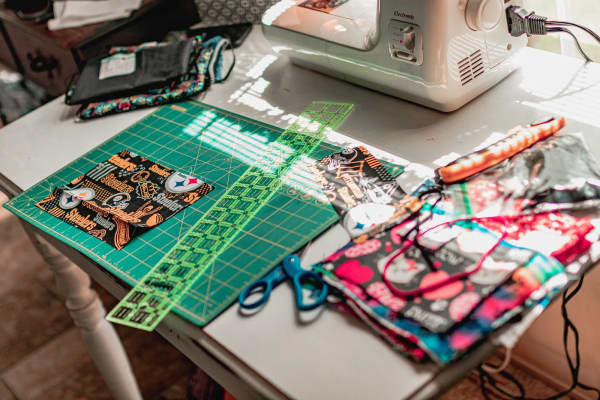
The basic tools are a rotary cutter, a self-healing cutting mat and a clear acrylic quilting ruler, plus good pins, thread and a sewing machine in working order. Quilt shops carry all of them, and the staff will happily explain what you need and what you do not.
Buy quality quilting cotton for your first project. It is easier to cut and sew accurately, it holds up to washing, and it makes a first quilt more satisfying. Many shops sell pre-cut bundles of coordinated fabrics, which take the guesswork out of choosing colors.
Choosing Fabric
Fabric choice makes or breaks a quilt, and quilt shops exist largely because the fabric they sell is different from what most general stores carry. Quilting cotton is woven tighter and more evenly than many apparel cottons, which makes it easier to cut precisely, keeps seams from shifting and helps a quilt hold up to years of washing. Shop-quality fabric also tends to keep its color better.
When planning a quilt, pay attention to value, the lightness or darkness of each fabric, as much as to color. A quilt made entirely of medium-value fabrics can look muddy no matter how pretty each piece is on its own, while a mix of lights, mediums and darks makes a pattern read clearly from across a room. Laying fabrics side by side on the shop's cutting counter, or photographing them in black and white, shows the difference quickly.
Buy a little more than the pattern calls for, since cutting mistakes happen, and plan for the backing and binding at the same time as the top. Many shops carry extra-wide backing fabric, which saves piecing a large back from several lengths. Quilters disagree about whether to pre-wash fabric; whatever you choose, be consistent within a single quilt.
Caring for a Finished Quilt
A well-made quilt can last for generations with a little care. Wash handmade quilts only when they need it, on a gentle cycle in cool water with a mild detergent, and consider a color-catching sheet the first few times, in case a fabric bleeds. Dry on low heat or lay the quilt flat to dry, away from direct sun, which fades fabric over time.
For storage, use a breathable cotton bag or pillowcase rather than plastic, which can trap moisture, and refold stored quilts now and then so permanent creases do not set along the same lines. Quilts displayed on walls or racks last longer out of direct sunlight.
Heirloom and Vintage Quilts
Many Utah Valley families have an older quilt made by a grandmother or great-grandmother, and those quilts deserve special care. Do not wash a fragile antique quilt in a machine; fading, weak fabrics and old repairs can come apart. For a quilt with real family or monetary value, look for a certified quilt appraiser, who can document its age, construction and condition, and talk with a textile conservator before attempting repairs.
Vintage quilts and quilt tops also turn up at antique shops and estate sales across the valley, and finishing an old, unquilted top found secondhand is a satisfying project for an experienced quilter. Our guide to antique shops in Utah Valley covers where to look.
Quilting With Children and Teens
Quilting is a skill many Utah Valley families pass down, and children can start younger than most parents expect. A tied quilt is the easiest first project: children can help choose fabric, lay out squares and tie the knots, with an adult handling the cutting and machine sewing. Older children and teens can learn to piece simple blocks on a machine, with close supervision around rotary cutters, which are very sharp.
Beginning classes at local shops welcome teens, and youth programs in the county have long taught sewing as a practical skill. A first quilt made for a younger sibling, a friend's new baby or a service project gives a young quilter something to be proud of.
Quilting on a Budget
Quilting can be an expensive hobby, but it does not have to be. Watch for shop sales, which often come around holidays and when new fabric collections arrive, and look for the remnant and fat-quarter bins, where small cuts sell for less. Pre-cut bundles stretch a budget further, since they come in coordinated colors with little waste.
Scrap quilts are the thrifty tradition behind much of quilting's history. Save leftover pieces from every project, trade scraps with friends at a club or sew-in, and use sturdy cotton from outgrown shirts and dresses for a memory quilt. A finished scrap quilt often ends up being the most loved quilt in the house.
A Short Glossary
Quilt top. The decorative top layer, usually pieced from many smaller pieces of fabric.
Batting. The middle layer that gives a quilt its warmth and loft.
Backing. The bottom layer, often a single wide fabric.
Binding. The strip of fabric that finishes the quilt's edges.
Piecing. Sewing fabric pieces together to make blocks and the quilt top.
Fat quarter. A quarter-yard of fabric cut wide rather than long, a popular unit for collecting fabric.
Pre-cuts. Bundles of coordinated fabric already cut into strips or squares.
Longarm. A large frame-mounted machine used to quilt the layers together.
Tied quilt. A quilt whose layers are held together with yarn knots instead of stitching.
Planning a Quilt Shop Day
A quilt shop day makes a good outing, and the shops are spread along the valley. A north-county loop can take in The Quilter's Crossing in American Fork and Nuttall's in Pleasant Grove, while a central run covers American Quilting and The Fabric Mill in Orem and Dave's Bernina in Provo. South-county quilters have Corn Wagon Quilt Company in Springville.
Bring swatches or photos of the project you are working on, since matching fabric from memory rarely works. Check each shop's hours before you go, and look for sales, which often coincide with holidays and the start of new fabric seasons.
The Short Version
Utah Valley's quilting scene includes independent quilt shops such as The Quilter's Crossing in American Fork, American Quilting in Orem and Corn Wagon Quilt Company in Springville; The Fabric Mill in Orem for broader fabric; and Bernina dealers with classes, including Dave's Bernina in Provo and Nuttall's in Pleasant Grove, which also sells Handi Quilter longarms. Longarm quilting is available at The Quilter's Crossing and from independent quilters. Classes, block-of-the-month programs and retreats are widely available, the Garden of Quilts at Thanksgiving Point displays quilts in the gardens each September, and the Utah Quilt Guild's Quilt Fest is the state's largest quilting event.
Related Guides
-
Advertisement
Frequently Asked Questions
Where are the quilt shops in Utah Valley?
Where can I get a quilt longarm quilted in Utah Valley?
Are there quilting classes in Utah Valley?
What is the Garden of Quilts at Thanksgiving Point?
What is Quilt Fest?
Are there quilting retreats near Provo?
What is a block-of-the-month program?
How do I start quilting?
Sources
The facts in this guide were checked against these sources. Hours, fees and rules change, so confirm anything time-sensitive with the source before you go. How we make Provo.com.
- Utah Quilt Guild. Checked October 12, 2026.