Upcoming dates

More on Springville: every guide we have published there, in one place.
Art City Days is Springville's own community celebration, and the most useful thing to know before you go is that it is one of three separate art-adjacent events the city runs — and the other two are not in June.
It starts on the first Saturday of June and runs through the first full week. Springville City publishes it that way, as a pattern rather than a fixed date, which is unusual and helpful. The 2026 celebration ran June 6 to 13.
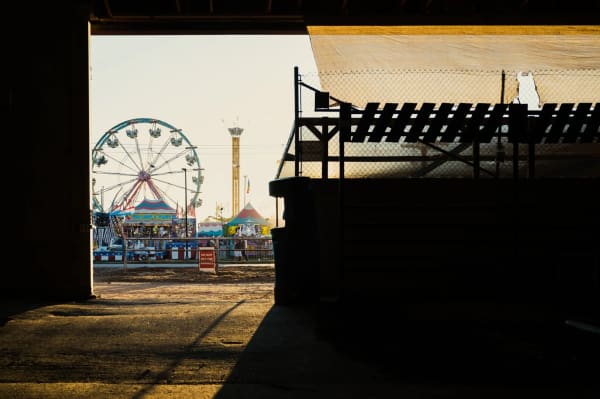
The shape is the standard Utah Valley city-celebration apparatus — a parade, a carnival, fireworks, food, exhibitions — with one distinctive addition: a hot air balloon launch that is the single most photographed thing to happen in Springville all year.
The three-event problem, solved
This is the section that will save you a wasted drive, so it goes first.
Springville runs three things with overlapping names and reputations, and visitors conflate them constantly:
Art City Days — early June. The city celebration. Parade, carnival, fireworks, balloons, food, community exhibitions. This is a town party that happens to be in a town nicknamed Art City. It is not primarily an art event.
The World Folkfest — late July. An international folk dance festival at Spring Acres Arts Park, bringing performing groups from around the world for several nights of staged performance. It has been running for decades and reached its fortieth anniversary in 2026. This is a serious performing-arts festival with an international roster, and it has nothing structurally to do with Art City Days.
The Springville Art Festival — September. Held at Civic Center Park, 110 South Main Street, with artist vendors, musical and dance performances, a plein air paint-out, chalk art and community art projects. The 2026 edition ran September 11 and 12, with additional programming on the city's Festival Street on 200 South and at the historic Rivoli Theater on Main Street.
Three events. June, July, September. If someone tells you "the art festival in Springville is great," ask them which month they mean.
There is a fourth thing people fold in, wrongly: the Spring Salon at the Springville Museum of Art, which fills the museum's main galleries from spring into early summer and is a juried competition rather than a festival. It overlaps Art City Days on the calendar but is entirely separate in organization. Our things to do in Springville guide covers the museum and the Salon in detail, including a dating trap worth knowing about — the Salon's edition number runs behind the calendar because it paused during the Second World War, so arithmetic from 1922 gives you the wrong number.
Why the town is called Art City
The nickname is older than the festival and it is earned, which is not true of every civic nickname in Utah.
The Springville Museum of Art is the oldest museum in Utah devoted to the visual fine arts. Its building, a Spanish Colonial Revival structure that began as part of Springville High School, was completed in 1937 and added to the National Register of Historic Places in 1986.
The sequence is the interesting part and it inverts the usual story. The museum did not create its famous exhibition — the exhibition created the museum. The Spring Salon was first held in 1922, started by students and teachers at the high school who wanted somewhere to show original work, and it ran out of the high school for fifteen years before there was a museum at all. The founding gift came earlier still: in 1903, the artists Cyrus E. Dallin and John Hafen donated work to the school.
So when the city calls itself Art City and names its June celebration accordingly, it is pointing at something real: a town of around thirty-five thousand people that built a civic art museum, kept a juried statewide competition running for a century, and charges nothing to see either.
Admission to the museum is free. If you make one addition to an Art City Days trip, make it that.
The balloons, and how not to miss them
The hot air balloon launch is the thing visitors come for and the thing most likely to disappoint them, for a reason that is nobody's fault.
Balloon launches are wind-dependent, and the decision is made very early in the morning — typically at dawn, at the field, by the pilots. Rain is rarely the problem. Wind almost always is. A morning that looks perfect from a bedroom window can be unflyable at two hundred feet.
The practical consequence: if the balloons are your reason for going, go on the first available morning of the celebration rather than saving them for the weekend. A scrubbed launch on day one leaves you other chances. A scrubbed launch on the last morning leaves you nothing.
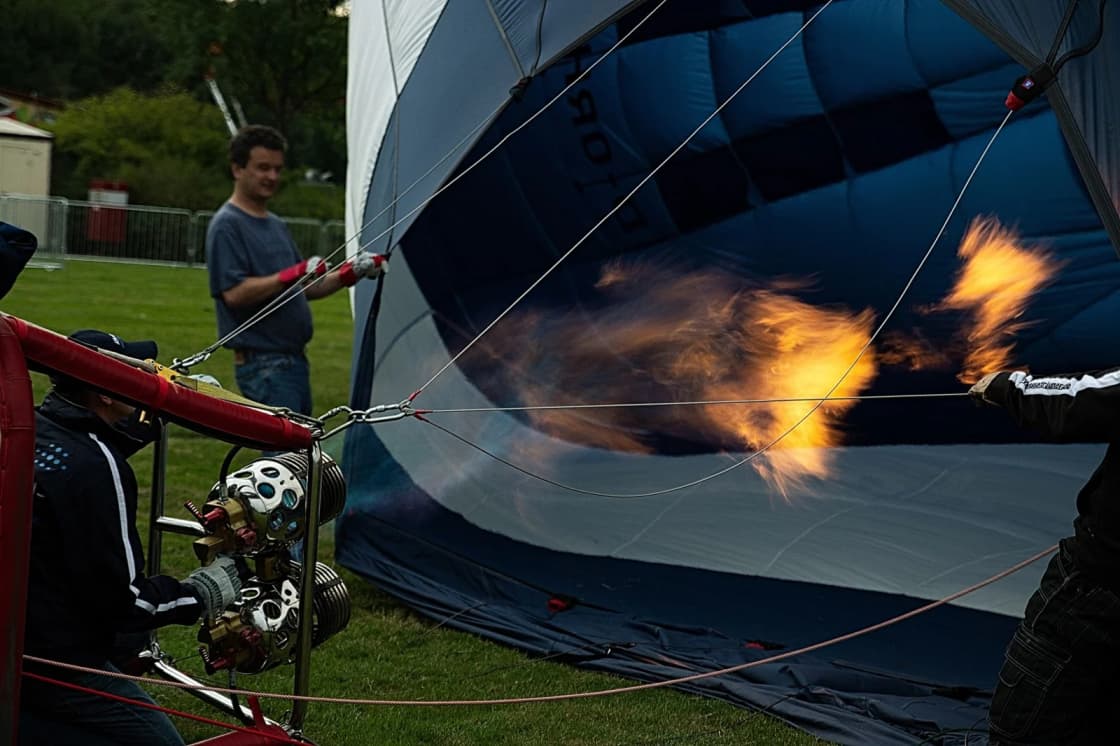
Arrive early — before the announced launch time rather than at it — because the inflation is arguably better than the flight. Balloons lying on their sides being filled by roaring burners, then standing up one after another across a field at sunrise, is the part that photographs well and the part that ends quickly.
Provo runs a larger balloon event during the Freedom Festival in early July, which is worth knowing if you miss the Springville launch — it is three weeks later and about fifteen minutes north.
What else is on
The published lineup shifts year to year, which the city says plainly, but the skeleton is consistent.
The parade. Down Main Street, on the closing Saturday morning. Standard Utah Valley parade conventions apply: candy is thrown, children collect it, chairs appear on the route the night before, and floats are a mix of civic organizations, local businesses, church groups and school teams.
The carnival. Rides and midway games across several days. Ticketed. This is the piece most likely to change operators and pricing between years.
Fireworks. Closing out the celebration. Springville sits at the base of the mountains and the display is visible from a wide part of town, so plenty of residents watch from their own streets rather than going in.
Exhibitions and contests. Community art shows, a range of competitions, and the kind of programming that only makes sense if you live there — which is the correct thing for a city celebration to do.
Entertainment and food. Live performance in the park, food vendors, and the usual scattering of service-club fundraisers.
Sport and races. Fun runs and tournaments through the week, with entry fees.
The honest scheduling warning
June in Utah Valley is the single most congested festival month of the year, and Art City Days sits right at the front of the pile-up.
In 2026, the first two weeks of June contained Art City Days in Springville, the Cedar Hills Family Festival, Oremfest in Orem, Saratoga Splash in Saratoga Springs, and the opening of Strawberry Days in Pleasant Grove. Five city celebrations, all within about half an hour of each other, substantially overlapping.
This is not a coincidence and it is not poor planning. School is out, the weather has turned reliable, and the ground has dried. Every city in the valley reaches the same conclusion about when to hold its party, and the calendar collides accordingly.
For a resident this is excellent — you can attend four celebrations in two weeks. For a visitor planning a single trip it means you should pick by event type rather than by city. If you want balloons, Springville. If you want a professional rodeo, Strawberry Days in Pleasant Grove. If you want scale, Oremfest. The small-city celebration circuit covers the ones that get less attention and are often better for it.
Making a day of it
Springville rewards a plan more than most of the valley's smaller cities, because the attractions are spread out and several are easy to miss.
Morning. Balloon launch if it is flying, or the parade if it is parade day. These conflict on some schedules — check before you assume you can do both.
Late morning. The Springville Museum of Art, ten minutes from downtown, free. If the Spring Salon is still hanging, you are seeing a broad cross-section of what Utah artists are making right now, which is an unusual thing to be able to do for nothing.
Afternoon. Downtown Main Street, the public sculpture that most visitors walk past without registering, and lunch. Best restaurants in Springville covers where to eat, and Strap Tank — the brewery with the motorcycle collection — is a genuine destination in its own right.
Late afternoon. If you want out of the crowd, Hobble Creek Canyon starts at the edge of town and gets you into the mountains in ten minutes. The canyon guide covers it, and Jolley's Ranch is up there if you want to make it a longer afternoon.
Evening. Carnival, entertainment in the park, fireworks.
The honest assessment
Art City Days is a good small-city celebration and it is not a destination arts festival. Anyone arriving expecting the second thing because of the name will be mildly disappointed, and that disappointment is a naming problem rather than a quality problem.
Taken for what it is — a town of thirty-five thousand people throwing itself a nine-day party with balloons in it — it is one of the better ones in the valley. The balloon launch is distinctive; only Provo does anything comparable and Provo's is much bigger and much more crowded. The parade is a proper small-city parade. The fireworks are fine.
The strongest version of the trip pairs the festival with the museum. That combination is unusual: a free civic art museum with a century-old juried exhibition, fifteen minutes from Provo, in a town holding a carnival the same weekend. Neither half is remarkable on its own. Together they are the reason to drive down.
If you can only do one Springville event in a year and you care about the arts rather than the party, go in late July for the World Folkfest or in September for the Art Festival instead. Art City Days is the town's birthday. The other two are what the town is known for.
The scheduling rule, and why it is unusually helpful
Most Utah Valley cities announce their celebration dates each spring and leave you to find out. Springville does something better and rarer: it publishes the rule instead of just the dates.
The city's own description is that Art City Days starts on the first Saturday of each June and runs through the first full week of June.
That is a formula, and it means you can work out any year's window yourself with a calendar. Find the first Saturday in June; that is opening day. The celebration then runs through the following week, closing the next weekend.
This matters more than it sounds, for two reasons.
First, it defends against the aggregator problem. Third-party festival roundups for small Utah cities are frequently wrong — written once early in the season and copied forward without rechecking. Our guide to the small-city celebration circuit documents the Highland Fling appearing under three different 2026 windows in three different Utah events listings. When a city publishes a rule, you can check any listing against the rule in ten seconds and catch the error yourself.
Second, it lets you plan a year ahead. If you want to build a June trip around the balloon launch, you do not need Springville to announce anything. The first Saturday in June is knowable now.
The caution is that a rule is not a guarantee. Cities do move celebrations, occasionally for good reasons — a conflict with a major regional event, a venue closure, construction on the parade route. Eagle Mountain moved its entire parade route ahead of 2026 and published its reasoning. So use the rule to plan, and confirm on the city site before you commit anything you cannot change.
Downtown, the Rivoli, and what the city is building around the festival
Something worth noticing if you have not been to Springville in a few years: the city has been actively reshaping the ground the festival sits on.
The Rivoli Theater on Main Street, a historic single-screen house, now carries programming during the city's September arts festival. Springville has also developed a dedicated Festival Street on 200 South — a stretch designed to be closed and used for events rather than merely tolerated when it is.
That second item is a modern piece of small-city planning. Most Utah towns run their celebrations by closing a normal road and putting up barricades. Building a street intended from the outset to become a venue is a different level of commitment, and it signals that Springville expects to keep doing this.
For a visitor the practical effect is that downtown Springville is a better place to spend an afternoon than it was, festival or not. Best restaurants in Springville covers where to eat, and the outdoor sculpture collection along Main Street is the free thing visitors most reliably walk straight past.
Watching the balloons properly
If the balloons are the reason for the trip, a few things separate a good morning from a frustrating one.
Go to the field, not to a viewpoint. The instinct is to find high ground and watch the launch from a distance. That is backwards. The inflation — burners roaring, envelopes filling on their sides, balloons standing up one after another — is the best part, it happens at ground level, and it is over in perhaps twenty minutes. Once they are up they scatter with the wind and there is nothing further to see from anywhere in particular.
Arrive before the announced time. Crews start early and the sequence does not wait.
Expect a scrub and do not take it personally. Wind is the deciding factor and the call is made at the field at dawn. This is why the first available morning beats the last one.
Dress for cold. A June dawn at the base of the Wasatch is chilly, and standing on wet grass for an hour before the sun clears the mountains is colder than the forecast high suggests.
Ask before you help. Crews frequently welcome spectators holding a crown line or steadying a basket, and being asked is the best possible version of this morning. Wait to be invited rather than grabbing rope.
One more scheduling conflict to watch. In some years the balloon launch and the parade fall on the same morning within an hour of each other, at opposite ends of town. If both matter to you, check the published times before parade day rather than assuming you can walk between them, because you cannot.
Provo's balloon fest in early July is larger and applies all the same rules, with considerably bigger crowds.
Related Guides
- Things to Do in Springville: The Museum, the Folkfest and Hobble Creek
- Strawberry Days: Utah's Longest-Running City Celebration
- Oremfest: What Happened to Orem Summerfest
- The Small-City Celebration Circuit: Utah County's Other Summer Festivals
- The Freedom Festival Balloon Fest in Provo
- Living in Springville, Utah
- Hobble Creek Canyon: The Name Springville Gave Away
- Springville World Folkfest: Utah's International Folk-Dance Festival
Frequently Asked Questions
When is Art City Days in Springville?
Is Art City Days the same as the Springville Art Festival?
What about the World Folkfest? Is that part of Art City Days?
Are there really hot air balloons?
Is Art City Days free?
Why is Springville called Art City?
Where do you park for the Art City Days parade?
Is it worth the drive from Provo?
Sources
The facts in this guide were checked against these sources. Hours, fees and rules change, so confirm anything time-sensitive with the source before you go. How we make Provo.com.
- Springville City: Art City Days, Springville City. Checked October 12, 2026.
- Balloon Fest | Art City Days, Springville City. Checked October 12, 2026.
- Special Events, Springville City Parks and Recreation. Checked October 12, 2026.