
Pony Express Days is Eagle Mountain's annual celebration, and the single most important thing to understand about it is structural: it is not one week.
The main festival lands in late May, around the Memorial Day weekend. The demolition derby happens on a later weekend. The PRCA rodeo happens on a weekend after that, running several nights. In 2026 the three components spanned from the end of May into the middle of June.
Most city celebrations in Utah Valley compress everything into seven or eight days. Eagle Mountain spreads its across roughly three weeks. Anyone planning around "Pony Express Days" as a single block will miss two thirds of it.
Eagle Mountain City's own page currently states that the 2027 dates are still to be announced. This guide therefore describes the shape and the components rather than asserting a date the city has not published.
The name commemorates something older than the city
Eagle Mountain was incorporated in 1996. The Pony Express operated for about eighteen months in 1860 and 1861.
So the celebration is named for a piece of history that predates the city by roughly a hundred and thirty-five years, and the city is explicit about this: it describes Pony Express Days as a celebration of the Cedar Valley and its history, not of Eagle Mountain as such.
That framing is more honest than most civic festival naming and it solves a real problem. A city founded in 1996 in what had been open Cedar Valley rangeland has no pioneer past of its own to draw on. What it has is a place with a past — the Pony Express Trail ran through this valley, and the trail's remnants and markers are still out there west of town. The celebration attaches itself to the geography rather than pretending to a civic history it does not have.
You can see the same logic in the venue names: the Pony Express Memorial Cemetery, the Pony Express Memorial Arena, Pony Express Parkway. A new city naming its infrastructure after the one historically significant thing that happened on its ground.
For the broader story of the area, living in Eagle Mountain covers the city and Cedar Fort and Fairfield covers the small settlements further out in the valley, including Camp Floyd, which is the other major piece of nineteenth-century history in this corner of the county.
The three-weekend structure, component by component
Component one: the festival week
This is the part most people mean when they say Pony Express Days.
Memorial Day Ceremony at the Pony Express Memorial Cemetery. This opens the celebration and it is a genuine observance rather than a festival event — worth knowing if you are bringing children expecting a party on day one.
Family Fun Night at Nolen Park. Inflatables, food trucks, informational vendors from city departments and community organizations. The city describes it as kicking off the festivities, and its function is fairly transparent: it is the event where residents meet the city and each other.
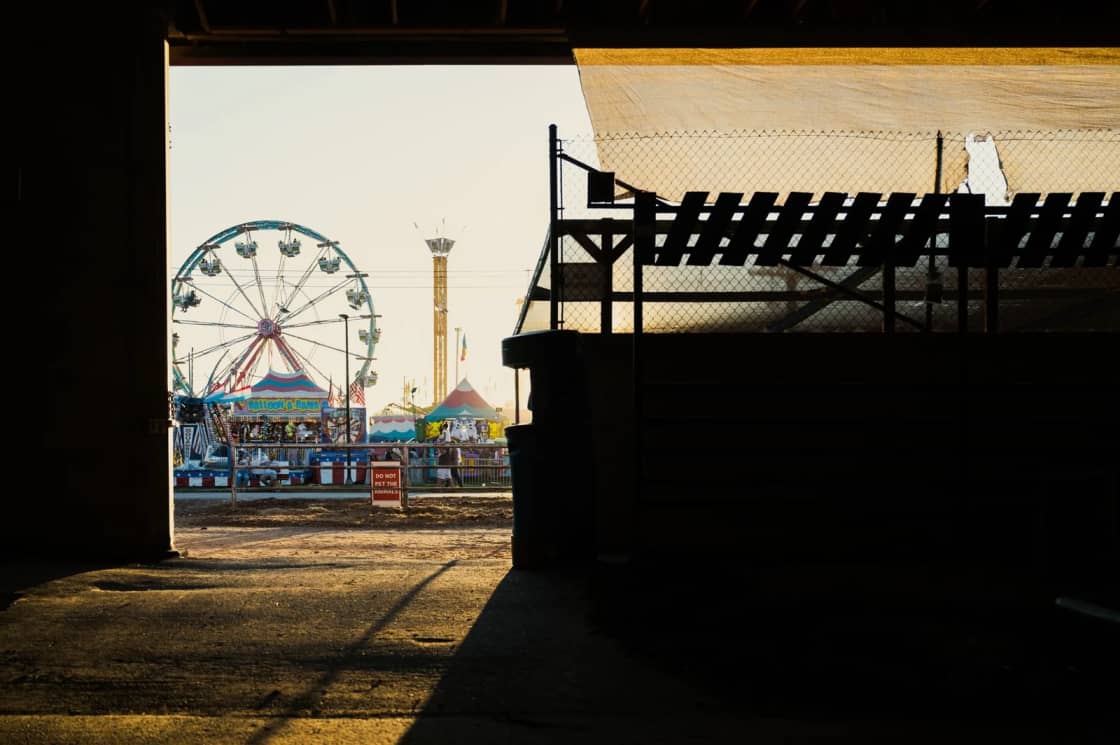
The Carnival at Cory B. Wride Memorial Park, running from midday until late — the city has published a noon-to-11 p.m. window. Rides, boutique vendors, food trucks and a concert in the park. This is the ticketed centerpiece of the week and it runs across multiple nights.
The Pickleball Tournament, also at Cory B. Wride Memorial Park. Double elimination, divisions across recreational and competitive levels for men's, women's and mixed play, with a per-team entry fee and only one player needing to register. The 2026 edition was the second annual, which tells you something about how fast the city is adding traditions.
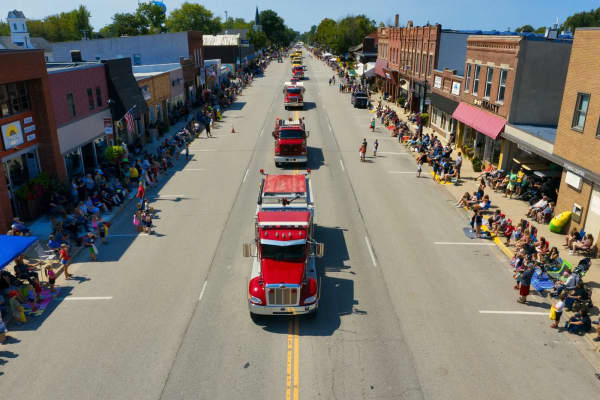
The Grand Parade, beginning at 10 a.m., rain or shine. Eagle Mountain changed the route ahead of the 2026 celebration, and the reasoning the city published is worth repeating because it is unusually clear about a thing cities normally do silently: the new route was chosen to improve visibility, reduce traffic conflicts, allow better control of intersections and pedestrian crossings, maintain clearer emergency access, and let barricades and staffing be placed more effectively. Centralizing the parade around the park also means attendees can move between events more easily.
The route runs from Pony Express Parkway and Mid Valley Road, south, right onto Aviator Avenue, ending at Eagle Mountain Boulevard. Seating is on the west side of Pony Express Parkway and both sides of Aviator Avenue.
The Motivational Mile. This is the one that has no equivalent anywhere else in the valley. Community members line up shoulder to shoulder for a full mile near Cory B. Wride Memorial Park, each holding a sign with a message of encouragement — the city's example is "I BELIEVE IN YOU." People pass along the mile and read them.
It is difficult to describe without sounding either cynical or sentimental, and it is neither when you see it. It is a town of people standing in the sun holding signs for strangers. In a city where a large share of residents arrived within the last few years, it is a fairly direct attempt to manufacture the feeling of being known.
The Fireworks Show at Cory B. Wride Memorial Park, synchronized to music, closing the festival weekend.
Component two: the demolition derby
A separate weekend. 7 p.m. at the Pony Express Memorial Arena. Ticketed. Organized by Pony Express Events rather than the city directly.
Demolition derby is the most accessible motorsport there is — the rules are self-evident within thirty seconds and the last car moving wins. It draws a substantially different crowd from the parade, and it is loud in a way that matters if you are bringing small children.
Component three: the PRCA rodeo
Another separate weekend, running several nights. 7 p.m. at the Pony Express Memorial Arena. Ticketed, with advance sales through the rodeo's ticketing partner.
This is the component with the strongest claim on outside attention, and the case for it is not the city's own marketing. Eagle Mountain City states that the rodeo has repeatedly been awarded "Rodeo of the Year" in its category by the PRCA Wilderness Circuit — that is a judgment from the sanctioning circuit rather than from the host.
Two further details make it unusual. It has been running more than ten years with attendance growing, in a city that has only existed for about thirty. And its board of directors is composed entirely of Eagle Mountain resident volunteers, which is not how most professional rodeos of this standing are run.
The events are the standard PRCA program — bareback, saddle bronc, bull riding, barrel racing, roping — plus rodeo royalty. Our Lehi Round-Up guide carries a full decoder if you have not watched one before.
How it compares to the rest of the valley
Utah County now has four professional rodeos of real quality across the summer, and they are different experiences.
Strawberry Days in Pleasant Grove is the oldest — continuously running since 1921, PRCA, with Mount Timpanogos behind the chutes and an arena that was substantially enlarged for 2026.
The Lehi Round-Up is the one with the deepest local ritual attached, including three separate parades.
Fiesta Days in Spanish Fork runs the largest rodeo operation in the south of the county.
Pony Express Days is the newest of the four and the one whose circuit has singled it out for its category. It is also the least convenient to reach from the population centers, which is a large part of why it is underattended by people who would enjoy it.
Orchard Days in Santaquin runs an RMPRA rodeo, which is a different and more regional sanctioning body — worth knowing if you are comparing.
Getting there, and the honest logistics
Eagle Mountain is a real drive from the east side of the valley. You are going out past the point of the mountain into Cedar Valley, and the road network serving the city is thinner than the population would suggest. Allow more time than the map does, particularly on parade morning.
The city is enormous and spread out. Eagle Mountain covers a very large land area with development clustered in pockets. "In Eagle Mountain" can mean twenty minutes from the park. Navigate to the specific venue rather than to the city.
Parade morning closes a main artery. Pony Express Parkway is one of the primary routes through the city, and the parade uses it. Arriving after 9:30 a.m. means finding a way around the closure.
The arena events start at 7 p.m. Both the derby and the rodeo. Plan the drive around an evening arrival and a late return.
Buy ahead. Carnival tickets, derby tickets and rodeo tickets all sell in advance at lower prices than at the gate, and the city closes online sales before the events.
What the celebration is doing
Eagle Mountain is one of the fastest-growing cities in Utah, built largely in the last two decades on ground that was open range within living memory. Its population is young, its residents are overwhelmingly new, and it has the civic problem that comes with that: a large number of people who live in the same place without having anything in common yet.
Pony Express Days is the city's answer, and the components make more sense read as answers to that problem than as entertainment. Family Fun Night exists so residents meet city staff. The Motivational Mile exists so residents stand next to each other. The rodeo's all-volunteer resident board exists so the best thing the city produces is produced by the people who live there. The Memorial Day ceremony at a cemetery named for a mail route exists so a thirty-year-old city has something older than itself to gather around.
Whether it works is not something a visitor can judge from a Saturday. What a visitor can observe is that the effort is unusually deliberate and unusually visible.
The honest assessment
Go for the rodeo. It is the strongest component, it is PRCA-sanctioned, its own circuit has repeatedly named it the best in its category, and it is run by the people who live there. If you make one trip to Eagle Mountain in a year, make it a rodeo night.
Go for the parade Saturday if you have children and want the full package — parade at 10, the park from noon, fireworks at the end.
Do not plan a single trip around "Pony Express Days" without checking which component falls on which weekend. This is the mistake that catches people, and the three-weekend structure is unlike anything else in the county.
Check the city site for dates. As of this writing Eagle Mountain has not published 2027 dates, and the aggregators that will publish them first will be guessing from last year.
For the rest of what is out there, things to do in Eagle Mountain covers the city, and the small-city celebration circuit covers the other celebrations that share this stretch of the calendar.
The actual trail, and where you can still see it
The celebration is named for the Pony Express Trail, and unlike most festival names in Utah Valley this one points at something you can go and stand on.
The Pony Express ran from April 1860 to October 1861 — about eighteen months — carrying mail by relay riders between Missouri and California. It was made obsolete almost immediately by the completion of the transcontinental telegraph, which is why its operational life was so short and its cultural afterlife so long.
The route crossed Utah, and the segment through Cedar Valley ran past where Eagle Mountain now sits. West and south of the city the old route continues out toward the desert, and the corridor is managed as a National Historic Trail with markers and interpretive signage at intervals.
What is out there is more subtle than a visitor expects. There is no continuous visible road. What exists is a series of station sites — the relay points where riders changed horses, spaced at intervals of roughly ten to fifteen miles — most now marked by monuments, foundations, or nothing but a sign and a view. The landscape itself is the exhibit: dry, open, wide, and not meaningfully different from what a rider saw.
The strongest single stop in the area is Camp Floyd at Fairfield, southwest of Eagle Mountain. In 1858 this was one of the largest concentrations of United States troops anywhere in the country, and the Stagecoach Inn there served the route. It is a state park with a museum, and it is the place where the history of this valley becomes legible rather than theoretical. Our Cedar Fort and Fairfield guide covers it.
The practical suggestion: if you are driving out to Eagle Mountain for the rodeo anyway, leave an hour earlier and go west first. The rodeo is at 7 p.m. Late afternoon light on Cedar Valley from the trail corridor is the best the landscape looks all day, and it turns a festival trip into something that explains the festival's name.
This is also the honest answer to a question visitors ask about Eagle Mountain: what is out here, other than houses? A short-lived mail service that failed commercially, an army camp that was abandoned, and a very large amount of sky. The city built its celebration on the only history the ground offers, and the ground is still there.
What the Wilderness Circuit is
Eagle Mountain's claim that its rodeo has repeatedly been named Rodeo of the Year in its category by the PRCA Wilderness Circuit deserves unpacking, because "circuit" is doing real work in that sentence.
The Professional Rodeo Cowboys Association does not run a single undifferentiated season. It organizes competition into regional circuits, each covering a group of states, each with its own year-end standings and its own circuit finals. The Wilderness Circuit is the one covering this part of the Intermountain West.
The system exists to solve a practical problem. Full-time professional rodeo requires enormous travel, and most competitors cannot do it. The circuit structure lets someone compete seriously close to home, accumulate standings, and qualify for a finals — without spending the year crossing the country.
Two consequences matter for a spectator.
The awards mean something specific. A circuit naming a rodeo the best in its category is a judgment made by the organization that sanctions it, based on how the event is run — stock quality, ground conditions, payout, organization, treatment of competitors. It is closer to a professional peer review than to a popularity contest.
The category qualifier is not a hedge to be embarrassed about. Rodeos are grouped by size, because a small-town rodeo cannot be sensibly compared to one with a six-figure purse. Winning your size band means you run the best rodeo among rodeos of your scale, which is exactly the useful claim.
For an audience, the practical upshot is that a well-run circuit rodeo is often a better night than a much larger one — closer to the arena, shorter waits, and competitors who live nearby.
Related Guides
- Things to Do in Eagle Mountain
- Living in Eagle Mountain, Utah
- The Lehi Round-Up: Three Parades and a Rodeo Decoder
- Strawberry Days: Utah's Longest-Running City Celebration
- Orchard Days: Santaquin's Rodeo Week
- The Small-City Celebration Circuit: Utah County's Other Summer Festivals
- Cedar Fort and Fairfield: Camp Floyd and the Far Side of Cedar Valley
Frequently Asked Questions
When is Pony Express Days in Eagle Mountain?
Why is it called Pony Express Days?
Is the Pony Express Days rodeo any good?
What is the Motivational Mile?
Where do the events happen?
Is Pony Express Days free?
What time is the Grand Parade and where does it go?
Is it worth the drive from Provo or Orem?
Sources
The facts in this guide were checked against these sources. Hours, fees and rules change, so confirm anything time-sensitive with the source before you go. How we make Provo.com.
- Pony Express Days, Eagle Mountain City. Checked October 12, 2026.
- Pony Express Days Parade Route 2026, Eagle Mountain City. Checked October 12, 2026.
- Eagle Mountain, Utah Division of State History (History to Go). Checked October 12, 2026.
- History & Culture - Pony Express National Historic Trail, National Park Service. Checked October 12, 2026.