Upcoming dates

More on Pleasant Grove: every guide we have published there, in one place.
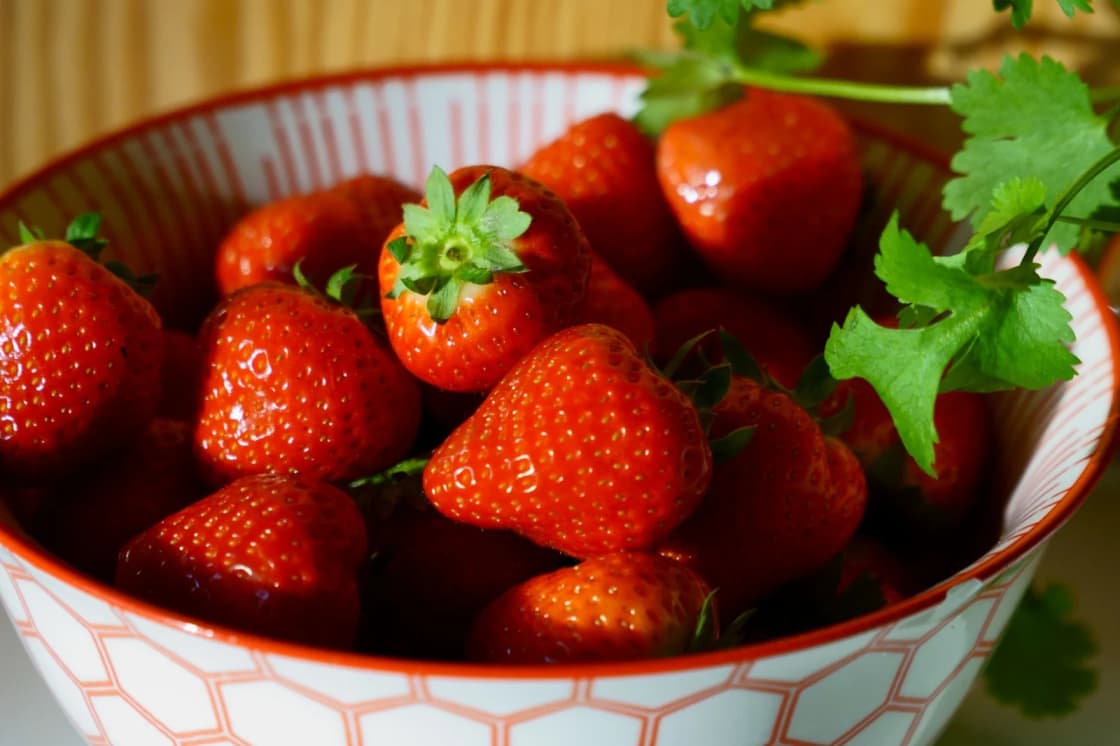
Strawberry Days is the oldest continuously running city celebration in Utah, and it happens in a town that has not grown strawberries commercially in living memory. Both halves of that sentence are true, and the gap between them is most of what makes the week interesting.
It runs nine days in mid-June in Pleasant Grove, from a Saturday through the following Sunday. The 2026 edition ran June 13 to 21. The official site lists June 12 to 20 for 2027.
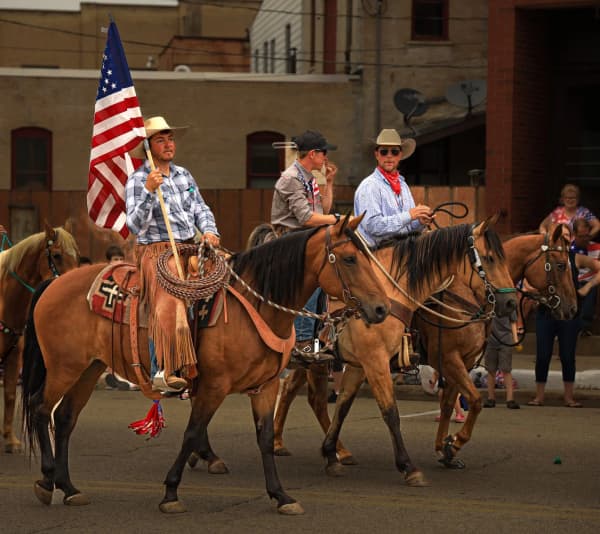
Most of it is free. The anchors are the PRCA rodeo, which runs several nights midweek, the parade on the closing Saturday morning, and a scattering of events — strawberries and cream in the park, a quilt show, a car show — that have been happening in roughly the same form for a very long time.
The 1921 origin, and what the Wasatch Club was
The first Strawberry Days was held in the second week of June 1921, organized by a body called the Wasatch Club, which was the forerunner of what became the local chamber of commerce.
That detail matters more than it looks. This was not a city government project and it was not a church project. It was a business-boosters project, which is what a chamber of commerce was in 1921 — a group of merchants who had concluded that the town needed a reason for people to come to it. The strawberry was the obvious hook because the strawberry was, at that moment, what Pleasant Grove sold.
The celebration has run every year since. Pleasant Grove City and the Pleasant Grove–Lindon Chamber both describe it as the longest continuing community celebration in Utah, and the rodeo attached to it is promoted as the longest continually running rodeo in the state, also dating from 1921.
Claims of the "longest running" kind are worth treating carefully, because they usually contain a hidden qualifier and the qualifier is where the competition happens. Utah has older gatherings than 1921 — Pioneer Day observances go back to the 1850s in some towns, and American Fork's celebration traces to a Timber Day around 1865. What Pleasant Grove is claiming is narrower and more defensible: an unbroken run of a named city celebration under continuous organization since 1921. American Fork's is older but changed names repeatedly, from Timber Day to Liberty Day to Poultry Day to Steel Days. Strawberry Days has been Strawberry Days the whole time.
The strawberries are gone, and the town says so
Here is the part that surprises visitors and that the city does not hide.
No strawberries are grown commercially in Pleasant Grove. The chamber's own history of the celebration states it plainly. The festival takes its name from a period when strawberries were a major economic activity in the city, and that period ended.
This is not a small irony bolted onto an otherwise straightforward festival. It is the actual shape of agriculture in Utah Valley across the twentieth century, and Strawberry Days is one of the clearest places to see it. The berry crop that named the celebration was displaced by the same pressures that took orchards out of Orem and truck farming out of west Provo — land values, water, labor, and the arrival of an economy that paid better than fruit.
Utah Valley does this repeatedly, and once you notice it you cannot stop noticing it. Payson runs Golden Onion Days for an onion crop that no longer dominates the local economy. Santaquin runs Orchard Days in a town where the orchards have thinned dramatically but not vanished. American Fork runs Steel Days for a steel industry that closed. The valley's summer calendar is substantially a set of memorials to industries that left, celebrated by the descendants of the people who worked in them.
Whether that is poignant or slightly absurd depends on the day you attend. Both readings are available and neither is wrong.
The rodeo is the serious part
If you go once, go to the rodeo.
The Strawberry Days Rodeo is sanctioned by the Professional Rodeo Cowboys Association, which means the people competing are working professionals earning standings points across a season, not local volunteers putting on a show. That distinction shows up in the stock, in the timing, and in how tight the runs are.
The rodeo runs several nights during the celebration week at the rodeo grounds on the south side of town, with Mount Timpanogos filling the view behind the arena — one of the better backdrops for a rodeo anywhere, and the thing photographers come for.
The arena was rebuilt ahead of the 2026 celebration, adding more than fifteen hundred seats to a venue that had been in service for decades. That is a substantial capacity increase for a town of this size, and it is the clearest available signal of where the rodeo sits in the city's sense of itself.
If you have not been to a rodeo, our Lehi Round-Up guide carries a full decoder of what the events are and what you are watching in each one, and the Utah County Fair guide covers the same ground for a first-timer. The short version: the roughstock events — bareback, saddle bronc, bull riding — are scored out of 100 with half the points going to the animal, and the timed events are exactly what they sound like. Eight seconds is the qualifying ride.
Mutton bustin' is the one to arrive early for if you have children with you. Small children in helmets hold onto sheep. It resolves quickly and it is the highlight of the night for a meaningful fraction of the crowd.
What fills the other eight days
The rodeo and the parade are the tentpoles. Underneath them is a dense week of programming, and reading the list is a fairly efficient way to understand what the town values.
Food and the signature event. Strawberries and cream served free in the park on a designated evening, tied to a concert. This is the thing people who grew up here name first. There is also a pie eating contest, which is precisely as dignified as it sounds.
Parades, plural. A grand parade on the closing Saturday morning, and a separate children's parade earlier in the week — a pattern several Utah Valley cities share, and a good one, because it lets small children be in a parade rather than watching one.
The shows. A quilt show, a community art show, a car show with an associated cruise, and garden tours through the town's older properties. The quilt show in particular draws entries well beyond the city.
Sport, and a surprising amount of it. A golf tournament, a pickleball tournament, a 2v2 grass volleyball tournament, a roundnet tournament, a fitness night, a Guns and Hoses 5K run by and against the police and fire departments, and relay races for schoolchildren organized by the local Kiwanis.
An esports tournament. Worth calling out separately, because a 1921 agricultural celebration running a video game bracket alongside a quilt show is a funny and healthy sign of an event that is still adapting rather than being preserved.
The pageants. Miss Pleasant Grove, Little Miss Strawberry Days, and rodeo royalty, all of which are more involved than an outsider assumes — these are year-long service commitments, not a sash handed out on a Saturday.
History programming. Pioneer tours of the town's older buildings, and a Strawberries and Stories session for younger children.
A family fair, a free family swim, a baby contest, a princess party, a dirt dance at the rodeo grounds, and a fireman's pancake breakfast that opens the whole thing on the first Saturday morning.
How to read the schedule without getting caught
Three practical warnings, all of them learned the hard way by people who showed up on the wrong day.
The published dates move between sources, and one common error is systematic. At least one widely circulated 2026 festival roundup listed Strawberry Days as June 12 to 20 — which is the 2027 window, not 2026. The 2026 celebration ran June 13 to 21. If you are reading a festival list rather than the official site, check that the dates land on a Saturday-to-Sunday pattern and check the year against a calendar. This is a general hazard with Utah Valley festival roundups, which are frequently written once and lightly edited afterward.
The parade is a chair economy. People place chairs along the route the evening before. This is the local norm and it is not treated as unreasonable. If you want a spot on the route without participating in that system, arrive early on the morning itself and expect to stand behind a row of chairs.
Midweek is not built for you unless you live there. A pickleball bracket and a garden tour are excellent things for a city to run for its residents and are not a reason to drive up from Provo. Target a Saturday or a rodeo night.
Where it sits in the June calendar
June in Utah Valley is congested, and Strawberry Days sits in the middle of the congestion.
Art City Days in Springville runs the first full week of June and can overlap the Strawberry Days opening weekend. Oremfest lands in the same stretch. The Lehi Round-Up follows later in the month, and the Freedom Festival in Provo begins its long run-up before Strawberry Days has finished.
The practical consequence is that mid-June is the one time of year when you can attend a different city's celebration on consecutive weekends without driving more than twenty minutes. The small-city celebration circuit picks up the smaller ones that do not get this kind of attention.
For the town itself outside the festival, living in Pleasant Grove covers the city, and things to do in Pleasant Grove covers what is there the other fifty-one weeks of the year.
What the week is for
There is a version of this article that treats Strawberry Days as a tourist attraction and rates it accordingly. That version would be mildly unfair to it.
A city celebration is not primarily a product. It is the mechanism by which a town of around forty thousand people, most of whom have moved there within the last generation, manufactures the experience of having a shared past. The quilt show and the pioneer tours and the pageant that requires a year of service are all doing the same job: making a set of strangers into people who have been to the same things.
That the industry it commemorates is gone does not weaken this. Arguably it strengthens it. Nobody in Pleasant Grove is celebrating strawberries. They are celebrating the fact that their grandparents celebrated strawberries, which is a durable thing to have in common and does not depend on a crop.
The honest assessment
Go for the rodeo. It is the best thing here by a clear margin, it is professionally sanctioned, the arena has just been substantially enlarged, and Timpanogos behind the chutes is worth the ticket by itself.
Go for the closing Saturday if you want the full package — parade in the morning, the shows through the day, the crowd at its peak.
Go for strawberries and cream if you want to understand why people who grew up here get sentimental about a nine-day municipal event.
Do not drive up midweek expecting a festival aimed at visitors. You will find a pickleball tournament and a very good garden tour, both of which are for the neighbors.
For families in the north end of the valley this is the default June week and has been for a century. For anyone in Provo or further south, it is worth the twenty minutes at least once, on a rodeo night, ideally with someone who can tell you which of the buildings on the pioneer tour their family used to own.
Who runs it, and how it is paid for
A nine-day celebration with two parades, a professional rodeo, a dozen tournaments and a free food service does not happen because a city budget line says so. It happens because of a committee, and the structure is visible if you look for it.
Strawberry Days publishes its committee. It also publishes, separately, its grand marshals, its food vendor application process, its sponsorship tiers and its volunteer opportunities. That is four distinct public-facing recruitment channels for a town of around forty thousand people, and it is the actual load-bearing structure of the week.
The division of labor is worth understanding because it is the standard Utah Valley model:
The city provides infrastructure — street closures, police and fire coverage, public works, park access, insurance. This is the expensive part and the part nobody sees.
The committee provides programming. Volunteers who own individual events year after year, which is why the quilt show and the pie eating contest persist across decades while newer additions come and go.
Sponsors provide cash. Local businesses buy visibility, and the tiering is published so a small business can participate at a small level.
The rodeo runs semi-independently, with its own site and its own ticketing, which is common for the professional rodeos attached to Utah Valley celebrations — the Pony Express Days rodeo in Eagle Mountain is run by a separate organization with an all-volunteer resident board.
The royalty programs are labor, not decoration. Miss Pleasant Grove, Little Miss Strawberry Days and the rodeo royalty are year-long service commitments involving appearances across the county, not a sash handed out on a Saturday. The reigning titleholders appear at other cities' celebrations through the summer, which is why you will see Pleasant Grove royalty in a parade in a town twenty minutes away.
The practical consequence for a visitor is that the people running the event you are attending are unpaid neighbors of the people attending it. That is the difference between a city celebration and a commercial festival, and it is most of why the tone is what it is.
If you want in, the volunteer and vendor channels open well before June, and the sponsorship page is the fastest route for a local business.
Huck Finn Day, and the other events nobody explains
Two items on the schedule reliably confuse anyone reading it for the first time.
Huck Finn Day is a children's fishing and outdoor-play event, named for the Twain character and run in the spirit of the reference — a morning of low-tech, unstructured, distinctly nineteenth-century recreation. Several Utah towns run a version. It is aimed squarely at primary-school children and it is free.
The Dirt Dance is exactly what it sounds like: a dance held on the dirt of the rodeo grounds, generally after a rodeo performance. It is one of the older traditions attached to the week and one of the few evening events aimed at teenagers and young adults rather than at families or competitors.
A practical note on mid-June weather, because visitors underestimate it. Utah Valley in June is hot and dry through the afternoon and cools off quickly once the sun drops behind the western hills. An evening rodeo can be cold by the last event. Bring a layer you do not think you will need, sun protection you definitely will, and water — the altitude here is around four and a half thousand feet and dehydration arrives faster than newcomers expect.
Related Guides
- Steel Days: How American Fork Takes Over Two Full Weeks in July
- Golden Onion Days: Inside Utah's Oldest Labor Day Celebration
- The Lehi Round-Up: Three Parades and a Rodeo Decoder
- Art City Days: Springville's June Celebration and the Balloon Launch
- Orchard Days: Santaquin's Rodeo Week and the Fruit Belt Behind It
- The Small-City Celebration Circuit: Utah County's Other Summer Festivals
- Things to Do in Pleasant Grove
- The Utah Flower Market at Grove Station: Utah-grown flowers direct, Wednesdays
Frequently Asked Questions
When is Strawberry Days in Pleasant Grove?
How old is Strawberry Days?
Does Pleasant Grove still grow strawberries?
Is the Strawberry Days rodeo a real PRCA rodeo?
Is Strawberry Days free?
What happens at the strawberries and cream event?
Where do you park for the Strawberry Days parade?
Is Strawberry Days worth traveling for from Provo or Orem?
Sources
The facts in this guide were checked against these sources. Hours, fees and rules change, so confirm anything time-sensitive with the source before you go. How we make Provo.com.
- Strawberry Days, Strawberry Days (Pleasant Grove). Checked October 12, 2026.