A baby blessing is a short Latter-day Saint ordinance in which a small circle of men holding the baby gives the child a name and a blessing, during an ordinary Sunday sacrament meeting. If you have been invited to one in Utah Valley, the practical answers are these: it usually happens on the first Sunday of the month, the blessing takes a few minutes inside a one-hour meeting, you cannot photograph it, you can sit with the family, and you do not have to participate in anything. A lunch at someone's house often follows.
This page is written for the relatives and friends who will be in that chapel for the first time, and for parents who want something to send them. The rules quoted here come from the Church's own General Handbook, the instruction manual its local leaders use, in the chapters on ordinances (Chapter 18), meetings (Chapter 29) and policies (Chapter 38). Where something is a family custom rather than a rule, we say so.
What it is, in one paragraph
The handbook calls it naming and blessing children. It cites a line of scripture from the Doctrine and Covenants (20:70): "Every member of the church of Christ having children is to bring them unto the elders before the church." In practice, a few men who hold what the Church calls the Melchizedek Priesthood, usually the father and close family members, stand in a circle at the front of the chapel. One of them, the "voice," offers a prayer that addresses Heavenly Father, states the authority by which they act, gives the child a name, and then blesses the child "as the Spirit directs." It closes in the name of Jesus Christ. The baby is held throughout; the handbook says the men "place their hands under a baby" (for an older child, they rest their hands lightly on the child's head).
Two things it is not:
- It is not a baptism. Latter-day Saints baptize children at 8 or older. A baby blessing involves no water.
- It is not one of the ordinances the Church considers required for salvation. The handbook lists those separately (baptism, confirmation, priesthood ordination, temple endowment and sealing) and puts naming and blessing among "other ordinances" meant to give comfort and guidance.
That second point matters for anxious grandparents: a blessing that has to wait a month because the baby was sick, or because the family is traveling, does not change the child's standing in anything.
Which Sunday
The handbook says children are "typically named and blessed during fast and testimony meeting" in the ward where the parents live. Fast and testimony meeting is usually the first Sunday of the month, but the handbook allows it to move "to accommodate general conference or stake conference." General conference is held in April and October, so those are the months when the blessing Sunday most often shifts. Stake conferences can move it in any month.
So before you book a flight, ask the parents for the date, the building's address and the ward's meeting time. Several wards often share one meetinghouse in Utah Valley and start at different hours, so "the church on 800 North" is not enough. Our guide to finding a ward in Utah Valley explains how wards share buildings and how start times work, and points out that visiting relatives planning around a homecoming or a blessing are the people most often caught out by a moved Sunday.
Exceptions exist, with the bishop's approval. The handbook gives examples: a blessing on a different Sunday, a blessing in another ward where grandparents or many relatives live, or a blessing at home. A home blessing still has a member of the bishopric presiding. If a newborn is critically ill, a Melchizedek Priesthood holder may name and bless the baby in the hospital or at home without the bishop's prior authorization, then let the bishop know so a record can be made. Families whose baby is in intensive care sometimes do this; our NICU families guide covers that longer stay.
What happens in the meeting, minute by minute
Sacrament meeting, the handbook says, "lasts one hour." A fast and testimony meeting has its own shape, which surprises first-time visitors because there are no assigned speakers.
- Opening. Announcements (kept brief), a hymn and a prayer.
- Ward business and ordinances. This is where the baby blessing usually happens, near the start of the meeting. The bishopric member conducting invites the family forward. The men in the circle stand at the front, the baby is held in the middle, and the blessing takes a few minutes. Then everyone sits down.
- The sacrament. A hymn, then bread and water are blessed and passed down every row. This is the quietest part of the hour.
- Testimonies. Instead of talks, the person conducting shares a brief testimony and then invites anyone in the congregation to come up and share theirs. Family members sometimes speak about the baby. It is unscripted, and the length of each testimony varies.
- Closing hymn and prayer.
Our guide to visiting a church in Provo describes a normal sacrament meeting in more detail, including the building layout and a short vocabulary list.
Who stands in the circle, and who cannot
This is the question that causes the most hurt feelings in mixed-faith families, so it is worth being precise about what the handbook says.
- The ordinance is performed by Melchizedek Priesthood holders, and the handbook tells leaders to make sure families know that beforehand.
- The family coordinates with the bishop, who holds the authority over blessings in the ward.
- A bishop may allow a father who holds the Melchizedek Priesthood to bless his own child even if he is not fully temple worthy, and bishops are told to encourage fathers to prepare to do it.
- A man from outside the ward (a grandfather from Idaho, an uncle from Arizona) must show the presiding leader a current temple recommend, or a Recommend to Perform an Ordinance signed by a member of his own bishopric. If he wants to stand in, he should get that paper from his home ward before he travels.
What that means for relatives who are not Latter-day Saints, and for those who are members but do not hold that priesthood: you will not be in the circle. Nothing in the handbook provides for anyone else to participate. Women, including the baby's mother, do not stand in the circle either. Families commonly seat grandparents, aunts and the mother together near the front so they can see. If this lands hard for you, it is a fair thing to talk about kindly with the parents beforehand rather than on the day.
If you are a relative who isn't a member: a short guide
Dress. Church clothes. You will see men in white shirts and ties and women in dresses or skirts. Visitors in slacks or a sweater are normal, and nobody checks.
Arrive early. Ten minutes is good. A family with a blessing may fill a couple of benches, and the seats near the front go first.
The sacrament. Trays of bread, then small cups of water, come down your row. The handbook states that "although the sacrament is for members of the Church, nothing should be done to prevent others from partaking of it." Take it or hand the tray to the next person. Both are completely ordinary, and the young men passing it will not react either way.
Photos. The handbook says no one should take photographs or video of sacrament meetings. This is the rule relatives most often break by accident when the circle forms. Put the phone away. Families usually take pictures before or after, often outside the building or at home with the baby in the blessing outfit. If someone who cannot travel wants to watch, ask the parents whether the bishop has approved a livestream; the handbook permits bishops to authorize it, and says recordings of such streams should be deleted within a day.
Testimony time. Anyone may go up. You will not be called on, and nobody expects a guest to speak.
Children. Babies cry in sacrament meeting every week. The building usually has a mothers' room with seating, and parents walk restless toddlers in the hallway. Nobody minds.
Fasting. Members are asked to fast on fast Sunday, going without food and drink for two consecutive meals and giving the value as a fast offering. Guests are not expected to fast. The Church's own teaching on fasting says people in poor health and those "who have nursing babies" should not be required to fast, and that parents should not compel little children to, so the baby's mother will likely eat normally. If you are hosting, know that some guests may arrive hungry and eat the moment the meeting ends.
After the meeting. Church continues after sacrament meeting with classes. Visitors usually leave after sacrament meeting with the family, or the family stays and the guests go ahead to the house. Ask which.
The name, the record and the certificate
The blessing is also a records event. Before it, the ward clerk prepares a Child Record Form in the Church's leader system. After it, the clerk creates the child's membership record and prepares a Blessing Certificate, which the bishop signs and gives to the parents.
The handbook says the name on the membership record and certificate "should match the birth certificate," the civil birth registry, or the child's current legal name. Two practical consequences:
- Have the birth certificate in hand, or at least know the exact legal spelling. If the name given in the blessing differs from the legal name, the record follows the legal name. Utah birth certificates come from the state Office of Vital Records; if a name needs changing later, our legal name change guide for Utah County covers the court process.
- Tell the clerk early. If the blessing will be given by a grandfather from another ward or the family is coming from out of state, the clerk may need a few days to set up the record.
Special situations
Parents who are not married, or who are divorced. The handbook's policy section says the bishop may proceed once he has verbal permission from the parents or guardians. Permission is not required from a parent or guardian "who has no legal basis for opposing the blessing." If the parents live apart, the blessing is usually performed in the ward where the child will primarily live.
Parents who are not members. If non-member parents ask for their child to be blessed, the bishop obtains their verbal permission and explains three things: that a membership record will be created for the child, that ward members will contact the family periodically, and that leaders will suggest the child prepare for baptism as he or she approaches 8. That is the Church's stated expectation; families who would rather not have the follow-up can say so to the bishop before agreeing.
Older children. The handbook sets no age limit and gives instructions for blessing an older child. A family that joined the Church, or a child blessed late after a move, is handled the same way.
A father who is not a member, or not ordained. He cannot act as voice or stand in the circle. Another Melchizedek Priesthood holder, often a grandfather or uncle, gives the blessing. The father can hold the family's attention in other ways: some families ask him to give a family prayer at the lunch, speak at it, or hold the baby for the photos. Those are family choices, not Church instructions.
The gathering afterward
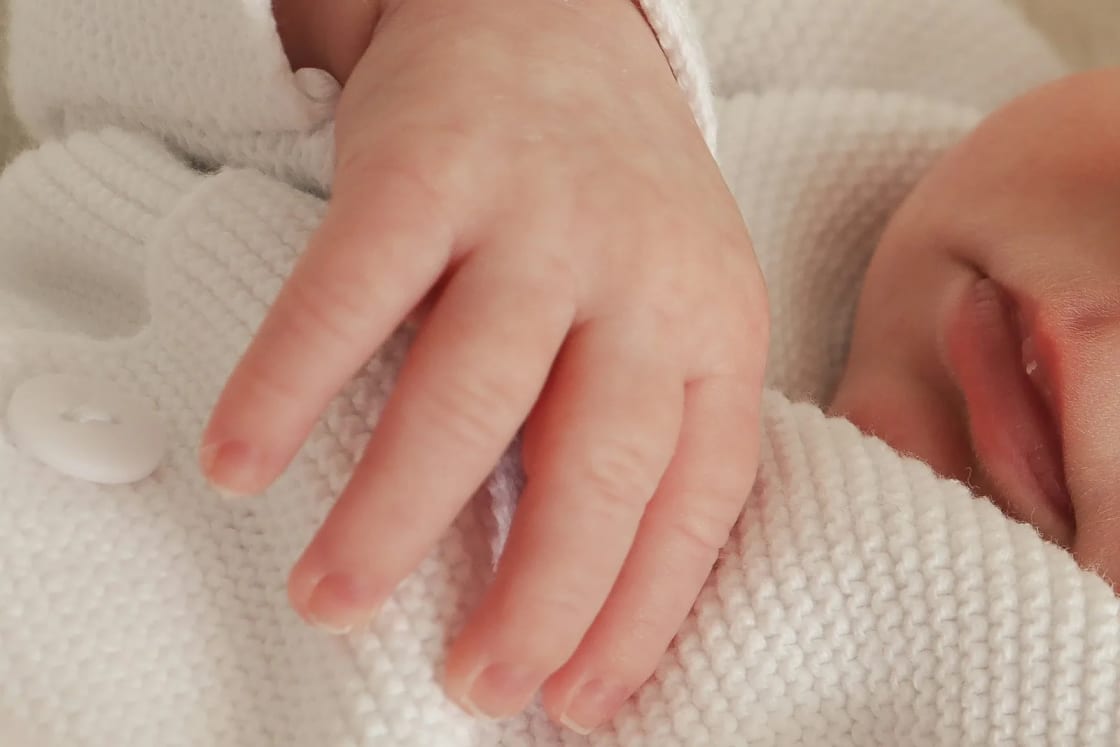
Nothing about the gathering is in the handbook, so every family does it differently. One familiar pattern is a lunch at the parents' or grandparents' home after church, with the baby still in the blessing outfit for photos, and relatives who traveled in staying through the afternoon. Some families dress the baby in white for the day; that is a custom, and the handbook's instructions do not mention clothing.
If you are the one hosting:
- Plan food that can wait. Sacrament meeting ends at a set time, but people linger in the hallway, and the guests who fasted will be hungry.
- Sunday closures matter. Many local restaurants and bakeries are closed on Sunday. If you are ordering a tray or a cake, pick it up Saturday. Our list of restaurants open on Sunday in Provo helps if you need a backup.
- Out-of-town relatives are better off flying into Provo on Saturday than cutting it close on Sunday morning. Our PVU vs. SLC comparison weighs the two airports.
- Mixed-faith families often appreciate being told what to expect beforehand. Sending them this page is one way to do it.
For the new parents, the blessing tends to land somewhere in the first few months, often in the same weeks as recovery and the first pediatric visits. Our first six weeks postpartum guide and the new dad's guide cover the rest of that stretch, including how wards tend to help.
If you are not a Latter-day Saint and live here
Utah Valley has many families who are not members of the Church, and you may find yourself invited to blessings for a neighbor's or coworker's baby. Going is a kind gesture and nobody will treat it as a step toward joining. Our guide to living in Provo when you're not LDS and our overview of the valley's other faith communities are written for you.
Frequently Asked Questions
What is a baby blessing in the Church of Jesus Christ of Latter-day Saints?
Which Sunday is a baby blessing usually held?
How long does a baby blessing last?
Can a non-member relative stand in the circle for a baby blessing?
Can I take photos or video during a baby blessing?
What should I wear to a baby blessing?
Do I have to take the sacrament at a baby blessing?
Can a baby be blessed if the parents are not members of the Church?
Sources
The facts in this guide were checked against these sources. Hours, fees and rules change, so confirm anything time-sensitive with the source before you go. How we make Provo.com.
- Utah Department of Health and Human Services, Office of Vital Records and Statistics: Vital Records, Utah Department of Health and Human Services, Office of Vital Records and Statistics. Checked October 20, 2026.
- General Handbook, Chapter 18: Priesthood Ordinances and Blessings (18.6 Naming and Blessing Children; 18.9 sacrament), The Church of Jesus Christ of Latter-day Saints. Checked October 20, 2026.
- General Handbook, Chapter 29: Meetings in the Church, The Church of Jesus Christ of Latter-day Saints. Checked October 20, 2026.
- General Handbook, Chapter 38: Church Policies and Guidelines (38.2.7), The Church of Jesus Christ of Latter-day Saints. Checked October 20, 2026.
- Fasting and Fast Offerings (Gospel Topics), The Church of Jesus Christ of Latter-day Saints. Checked October 20, 2026.