
Most people who decide to help with homelessness in Utah County start by looking for the shelter. They picture a building with beds, a front desk, and a sign-up sheet for evening shifts, and they go looking for its volunteer page.
That building, in the form people expect, largely is not there — and understanding why is the difference between being useful here and being a logistics problem for an organization that is already stretched.
Utah County does not run shelter the way Salt Lake does
The model in Utah County leans heavily on vouchers and day services rather than on a single large county shelter. Emergency placement often happens through motel vouchers administered by agencies rather than through beds in a county-run facility, and the daytime infrastructure — meals, showers, laundry, mail, case management, medical and dental clinics — is concentrated at a small number of organizations rather than distributed across many.
The practical consequence for a volunteer is that the work is in daytime service delivery, not overnight bed staffing. If you came looking for a night shift monitoring a dormitory, that is the shape of the work an hour north, not here.
The Food and Care Coalition in Provo is the closest thing the county has to a central hub, and meal service is the usual entry point for a new volunteer. Our guide to homeless resources in Utah County covers the client side of that system in detail — what exists, how someone gets in, and where the gaps are. This guide is the other half: what the system looks like from the volunteer's side of the counter, and what determines whether your hours land somewhere useful.
The state rule that explains a lot of what looks arbitrary
Here is the part almost nobody volunteering knows, and it explains a category of interaction that otherwise looks like bureaucratic coldness.
Utah Code § 35A-16-205.1 directs the Utah Homeless Services Board to make rules — under the Utah Administrative Rulemaking Act — establishing standards for the prioritization of beds in a homeless shelter. It does not leave the priorities open. The statute tells the board what they must be:
- Highest priority goes to individuals eligible for Temporary Assistance for Needy Families funds under 42 U.S.C. § 604, and to individuals discharged from the Utah State Hospital.
- Shelters must, if feasible, allocate an average of 85% of total beds to the TANF-eligible group.
And then the enforcement clause: state funds may not be awarded under that chapter to a shelter that does not comply.
Sit with the 85% figure for a moment, because it changes how you read a scene you will eventually witness. A shelter can have an empty bed and still not be able to give it to the person asking. The staff member declining is not exercising discretion and is not making a judgment about the person's character. They are managing an average that their organization's state funding is conditioned on. A volunteer who does not know this reads that exchange as callousness and sometimes says so out loud, which is corrosive to the staff member and useless to the person who was turned away.
Knowing it also tells you where your own effort is best aimed. If beds are allocated by a statutory formula, then the marginal thing a volunteer adds is almost never a bed — it is a meal, a ride, a completed application, an hour of childcare, a functioning donation stream, or a case manager's time freed up because you did the sorting.
A naming trap worth knowing before you cite anything
If you research this, you will run into two names for the same body.
Utah Code § 35A-16-204, effective May 7, 2025, creates the Utah Homeless Services Board within the Office of Homeless Services. The board's membership is spelled out in the statute — legislative appointees, gubernatorial appointees, the mayor of Salt Lake City, a statewide philanthropic leader, a representative from the Utah Association of Counties, someone representing the Utah Homeless Network, the state homelessness coordinator, and an individual with lived experience of homelessness appointed by the chair.
But when the body was created in 2021 it was called the Utah Homelessness Council, and state web pages still carry that name in places — including pages on the state's own homelessness site. This is a specific and repeatable research failure: a source's own official host is not automatically its current page. If you are quoting a governance structure in a grant application, a council presentation or a nonprofit board packet, go to the statute rather than to the agency's explainer page, and check the effective date.
What the volunteer roles are
Strip away the picture of the dormitory and the real inventory looks like this.
Meal service. The reliable front door, at the Coalition and at congregational and community meal programs across the valley. Usually single-shift, usually no background check, usually oversubscribed in December. Contact the organization to arrange it rather than arriving unannounced — a dining hall with more volunteers than stations is not more help, it is a crowd management problem.
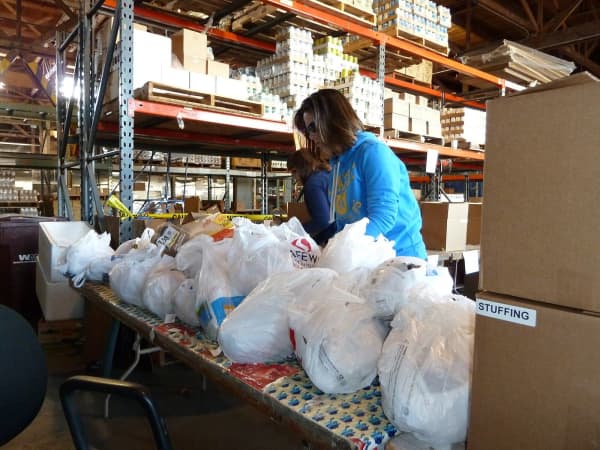
Warehouse, sorting and distribution. Donations arrive unsorted and cannot be used until someone sorts them. This is the least glamorous work in the sector and among the most consistently needed. It is also generally the most family-friendly, though age minimums vary and anyone under about sixteen usually needs an adult alongside.
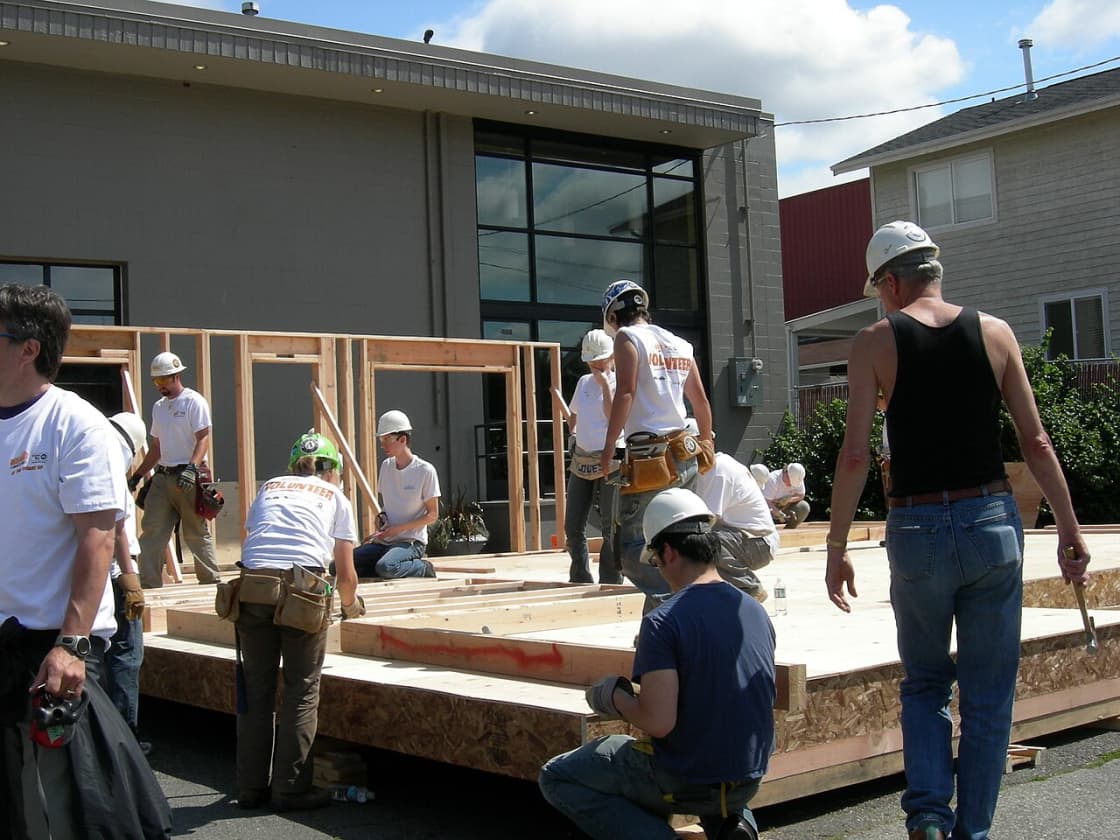
Habitat for Humanity, both halves. The build side runs on supervisor-led crews that expect to teach; you do not need construction skills, you need to show up when you said you would. The ReStore side — the resale operation whose margin funds the builds — needs people to sort, price, move and sell donated goods, and it takes single-shift help readily. If you hold a trade license, say so on the first call, because skilled hours are the scarcest thing in the building.
Case management support. Filing, data entry, appointment reminders, transportation. This is where the leverage is highest and where the background check requirement almost always applies, because it involves client records and often unsupervised contact.
Skilled professional time. Medical, dental, mental health, legal and job-readiness hours are far harder to replace than general volunteering. If you are licensed in any of those, the correct opening line is not "how can I help" but "I am a licensed X, do you have a use for that."
Code blue: the week the rules change
There is one set of conditions under which almost everything above is temporarily suspended, and any volunteer who serves through a Utah winter should know it exists.
Utah Code § 35A-16-703, as amended by Chapter 504 of the 2025 General Session and effective May 7, 2025, sets out what takes effect within an affected county for the duration of a code blue alert. The list is worth reading closely, because it describes a different operating environment:
- A homeless shelter may expand its capacity limit by up to 35%, so long as it stays compliant with the applicable building and fire codes.
- Shelters must implement expedited intake procedures, coordinated with the applicable local homeless council.
- A shelter may not deny temporary shelter to anyone requesting it — unless it is at the expanded capacity limit, or a reasonable individual would conclude the person presents a danger to public safety.
- Any indoor facility owned by a private organization, a nonprofit, or a state or local government entity may be used for temporary shelter, and is exempt from Title 26B Chapter 2 licensure requirements for the duration of the alert and seven days after it ends — provided the building and fire codes are met and the owner's governing body approves the use.
- Shelters, government entities and service organizations may coordinate street outreach to distribute cold-weather survival resources, including clothing and blankets.
- Camping ordinances may still be enforced, but government entities may not seize personal cold-weather survival items — clothing, blankets, tents, sleeping bags.
- A municipality may not enforce any ordinance or policy, including zoning, that limits the provisions above from taking effect.
Read that against the 85% bed-prioritization rule and you can see the design. In ordinary conditions, beds are allocated by a statutory formula and a shelter can lawfully turn someone away. Under a code blue alert, the presumption inverts — the default becomes admission, and the exceptions narrow to capacity and danger.
Two things follow for a volunteer.
First, the fourth provision is an invitation. A congregation's cultural hall, a company's warehouse, a city's recreation building — any of these can lawfully be used as temporary shelter during an alert without going through the ordinary licensure process, if the owner agrees and the building is code-compliant. Organizations that have thought about this in October can open a door in January. Organizations that have not will spend the alert making phone calls. If you sit on a board or a building committee anywhere in this valley, that is the question to raise before winter, not during it.
Second, the sixth provision is the one to know by heart. During an alert, a person's blankets, tent and sleeping bag cannot be taken from them, even where a camping ordinance is being enforced. Volunteers doing outreach are frequently the people best positioned to know when that line has been crossed, and knowing the citation is the difference between an uncomfortable feeling and a reportable fact.
The background check is the schedule, not a formality
For any role involving unsupervised contact with children or vulnerable adults, expect a background check. It takes days to weeks depending on the organization and the vendor they use, and it is the single most common reason a person who decided in September to start mentoring has still not started by November.
Treat it as the first step rather than the last. Ask for the paperwork on your first phone call, before you have picked a role or a shift. If the organization turns out not to need it for the role you land in, you have lost nothing; if it does, you have saved yourself three weeks.
Our volunteer liability guide covers the two statutes that sit behind the waiver you will be asked to sign — the federal Volunteer Protection Act and Utah's Volunteer Government Workers Act — and which one applies depends on whether the organization you serve is a nonprofit or a government agency. It matters more than people assume, particularly for driving roles.
Money, goods, and the sorting cost nobody counts
Money is generally the most efficient donation. It lets an organization buy exactly what is short this week, at wholesale, with no sorting or storage cost attached. This is not a polite deflection; it is arithmetic.
Goods given against a published need list work well. The recurring Utah County winter appeal is for sleeping bags, coats, hats, gloves and non-fleece blankets — and the specificity there is worth respecting. Non-fleece is not fussiness. It reflects what performs when it is cold and wet, which is the condition the item is for.
Goods given against your own guess are frequently a net cost. Every unusable item still has to be received, handled, sorted and disposed of, by someone whose hours were budgeted for something else. If you want to give goods, call and ask what is short. The answer takes two minutes to get and changes what you buy.
If you are clearing out a house rather than shopping for a drive, our junk removal and donation guide covers what local organizations will and will not take, which saves a trip.
The timing problem, which is the real lesson
Utah Valley is generous in a concentrated way. November and December bring a flood of volunteers, and at some organizations more people than there are shifts. Groups call wanting a Saturday in December and are told, gently, that December is full.
February brings the same need and a much thinner sign-up sheet. So does July, when school meal programs stop and household food budgets absorb ten extra meals a week per child in a county with a very high proportion of households with children, while the volunteer base is on vacation.
If you have any flexibility about when you serve, that flexibility is worth more than the hours themselves. Call an organization in January and ask which weeks in the next six months they expect to be short. They will know precisely, and they are rarely asked.
The same logic applies to congregations, student groups and companies planning a service project. A December group shift is a pleasant morning that an organization will graciously accommodate. A committed monthly crew in the first quarter is a different category of contribution, and the people running these programs will tell you privately that they would trade three of the former for one of the latter.
How to start this week
- Pick the organization before the role. Call the Food and Care Coalition, Community Action Services and Food Bank, or Habitat for Humanity's local affiliate and ask what is short, rather than proposing what you would like to do.
- Ask about the background check on that first call, even if you do not think your role needs one.
- Ask which month they are thinnest, and offer that month.
- Check both listing sites. JustServe and the United Way of Utah County volunteer portal carry most of what is posted locally, and between them take about ten minutes to scan. Our volunteering guide explains what each one is good for.
- If you are licensed in a clinical or legal field, lead with that. It is the scarcest input in the system.
The version of this that works is unglamorous and repetitive, involves more sorting than conversation, and happens in months when nobody is thinking about it. That is also the version organizations remember.
What not to do
A short list, assembled from what staff at organizations like these say when asked directly.
Do not arrive unannounced with a group. A dining hall with more volunteers than stations is a crowd management problem wearing the costume of help. Call first, every time, even for a repeat visit.
Do not photograph clients. Not for a church newsletter, not for a company social post, not with a face blurred. People using these services have not consented to appear in your organization's marketing, and a camera changes who is willing to walk through the door next week.
Do not offer money, rides or your phone number directly to a client. This feels cold and is not. Organizations run these interactions through structures for reasons involving safety, equity and the volunteer's own protection, and a side arrangement bypasses all three. Take the impulse to the staff member.
Do not treat a bad interaction as data about the population. You will occasionally meet someone who is rude, intoxicated or unwell, in the same proportion you would in any other room of strangers. Volunteers who generalize from one encounter tend to leave, and to say things on the way out that make it harder for the next person.
Do not promise a return you have not scheduled. "We'll be back soon" from a group that does not come back is a small thing to say and a familiar thing to hear.
Related Guides
- How to Actually Volunteer in Utah Valley — the front door to the whole cluster
- Homeless Resources in Utah County — the same system from the client's side
- Volunteer Liability in Utah — the two statutes behind the waiver
- Volunteering at Utah Valley's Food Banks and Pantries — the adjacent cluster, and the busiest one
- Service Hours for Students and Student Groups
- Junk Removal and Donation in Utah Valley — what gets accepted
- Volunteering as a Tutor or Mentor
- Holiday Giving in Utah Valley — Sub for Santa, drives, and what helps
- Blood Drives in Utah Valley
Frequently Asked Questions
Does Utah County have a homeless shelter I can volunteer at?
Is there a state rule about who gets a shelter bed?
What happens to a shelter that does not follow the prioritization standards?
Do I need a background check to volunteer with a housing nonprofit?
What is the difference between the Utah Homelessness Council and the Utah Homeless Services Board?
Can I volunteer with Habitat for Humanity without construction skills?
Is donating money really better than donating goods?
When are shelter and housing organizations short of volunteers?
Sources
The facts in this guide were checked against these sources. Hours, fees and rules change, so confirm anything time-sensitive with the source before you go. How we make Provo.com.
- Utah Code 35A-16-205.1. Utah Homeless Services Board to establish standards for the prioritization of homeless shelter beds, Utah State Legislature. Checked October 12, 2026.
- Utah Code 35A-16-204. Utah Homeless Services Board., Utah State Legislature. Checked October 12, 2026.
- Homeless Services & Food Assistance in Provo, UT, Food & Care Coalition. Checked October 12, 2026.
- Habitat for Humanity of Utah County. Checked October 12, 2026.