
Most craft groups fail the same way. The first night is a hit, the second is half as full, and by the fourth the organizer is cutting fabric alone. The groups that last pick a format they can repeat without heroics, a place that is easy to get into, and a supply plan that does not depend on one person's credit card. This guide covers all three, and the Church rules that apply if the group is a ward activity.
First decide what kind of group it is
The answer changes the rules.
A ward or stake activity is planned through Relief Society, Young Women, an activities committee, a YSA committee or similar, uses the meetinghouse, and is paid from the ward budget. The Church's General Handbook (chapter 20) governs it. Our guide to how LDS wards work explains who does what.
A neighborhood group is just neighbors, meeting in homes or rented space, paying their own way. No handbook applies, and you can meet on a Monday or sell what you make. Many groups in Utah Valley are both at once (ward members who also happen to be neighbors), so be clear about which hat the group is wearing on a given night.
The Church rules that matter for a craft night
These are from the 2026 General Handbook, chapter 20, as published on the Church's site. They are short, and they answer most questions organizers ask.
| Topic | What the handbook says | Section |
|---|---|---|
| Monday nights | No Church activities after 6 p.m.; buildings closed | 20.5.3 |
| Who pays | Budget pays; members should not supply materials at their own expense | 20.6.1 |
| Cost | Simple, little or no cost; expenses approved in advance | 20.2.6 |
| Selling | No commercial or political purpose | 20.5.1 |
A few more that come up:
- Reserve the building early. "If an activity will be held at a meetinghouse or another Church facility, the facility should be reserved in advance to avoid scheduling conflicts" (20.2.5). Work through your building scheduler.
- Fundraisers are limited. A bishop or stake president may authorize one fundraising event a year, and only for specific purposes such as youth camp costs or camp equipment (20.6.4 and 20.6.5). A craft sale to raise general funds does not fit.
- Youth need two adults. At least two adults must be present at all Church activities attended by children and youth, and those working with them must complete the Church's protection training (20.7.1).
- Invite widely. Planners "should reach out to all," including new members, single adults, people with disabilities and people of other faiths, and be sensitive to physical limitations (20.2.2). In practice: avoid crafts that need fine motor skills or long standing unless you have an alternative.
The supply rule surprises people most. If the ward is running the activity, the ward should be buying the felt, not the sisters who show up.
Pick a format you can repeat
Three formats work, and each suits a different group.
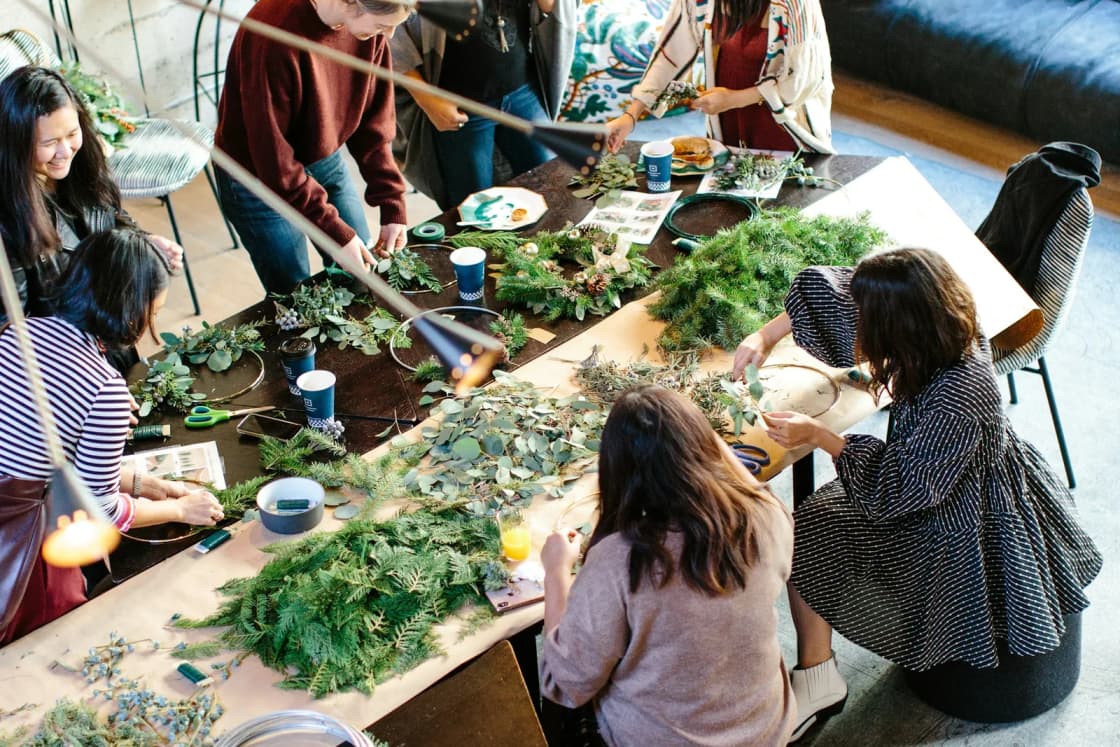
1. The one-night project. Everyone makes the same thing in about 90 minutes and takes it home. Best for a ward activity, a first meeting or a mixed-skill group. It needs one teacher and supplies prepped in advance (pre-cut, pre-counted, one kit per person). Ideas that fit: a simple pouch or pillowcase if you can borrow machines, a no-sew fleece blanket, hand-lettered cards, a pressed-flower bookmark, a small wreath.
2. The bring-your-own-project night. Everyone brings whatever they are working on and sits together. Best for knitters, crocheters, embroiderers, quilters doing hand work and scrapbookers. It needs almost no organizing: a time, a place and a table. This is the format that lasts longest, because there is nothing to prepare. The model in this valley is the free weekly Stitch Night at Petit Fours & Purls in Lehi, covered in our yarn shop guide.
3. The multi-week class. Same group, a skill learned in steps over four to six weeks: a first quilt, a sweater, beginning sewing. Best for committed people. It needs a capable teacher and a plan for people who miss a week. If no one in the group can teach, a local shop class is often a better start than a homemade curriculum; Dave's Bernina in Provo, for example, lists short project classes from $15, and our guide to sewing machines in Utah Valley covers the dealers' classes.
A sensible path is to start with format one to get people in the door, then offer format two as the standing night.
Where to meet
The meetinghouse. Free for ward activities, with tables, chairs, a kitchen and outlets. The catches are scheduling, the Monday-night rule above, and that you set up and clean up. Ask the building scheduler which rooms have the most outlets if you plan to use sewing machines or glue guns, and who will open and lock the building. For a group trip instead of a night, see craft retreats and cabin weekends near Provo.
A home. The easiest and most social option for a neighborhood group. It caps your size at the number of chairs and makes the host the de facto organizer, so rotate homes.
The library. The Orem Public Library takes room reservations through its online events calendar. Check each library's room policy for group size, food and whether a library-card holder must book.
A shop or studio. Some shops welcome groups. Joining an existing night, such as the Thursday stitch night in Lehi, saves you from organizing at all. For an outing, The Wick Lab in Provo offers group bookings and on-site events, and our guide to craft nights by night of the week lists which studios are open when.
Supplies without burning out the organizer
- Set the budget first. For a ward activity, get the amount approved before buying anything (20.2.6). For a neighborhood group, agree on a per-person kit cost and collect it before you shop.
- Buy once, in bulk, before Sunday. Hobby Lobby (American Fork, Orem, Spanish Fork, Saratoga Springs) and Michaels (American Fork, Orem) are open Monday through Saturday and closed Sunday. Our craft stores guide lists hours and what each carries.
- Check the thrift store first. Making Space Thrift, 475 North Freedom Boulevard in Provo, sells donated fabric, yarn and notions, and accepts donations. For a group making 30 of something, secondhand fabric and yarn can cut costs sharply. The general thrift stores are worth a pass too.
- Make kits. Bag each person's supplies the night before. It cuts the first 20 minutes of chaos and shows you exactly what you are short.
- Keep a group bin. Scissors, rotary cutters, rulers, hot-glue guns, extension cords and a first-aid kit, stored with one person. Note that equipment bought with ward funds is for Church use only (20.6.4).
Making it last
- Same night, same time. A standing date (second Thursday, say) beats a new date every month.
- One reminder, a day before. A ward or neighborhood group chat works.
- Plan for beginners every time. Keep a simple starter project on hand for whoever shows up new.
- Share the teaching. Ask a different member to teach a skill each month. The handbook encourages inviting people "to use their skills and talents" (20.2.2), and it keeps the organizer from carrying everything.
- Give it a service outlet. Quilts, hats and blankets made by groups are a long tradition here; our quilt shop guide mentions the service projects where valley groups tie quilts.
A first-night plan
- Choose a one-night project and make a sample yourself.
- Get the space (and, for a ward activity, the budget) approved.
- Prep kits for your expected count plus a few extra.
- Start on time with a five-minute demo, then circulate.
- End by announcing the next date and asking who wants to teach.
Related Guides
- LDS Wards Explained
- New to a Provo YSA Ward?
- Craft Nights in Utah Valley, Night by Night
- Craft Stores in Utah Valley After JOANN
- Craft Studios and Paint Nights
- Thrift and Vintage in Provo and Orem
Frequently Asked Questions
Can we hold a ward craft night on a Monday?
Who pays for supplies at a ward craft activity?
Can we sell crafts at a ward activity or use it as a fundraiser?
How do I reserve the church building for a craft night?
Do youth craft nights need two adults?
What craft works best for a first group night?
Where else can a neighborhood craft group meet?
Where can a group buy craft supplies cheaply in Utah Valley?
Sources
The facts in this guide were checked against these sources. Hours, fees and rules change, so confirm anything time-sensitive with the source before you go. How we make Provo.com.
- Orem Public Library home page (calendar, room reservations, makerspace links), Orem Public Library. Checked October 20, 2026.
- General Handbook, chapter 20: Activities (2026), The Church of Jesus Christ of Latter-day Saints. Checked October 20, 2026.
- Petit Fours & Purls home page (move notice, Stitch Night, hours, classes), Petit Fours & Purls. Checked October 20, 2026.
- Dave's Bernina home page and class calendar, Dave's Bernina. Checked October 20, 2026.
- Making Space Thrift home page, Making Space Thrift. Checked October 20, 2026.
- The Wick Lab home page (locations, hours, workshops), The Wick Lab. Checked October 20, 2026.
- Google Places listings: Hobby Lobby and Michaels Utah County stores (Oct. 2026), Google Maps (Places). Checked October 20, 2026.