
Most restaurant guides are written for people choosing where to eat. This one is written for people who did not choose.
River Rock Cafe is the cafeteria inside Intermountain Health Utah Valley Hospital, at 1034 North 500 West in Provo, on the third floor. Nobody plans a visit. People end up there because someone they love is upstairs, or because they work there, or because it is two in the morning and the alternative is a gas station.
It is also, by broad agreement of the people who have been stuck there, considerably better than it needs to be.
The short version
A hospital cafeteria on the third floor of Utah Valley Hospital, open extremely long hours seven days a week, with a made-to-order grill, a bakery case, salads, soups, sushi and grab-and-go. Cheap. Mountain views from the dining room. Not a destination restaurant, and not pretending to be.
Why this page exists at all
Search listings file River Rock Cafe as an ordinary Provo cafe. It appears on cafeteria shortlists, on breakfast lists, and — this is the giveaway — on lists of restaurants open late and restaurants with a view.
None of that is wrong exactly, but it produces a predictable failure: someone reads a review praising the grilled cheese, drives to the address, and finds a hospital. The single most useful thing a local guide can do here is say plainly what the place is.
It is the hospital cafeteria. You get to it by going into the hospital.
Who actually eats here
Three groups, with very different needs.
Staff, who are eating on a break and need speed and value above all. Visitors and families, often mid-crisis, who need somewhere to sit that is not a waiting room. And patients, whose food mostly arrives through the hospital's own room-service arrangements rather than at this counter.
The reviews reflect that mix. A striking number are written by people describing a NICU stay, a new baby, or three weeks of daily visits — and they read less like restaurant reviews than like notes of gratitude that the food was decent during a hard month.
The hours, and why they are unusual
Listings widely show River Rock Cafe operating from early morning until past midnight, seven days a week including Sunday.
In Utah Valley that is remarkable. Sunday closure is close to a regional default, and late-night food in Provo is genuinely scarce. A hospital does not close, so its cafeteria keeps hours that no ordinary Provo restaurant would attempt.
The caveat is that long opening hours do not mean full service throughout. The grill, the hot line and the bakery are not all running in the small hours. Anyone counting on a cooked meal at an unusual time should ask at the hospital rather than trusting a listing.
What the food is actually like
The consistent theme across reviews is surprise. People arrive with the words "hospital food" in mind and leave describing genuinely good sandwiches.
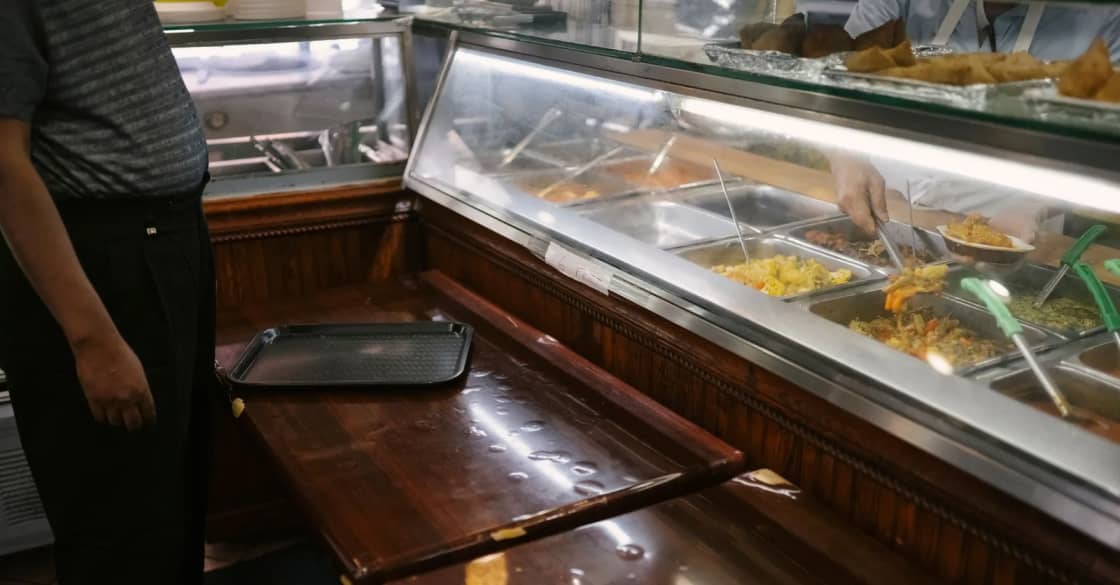
Named repeatedly: the grilled cheese, described in one review in loving structural detail — two slices of cheddar, grilled under a lid so the outside crisps properly. The fries. The made-to-order grill generally, with named cooks getting personal credit in reviews, which is not something that happens at a bad canteen.
Beyond the grill there is a bakery case with sweet rolls, salads, soups, sushi, and grab-and-go items. Reviewers mention made-to-order omelettes on certain mornings as a standout, at a price that would be difficult to match anywhere in the county.
The price point, in context
Listings put typical spend in the low single digits to around ten dollars per person. That is cheap in absolute terms and very cheap for hot, cooked-to-order food.
The comparison reviewers themselves draw is instructive: several explicitly measure it against the nearby gas stations, which is the honest alternative for someone who has twenty minutes and cannot leave the area. Against that benchmark it is not close.
We do not print specific prices, because they move. The structural point is that this is not a place where feeding a family during a long hospital day becomes a financial problem on top of everything else.
The view, which matters more than it should
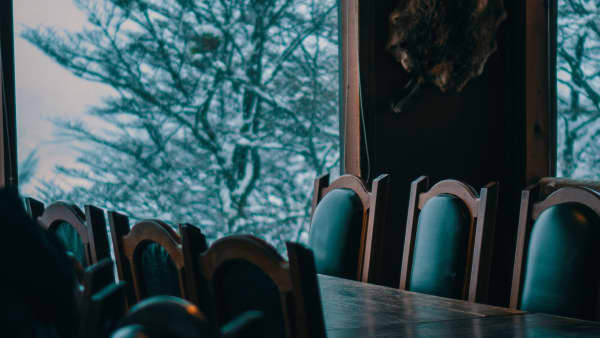
The dining area looks toward the mountains, and from an upper floor it does so with a real horizon rather than a slice of car park.
This sounds like a trivial detail in a restaurant review. It is not trivial for the actual audience. If you are spending twelve hours a day in a hospital, a room with daylight, a view of the Wasatch and a table you are allowed to sit at for a while is a materially different experience from a vending machine in a corridor.
Finding it inside the building
The cafe is on the third floor. Utah Valley Hospital is a large modern facility and the walk from some units is long — one review's only complaint is the distance from distant rooms.
The practical advice for a family settling in for a long stay is to work out the route once, early, while nobody is in a hurry. Hospital wayfinding is much harder when you are worried, and the third-floor cafeteria is one of the few fixed points worth knowing.
Dietary requirements
Listings flag limited vegetarian options, and reviews bear that out — the vegetarian path runs through salads, soups and grab-and-go rather than a dedicated hot offering.
Anyone with stricter requirements, whether religious, allergy-driven or medical, should plan around the salad and bakery side or bring food in. A hospital is generally relaxed about visitors bringing their own food, though patients' own diets are set by their care team and are not a matter of preference.
What else is near the hospital
For anyone who can leave the building, the immediate area around 500 West has options within a few minutes' drive, including a deli inside a nearby gas station that has a small local reputation of its own, and various quick-service places on the surrounding roads.
For a proper meal after a long day, downtown Provo is a short drive south and our best restaurants in Provo guide covers it. Our restaurants open late in Provo page is the more relevant one for hospital hours, because late-night options here are genuinely thin.
For families settling in for a long stay
A few practical notes that reviews surface and that nobody tells you on arrival.
Bring a card; the cafe takes them. Expect the grab-and-go case to be the reliable option outside main service windows. And treat the cafeteria as somewhere to leave the room for twenty minutes rather than purely as a food source — several reviews make clear that getting out of the unit for a short break was the real value.
Our Utah Valley healthcare guide covers the wider picture of the hospital system for anyone new to the area.
Room service versus the cafeteria
These are different things and people conflate them constantly.
Reviews from patients describe ordering food to their rooms across multiple days and rating it highly. That is the hospital's room-service arrangement, run by the hospital for admitted patients, with menus governed by clinical requirements.
The cafeteria is the walk-in counter for everyone else. If you are a patient, your care team sets how ordering works on your unit; if you are a visitor, the third floor is where you go.
Parking and getting to the building
Utah Valley Hospital sits at 1034 North 500 West, west of University Avenue and north of the city center. It has structured and surface parking, and the practical advice for a repeat visitor is to settle on one entrance and use it every time.
Hospital campuses are disorienting by nature, and the cognitive load of navigation is exactly what you do not need on a difficult day. Learning one route — park here, this door, this lift, third floor — is worth doing deliberately on the first visit.
For anyone new to the area, our Utah Valley healthcare guide covers how the hospital system in the county is organized.
What a long hospital stay actually costs in food
This is rarely discussed and matters enormously to families. A relative staying near a patient for two weeks is buying somewhere between fourteen and forty meals outside the home, at a moment when nobody is thinking about budgets.
At the price point listed here, that is a manageable number. At restaurant prices it would not be. The cafeteria's cheapness is not a minor amenity — for a family from Nephi or Delta whose relative has been transferred to Provo, it is part of what makes staying nearby possible at all.
The staff, who get named
An unusual feature of River Rock's reviews is that individual cooks are named and thanked. That does not happen at indifferent canteens.
It is worth noting for what it implies about the operation: a grill that is genuinely made to order, staffed by people who are there consistently enough for regulars to know them. In a facility where visitors are often having their worst week, a familiar face at the grill does more work than the menu does.
Bringing food in instead
Hospitals are generally relaxed about visitors bringing their own food, and for long stays a cooler bag in the car is a reasonable strategy — particularly for anyone with dietary requirements the cafeteria cannot meet.
The rules are different for patients, whose diets are set by their care team and may be restricted for clinical reasons that are not negotiable. Never bring food to a patient without asking the nursing staff on that unit first.
Our grocery stores guide covers where to stock up nearby.
The honest caveats
It is a cafeteria. Atmosphere ratings in reviews sit consistently below food ratings, and that is fair — it is a functional room with a good view, not a designed dining space.
Service quality varies with who is on, which is true of every counter operation everywhere. And the long hours do not guarantee the full menu at any given moment.
Overnight and early-morning service
The hours that make River Rock unusual are the ones at the margins, and those are also the least predictable.
A visitor arriving at two in the morning should expect grab-and-go rather than a cooked meal. Vending and packaged options generally fill the gap when the grill is down. If you are staying overnight with a patient and know you will need food at an odd hour, buying something earlier in the evening is the reliable strategy.
Early mornings are better served — breakfast is a real service period here, and reviewers single out made-to-order omelettes on certain mornings as the best value in the building.
Coffee
Reviews mention the coffee positively, including the detail that beans are roasted in-house within the wider Intermountain food operation. For families running on very little sleep, a decent coffee at cafeteria prices is not a trivial amenity.
It is also one of the few places in that immediate area serving coffee at three in the morning, which for a hospital is exactly the point.
What this page cannot tell you
Hospital facilities change without announcement, and access policies in particular can shift quickly during any period of infection control. Nothing here should be read as a guarantee that a visitor can walk in and buy lunch on a given day.
The stable facts are the location, the floor, and the general shape of the offering. Everything operational — precise hours, which counters are running, whether the public is being admitted — should be confirmed with the hospital itself.
A note on why we cover it
Provo.com writes about restaurants people choose. This is the rare page about a place people end up in, and it exists because the searches are real: people look for the hours, the menu and whether they are allowed in, usually at a bad moment and usually on a phone in a corridor.
Answering that clearly is worth more than another review of a place with a patio.
If you are visiting someone for the first time
A short checklist, from the reviews and from common sense. Park in the same place each visit. Find the third floor once, early. Bring a card. Expect the walk from distant units to be longer than you think.
And take the break. The most consistent thing in these reviews is not the food — it is people describing the relief of sitting somewhere with a window for twenty minutes.
Why hospital cafeterias got better
The stereotype of hospital food comes from an era when catering was a cost line to be minimized and nothing else. That changed for reasons that had little to do with visitors.
Large health systems began treating food as part of both staff retention and patient recovery, and the practical result was made-to-order grills, real bakery programs and longer service hours. A hospital that wants nurses to stay through a night shift has to feed them properly at three in the morning.
Visitors are the incidental beneficiaries. A cafeteria built to keep clinical staff fed around the clock is, by construction, a cafeteria that serves a worried family at an odd hour better than any restaurant in the city could.
That is the honest explanation for why the reviews here are so much warmer than anyone expects. Nobody set out to build a good restaurant. They set out to feed a building that never closes, and did it well.
The bottom line
River Rock Cafe is not a restaurant you choose. It is a facility that turns out to be good, in a building where people are usually having one of the harder weeks of their lives, and that is a genuinely worthwhile thing for it to be.
Third floor. Cheap. Open when nothing else is. Sit by the window.
Being open to the public is a legal status, not just a courtesy
The question this page opens with — whether you are allowed to eat here if you are not a patient — has a plainer answer than most people expect, and the reason is worth setting out, because it also governs how the space has to be built.
A cafeteria that serves the general public is a place of public accommodation under Title III of the Americans with Disabilities Act, with the operating rules at 28 C.F.R. Part 36. That status is not about who owns the building or what else happens inside it; it follows from the nature of the operation. A restaurant inside a larger facility is still a restaurant.
For existing space the standard is readily achievable barrier removal — architectural barriers must be removed where that is "easily accomplishable and able to be carried out without much difficulty or expense" (§ 36.304(a)) — with the regulation naming measures such as ramps, curb cuts, repositioned shelving, rearranged seating and widened doorways (§ 36.304(b)). Newly constructed and altered areas are held instead to the 2010 ADA Standards for Accessible Design, a substantially higher bar, with a safe harbor for elements that already met the 1991 Standards (§ 36.304(d)(2)).
In a modern hospital building this tends to produce a better experience than in an older independent restaurant, and not by accident. Recently built facilities are designed against the current standards from the outset, and circulation routes in a hospital are planned for wheelchairs, walkers, and equipment as a baseline condition rather than as an adaptation. Wide corridors, level thresholds and accessible restrooms are ordinary features of the building type.
The practical implication for the visitors this page is written for — families settling in for a long stay, people arriving exhausted and unfamiliar with the building — is a small but real one. The route from accessible parking to the cafeteria in a facility like this is generally navigable without stairs, and the information desk can give you a specific path. That is worth knowing on a day when working it out yourself is the last thing you have capacity for.
Getting Food Delivered to the Hospital
The delivery question here runs the other way from the rest of this site. Nobody orders delivery from a hospital cafeteria. What people want to know, usually on a difficult day, is whether they can have food from outside brought to them while they are sitting with someone.
Generally yes, and the practical constraints are worth knowing in advance rather than working out in a lobby.
A delivery driver will not bring food to a patient room. Hospital access is controlled, and drivers are not escorted through it. In practice that means meeting the driver at a main entrance, which requires leaving the floor you are on and going down — something worth planning around if you do not want to leave someone alone for ten minutes. Giving the driver a specific entrance rather than just the hospital address avoids most of the confusion, because a large hospital campus has several and a pin can land at the wrong one.
Food brought in for a patient is a separate question, and it is a clinical one rather than a logistical one. Dietary restrictions after surgery or during treatment are real, and the nursing staff on that floor are the people to ask before bringing anything in for the person in the bed.
For visitors and family, the cafeteria's advantage is precisely that it is inside the building and requires no coordination at all. On a long day, that is worth more than a better sandwich.
Our food delivery guide covers how the delivery platforms work across the valley.
Related Guides
- Best Healthy & Clean Eating Restaurants in Provo (2026)
- Black Sheep Cafe: The Provo Restaurant Built on a Navajo Nation Childhood
- Utah Valley Hospital: The Complete Visitor and Patient Guide
- The Provo & Orem restaurant directory — where this place sits among everything else we cover, with the address and the city
Frequently Asked Questions
Where is River Rock Cafe?
Is River Rock Cafe open to the public?
What are the hours?
What kind of food does it serve?
Is it expensive?
Can patients get food delivered to their room?
Is there a view?
What are the vegetarian options like?