
Every family in Utah Valley ends up at Utah Valley Hospital eventually. A baby is born there — more than any other hospital in the county — or a grandparent is admitted, or a teenager comes off a mountain bike in Rock Canyon and rides in on an ambulance, or a chest pain that had been ignored for a week turns into a stent at two in the morning. It is the county's biggest hospital, its only high-level trauma center, and the place the smaller hospitals of central and southern Utah send the patients they cannot handle, and most of the people walking into it have never been inside and do not know where to park.
This guide is for them. It covers the campus and its entrances, the emergency department and what its trauma designation means, parking for visitors and outpatients, the visiting hours and the units that restrict them, what the 12-story tower is and what it replaced, the cafeteria and the pharmacy and the chapel, the floors where babies are born, billing and the assistance program, and where the hospital fits among the valley's others. The facts below are as of early September 2026 and drawn from the hospital's own listings and Intermountain's published policies; visiting rules in particular change with respiratory-illness seasons and with a patient's condition, and a phone call to the unit is worth more than any guide.
Where It Is and How to Get In
Utah Valley Hospital sits at 1034 North 500 West in Provo, on the flat west side of the city between 500 West and the freeway, a few blocks north of Center Street. From I-15, take the Center Street exit, go east to 500 West, and turn north; the campus fills the blocks from about 900 North to 1200 North. From BYU and the east side, come west on 800 North or Center Street. The main switchboard is 801-357-7850.
The campus has three front doors, and using the right one saves twenty minutes.
The main entrance is on the patient tower, off 500 West, with a covered drop-off loop, the visitor lobby, the information desk, admitting, and the elevators to the inpatient floors. This is where you go to visit an admitted patient, to check in for a scheduled surgery, and to find anything you cannot find.
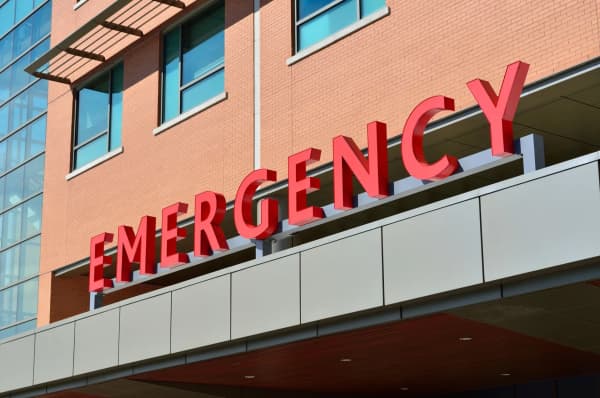
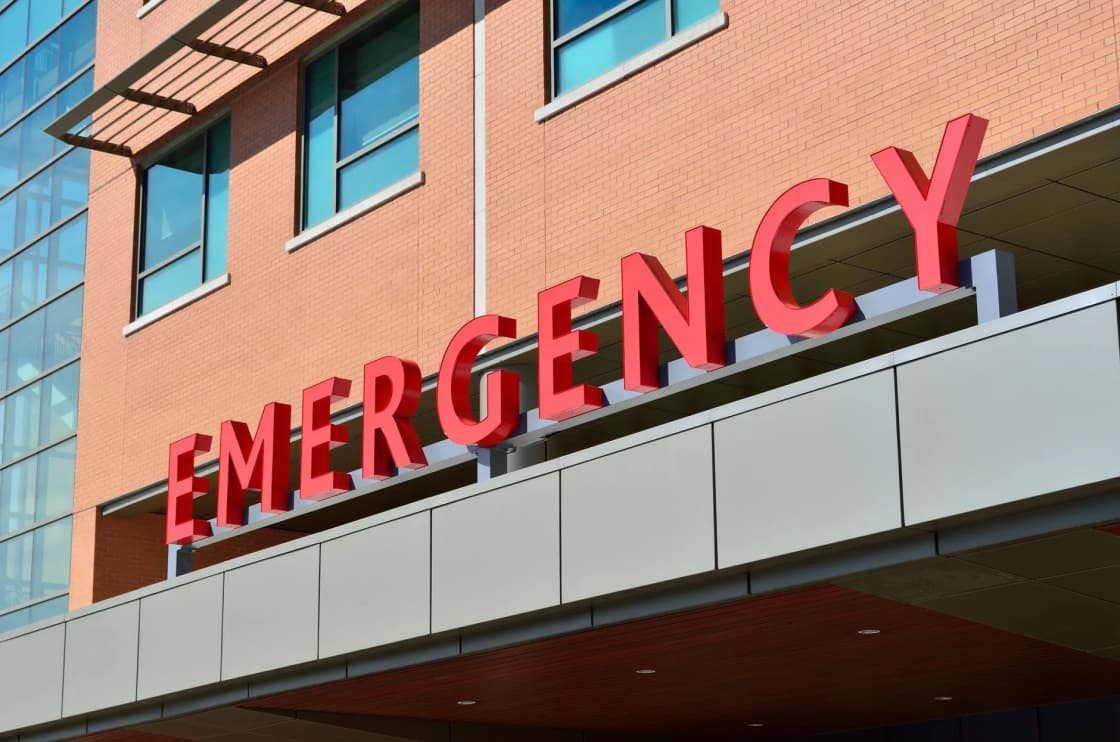
The emergency entrance is on the north side of the campus, with its own drive, its own walk-in doors, its own parking, and a separate ambulance bay. If you are the patient, or driving one, go here directly; do not go to the main lobby and ask.
The outpatient building (the Sorenson Legacy Tower) is separate from the patient tower, with its own parking and its own front door, and it is where the imaging, the lab draws, the outpatient clinics, and the pre-surgery appointments are. A patient who arrives at the main tower for a scheduled MRI will be sent back across the campus.
The three are connected inside, and the information desk in the main lobby will walk anyone who is lost to the right place; the volunteers there have done it ten thousand times.
The Emergency Department
Utah Valley's emergency department is open 24 hours, every day, and it is the busiest in the county by a wide margin — the one that takes the trauma from the canyons and the freeway, the heart attacks and strokes from across central Utah, and the ordinary Tuesday-night emergencies of a city of 115,000 and a county of about 750,000.
The designation that matters is Level II trauma center, which Utah Valley holds and no other hospital in Utah County does. The trauma levels run from I to V; a Level II has general surgeons in the building around the clock and orthopedic surgery, neurosurgery, anesthesiology, emergency medicine, radiology, and critical care available promptly, and it can definitively treat nearly any injury without transferring the patient. The Level I centers — which add research and teaching requirements and, in practice, a few very rare specialties — are in Salt Lake at University of Utah Health and Intermountain Medical Center. For a serious accident anywhere from Lehi to Nephi, the ambulance or the helicopter comes here; the hospital has a helipad and Life Flight uses it constantly.
What a visit looks like: walk in, register at the desk, be triaged by a nurse who assigns an urgency level, and wait in proportion to it. A chest pain or a stroke symptom goes back immediately; a sprained ankle at 8 p.m. on a Friday waits behind the accidents. The department is large and has a fast-track area for the lower-acuity cases, which helps. If the problem is not an emergency, the wait will be long and the bill will be large, and our guide to urgent care versus the ER in Provo exists to help decide before you drive; Intermountain's own InstaCares and the other urgent-care clinics along University Parkway handle most of what people bring to an ER.
For children, the emergency department treats them, and for anything serious that needs a children's hospital the transfer is to Primary Children's in Salt Lake — or, since 2024, to Primary Children's Lehi campus at the north end of the county, which our pediatrician guide covers.
Parking
Visitor parking is in surface lots and a parking structure off 500 West near the main entrance; the emergency entrance has its own lot, and the outpatient building has its own. Check posted signs for any charges or restrictions. Handicap spaces are at every entrance, and the main entrance has a covered drop-off loop for patients who cannot walk in from a lot.
The bad news is that the lots nearest the tower fill by mid-morning on weekdays, and the walk from the outer lots is several minutes — fine for a healthy visitor, hard for a patient with a new hip. The strategy: drop the patient at the main entrance loop, park wherever there is a space, walk back. The structure is the most reliable. Never park in the emergency drive or the ambulance zones, which are enforced. The neighborhood streets east of 500 West are residential and the residents have opinions about hospital parking.
For a long stay, there is no daily charge to worry about, which is more than the Salt Lake hospitals can say.
Visiting Hours and the Units That Restrict Them
The hospital's own listing gives visiting hours of 9 a.m. to 9 p.m.; Intermountain's system-wide guidance says most of its hospitals allow visitors from 7 a.m. to 9 p.m., that visitors of any age are welcome on general units, and that one support person can generally stay overnight. In practice the general medical and surgical floors of the tower are relaxed about it, the nurses will let a spouse stay late, and the rules that bite are on the specialty units.
Intensive care. The ICUs limit the number of visitors at a time, sometimes to two, and may limit ages; the hours are the unit's, and a patient's condition can close the door for a while at any hour. Ask the charge nurse.
Labor and delivery, and the postpartum floor. Support persons are welcome through the birth; the number of visitors afterward is set by the unit and the mother, and young children are generally welcome to meet a sibling but not to spend the day. During respiratory-illness seasons the unit tightens.
The NICU. The newborn intensive care unit is the most restricted place in the hospital, for obvious reasons: parents at nearly any hour, a short list of other adults, and very limited access for children. Hand washing is not optional and a cough keeps you out.
Behavioral health. Set visiting hours, set visitor lists, and no exceptions.
Everywhere: do not visit if you are sick, and Intermountain asks you not to visit if someone in your home has an active contagious illness. Masks are available and sometimes required in specific units or seasons. If a visit matters, call the unit first — the main number will transfer you — because a rule that changed yesterday is not on any website.
The Tower and the Old Hospital
If you have not been to Utah Valley Hospital since the mid-2010s, it is a different place. The hospital opened in 1939 as a 55-bed community hospital with 38 physicians; the church that then owned it — which had taken ownership in 1953 — donated it, with the rest of its hospitals, to the new nonprofit Intermountain Health Care in 1975. It became Utah Valley Regional Medical Center in 1984 as it grew into the referral center for central and southern Utah, and it dropped the "Regional Medical Center" and went back to Utah Valley Hospital in 2016. It was the first fully staffed 24-hour emergency center south of Salt Lake City, in 1970, which is a sentence that tells you how recently the valley was a small place.
By the 2010s the seven-story patient building from the postwar decades was worn out, and Intermountain undertook what it described as a $430 million replacement of most of the campus. It built a 12-story patient tower on the southwest side of the campus, with larger private rooms, floor-to-ceiling windows, and family space in every room; a new outpatient building; walking paths; and new parking. The tower opened at the end of the decade, the old patient building came down, and the campus today is essentially new. The hospital has 395 beds and is the largest in the county.
For a visitor, the practical consequences: the rooms are private, the recliners are real, the windows look at Timpanogos or Utah Lake, there is a family lounge on each floor, and the elevators are fast. The wayfinding is the main lobby's information desk, whose volunteers are the best resource in the building.
The Cafeteria, the Pharmacy, the Chapel, and the Rest
The River Rock Cafe, on the main level, is the cafeteria — a grill, a hot line, a salad bar, a bakery, and a lot of seating — and it is open to the public, which makes it one of the few hot meals in Provo on a Sunday night or at 11 p.m. Listings show it open from early morning until late every day, though the grill and hot line are not all running in the small hours; ask at the counter. It serves a holiday meal on Thanksgiving and Christmas for staff and visitors. We have a full River Rock Cafe guide. Coffee and grab-and-go stands sit in the lobbies of the tower and the outpatient center.
The outpatient pharmacy fills prescriptions written at discharge and in the clinics, which matters on a holiday or a Sunday when the retail pharmacies are closed; our Christmas Day guide leans on it.
The chapel is on the main level and open at all hours, non-denominational, and used more than you would think. Chaplains are available through the nurses, and the hospital will call clergy of any faith; for the Latter-day Saint majority of patients, the local ward is usually already on its way.
The gift shop, the ATM, and the vending are in the main lobby. Wifi is free throughout. Cell coverage is good in the tower and poor in the basement.
Patient and family services — social workers, case managers, interpreters, financial counselors — are reached through the nurse or the main desk; the interpreter service covers Spanish in person and most other languages by video, and a family should ask for it rather than translating a diagnosis themselves.
Having a Baby Here
More babies are born at Utah Valley Hospital than anywhere else in the county, and for a first-time parent the labor and delivery floor is the part of the building they will see. The unit has private labor rooms, a Newborn ICU providing advanced neonatology care for premature and sick newborns — which means a family whose baby comes early does not have to be split between Provo and Salt Lake — and a postpartum floor in the tower. The hospital runs childbirth, breastfeeding, and infant-CPR classes and a tour of the unit for expectant parents, which is the single best way to learn the parking and the entrance before the day it matters; ask your OB's office or call the hospital's women's services line. Our pediatrician guide covers the next step, and our healthcare in Provo guide covers the OB practices that deliver here.
Billing, Insurance, and Financial Assistance
Utah Valley is an Intermountain hospital, and Intermountain is the largest health system in the state, with its own insurance arm (Select Health) and contracts with nearly every other insurer that operates in Utah. Check that the hospital and the specific physicians are in your network before a scheduled procedure; the emergency room takes everyone regardless, as federal law requires, and the emergency visit itself is covered as in-network by most plans, but the specialists who see you afterward may not be.
If the bill is more than you can pay: ask, early, and ask specifically about financial assistance. Intermountain, as a nonprofit, runs a program that discounts or forgives bills for patients below income thresholds and applies a sliding scale above them; the hospital's financial counselors will take the application before, during, or after a stay, will set up interest-free payment plans, and will screen you for Medicaid, the state's Primary Care Network, and the marketplace plans. An itemized bill is yours for the asking and worth reading. Our healthcare guide covers the insurance landscape, and our student health guide covers the BYU and UVU plans, which send a lot of students here.
The Hospital Among the Others
Utah County has more hospitals than it did a decade ago, and knowing which is which saves a drive.
Utah Valley Hospital (Intermountain, Provo) is the referral center: the Level II trauma, the cardiac and neurosurgery and cancer programs, the NICU, the largest emergency department. American Fork Hospital (Intermountain) serves the north county with a full emergency room and a busy labor and delivery. Orem Community Hospital (Intermountain) is a small hospital known mostly for its labor and delivery. Timpanogos Regional Hospital in Orem is the MountainStar (HCA) hospital, with an emergency room and a full acute-care program, and the main non-Intermountain choice in the valley. Mountain View Hospital in Payson (Steward, then Revere) serves the south county. Primary Children's Hospital Lehi opened in 2024 as the children's hospital for the county. And Spanish Fork Hospital (Intermountain) opened in 2023 as the newest in the system. Our healthcare in Provo guide has the map, and a coming guide will sort out which network runs which building.
The rule of thumb: for a serious injury or a stroke or a heart attack, Utah Valley, and the ambulance knows it. For a birth, whichever hospital your OB delivers at. For a child, Primary Children's Lehi for the serious cases and the nearest ER for the rest. For everything that is not an emergency, the InstaCare and the urgent cares, which is where the hospital itself would send you.
What to Bring, and What to Know
For an admitted patient: ID and insurance card; a list of every medication with doses, or the bottles themselves; the name and phone number of the primary-care doctor; any advance directive, living will, or power of attorney; glasses, dentures, hearing aids; a phone and a long charging cable; and loose, comfortable clothes and shoes for the day of discharge. Leave jewelry and cash at home. For a support person staying the night: a pillow, a blanket, a book, and the knowledge that the recliners are better than the old ones and still recliners. Bring a notebook, because a family in a hospital is told things by six different people a day and remembers none of them, and write down the nurses' names.
Ask the questions. What is the plan, what are we waiting for, when does the doctor round, what does this medication do, when can we go home. Ask for the case manager early if a discharge will need equipment, home health, or rehab, because those take a day to arrange. Ask for the chaplain, the social worker, the interpreter, the financial counselor — they exist because people need them and they are underused because people do not ask.
And find the River Rock Cafe on the first day. Everybody in the building will tell you the same thing: eat, sleep when you can, and let the nurses do their jobs.
The Short Version
1034 North 500 West, Provo; 801-357-7850. Main entrance and visitor lobby in the tower off 500 West; emergency entrance on the north side with its own drive; separate outpatient building. Lots fill by mid-morning, use the drop-off loop. Visiting roughly 9 a.m. to 9 p.m. on general floors with one overnight support person, tighter in the ICUs, labor and delivery, the NICU, and behavioral health; call the unit. 395 beds, the county's only Level II trauma center, a Newborn ICU, a 12-story tower opened at the end of the 2010s in a $430 million rebuild. The River Rock Cafe is open to the public and late. Financial assistance exists; ask. And bring the medication list.
Related Guides
- Urgent Care vs. the ER in Provo
- Healthcare in Provo: Hospitals, Clinics, Insurance
- River Rock Cafe: The Hospital Cafeteria Guide
- Finding a Pediatrician in Utah Valley
- Student Health and Wellness at BYU and UVU
- Healthcare Jobs in Utah Valley
- BYU's School of Medicine, Explained
- What's Open on Christmas Day in Provo
- Health Insurance in Utah, Explained
- Intermountain, MountainStar, Holy Cross, U of U Health and Revere: Which Network Runs Which Hospital in Utah Valley
Frequently Asked Questions
Where is Utah Valley Hospital and which entrance do I use?
What are the visiting hours?
Where do visitors park?
What does a Level II trauma center mean?
How big is the hospital and what happened to the old building?
What is the cafeteria and is it open to the public?
What should I bring for an admitted patient?
What if I cannot afford the bill?
Sources
The facts in this guide were checked against these sources. Hours, fees and rules change, so confirm anything time-sensitive with the source before you go. How we make Provo.com.
- 2025 Trauma Facilities (designation list, 01/01/25), Utah Bureau of Emergency Medical Services. Checked October 12, 2026.
- ACS 1-Year Data Profile 2024 (DP05) — Provo city and Utah County, Utah (via USAFacts Government Data Connector, accessed 2026-10-12), U.S. Census Bureau. Checked October 12, 2026.
- About Utah Valley Hospital, Intermountain Health. Checked October 12, 2026.
- Utah Valley Hospital, Intermountain Health. Checked October 12, 2026.
- Utah Valley Hospital opens new 12-story patient tower nearing the end of $430M renovation, Deseret News. Checked October 12, 2026.