
Provo has close to ideal conditions for bicycle commuting and a modest number of people doing it.
The valley floor is nearly flat. The distances are short — most trips within the city are a few miles. The street grid is wide, rectangular and easy to navigate. A long continuous off-street path runs most of the length of the city. Two universities concentrate tens of thousands of people into a small area where parking is scarce and expensive.
What stops people is rarely the commute as a whole. It is two or three specific problems, and they are worth naming precisely, because each has a workaround.
The short version
The river parkway is the spine. Long, continuous, off-street.
Ride the parallel street, not the arterial. One block over is usually calm.
East-west crossings are the hard part. Plan them deliberately.
Bike plus transit is the most underused option here.
Lights are equipment, not accessories. Dark at both ends of the day for months.
Winter's obstacle is ice and inversion, not cold.
U-lock, frame to rack, record the serial.
The geography, assessed
What works in your favor:
The valley floor between the mountains and the lake is close to flat, which removes the single biggest deterrent to casual cycling. Provo's grid is wide and legible, with long straight streets and a numbering system that makes navigation nearly automatic once you understand it — our Provo zip codes and grid guide covers the addressing logic. Distances are short. And the destination density is unusual: a large share of the city's daily trips converge on two campuses and a downtown within a few miles of each other.
What works against you:
The east-west arterials carry heavy traffic at speed, and crossing them is the recurring problem in almost every Provo bike commute. The bench rises sharply on the east side, so anything up toward the foothills involves real climbing at the end of the ride. The network has gaps, where a comfortable marked route ends abruptly at exactly the point you most wanted it to continue. And the inversion months produce air quality that makes heavy outdoor exertion inadvisable on some winter days. For group rides, see cycling clubs and group rides.
The routes
The Provo River Parkway is the single best cycling asset in the city. It follows the river for a long, continuous, almost entirely separated distance, from the mouth of Provo Canyon down through the city toward Utah Lake. Its surface is good, its grade is gentle, and it crosses most major roads without needing to negotiate them at grade.
If your origin and destination are both within reasonable reach of the river, the parkway turns the commute into something closer to a pleasant ride than a transportation problem. Our Provo River Parkway guide covers it as a recreational route; as a commuting route the same qualities apply, with the caveat that its orientation follows the river rather than the grid, so it serves some trips perfectly and others hardly at all.
The parallel-street principle is the most useful habit for everything else. A driver picks the arterial because it is fast. A cyclist should pick the residential street one or two blocks over, which is usually only marginally longer, carries a fraction of the traffic at half the speed, and reaches the same places. Provo's grid makes this unusually easy, because nearly every arterial has a quiet parallel a short distance away.
The crossings are where planning pays. On any regular commute, identify the two or three places you must cross a major road, and solve each one deliberately — a signalized intersection with a protected phase, a route that uses an underpass or overpass, or a detour of a couple of blocks to reach a better crossing. Solving them once means never thinking about them again.
Campus has its own rules about where riding is permitted and where it is not, and those rules are covered in our bike shops guide, which also handles the e-bike classification question that determines where different classes of electric bicycle may legally ride. Both are worth reading before you assume the last hundred yards works the way you expect.
The multimodal trick
The most underused option in Utah Valley is not riding further. It is riding less.
Regional buses are generally equipped with front-mounted bike racks, and FrontRunner accommodates bicycles. That combination makes a whole class of trip practical that neither mode manages alone.
The pattern: ride the local ends, take transit for the long middle. A commute from Provo to a job in Lehi or further north is an unrealistic bicycle trip and a straightforward bike-plus-rail one. Our FrontRunner commuting guide covers the rail side of that.
Two things this solves at once. It removes distance as an obstacle. And it removes the arrival problem — in July, a short ride to a station is survivable in work clothes in a way that a forty-minute ride is not.
The variation worth knowing: ride one direction, take transit the other. Riding home rather than to work removes the presentability question entirely, and a great many regular commuters do exactly this through the hot months.
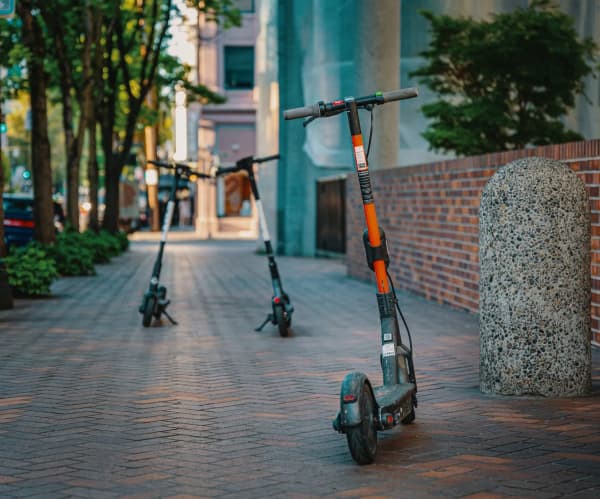
Shared bikes and scooters cover a different case again — the trip that is too far to walk and too short to justify anything else. Our guide to scooters and bike share in Provo covers what is on the street and what it costs.
Equipment, in order of what matters
Lights. Not accessories. Utah requires a front white lamp visible from at least 500 feet at night and either a rear red reflector or a rear red bicycle lamp. Ignore the minimum and fit a rear light regardless: a reflector only works when something is already pointed at it, and a light works from every angle and in the gray half-dark that describes most of a Utah Valley winter afternoon. Through December and January you will be riding in darkness at both ends of the day.
A lock that is not a cable. Cable locks are defeated in seconds. A U-lock, through the frame and to a fixed rack. Where the front wheel is quick-release, take it into the lock. Bicycle theft is persistent around both campuses and downtown.
Tires with some volume. Provo's streets have their share of rough edges, gravel washed out of driveways, and winter debris. A slightly wider tire at slightly lower pressure is more comfortable and far less puncture-prone than a narrow one.
Fenders, if you ride in wet or slush. The difference between arriving damp and arriving filthy.
A rack and a bag rather than a backpack, in summer. A pack against your back in July is the reason a lot of people stop.
Layers, not a heavy coat, in winter. You warm up within minutes and are then stuck with whatever you are wearing.
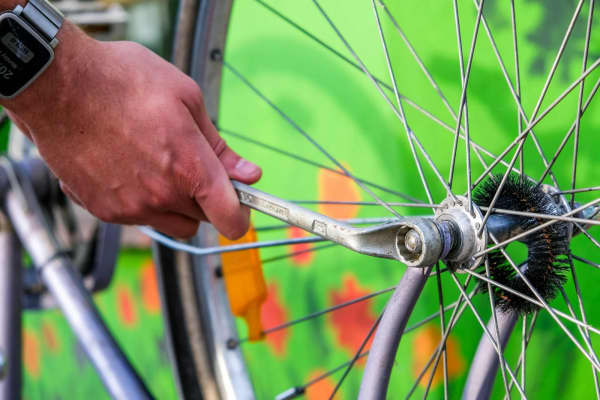
Our bike shops guide covers where to get any of this fitted, and the co-op that will teach you to do it yourself.
Winter, which is the real question
Cold is not the problem. Layering solves cold, and moving generates heat within a few minutes.
The two genuine obstacles:
Ice. Specifically the refrozen melt that forms in shaded sections, at the edges of roads where plowed snow melts through the day and runs across the pavement, and on the parkway where sun does not reach. Black ice at bicycle speed offers no warning and no recovery. Wider tires at lower pressure help. Studded tires help substantially and are worth it for anyone committed to riding through. Route selection helps most of all: south-facing streets clear, north-facing shaded stretches do not.
Inversion. Utah Valley's winter inversions trap pollutants in the valley floor for days at a time, and air quality can deteriorate to levels where sustained heavy exertion outdoors is inadvisable. This is not a hardiness question. Most regular winter commuters ride through most of the winter and simply do not ride on the worst inversion days — which is a completely reasonable way to handle it, and the reason to keep a fallback in place.
The related infrastructure point: snow clearance on paths is not the same as on roads, and a route that works all summer may be unusable after a storm. Our snow removal guide covers who is responsible for clearing what, which explains why some stretches of sidewalk and path are cleared promptly and others are not cleared at all.
The last mile, which is usually the worst mile
Most people's commute is fine for 95 percent of its length and unpleasant for the final few hundred yards, where the calm residential route meets the parking lot, the loading area, or the arterial frontage of the destination.
Worth solving deliberately:
Where does the bike go when you arrive? A rack outside is fine in June and a theft risk over a winter. Many Utah Valley employers have space that could hold a bike indoors and have simply never been asked.
Is there anywhere to change? Not every workplace needs a shower. A great many need only somewhere to change a shirt, and that request is far easier to grant.
Is the approach safe? Frequently the answer is that the driveway everyone uses is hostile and a pedestrian entrance around the side is not. Two minutes of walking a bike solves a great deal.
These are also the things most amenable to being fixed by asking. End-of-trip facilities are inexpensive relative to parking, and an employer who has never had an employee ask has no reason to have thought about it.
Starting without quitting
The failure pattern is consistent: someone decides to become a bicycle commuter, rides every day for a week including one bad-weather day, and stops.
What works better:
Start with two days a week, in good weather. September and October in Utah Valley are close to perfect.
Ride the route once on a weekend, without time pressure, and find out where the awkward crossings are.
Solve the awkward crossings, once.
Keep a fallback, and use it without guilt. A bad-air day, a storm, a day with three errands. The commuters who last are the ones who ride four days a week for years, not the ones who ride seven days a week for a month.
Time it honestly. Across a short urban trip with parking at the far end, the bicycle is frequently as fast as driving and occasionally faster. People are routinely surprised, having estimated from the ride rather than from door to door.
The law, briefly and practically
Utah's traffic code treats a bicycle as a vehicle for most purposes, which is the single most useful thing to know: a cyclist has the rights and duties of a driver, with a handful of bicycle-specific provisions layered on. Utah's 2026 e-bike changes, including the under-21 helmet rule, are in our e-bike guide.
The provisions that come up in ordinary commuting:
Position on the roadway. A cyclist moving slower than surrounding traffic generally rides as near as practicable to the right, with recognized exceptions for passing, preparing to turn left, avoiding hazards, and where a lane is too narrow to share safely. That last exception matters more than people realize — a narrow lane is one you may occupy.
Passing distance. Utah requires drivers to give bicycles a minimum lateral clearance when passing. Knowing the requirement exists is useful when a driver has not observed it.
Signaling and lighting. Hand signals for turns and stops, and the lighting requirement at night described above.
Riding two abreast is generally permitted where it does not impede traffic.
Stop signs. Utah has adopted a provision permitting a cyclist, in defined circumstances, to treat a stop sign as a yield. The conditions are specific and it is worth reading the current text rather than relying on someone's summary, because the details govern.
Where a right is unclear, the defensive habit is worth more than the citation: ride predictably, be visible, make eye contact at conflict points, and never assume you have been seen because you have the right of way.
The economics, which are better than people expect
The financial case rarely persuades anyone on its own, and it is stronger than the usual estimate.
A car trip has a marginal cost beyond fuel — tire and brake wear, maintenance intervals that arrive by mileage, and depreciation that is partly a function of odometer. Our car ownership guide covers what running a vehicle here costs.
Parking is the bigger number in this specific market. Around both campuses and downtown, parking is scarce, permitted, enforced and in some cases paid. A commute that eliminates a permit eliminates a fixed annual cost that dwarfs the running cost of a bicycle.
A second vehicle is the largest saving available. For a household on the edge of buying one, replacing that purchase with a bicycle and occasional transit is a saving of a different order — insurance, registration, maintenance and depreciation on a whole vehicle.
The bicycle itself is cheap by comparison. A serviceable commuting bike, lights, a lock and fenders is a fraction of a single month of vehicle ownership, and a tune-up once or twice a year keeps it running. Our bike shops guide covers what a tune-up includes and when repair stops making sense.
The honest caveat: none of this holds if the bicycle sits unused after February. The saving comes from the trips displaced, which is why building a sustainable two- or three-day habit beats an ambitious daily one that lapses.
Riding with children, and the family case
A meaningful share of Utah Valley households have young children, and the assumption is usually that this ends cycling as transport. It does not, though it changes the equipment.
Trailers are the most common approach for younger children — stable, weather-protected, and visible when fitted with a flag. They add width, which matters on narrow shoulders and on the parkway when passing.
Child seats are lighter and simpler and raise the center of gravity considerably, which changes handling at low speed and when stopping.
Longtail and box bikes carry children and cargo together and have become far more common. They are expensive, and for a household displacing a second vehicle the comparison is favorable.
Riding alongside an older child is a different exercise again. Children's road judgment develops slowly, and the usual approach is to ride behind them so they are always in view, on routes chosen for calm rather than for directness. Provo's residential grid is well suited to this.
Two practical notes. The parkway is the obvious family route and it is shared with pedestrians, runners and dogs, so speed discipline and an audible warning when passing are part of using it well. And school routes are worth riding once at the actual time of day, because a street that is quiet at ten in the morning can be very different at eight.
What would make this better, and what to ask for
Utah Valley's bicycle network has improved substantially and remains incomplete in specific, identifiable ways. Knowing what the gaps are makes public comment more useful than a general request for bike lanes.
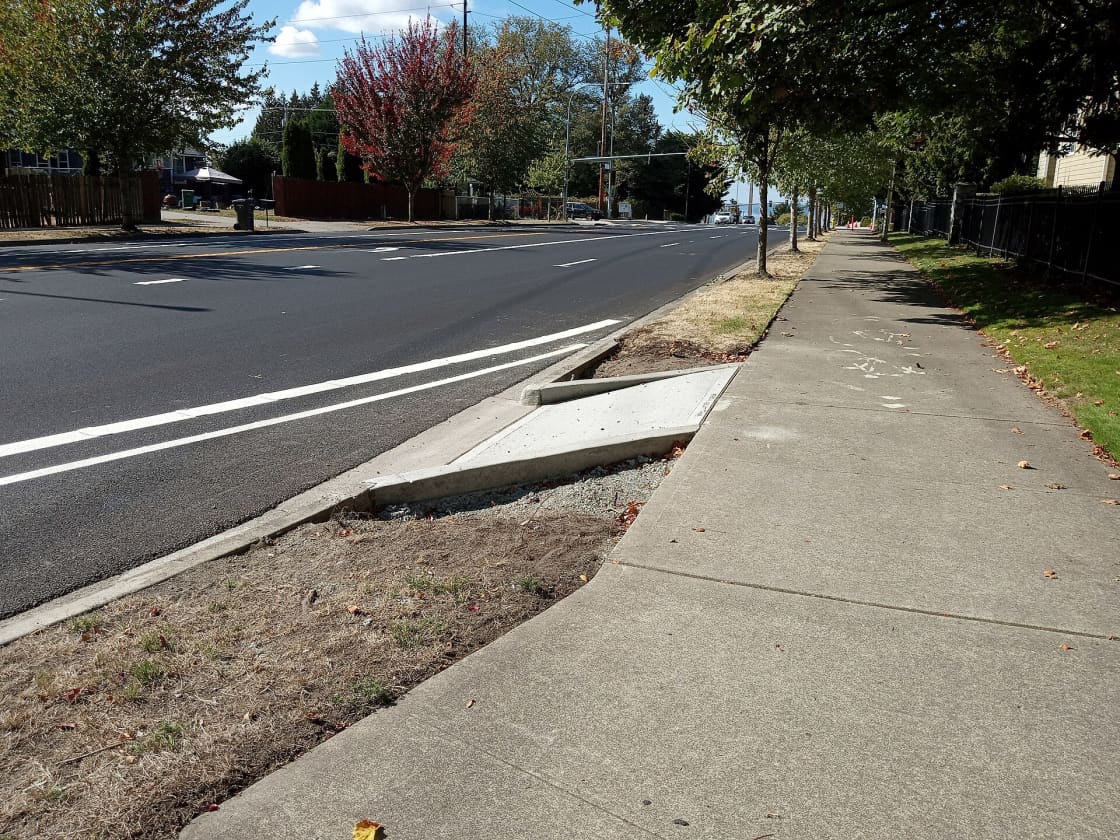
Continuity. The single most valuable improvement is usually connecting two existing pieces of comfortable infrastructure that currently end a few blocks apart. A network is only as good as its worst link, and a route that is excellent for two miles and hostile for two hundred yards is a route most people will not use.
Crossings. Signalized crossings with adequate timing at the arterials, and grade-separated crossings where volumes justify them.
Separation on high-speed roads. Paint next to fast traffic is comfortable for a small minority of riders. Physical separation changes who is willing to ride.
Maintenance. Sweeping debris from bike lanes and clearing snow from paths. Infrastructure that exists but is unusable four months a year is infrastructure that will not build a habit.
End-of-trip facilities. Secure parking and somewhere to change, which are the employer's contribution rather than the city's.
City transportation plans and active transportation plans are adopted at public meetings, and our directory of public meetings across Utah Valley lists where those bodies sit. A specific, local comment naming one gap is worth considerably more than a general one.
Related Guides
- Provo River Parkway — the continuous off-street spine
- Bike Shops in Provo and Orem — repairs, e-bike classes, and the co-op
- Scooters and Bike Share in Provo — the short-trip alternative
- FrontRunner Commuting Guide — the long middle of a multimodal trip
- Snow Removal in Provo — who clears the path you were counting on
- Provo Zip Codes and the Grid — why navigation here is nearly automatic
- Why Provo Addresses Are Coordinates — why the blocks are so long
- Every Paved Trail in Utah Valley: Provo River Parkway to Murdock to the Jordan River, and How They Connect
- Road cycling in Utah Valley — the climbs, the loops and the group rides
Frequently Asked Questions
Is Provo a good city for bike commuting?
What is the best off-street route across Provo?
Can I combine a bike with transit in Utah Valley?
Is it legal to ride on the sidewalk in Provo?
What do I need to ride legally at night in Utah?
Can I bike commute through a Utah Valley winter?
Where do I park a bike so it is still there later?
What is the biggest mistake new bike commuters make here?
Bikes & scooters on the Provo.com board, listed by Utah Valley neighbors.
Sources
The facts in this guide were checked against these sources. Hours, fees and rules change, so confirm anything time-sensitive with the source before you go. How we make Provo.com.
- Utah Code 41-6a-1114: Bicycles -- Lamps and reflective material required, Utah State Legislature. Checked October 12, 2026.
- Provo River Parkway, AllTrails. Checked October 12, 2026.