
Provo is a bicycle town for reasons that have nothing to do with anyone's intent. Two large universities, a large population of students without cars, a compact grid, and a valley floor flat enough that a single-speed is a rational choice combine to put a great many bicycles on the street here.
What follows from that is a service economy the city rarely talks about — including one institution unusual for a town this size.
The co-op
The Bicycle Collective is a nonprofit, and its Provo co-op is the most interesting thing in this article. Its website currently lists shops only in Salt Lake City, Ogden and St. George, so confirm the Provo shop is operating before you go.
The model: donated bicycles come in, get refurbished, and go out to people who need transportation and cannot buy it. Some are given away. Some are sold, which is what pays the rent and keeps the lights on.
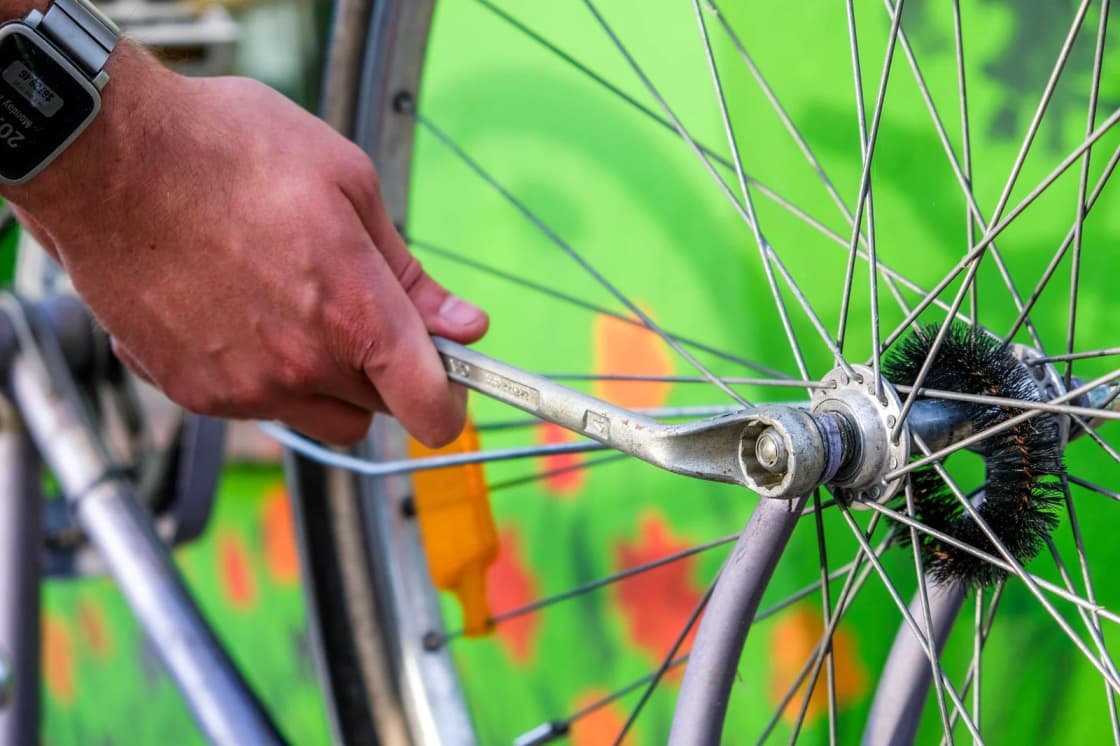
The part that makes it unusual is the workspace. Rather than only doing repairs for you, the Collective will let you use its stand and its tools to fix your own bike, with someone showing you how. Reviewers describe a modest hourly rate for shop time with parts sold at cost, and describe the experience as being taught rather than served — one review puts it exactly that way: they do not just fix your bike, they help you learn to fix your bike.
Volunteering is also a route to a bicycle. Put in the hours helping refurbish donated bikes and you can earn one, which for a student arriving without transport is a materially different proposition from any price tag.
Two practical notes. Hours vary with volunteer availability rather than running on a fixed retail schedule, so confirm before going. And if you have a bike rusting in a garage, this is the place to take it — a donated bike here becomes somebody's way to work.
The Provo shops
Taylor's Bike Shop & Repair, Freedom Boulevard, Provo. The long-standing full-service shop in the city. The review record runs heavily toward service work — gear shifters, brakes, wheel work, quick turnarounds on tire repairs — and specifically toward communication, with several accounts of the shop phoning mid-repair to report an additional problem before proceeding rather than presenting it on the invoice afterwards.
That behavior is worth weighting heavily when choosing a shop. The most common bad repair experience in any trade is not incompetence; it is a bill that arrived without a conversation.
Gary's Bikes, north Provo. Well north of downtown, near the mouth of the canyon, and it serves that end of the city plus visitors heading up the Provo River Parkway. Smaller and owner-operated, with rentals — including a child carriage, per one review from a family riding to Bridal Veil Falls.
JigaWatt Cycles, Provo. The electric specialist: e-bikes, electric scooters, and conversions of conventional bicycles into electric ones. This is a distinct skill set — diagnosing a battery, controller or hub motor has more in common with electronics repair than with bicycle mechanics, and most general shops will decline the work. Posted hours are a short afternoon window, and reviewers note that the listing has at times shown incorrectly as closed while the business was operating, so call rather than judging by the map.
The Orem shops, and when the drive is worth it
Mad Dog Cycles, 350 North Orem Boulevard, Orem, is one of the largest bike shops in Utah Valley. Deep inventory, a substantial service department, and a strong presence in electric bikes.
Hangar 15 Bicycles, 1756 South State Street, Orem, is part of a Utah chain and has a service reputation that comes through clearly in its reviews, including several from people who had been turned away elsewhere.
Al's Sporting Goods, University Parkway, Orem, is a general outdoor retailer with a bike department rather than a dedicated bike shop, which makes it the convenient option when you are already there and the wrong one for a difficult repair.
So when is the drive worth it? Roughly: when the job needs parts inventory or specialized tools. A full drivetrain replacement, a suspension fork service, a wheel build, a hydraulic brake bleed on an unusual system, or a diagnosis nobody has cracked. A larger shop has the part on the shelf rather than on order, and that difference is usually days.
For routine work — tubes, tires, brake pads, cables, a seasonal tune — the Provo shops do it perfectly well and you save an errand.
What a tune-up is
The word covers three quite different jobs, and the confusion is the source of most surprise at the counter.
A basic tune is adjustment: brakes set, gears indexed, bolts checked, tires inflated, a safety once-over and a clean. Nothing comes apart. This is the right service for a bike that works but has drifted.
A full tune adds drivetrain removal and degreasing, wheel truing, bearing checks and lubrication. This is the annual service for a bike ridden regularly.
An overhaul strips the bike to the frame, cleans and repacks or replaces bearings, and rebuilds. This is what a neglected bike or a restoration needs.
Parts are extra in all three, and on an older bike parts are usually the larger number. A worn chain that has been ridden past its life will have worn the cassette with it, and replacing the chain alone on a stretched drivetrain produces a bike that skips under load — which is why a shop that tells you the cassette needs doing too is generally being straight with you rather than upselling.
Ask two questions before work starts: what is the quote, and what happens if you open it up and find more? The answer you want is a phone call.
When repair loses
Frames outlast everything attached to them. A sound steel or aluminum frame from decades ago can carry an entirely modern set of components, and the consumables — chain, cassette, cables, housing, tires, pads, bar tape — are inexpensive relative to any new bicycle.
So the default answer is repair, and it holds far longer than people expect.
Where it fails: a heavy department-store bike with worn bearings throughout, a frame that has been bent, or a bike where the labor to make it safe exceeds anything the finished bike could be worth. Also, honestly, a bike that does not fit you — no amount of adjustment converts a frame two sizes wrong into a bike you will ride.
The Collective is the best place to get an honest read on this, because it has no incentive to sell you a repair and considerable experience judging donated bikes. Being told a bike is not worth the money is useful information delivered free.
Electric bikes, and the classes that decide where you may ride
The e-bike question comes up constantly here and the answer turns on a classification system most riders have never been told about.
Utah, like most states, sorts electric bicycles into three classes. Class 1 provides assistance only while you pedal and cuts out around 20 miles per hour. Class 2 has a throttle that will move the bike without pedalling, also cutting out around 20. Class 3 is pedal-assist only and continues assisting to around 28 miles per hour.
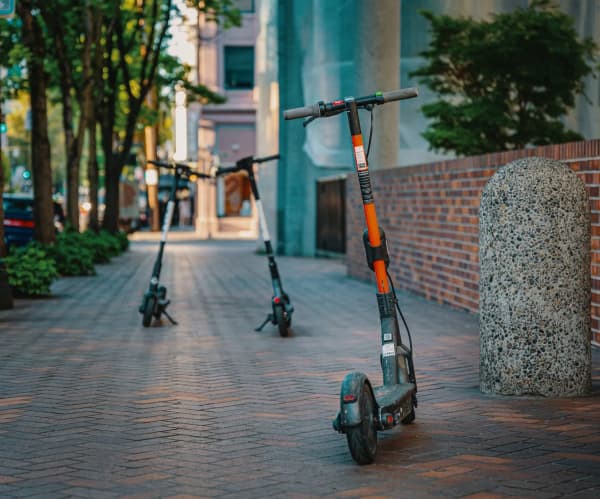
Why it matters: the class determines where the bike is allowed. Paved trails and shared-use paths in Utah frequently permit Class 1 and Class 2 while restricting Class 3, and rules on natural-surface trails vary between land managers — a Forest Service trail, a city trail and a county trail can each answer differently on the same afternoon. The Provo River Parkway, campus paths and canyon trails are all governed by different authorities, and the same patchwork governs shared scooters.
Two consequences worth acting on. First, know your bike's class before you buy it, not after, because a Class 3 bike is faster and also barred from more places. The class should be labeled on the frame. Second, check the specific trail rather than assuming a general rule, because there is no general rule.
A related point on conversions: turning a conventional bicycle into an electric one is legal and popular, and a shop that does it well will tell you what class the finished bike is. A conversion with a throttle is not the same legal object as one without.
Campus, and where you cannot ride
Both universities run their own rules on their own ground, and they are enforced.
The pattern to expect is that bicycles are welcome on campus roads and designated paths, restricted or prohibited in dense pedestrian areas during class-change periods, and required to be parked in racks rather than locked to railings, trees, benches or handrails. Bikes locked to the wrong thing get cut and impounded, and the impound process costs a day.
Abandoned-bike sweeps are the other thing that catches people. Both campuses periodically clear racks of bicycles that appear derelict, and a bike left through a summer or a mission absence is a strong candidate. If you are leaving for a semester or longer, either take the bike home, arrange indoor storage, or find out what the current registration and long-term parking arrangements are — a registered bike is far more likely to generate a phone call than a tow.
Storing a bike over winter, or over a mission
Provo has an unusual number of bicycles that sit unused for long stretches, and how they are stored determines what state they come back in.
For a winter or a semester: clean and lubricate the chain before storage rather than after, because grit left on a drivetrain keeps working while nobody is watching. Inflate the tires fully and re-inflate periodically, since a tire stored flat develops a permanent set at the contact patch. Store indoors if at all possible — an unheated garage is fine, a sunlit balcony is not, because ultraviolet degrades tires and any plastic on the bike.
For eighteen months to two years, add two steps. Remove the battery from an electric bike and store it separately at a partial charge in a cool place; lithium batteries deteriorate fastest when stored fully charged or fully flat, and a battery is the most expensive component on the bike. And take the bike for a service when it comes back out rather than riding it straight away — cables seize, brake pads harden, and tires that looked fine can be perished.
Riding here, and what breaks
A few local realities shape what goes wrong with bicycles in this valley.
Goatheads. Puncturevine grows all over Utah Valley and its seeds are engineered — genuinely, evolutionarily — to puncture things. They are the dominant cause of flat tires here by a distance, and they arrive in clusters along the edges of paths and gutters in late summer. If you are getting repeated flats and cannot understand why, that is why. Tire sealant, tire liners or thorn-resistant tubes are the standard local answer, and every shop on this page will know exactly what you mean when you say the word.
Winter salt and slush destroy chains and cables. A bike ridden through a Utah Valley winter needs its drivetrain cleaned and lubricated far more often than the same bike ridden in summer, and a spring service after the last storm is the single highest-value appointment of the year.
Canyon riding is a different discipline from valley commuting. The Provo River Parkway is flat and gentle; anything up South Fork or into the canyons involves sustained climbing and, more importantly, sustained descending. Brakes that are adequate on the grid are not automatically adequate on a long descent, and this is worth saying to a mechanic explicitly rather than asking for a generic tune.
Theft is real, particularly around campus housing. Two things matter more than the lock's price: locking the frame rather than only a wheel to something immovable, and recording your serial number. The number is stamped under the bottom bracket, where the crank arms meet the frame. Photograph it now, keep the photograph somewhere other than the bike, and register it. A recovered bicycle without a serial number is an unclaimable bicycle, and police recover more bikes than they can return for exactly that reason.
Buying used
The Collective's refurbished bikes are the option with the most reassurance attached, because somebody with experience has already gone over the machine and made it safe.
The local classifieds carry far more volume and none of that assurance. If you buy privately:
- Check the serial number before money changes hands, and be wary of a seller who has removed or defaced it.
- Lift the bike and spin both wheels. Wobble means a wheel problem; grinding means bearings.
- Lift the chain off the front chainring with your fingers. If it pulls away noticeably, the drivetrain is worn and you are buying a chain, cassette and possibly chainrings.
- Check the frame at the head tube and down tube for ripples, dents or paint cracking, which indicate an impact.
- Ride it. Through the gears, both brakes, out of the saddle.
And afterwards, photograph the serial number yourself.
The short version
Taylor's on Freedom Boulevard for full service in Provo. Gary's at the north end. JigaWatt for anything electric. The Bicycle Collective, if its Provo shop is open, if you would rather learn to do it, need an affordable bike, or have one to donate.
Mad Dog and Hangar 15 in Orem when the job needs deep parts inventory or specialized tools. Everything closes Sunday.
Ask for the quote and ask what happens if they find more. Repair beats replacement far longer than people think. Deal with goatheads before they deal with you. And photograph your serial number today, not after the bike is gone.
The federal definition of "bicycle" — and why it decides what a shop can sell you
Walk into any shop in the valley and roughly a third of the floor is electric. The question that follows — is this thing a bicycle — is not a philosophical one. There is a federal definition, it turns on two numbers, and it determines which safety regulation a machine has to meet before it can be sold in the United States.
The Consumer Product Safety Commission's bicycle regulation is 16 C.F.R. Part
1512. § 1512.2(a) defines a bicycle as either a two-wheeled vehicle with a
rear drive wheel that is solely human-powered, or a two- or three-wheeled
vehicle with fully operable pedals and an electric motor of less than 750
watts, whose maximum speed on a paved level surface, powered solely by the
motor while ridden by an operator weighing 170 pounds, is less than 20 miles per
hour.
Three elements, all of which must hold. Fully operable pedals — so a machine with vestigial pedals or none at all is outside the definition. Under 750 watts. And under 20 mph on motor power alone, measured with a 170-pound rider. A machine that fails any of the three is not a bicycle for federal purposes, which means it is not sold to you as one, and the shop's obligations and yours both change.
This is the cleanest way to cut through e-bike marketing, because the numbers are specific and a reputable shop can answer them off the spec sheet. It is worth asking directly rather than relying on a class label, since the class system is a matter of state traffic law and sits on top of the federal product definition rather than replacing it.
What Part 1512 then requires is a long list of things you are quietly benefiting from on every new bike.
Brakes. § 1512.5 sets requirements for the braking system, including stopping
distance performance and, for bicycles with handbrakes, hand lever dimensions
sized so a rider can reach and squeeze them.
Reflectors, and this is why you get a bag of them. § 1512.16 requires an
essentially colorless front-facing reflector, essentially colorless or amber
pedal reflectors, and a red rear-facing reflector — plus side reflectivity,
either retroreflective tire sidewalls, spoke-mounted reflectors on each wheel, or
retroreflective rims on non-caliper-rim-brake bicycles, visible from each side of
the wheel. The combination must have a clear field of view. Sidewalk bicycles are
exempt from the reflector requirements.
Protrusions. § 1512.4(g) defines an excluded area, bounded by a line 89 mm
behind and parallel to the handlebar stem, a line tangent to the front tip of the
seat, the top surface of the top tube, and a line from the front of the seat to
the handlebar junction, within which there may be no protrusions. That is the rule
behind the absence of hard fittings where a rider would land.
Hardware. § 1512.4(d) requires that screws, bolts and nuts not fracture,
loosen or otherwise fail during the prescribed tests, and that threaded hardware
be of sufficient quality to allow adjustment and maintenance — a quiet but real
distinction between a shop bike and a big-box assembly.
Instructions and labeling. § 1512.19 sets out what must come with the
bicycle, which is why a proper shop hands over a manual rather than a receipt.
Two definitions in § 1512.2 explain edge cases you will see on the floor. A
sidewalk bicycle is one with a seat height of no more than 635 mm, measured
with the seat at its highest position, excluding recumbents — that is the
kids'-bike category, and several requirements are relaxed for it. A track
bicycle, designed for velodrome use with no brake levers or calipers, a single
crank-to-wheel ratio and no freewheel, is excluded from the part altogether under
§ 1512.1, along with one-of-a-kind bicycles. So a fixed-gear track machine
genuinely is outside the regulation — which is worth knowing if someone offers to
sell you one for road use.
Questions worth asking on the shop floor, in order: what is the motor's rated wattage, what is its top speed under motor power alone, are the pedals fully operable, and does the bike ship with the reflector set the federal rule requires. A shop that answers all four without checking is a shop that knows what it sells.
Related Guides
- Scooters & Bike Share in Provo: What's Actually on the Street (2026)
- Mountain Biking Near Provo: Trails & Guide (2026)
- Phone & Computer Repair in Provo: Who Fixes What, and When Not To
- Calling Provo Police Without Calling 911: The Non-Emergency Line, Online Reports & Records
- Finding a Trustworthy Mechanic in Utah Valley
- Visiting BYU Campus: Museums, the Creamery, the Y & Parking
- Provo Classifieds — the community board, where secondhand bikes change hands locally
- UTA On Demand in Utah County: The Van You Hail Like an Uber for $2.50
- Bike Commuting in Provo
Frequently Asked Questions
Where can I get a bike repaired in Provo?
What is the Provo Bicycle Collective?
Which shop should I use for a serious repair?
Where do I get an e-bike or electric scooter fixed?
How much does a bike tune-up cost?
Is it worth repairing an old bike?
Where can I buy a used bike in Provo?
Are the bike shops open on Sunday?
Sources
The facts in this guide were checked against these sources. Hours, fees and rules change, so confirm anything time-sensitive with the source before you go. How we make Provo.com.
- Bicycle Collective. Checked October 12, 2026.
- Mad Dog Cycles. Checked October 12, 2026.
- Hangar 15 Bicycles. Checked October 12, 2026.