
Ask three sources what dollar figure triggers a contractor license in Utah and you will get three answers. That is not a failure of research. It is the actual state of the information.
The Legislature amended the exemption statute in recent years, the administrative rule that implements it has its own revision cycle, and the secondary sources that summarize both — insurance blogs, licensing-service sites, trade explainers — have updated at different times and to different numbers. Some current pages describe a threshold of $3,000. Others describe $7,000, with a middle band from $3,000 requiring a filed affirmation. Older statutory text still quotes $1,000. The current text of Utah Code 58-55-305(1)(h), as published by the Legislature in October 2026, matches the second version: work with a contracted value under $7,000, labor and materials and change orders included, is exempt from licensure, and above $3,000 the person must file a one-time affirmation with the Division that they carry liability insurance (and workers' compensation where applicable).
Read the current statute and the Division's rule side by side on the day you need the answer, because both have changed recently and may change again.
What we can do is tell you which part of this rule is stable, which part is not, and what to do about it. Because the stable part is the part that protects you.
The part that does not move
Certain work requires an appropriately licensed contractor regardless of what the job costs. The exemption statute carves these out explicitly, which means no dollar threshold ever applies to them:
- Plumbing
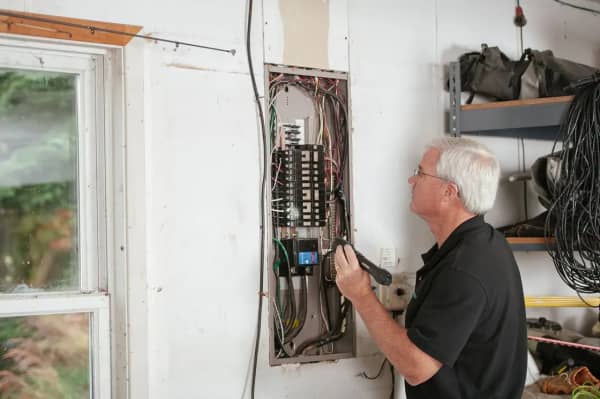
- Electrical
- Gas appliances and combustion systems — installation, repair or replacement
- Water-based fire protection systems
- HVAC systems
- Radon mitigation systems
A twelve-dollar part in a gas line is still gas work. A single outlet is still electrical. The price of the job has nothing to do with it.
There is one narrow and frequently misunderstood exception around gas appliance delivery: a delivery person swapping an existing gas range, dryer, outdoor barbecue or patio heater for a new one has historically been treated differently where there is already a shutoff valve at the appliance. That is a specific carve-out for a specific swap, not a general permission.
If you remember one thing from this page, remember this list. It does not drift between legislative sessions the way the dollar figures do, and it maps almost exactly onto the ways an unqualified repair can burn your house down or poison the people in it.
The part that does move, and how to handle it
Utah's structure has consistently been tiered rather than binary. Small jobs are exempt outright. Mid-sized jobs are exempt but require the person doing them to file a one-time affirmation with the Division of Professional Licensing attesting that they carry liability insurance and workers' compensation. Larger jobs require a real contractor license with exams, experience and continuing education behind it.
The tier boundaries are what moved. Rather than quote a number that may be wrong by the time you read this, do the thing that is correct in every version of the rule:
Ask the person what tier they are in, and then verify it. A legitimate operator knows whether they hold a license, hold a filed exemption, or work only on jobs small enough to need neither. Someone who does not know, or who waves the question away, has answered it.
DOPL runs a free license lookup. Search the business name or the individual. Confirm the license exists, confirm it is active rather than expired, and confirm the classification covers your work — specialty classifications are narrow, and a license in one trade is not a license in another.
The insurance floor went up in 2026
This is one number that is worth stating because it changed recently and in one direction.
A rule change taking effect in April 2026 raised the minimum general liability coverage required of contractors — and of people registered under the handyman exemption — from the long-standing hundred-thousand-per-occurrence, three-hundred-thousand-aggregate level to a substantially higher floor. The stated scope was every license category, including registered handymen.
For a homeowner the takeaway is not the figure. It is that "I'm insured" is no longer a sufficient answer, because policies written before the change may not meet the current requirement at renewal. Ask for a current certificate of insurance and look at the coverage amounts on it. Ask separately about workers' compensation if anyone other than the owner will be on your property, because an uninsured worker injured at your house is a problem that lands on your homeowner's policy.
What a handyman is good for
The economics of this trade are all about the trip.
An operator's cost to reach your house — drive time, setup, the mental overhead of a new job — is roughly the same whether they fix one thing or seven. Which means a single small task is the most expensive way per item to buy this service, and a punch list is the cheapest.
So keep a list. The doorknob that does not latch, the closet shelf that sagged, the two rooms that need patching where you took pictures down, the fence picket, the running toilet flapper, the smoke detector at ceiling height, the grout in the shower, the weatherstripping on the front door that has been letting January in for two winters. That is one visit. Called individually, it is seven trip charges.
Typical scope, staying inside the legal lines:
- Drywall repair, patching, texture matching and painting
- Doors and windows — adjustment, hardware, weatherstripping, screens
- Trim, baseboard, molding, shelving
- Cabinet installation, hardware, drawer slides and hinges
- Fixture replacement that does not involve wiring or plumbing connections
- Tile and grout repair
- Fence, gate and deck repair
- Mounting, hanging and furniture assembly
- Gutter cleaning and minor exterior maintenance
- Caulking, sealing and general weatherization
Where it stops: structural changes to load-bearing elements, anything needing a building permit, and the licensed-trade list above.
The Utah Valley wrinkles
Three local factors change the calculation here in ways that are not obvious from a generic guide.
The building stock is bimodal. Utah Valley has a large inventory of homes built in the last twenty-five years and a meaningful stock of pre-war housing in central Provo and the older parts of Springville, Spanish Fork and Payson. Those are completely different repair problems. Plaster is not drywall. Knob-and-tube and early aluminum wiring appear in old houses and are an immediate stop-and-call-an-electrician. If your house predates the 1950s, say so when you call, because some operators prefer newer construction and it is better to find out on the phone.
Seasonality is severe. Exterior work here compresses into a window. Autumn is the crunch — gutters, weatherization, exterior paint and everything else that has to happen before the weather turns, all competing for the same weeks as sprinkler winterization and tree work. January and February are the quiet months, and interior work booked then gets faster scheduling and more attention.
Student turnover drives a spring rush. Provo's rental cycle produces a concentrated burst of turnover repair around lease changeover, which soaks up small-job capacity at exactly the moment homeowners want spring work done. Book earlier than feels necessary.
And the summer is empty for a week in July. Between Independence Day, the Freedom Festival and Pioneer Day, a good share of Utah Valley tradespeople take July lightly. Plan around it.
Why the threshold exists at all
It is worth understanding the logic, because it explains which side of the line your job falls on better than memorizing a number does.
Contractor licensing is a consumer-protection regime with a cost. Requiring exams, documented experience, insurance, continuing education and a renewal cycle raises the quality floor and also raises the price of every job and removes the smallest operators from the market entirely. Applied to a hundred-dollar repair, that trade goes badly: you have made it uneconomic for anyone to hang your shelf legally.
So states draw a line somewhere. Below it, the reasoning goes, the potential harm is small enough and the transaction informal enough that the market and small-claims court can handle it. Above it, the money at stake and the potential for serious defective work justify the regulatory overhead.
The middle tier Utah added — exempt from licensure but required to file an affirmation of insurance — is a sensible compromise for the awkward band where a job is too big to be casual and too small to justify a full license. It also explains why the state cares so much about the anti-splitting rule: the entire structure collapses if a twenty-thousand-dollar remodel can be invoiced as eleven separate small jobs.
Reading it that way makes the carve-outs obvious rather than arbitrary. Gas, electrical, plumbing, fire suppression, HVAC and radon are exempted from the dollar logic because their failure modes are not proportional to their price. A cheap mistake in any of them can kill somebody, which is precisely why no threshold applies.
What to do before they arrive
Three small things that reliably save money.
Clear the work area. Time spent moving your furniture is billed at the same rate as time spent fixing your door. This is the single easiest way to reduce an hourly invoice and almost nobody does it.
Buy the fixtures yourself if you have a preference. Materials are frequently marked up, and more importantly a trip to the store mid-job is billable time. If you want a particular faucet, cabinet pull or light fitting, have it on site and in the box before they arrive.
Write the list down and photograph it. Not for formality — because you will forget item six while standing in the kitchen talking about item two, and item six is the one that has been bothering you for a year. A written list also gives both sides a shared scope to price against.
Finding someone, and the filter that works
The reliable sources here are unglamorous. Neighborhood referrals remain the best signal in this valley, and the local social channels where people ask are noisy but informative if you read the specific recommendations rather than counting them — "he rebuilt our deck stairs and came back to fix a squeak" is worth ten "highly recommend!!" replies.
The screening filter that separates operators quickly:
Do they answer the phone or return a message within a day? Responsiveness before you are a customer is the best available predictor of responsiveness after.
Do they quote or do they guess? For a defined task a competent operator can give a fixed price or a tight range. "We'll see when we get there" is acceptable for genuine unknowns behind a wall and is a warning sign for a doorknob.
Do they want to see it first? For anything beyond a trivial task, a person who wants to look before quoting is usually the person who will not surprise you.
Written scope, even a text message. Not a formal contract for a two-hour visit — but a written list of what is included, what it costs, and what happens if something unexpected turns up. Almost every dispute in this trade is a scope dispute.
Paying, and the deposit question
For small work, paying on completion is normal and paying substantially in advance is not.
A modest deposit for materials on a larger job is reasonable. A large up-front payment for a small job is the classic shape of the problem, and it is worth being direct about: no is a complete answer, and a legitimate operator will not be offended.
Utah provides some homeowner protections against liens in the residential context, but they attach to hiring a licensed contractor under a written contract on a home you occupy. That is another reason the licensing question is not paperwork trivia — it determines whether a protection exists for you at all when a job goes wrong.
Permits, which are a separate question from licensing
People conflate these two constantly, and they are governed by different bodies for different reasons.
Licensing is a state question, administered by the Division of Professional Licensing, and it asks whether the person doing the work is qualified and insured to do it.
Permits are a local question, administered by your city's building department, and they ask whether the work itself complies with code and gets inspected. Provo, Orem, Lehi and every other valley city runs its own permit desk with its own fee schedule and its own thresholds.
The two interact in a way that matters. The current exemption in 58-55-305(1)(h) is written around contract value and trade rather than permits, but work that needs a permit very often touches the plumbing, electrical, gas or HVAC trades that the exemption carves out, and the city will ask who is doing the work when the permit is pulled. So the permit question is not a separate box to tick afterward; it often decides who is allowed to do the work in the first place.
Most genuine handyman work is well clear of this. Patching drywall, replacing a doorknob and repairing a fence do not require permits anywhere in the valley. Structural alterations, additions, changes to egress, and most work touching the licensed trades do. If you are unsure, the city building department will answer the question over the phone for free, and doing that before hiring is considerably cheaper than doing it after an inspector notices.
When the handyman is the wrong call
A generalist is the right answer for breadth and the wrong answer for depth.
If the job is one large thing squarely inside a trade — a roof, a furnace, a repipe, a panel upgrade, a retaining wall — hire the specialist. They are faster, they carry the right classification, and their work is warrantied in a way a generalist's is not. Our guides to roofing and plumbers cover those decisions separately.
The reverse is also true and less often said. A specialist will decline the eleven small annoyances on your list, because a two-hour miscellany is not a job to a roofing company. That gap is exactly the space a good handyman occupies, and a good one is worth keeping the number of.
The small job that stops being a small job, and how to see it coming
Handyman work has a failure mode that is specific to it: the job is correctly scoped, correctly priced, and then something behind the wall changes what the job is. This is not a scam and it is usually not incompetence. It is the nature of working on houses that were finished by somebody else decades ago.
The tell is almost always the same. The work required opening something — a wall, a ceiling, a cabinet base, a section of floor — and what was behind it did not match what was assumed. Once that happens, three things change at once: the price, the timeline, and quite often whether this is a handyman job at all.
The categories where this happens most:
- Anything touching supply plumbing in an older house. Replacing a tap is a fixed job. Replacing a tap and discovering the shut-off valve underneath will not close, or that the supply line behind it is a material nobody stocks any more, is a different job that starts with getting water shut off somewhere less convenient.
- Anything touching electrical in a house that has been rewired in stages. Adding a fixture is routine until the box it hangs from turns out to have three generations of wiring converging in it and no ground.
- Water damage of any kind. A stain is a symptom. The scope is decided by what is behind it and how long it has been there, and neither is knowable from the front.
- Anything under a bathroom or kitchen floor. Soft spots are rarely local.
How to handle it before it happens rather than after
Ask for the discovery clause up front. The sentence you want is some version of: if you open it up and it is not what we assumed, you stop and call me before doing anything else. Almost every competent tradesperson works this way already. Saying it out loud converts an argument about a bill into a phone call about a decision.
Agree what happens to the diagnostic time. If someone spends an hour opening a wall and the answer is "this needs a licensed plumber," that hour was still work and should still be paid for. Deciding that in advance is much easier than deciding it while looking at an open wall.
Do not let a stop-work moment turn into a patch-over. The expensive outcome is not the change order. It is closing the wall back up over a known problem because the change order felt like bad news. A visible problem is cheap relative to the same problem two years later with finished surfaces over it.
Recognize the handoff honestly. Some discoveries move the job out of handyman scope entirely. A good handyman will say so, and will often be the fastest route to the right trade, because the people who do this work locally know each other. Treating that referral as a failed job rather than a correct diagnosis is how people end up hiring someone willing to do work they should not be doing.
Related Guides
- Sprinkler Repair and Winterization in Utah Valley
- Plumbers in Provo
- Roofing in Utah Valley
- Tree Removal in Utah Valley
- Hardware Stores in Utah Valley
- Lawn Mowing and Yard Care in Utah Valley
- Junk Removal and Donation in Utah Valley
- Hiring Movers in Utah Valley
- Window Cleaning in Utah Valley: The Hard-Water Problem
- Concrete Driveways in Utah Valley: Why They Flake
- House Painters in Utah Valley: Why Exterior Paint Fails Faster Here
Last updated August 2026. Utah's contractor-licensing thresholds have been amended recently and published summaries disagree — verify current requirements with the Division of Professional Licensing rather than relying on any secondary source, including this one.
Frequently Asked Questions
Does a handyman need a license in Utah?
What work always requires a licensed contractor in Utah, regardless of cost?
How do I verify a contractor's license in Utah?
Should a handyman carry insurance for small jobs in Utah?
Can I split a big job into smaller pieces to stay under the threshold?
What can a handyman legally do in a Utah Valley home?
How much do handyman services cost in Utah Valley?
Is it better to hire a handyman or a specialty contractor?
What happens if a handyman opens up a wall and finds a bigger problem?
Sources
The facts in this guide were checked against these sources. Hours, fees and rules change, so confirm anything time-sensitive with the source before you go. How we make Provo.com.
- Utah Code 58-55-305 Exemptions from licensure, Utah Legislature. Checked October 12, 2026.