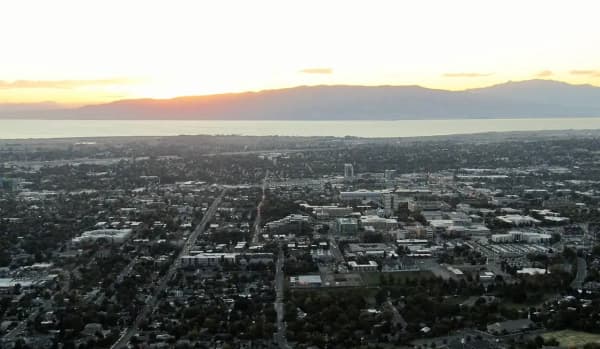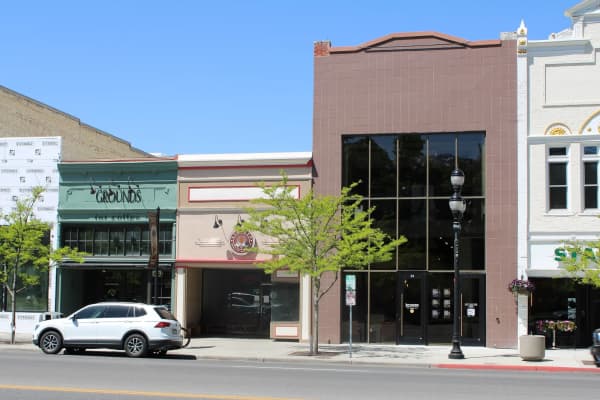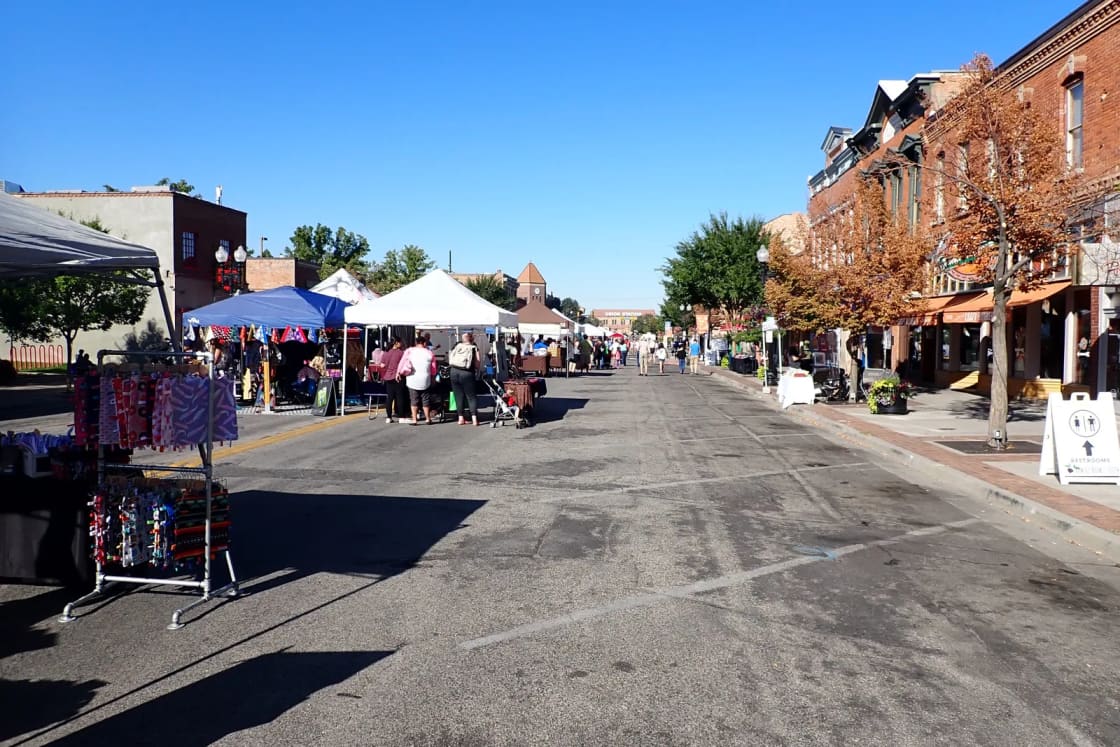
Most people in Utah Valley know Ogden as the far end of the FrontRunner map, the turnoff for Snowbasin, or the city with the railroad station on 25th Street. Fewer have looked at it as a place to live. That's changing for some families, as the price of housing in Utah County and the growth of jobs at Hill Air Force Base, Weber State University and the IRS processing center make the northern end of the Wasatch Front a real option.
This guide is for someone in Provo, Orem or the rest of Utah County who is weighing a move north. It covers what the federal data says about Ogden, how the city itself describes its neighborhoods, what the commute back to Utah County really costs in time, and how to set up utilities and schools once you're there. For the question of whether to leave Utah County at all, start with our Salt Lake County vs. Utah County comparison, which lays out the bigger tradeoff. If you've never spent a day in Ogden, our Ogden day trip guide is the better first step.
Every number below comes from a government, university or news source checked on Nov. 28, 2026, with the year it describes. Utah is a non-disclosure state for real estate, so this guide doesn't publish home sale prices.
Quick facts
| Measure | Ogden | Source and year |
|---|---|---|
| Population | 87,413 | Census ACS 5-year, 2024 |
| Median age | 33.6 (Provo: 23.6) | Census ACS 5-year, 2024 |
| Median household income | $72,575 (Provo: $64,171) | Census ACS 5-year, 2024 |
| Median gross rent | $1,216 a month (Provo: $1,193) | Census ACS 5-year, 2024 |
| Owner-occupied households | About 61% (Provo: about 39%) | Census ACS 5-year, 2024 |
| People below the poverty line | About 13.7% | Census ACS 5-year, 2024 |
| Jobs located in the city | 68,631 average employment | Utah DWS, 2024 |
| Drive to Provo | About 80 miles, about 1.5 hours without traffic | OpenStreetMap routing |
| FrontRunner to Provo Central | About 2 hours 4 minutes | UTA schedule, fall 2026 |
| Main hospital | McKay-Dee Hospital, 4401 Harrison Blvd. | Intermountain Health |
Owner and poverty shares are calculated from the Census tables: 20,531 of 33,508 occupied Ogden homes were owner-occupied (13,392 of 34,022 in Provo), and 11,650 of 85,251 people were below the poverty line. All ACS figures carry margins of error.
What the numbers say about Ogden
Ogden and Provo have almost the same number of occupied homes, but different people live in them. Provo's median age is 23.6, the mark of a city built around two universities. Ogden's is 33.6.
That shapes almost everything else. About six in ten Ogden households own their home, against about four in ten in Provo. Ogden's median household income of $72,575 is higher than Provo's $64,171, though the Provo figure is pulled down by student households that report little income. Median gross rent, which includes utilities the tenant pays, comes out nearly identical: $1,216 in Ogden and $1,193 in Provo, with overlapping margins of error.
The practical reading for someone leaving Utah Valley: Ogden isn't a bargain-basement version of Provo on rent, at least by the Census median. It's a city with more established households, more owners and fewer students. If your reason for moving is a lower rent check, compare current listings for the specific units you'd rent rather than relying on a citywide median, which blends decades-old leases with new ones.
The commute data is worth a look too. Of the 39,886 Ogden workers who didn't work from home in the 2024 ACS, 4,937, or about 12%, reported a one-way trip of 45 minutes or more, and about 6% reported an hour or more. Most people who live in Ogden work fairly close to it. A daily commute to Utah County would put you in a small minority.
The commute to Utah County
By car. Ogden is about 80 miles from Provo on I-15, an hour and a half by OpenStreetMap routing with no traffic. The Ogden end of the trip is rarely the problem. The slow stretches are through Salt Lake County and over the Point of the Mountain, the same choke points Utah County commuters already know, now with Davis County added on top. A round trip of three hours or more on a bad day is realistic. Before you commit to a daily drive, try it at the hours you would travel, in both directions, and watch UDOT's traffic site for a week. Our Salt Lake City moving guide covers the Salt Lake County part of the corridor in more detail.
By FrontRunner. Ogden and Provo sit at opposite ends of UTA's commuter rail line, which makes the train a straight shot with no transfers. It isn't fast. On UTA's weekday schedule effective August 2026, the 5:07 a.m. train leaves Ogden and reaches Provo Central at 7:11 a.m.; the 5:37 a.m. arrives at 7:41 a.m.; the 6:07 a.m. arrives at 8:11 a.m. Heading home, the 4:46 p.m. from Provo Central reaches Ogden at 6:54 p.m., and the 5:16 p.m. arrives at 7:24 p.m. That's a little over two hours each way, before you add the trip from the station to your desk.
A few details from the schedule matter if you'd ride daily:
- No Sunday service. The printed schedule says "No Service Sunday" in large type.
- Peak frequency is about every 30 minutes on weekdays. Saturday trains run roughly hourly.
- Some trains don't run the full line. Several late-evening and Friday-only trips end at North Temple or Salt Lake Central, so read the footnotes before counting on the last train.
- Station addresses. UTA lists Ogden station at 2350 S. Wall Ave. and Provo Central at 701 S. Freedom Blvd.
What it costs. UTA's current fares page says FrontRunner starts at a $2.50 base fare, adds 60 cents per additional station with a few exceptions, and caps the one-way Provo to Ogden trip at $9.70. The same page lists FAREPAY caps on premium services of $10 a day and $40 a week. Our FrontRunner from Provo guide covers parking, tapping on and off, and the Provo station itself.
The short version: Ogden works for someone with a Utah County job they visit a few days a week, or a hybrid schedule, or a partner who works north. A five-day, in-person Utah County job from Ogden is a long day by either car or train.
Neighborhoods, as the city describes them
Ogden divides itself into 14 planning communities, each with a community plan on the city's City Plans page. They're the most reliable way to understand the city's parts, because they're written by the people who zone them. Here are the ones a Utah Valley household is most likely to look at.
Downtown and the Historic 25th Street area. The blocks around Washington Boulevard, 25th Street and the FrontRunner station are the city's commercial center and its most walkable part. If living car-light near the train matters to you, this is where to look. Our day trip guide covers what's there, from Union Station to the farmers market.
East Central, including the Jefferson and Eccles historic districts. The city's East Central Community Plan, adopted in 2009 and amended in 2022, places this area directly east of the central business district and west of Harrison Boulevard, from the bluff south of the Ogden River down to 30th Street. The plan calls it "the original residential area" of the city as Ogden developed in the late 1800s and early 1900s, with "a mixture of mansions and modest homes built for the working class." It also describes how, after World War II, many large single-family homes were divided into apartments, and how the city has since used zoning and preservation programs to protect the historic housing. The city's Landmarks Commission reviews exterior changes to properties in the Jefferson Avenue and Eccles Avenue historic districts, which matters if you'd buy an older home and plan to remodel.
Southeast Ogden and the East Bench. The Southeast Ogden Community Vision Plan describes an area between 36th Street and the southern city limits, and between Gramercy Avenue and the eastern city limits, covering about 12% of the city's acreage. It holds Weber State University, McKay-Dee Hospital and the Dee Events Center. The plan says housing units in the area grew about 56% from roughly 2,250 in 1990 to 3,500 in 2018, mostly single-family homes, with much of the newer building in the far southeast portion known as Shadow Valley. It lists the Bonneville Shoreline, Birch Creek and Beus Canyon trails among the area's changes since the 1980s. Using 2017 to 2018 Census data, the plan says median household income in Southeast Ogden was "nearly double" the city's as a whole.
Mount Lewis, in the northeast. The Mt. Lewis Community Plan describes the area between Washington Boulevard and the mountain front, from North Street to the city's northern boundary at 1500 North; it was formerly called the Lincoln Edison community. The plan says there were only 37 homes there, mostly farms, as late as 1939, and that the first major development was the Ron Claire Village subdivision of the early 1960s, which housed workers at the Morton Thiokol plant in Box Elder County. Its housing is described as mostly bungalows, ramblers and split levels, with larger homes built in the 2000s east of Harrison Boulevard. Much of the land east of the canal is mountainside the plan expects to remain undeveloped.
North Ogden and Ogden Valley are separate places. North Ogden is its own city with its own government and services, and its schools are in the Weber School District. Ogden Valley, over the mountain through Ogden Canyon, holds Huntsville, Eden and Pineview Reservoir and is a different way of life altogether; our Ogden Valley guide covers it. A Utah County commute from the valley adds a canyon drive to an already long trip, and that canyon road is a winter planning factor.
Community plans describe land use and history, not the feel of a particular block. Visit a neighborhood at night and on a weekend before you sign anything.
Jobs and the local economy
Ogden is an employment center in its own right, not just a bedroom community. The Utah Department of Workforce Services counted an average of 68,631 jobs at about 3,000 employers located in Ogden in 2024, out of 123,656 in all of Weber County. Government was the largest sector in the city at 18,167 jobs, followed by manufacturing at 14,331, and the average monthly wage for jobs in Ogden was $5,047.
Three employers shape the local economy:
The IRS. The agency runs a large processing center in Ogden. KUER reported in June 2026 that the IRS "as of 2024, was Weber County's largest employer," and that it was trying to fill 850 jobs in Ogden after a period of federal job cuts. The same report said Utah's federal civilian headcount fell 11% between January 2025 and April 2026, by state Workforce Services data. If you're moving for a federal job, the last two years are a reminder to get hiring terms in writing.
Hill Air Force Base. The base sits south of Ogden, near Roy, Clearfield and Layton. A Kem C. Gardner Policy Institute report, as summarized by the Deseret News in January 2025, counted 4,853 active-duty personnel, 1,067 Air Force reservists and 14,787 federal civilian employees at Hill in 2023, plus more than 6,200 private-sector contractor employees on the base. For a Hill employee, Ogden is a short commute, which is one reason the city draws military and defense families.
Weber State University and McKay-Dee Hospital. Weber State reported a record fall 2026 headcount of 33,558 students in a Nov. 3, 2026 release, with more than 250 certificate and degree programs and over 90% of students from Utah. It doesn't shape Ogden's housing market or calendar the way BYU shapes Provo's, which the city's median age of 33.6 reflects. Intermountain Health's McKay-Dee Hospital, on Harrison Boulevard in Southeast Ogden, is described in the city's Southeast Ogden plan as one of the largest employers in that part of the city.
Getting around town: OGX and local transit
UTA's Ogden Express, or OGX, is the city's bus rapid transit line. It began service on Aug. 20, 2023, and runs from the FrontRunner station at Ogden Central through downtown and Weber State to McKay-Dee Hospital. UTA's first-anniversary release described intervals of 10 to 15 minutes on weekdays and 15 to 30 minutes on weekends, and said the line carried more than 890,000 riders in its first year. UTA's OGX route page says the line is "Zero Fare until Spring Change Day 2028."
For a Utah County commuter, OGX is the piece that can make a FrontRunner commute work without a car on the Ogden end, if you live near the line. If you'd live in Mount Lewis, North Ogden or the valley, plan on driving to the station. Check the OGX schedule page for current times before you pick an apartment based on it.
Setting up utilities
Ogden City Utility Billing handles water, sewer, stormwater and garbage. The city's Utility Billing page lists the office at 133 W. 29th St., open Monday through Friday, 8 a.m. to 5 p.m., with the main number at 801-629-8321.
The city's start-service page includes a few things a newcomer should know:
- Only the recorded owner can open an account. Private owners should have closing documents ready to verify ownership. If you rent, the account usually stays in the landlord's name, and the lease should say who pays.
- Same-day service is generally available if you call or visit before noon.
- A $30 trip charge applies if water department staff have to visit the property to turn water on or off.
Secondary water isn't a city service. The utility billing page says plainly that "Ogden City does not provide or bill for secondary water," and names the Weber Basin Water Conservancy District and Pineview Water Systems as providers in Ogden. Ask the seller or landlord whether a property has secondary irrigation water and who bills it.
Electricity and natural gas are separate accounts with private utilities, not the city; confirm the provider for your address when you schedule the move. If you're coming from Provo, note that Provo runs its own city power utility, so you'll be opening an account you may never have needed before. Our Utah Valley utility rates guide explains how Utah County's city-run utilities compare.
Cities outside Ogden, including North Ogden and South Ogden, run their own utility billing. Confirm which city a property is in before you assume any of the above applies; mailing addresses in the area don't always match city limits.
Schools
Most of Ogden is in the Ogden School District, whose high schools include Ogden High and Ben Lomond High. The surrounding Weber County cities, including North Ogden, are served by the separate Weber School District. School pages in the Ogden district tell families of new students to bring a birth certificate, immunization records and proof of residence when registering.
The Ogden School District has redrawn several elementary boundaries in recent years, so confirm the school assignment for an exact address with the district office rather than a listing or third-party map.
Healthcare
Intermountain Health's McKay-Dee Hospital is at 4401 Harrison Blvd. in Southeast Ogden, open 24 hours with a main line of 801-387-2800 and an emergency department line of 801-387-7000, according to the hospital's page. The city's Southeast Ogden plan says the hospital campus moved to its current location south of Country Hills Drive in 2002. If you have doctors in Utah County through an Intermountain plan, ask your insurer whether your coverage carries over to Ogden providers before you transfer care.
Air quality
Ogden shares the Wasatch Front's air problems rather than escaping them. The Utah Department of Environmental Quality says the Northern Wasatch Front ozone nonattainment area includes Salt Lake and Davis counties and "the western portion of Weber County (including Ogden)." The EPA designated the area in August 2018 under the 2015 ozone standard, it was reclassified to "Moderate" after missing the standard by August 2021, and DEQ says it missed the August 2024 moderate attainment date, which could move it to "Serious."
Winter inversions trap fine particulate pollution along the whole Wasatch Front, Ogden included. If air quality is part of why you're thinking of leaving Utah County, the move north doesn't change the basic picture; our Utah County inversion and air quality guide explains how the season works and where to check daily readings.
Outdoor access
This is where Ogden makes its strongest case. The mountains rise directly behind the east side of the city, and trailheads on the East Bench are close to residential streets; the Southeast Ogden plan lists the Bonneville Shoreline, Birch Creek and Beus Canyon trails among the area's newer amenities. Ogden Canyon leads to Pineview Reservoir and the ski areas of Ogden Valley, and our Ogden Canyon and Waterfall Canyon hike guide covers the closest outings. For a skier, living in Ogden trades the Utah County drive to the Cottonwoods or Sundance for a shorter drive to Snowbasin and the valley resorts.
Who Ogden suits
- Anyone whose job is at Hill, the IRS, Weber State, McKay-Dee or elsewhere in Weber and Davis counties. The commute math flips completely.
- Households who want an older city with historic housing. East Central and the Jefferson and Eccles districts have a housing stock Utah County mostly doesn't.
- Remote and hybrid workers with occasional Utah County trips. FrontRunner makes a once- or twice-a-week trip to Provo workable, and you can work on the train.
- People who want trails and skiing close to home. The East Bench and Ogden Valley are the draw.
Who should skip it
- Anyone with a five-day, in-person job in Utah County. Two-plus hours each way on FrontRunner, or a 160-mile round trip by car, will wear on you.
- Families with deep ties in Utah Valley. Grandparents, a ward, kids' activities and friends are an hour and a half away. That's a weekend visit, not an evening drop-in.
- Anyone moving mainly for cleaner air. Ogden is inside the same ozone nonattainment area as Salt Lake and Davis counties and has winter inversions too.
- Renters moving mainly to save on rent. The Census median is about the same as Provo's. Check real listings before deciding.
What to check before you move
- Drive the commute at your real hours, and ride FrontRunner end to end once if you plan to use it.
- Confirm the city. Ogden, South Ogden, North Ogden and unincorporated Weber County have different utilities and services.
- Confirm the school assignment for the exact address with the district.
- Ask about secondary water, and who bills it.
- Update your license and registration after the move; our Provo DMV guide covers the statewide process.
The bottom line
Ogden is a real city with its own job base, an older housing stock, a university that doesn't take over the calendar, and mountains closer than most Utah County residents have them. By the Census numbers it's more settled and more owner-occupied than Provo, and not much cheaper to rent in. What decides the move for most people reading this is the commute: Ogden is a good fit if your work is in Weber or Davis County or mostly remote, and a hard one if you need to be in Utah County every weekday. Make the trip at rush hour before you make the move.
Sources
- U.S. Census Bureau, American Community Survey 2024 five-year estimates, tables B01003, B01002, B19013, B25064, B25003, B17001 and B08303 for Ogden city and Provo city, via data.census.gov
- Utah Transit Authority, FrontRunner 750 schedule, effective August 2026, and current fares
- Utah Transit Authority, OGX route page and first-year OGX release
- Ogden City, Utility Billing, Start or Stop Service and City Plans, including the East Central, Southeast Ogden and Mt. Lewis community plans
- Utah Department of Workforce Services, Table 18, Weber County employment and wages by community, 2024
- Weber State University release via Utah Business, fall 2026 enrollment
- KUER, IRS hiring in Ogden, June 2026
- Deseret News, Gardner Institute defense industry report, January 2025
- Intermountain Health, McKay-Dee Hospital
- Utah Department of Environmental Quality, Northern Wasatch Front ozone nonattainment area
Related Guides
- Salt Lake County vs. Utah County
- Ogden From Provo: 25th Street, the Dinosaur Park and the Mountain Behind It All
- FrontRunner From Provo: What to Know Before You Ride
- Moving to Salt Lake City: Neighborhoods and Commutes
- Moving to St. George, Utah
- Ogden Valley: Eden, Huntsville and Pineview Reservoir
- Christmas Village in Ogden and the Midway Ice Castles
Frequently Asked Questions
How long is the commute from Ogden to Provo?
Does FrontRunner run from Ogden to Provo on Sundays?
How much does FrontRunner cost from Ogden to Provo?
What is the median rent in Ogden?
Which school district serves Ogden?
How do I set up water and garbage service in Ogden?
Who are the biggest employers in Ogden?
Is Ogden cheaper than Provo?
Sources
The facts in this guide were checked against these sources. Hours, fees and rules change, so confirm anything time-sensitive with the source before you go. How we make Provo.com.
- American Community Survey 2024 5-year estimates (B01003, B01002, B19013, B25064, B25003, B17001, B08303), Ogden city and Provo city, U.S. Census Bureau. Checked November 28, 2026.
- 750 FrontRunner schedule, effective August 2026, Utah Transit Authority. Checked November 28, 2026.
- Utah Transit Authority: Current Fares, Utah Transit Authority. Checked November 28, 2026.
- Route 603X Ogden Express (OGX), Utah Transit Authority. Checked November 28, 2026.
- Utah Transit Authority celebrates successful first year of Ogden Express, Utah Transit Authority. Checked November 28, 2026.
- Utility Billing, Ogden City. Checked November 28, 2026.
- Start or Stop Service, Ogden City. Checked November 28, 2026.
- City Plans (planning communities), Ogden City. Checked November 28, 2026.
- East Central Community Plan, Ogden City. Checked November 28, 2026.
- Southeast Ogden Community Vision Plan, Ogden City. Checked November 28, 2026.
- Mt. Lewis Community Plan, Ogden City. Checked November 28, 2026.
- Table 18: Nonagricultural employment and wages by community, Weber County, 2024, Utah Department of Workforce Services. Checked November 28, 2026.
- Northern Wasatch Front Ozone Nonattainment Area, Utah Department of Environmental Quality. Checked November 28, 2026.
- Weber State University growing enrollment, credentials, students: new record, Weber State University (via Utah Business). Checked November 28, 2026.
- McKay-Dee Hospital, Intermountain Health. Checked November 28, 2026.
- Utah took an 11% federal workforce cut, but now the IRS is hiring in Ogden again, KUER. Checked November 28, 2026.
- Utah economy: defense industry, Hill Air Force Base jobs, Deseret News. Checked November 28, 2026.