
Utah has two college valleys, and choosing between them is a live question for a lot of people: high school students weighing BYU against Utah State, families deciding where to raise children, remote workers picking a base, and Provo residents wondering whether the quieter valley to the north is the version of Utah they wanted.
The comparison usually gets made badly. It tends to reduce to school rankings and a housing-price number, both of which are the least reliable inputs available — the rankings measure things that may not matter to you, and Utah does not publish sale prices at all.
This guide compares the two places on the things that differ: scale, isolation, economy, climate, culture and what daily life feels like. It also corrects a student-population figure that nearly every comparison gets wrong. If you are weighing Provo against the state's largest city instead, see Provo vs Salt Lake City; if you want to visit Logan rather than move there, our Logan and Cache Valley day trip guide covers the trip.
The short version
- Provo is part of a metro; Logan is the center of its own valley. That single structural fact drives most of the rest.
- The student-numbers comparison is routinely wrong. USU's headline figure is a statewide system total, not the Logan campus.
- Logan is more affordable and more isolated. Those are the same fact viewed from two directions.
- Provo has the job market. Silicon Slopes and Salt Lake proximity are not small advantages.
- Cache Valley is colder and its winter inversions are worse.
The enrollment figure everyone gets wrong
Start here, because it distorts the whole comparison.
Utah State University reported a fall 2025 headcount of 29,831 students, up 3.2 percent, comprising 26,629 undergraduates and 3,202 graduate students. The university notes it serves approximately 34,000 students across a full year when you include those attending outside fall semester.
Those numbers get quoted against BYU's total, and the two schools come out looking comparable. They are not, because USU's figure counts something different.
USU is a statewide land-grant system, and its own enrollment reporting breaks the total down by campus. Of that 29,831: the Logan campus accounted for 20,081. The remainder was distributed across the statewide campuses (5,175), USU Eastern (1,333), Blanding (448), online (795) and other categories (1,068).
BYU, meanwhile, enrolls in the mid-thirty-thousands on a single campus in Provo.
So the honest comparison of what you would encounter is roughly 20,000 students in Logan against something like 35,000 in Provo — and that is before accounting for Utah Valley University in Orem, ten minutes up the road, which is Utah's largest public university with more than 40,000 students of its own.
The combined student population of the Provo-Orem area is therefore several times Logan's. That is not an argument for Provo; plenty of people prefer the smaller number, and it is precisely why they choose Logan. But a decision made on the belief that the two towns have similar student populations is a decision made on bad information.
Scale, and the metro question
The deepest structural difference is that Provo sits inside a metropolitan area and Logan does not.
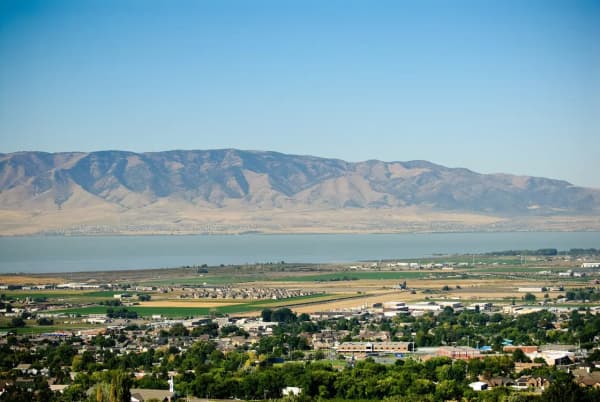
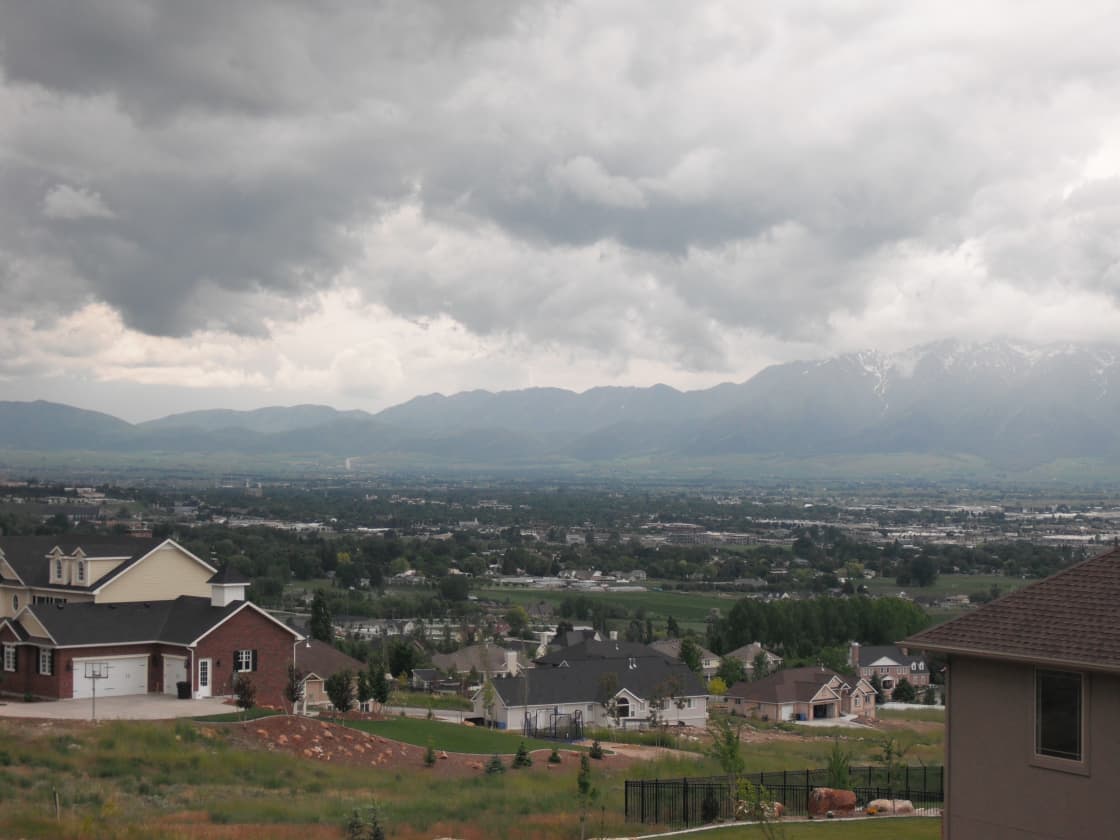
Provo and Orem have grown into each other, and the urban corridor continues north through Lindon, Pleasant Grove, American Fork and Lehi toward Point of the Mountain, and south through Springville, Spanish Fork and Payson. It is continuous development along an interstate, and it means a Provo resident has several hundred thousand people, multiple downtowns, two major universities and a full range of retail and services within a short drive — plus Salt Lake City about 45 miles north, connected by FrontRunner commuter rail.
Logan anchors Cache Valley, a separate valley over a mountain divide, roughly 80 miles from Salt Lake City with no rail connection. Cache Valley has its own towns — Hyde Park, North Logan, Smithfield, Providence — but the whole valley is smaller than the Provo-Orem metro, and Logan is unambiguously its center rather than one node among several.
This produces the trade that defines the entire comparison. Logan is more self-contained, quieter, less congested and more affordable. It is also further from everything: a bigger airport, specialized medical care, a wider job market, a concert tour that skips smaller markets. Residents describe the isolation with genuine affection and genuine frustration, often in the same conversation.
Provo's congestion is the mirror image. The I-15 corridor through Utah County carries heavy traffic, growth has been rapid, and the valley has the air-quality problems that come with a lot of vehicles in a basin.
The two universities
BYU is a private university owned by The Church of Jesus Christ of Latter-day Saints, with an honor code governing student conduct, a religious-education requirement, and an admissions process that includes an ecclesiastical endorsement. Its student body is overwhelmingly Latter-day Saint, tuition is substantially subsidized for members of the church, and the culture is distinctive and pervasive. People who fit it often describe it as the best four years of their life; people who do not can find it constraining. It is a selective institution with strong programs across a wide range of fields.
Utah State is a public land-grant university founded in 1888 as an agricultural college. That origin still shapes it: strong programs in agriculture, natural resources, engineering and education, a substantial research operation, and a statewide access mission that is why the system has so many campuses. Admission is far less restrictive than BYU's, tuition follows the public in-state and out-of-state structure, and there is no honor code of BYU's kind. The Logan campus is a residential campus in a small city, which produces a concentrated campus culture — USU cites the residential experience as a draw in its own enrollment reporting.
USU also runs one of the more effective affordability packages in the state, including a last-dollar scholarship covering full tuition and fees for Pell-eligible students. For a student weighing cost, that is worth investigating directly rather than comparing sticker prices.
And Aggie Ice Cream, made on campus since the university's founding era, is not a trivial cultural detail in Logan. It is a genuine institution.
Cost of living, and the honesty problem
Logan is generally more affordable than Provo. That is the consistent picture and the structural reasons are straightforward.
Cache Valley has less development pressure, no equivalent of the Silicon Slopes corridor bidding up housing with technology salaries, and greater distance from Salt Lake City, which insulates it from spillover demand. Utah County has all three working the other way, and has been one of the fastest-growing counties in the country.
Here is where we have to be careful. Utah is a non-disclosure state: residential sale prices are not part of the public record. Every confident median you find for either city is an estimate built from partial data, and the estimates from different sources routinely disagree. This page is not going to add another one.
What you should do instead: pull current listings in both places for the specific kind of property you want, talk to an agent in each market who can run a comparative analysis, and — critically — compare total cost rather than housing cost. Logan's lower housing is partly offset by higher heating in a colder climate, longer drives for specialized services, and airfare or a long drive to reach a major airport. Provo's higher housing comes with a larger job market that may pay more.
Jobs and the economy
If you intend to stay after graduation, this is the most consequential difference on the page.
Utah Valley anchors the southern end of Silicon Slopes. Technology, software and startup employment runs from Provo north through Orem and Lindon into the Lehi and Point of the Mountain corridor, alongside major employers in education, healthcare and retail. Salt Lake City's market is a commute away. For technology, finance, marketing and professional careers, the density of opportunity is not comparable between the two valleys.
Cache Valley's economy is diversified but smaller: agriculture and food production remain significant, Utah State itself is a major employer, and there is a notable cluster of specialized manufacturing. It is a functioning regional economy, not a company town. It simply has fewer employers and fewer roles, which matters most in specialized fields where a valley may hold one relevant employer, or none.
The practical pattern is that many USU graduates who want a large job market move south. That is not a criticism of Logan; it is a consequence of a small city being a small city, and plenty of people build excellent careers there — particularly in education, healthcare, agriculture-adjacent industries and remote work.
Remote work changes this calculation more than any other factor. If your income does not depend on the local market, Logan's affordability and quiet become close to pure gain, with isolation as the only real cost.
Climate, outdoors and air
Both valleys sit against mountains with four real seasons, cold winters and hot dry summers. The differences are matters of degree, and they are noticeable.
Cache Valley is colder. It is higher and further north, and its bowl shape traps cold air efficiently, producing hard winter temperature inversions and lower lows than Utah Valley typically records. Summers are correspondingly milder, which a lot of people count as a straight win.
Inversions affect both, and this is a Utah problem rather than a local failing. Cold air settles in the valleys, a warm layer caps it, and pollution accumulates underneath for days or weeks. Utah Valley's inversions come with more vehicle emissions; Cache Valley's are aggravated by its geography and have periodically produced some of the worst readings in the country. Anyone with asthma or a respiratory condition should research this seriously for either city rather than assuming one is clean.
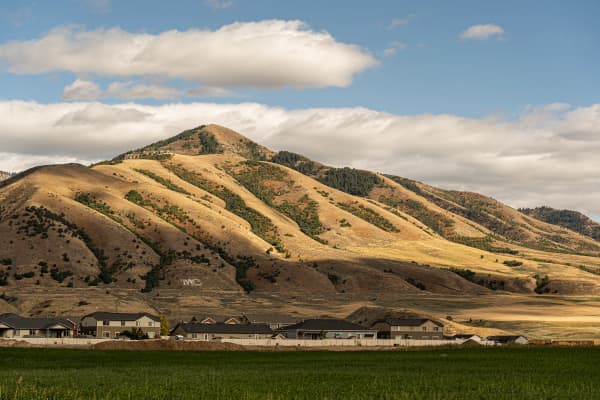
For outdoor access, both are excellent and the character differs. Utah Valley has Mount Timpanogos, the Alpine Loop, American Fork Canyon, Utah Lake and a short drive to the Wasatch resorts. Logan has Logan Canyon essentially at the edge of town — a spectacular corridor running up to Bear Lake — plus Beaver Mountain, and quicker access to the emptier country of northern Utah and southern Idaho.
Logan's advantage is proximity: the canyon starts minutes from campus. Utah Valley's advantage is variety and reach, including much faster access to southern Utah's national parks.
Getting around, and getting out
Transport is where the metro-versus-valley distinction becomes concrete, and it is underweighted in most comparisons.
Within each place, both are manageable. Logan is small enough that most trips are short, and campus is close to town. Provo is larger but has UVX, a bus rapid transit line running through Provo and Orem and serving both BYU and UVU, which makes car-free student life workable along that corridor.
Getting to Salt Lake City is where they diverge sharply. From Provo, FrontRunner commuter rail runs the corridor, so a Salt Lake trip is a train ride and a Salt Lake commute is a normal thing people do. From Logan there is no rail. You drive, over a route that is beautiful and, in winter, occasionally not a route at all.
Getting to an airport follows the same pattern. Salt Lake City International is the region's hub; it is a straightforward trip from Provo and a substantial one from Logan. Provo also has its own smaller commercial airport with limited service, which is convenient when a route happens to match your destination.
Winter driving deserves specific mention. Canyon routes close and mountain passes get bad, and Cache Valley's connections to the rest of the state run through terrain that takes weather seriously. Utah Valley's main artery is an interstate through a valley floor. This affects how often you leave, and how confidently you plan a trip in February.
The cumulative effect is that Provo residents treat Salt Lake as adjacent, while Logan residents treat it as a trip. Neither is wrong. But if you imagine yourself popping down to the city regularly, be honest about which one you would be doing.
Healthcare, services and the things you only notice later
The category people forget when comparing college towns, and the one that matters more as circumstances change.
Routine healthcare exists in both. Logan has a regional hospital serving Cache Valley, and Utah Valley has multiple hospitals plus a dense network of clinics and urgent care.
Specialized care is the difference. For a complex condition, a rare specialty, a high-risk pregnancy or a serious diagnosis, the referral pattern in Utah generally runs toward Salt Lake City's major medical centers and the University of Utah. From Provo that is a manageable drive done routinely. From Logan it is a longer trip on a schedule you do not control, repeatedly, often in winter, sometimes weekly for a course of treatment.
This rarely factors into a decision made at eighteen, and it factors heavily into one made at thirty-five with a family, or made on behalf of aging parents. It is worth thinking through rather than discovering later.
The same logic applies more mildly across other services: specialized retail, professional services, and anything where you want a choice of providers rather than the one available. Logan has what a regional center has, which is a lot more than a small town and less than a metro.
Culture and daily life
Both are young, both are heavily shaped by their universities, and both sit in a state where Latter-day Saint culture is a strong influence. Neither is a secular college town, and someone expecting one will be surprised in both places.
Provo is larger, denser, and busier. Its downtown has developed considerably, with a restaurant and arts scene supported by a metro-sized population. The presence of BYU and UVU together creates an unusually large concentration of people in their twenties. It also has more traffic, more construction and more of the texture of a growing metro.
Logan is quieter and more contained. Its historic downtown and the Cache Valley Center for the Arts anchor a real cultural life at a smaller scale, and the valley's agricultural character remains visible in a way Utah Valley's largely no longer is. People describe Logan as friendlier and slower, and describe the same quality as limiting when they want options on a Friday night.
On the marriage-oriented culture that both share: it is real in both, and more intense in Provo simply because of the numbers. Our guide to dating in Provo covers what that looks like on the ground here.
How to decide
Reduce it to a few honest questions.
Do you want to be near a metro or away from one? This is the real question and everything else follows from it. Provo gives you access, options and a job market, with congestion and cost. Logan gives you quiet, affordability and a self-contained community, with distance from everything larger.
Does your career need a big local market? If yes, Provo has an enormous advantage. If you work remotely or your field is well represented in Cache Valley, the advantage largely disappears.
Which university fits? This is a fit question rather than a ranking question. BYU's honor code, religious requirements and admissions process are either right for you or they are not, and no amount of institutional prestige compensates for a bad fit. USU's public, land-grant, open-access character is a different proposition entirely.
How do you feel about cold and about driving? Cache Valley winters are colder and Logan is further from an airport, a major hospital and a large concert. These sound minor in June.
Then go. Drive up during term time — it is about two and a half hours — walk both campuses, spend an evening in each downtown, and see which one feels like somewhere you want to be. The two places differ in ways no written comparison captures, and a single day will tell you more than a month of reading.
For more on this valley specifically, start with our complete guide to Provo and the guide to Orem next door.
A note on figures. Enrollment numbers move every year and the campus-level breakdown matters more than the headline total, so check both universities' current reporting rather than relying on figures quoted second-hand. And because Utah does not publish residential sale prices, treat any specific cost-of-living median for either city as an estimate rather than a record.
Frequently Asked Questions
Which is bigger, Provo or Logan?
How many students does each university have?
Is Logan cheaper than Provo?
How far is Logan from Salt Lake City compared with Provo?
Which has better weather?
Which is better for jobs after graduation?
What about the social and dating scene?
Can you visit both before deciding?
Sources
The facts in this guide were checked against these sources. Hours, fees and rules change, so confirm anything time-sensitive with the source before you go. How we make Provo.com.
- Utah State University, Pacific Northwest National Laboratory (Tethys). Checked October 12, 2026.
- Office of Data & Analytics, Utah State University. Checked October 12, 2026.