
More on Springville and Spanish Fork: every guide we have published there, in one place.
Only a few miles of freeway separate Spanish Fork and Springville. They share a school district, a canyon-facing bench, an agricultural past, and a stretch of I-15. People shopping the south end of Utah Valley routinely tour both in an afternoon and come away unable to articulate the difference.
There is a difference. It is just not the one most comparisons reach for.
This covers what separates them — size and growth trajectory, housing stock, who runs your utilities, the canyons they open onto, and the civic character each has built — and how to tell which one fits. Prices, rates and city programs change; confirm current figures with each city before deciding.
The one-sentence version
Spanish Fork is the bigger, faster-growing, more self-contained city with more new construction and its own municipal utilities. Springville is the smaller, older, more settled one with a stronger arts identity and a slightly better position toward Provo.
If you want a new house on a new street with a short drive to a big-box strip, Spanish Fork has more of that. If you want an established neighborhood with mature trees and you do not mind older houses, Springville has more of that.
Everything below is elaboration.
Size, and the growth gap that keeps widening
Census estimates for July 2025 put Spanish Fork at roughly 48,800 and Springville at roughly 35,700. Both grew from their 2020 counts, but not at the same rate — Spanish Fork's estimated increase since 2020 runs to about 14.6 percent.
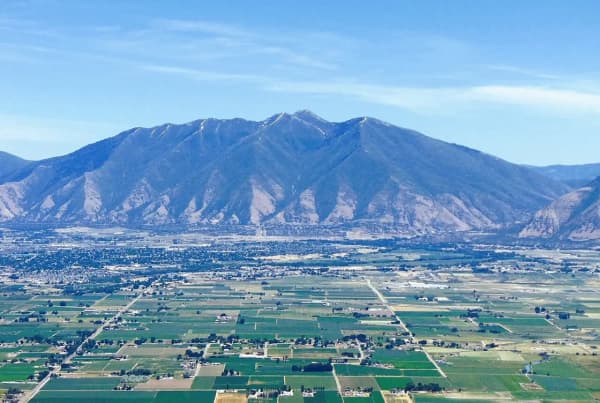
The reason is land. Spanish Fork has substantially more developable ground, particularly west toward the lake and south toward the Salem line. Springville is more boxed in — mountain on the east, Spanish Fork on the south, Provo's orbit on the north, and lake-adjacent ground on the west that is harder to build on.
That difference compounds. A city with room grows by adding subdivisions; a city without room grows by infill and by going up, which is slower and more contested. Expect the gap between these two to keep widening rather than close.
For a buyer, this is not automatically good or bad. It determines whether you are moving into a place that will look noticeably different in ten years or one that will look much the same.
Schools: the rare Utah Valley comparison where this is not the question
Both cities are in Nebo School District. This matters more than it sounds, because most Utah Valley city comparisons right now turn on the Alpine School District split — the north county's district dissolves on 30 June 2027 and three new districts take over the next morning.
Nebo is not part of that. Neither Spanish Fork nor Springville is affected. If you are comparing these two, you can set the district question aside entirely and look at individual schools instead, which is a luxury someone choosing between American Fork and Pleasant Grove does not have.
What remains is the ordinary work: look up the specific boundary for the specific address, because both cities have redrawn boundaries as they have grown, and a house two streets over can feed a different school.
Housing stock is the clearest real difference
Springville's housing is older on average. Its historic core has genuine nineteenth- and early-twentieth-century houses, and the neighborhoods that grew around them through the mid-century have mature landscaping, established trees and the irregular lot shapes that come from incremental growth.
Spanish Fork has that too, in a smaller downtown core. But a much larger share of its housing was built in the last twenty-five years, and a meaningful share in the last ten.
This shows up in practical ways. Older housing means more character and more maintenance — older Utah Valley homes carry their own set of questions about materials and systems. Newer housing means fewer surprises and less character, plus the HOA question, which is far more likely to arise in Spanish Fork's newer western subdivisions than in central Springville.
Neither is better. They attract different buyers, and knowing which one you are saves a lot of touring.
Who runs your utilities, and why it is not trivial
Spanish Fork operates municipal utilities. Springville does as well. Both cities run more of their own infrastructure than a typical suburb, which is a legacy of how Utah towns were built.
The consequence is that your utility questions go to a city department rather than a regional corporation, your rates are set in a public meeting you can attend, and outage response is local. People who have moved from a large metro often find this different — you can call about a bill and reach someone in the same city.
The flip side is that municipal systems carry capital costs that show up in rate discussions, and those discussions are political. If you care about this, read a year of city council agendas before you buy. It is the single most informative unglamorous research anyone can do about a Utah city, and utility rates across the valley vary more than most buyers expect.
The canyons point in different directions
This is the difference residents feel most and comparison articles mention least.
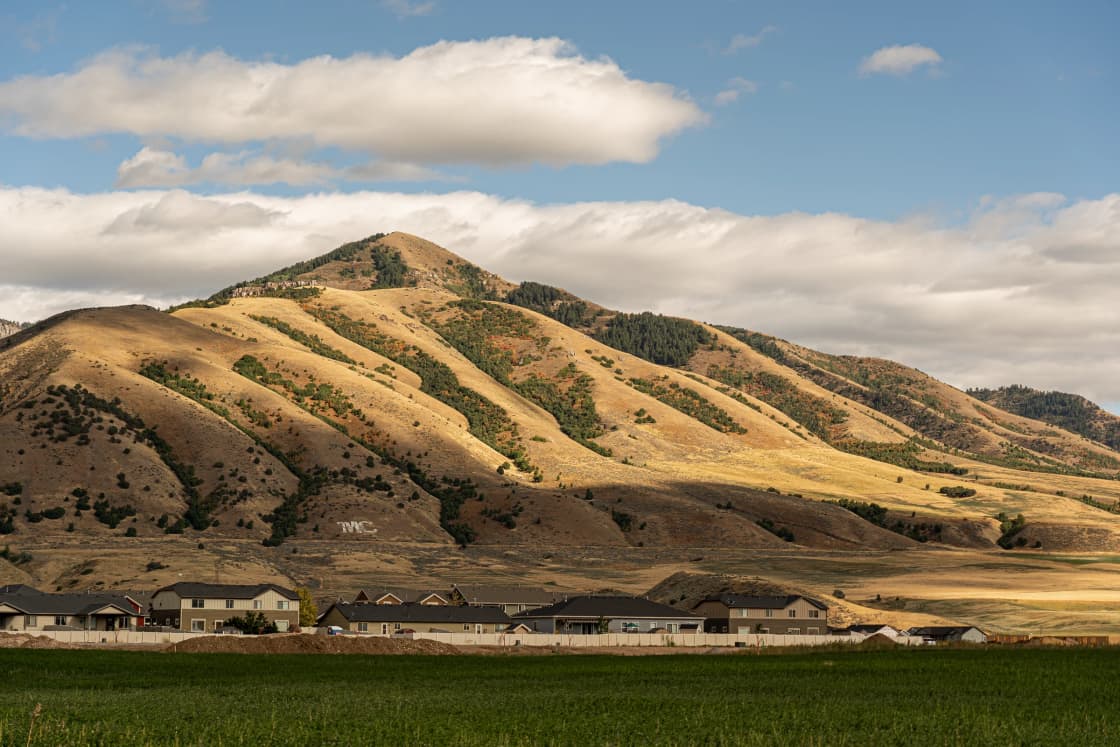
Springville sits at the mouth of Hobble Creek Canyon. It is a short, green, close-in canyon with a golf course, picnic grounds and a loop road — the kind of canyon you use on a Tuesday evening without planning it. Jolley's Ranch is up there, and the canyon functions as the city's backyard.
Spanish Fork opens onto Spanish Fork Canyon, which is a different animal: a major highway canyon carrying US-6 toward Price and the Diamond Fork drainage branching off it. It is longer, more dramatic, and more of a destination than a backyard. The hot springs at the end of Diamond Fork are a genuine draw.
If your weekends involve a quick drive to green space, Springville's canyon is more convenient. If they involve longer trips toward the San Rafael Swell or Nine Mile, Spanish Fork puts you at the mouth of the route.
Character: Art City and the fairgrounds city
Springville has called itself Art City for well over a century, and the Springville Museum of Art is the substance behind the nickname — a real institution with a serious permanent collection, housed in a building that would not be out of place in a much larger city. The city's calendar is built partly around it, and Art City Days is the summer anchor.
Spanish Fork's civic identity runs through its fairgrounds and its events. The rodeo and fair tradition is strong, the Krishna Temple on the bench draws visitors from across the state for its festivals, and the city's Latino population is a larger share than in most Utah Valley cities.
Neither identity will change your daily life much. Both will change what the city feels like on a summer Saturday, and which one appeals to you is a legitimate tiebreaker.
The history each city tells about itself
Both cities were settled in the 1850s by the same movement, but the stories they have chosen to keep are different, and those stories are still visible.
Spanish Fork was the first permanent Icelandic settlement in the United States. The first Icelandic immigrants settled there between 1855 and 1860, and the city marks it with an Icelandic Monument on Canyon Road. For a city of this size to hold a distinction like that — and to still observe it — tells you something about how Spanish Fork thinks about itself. Both cities' full stories are told separately in a short history of Spanish Fork and a short history of Springville.
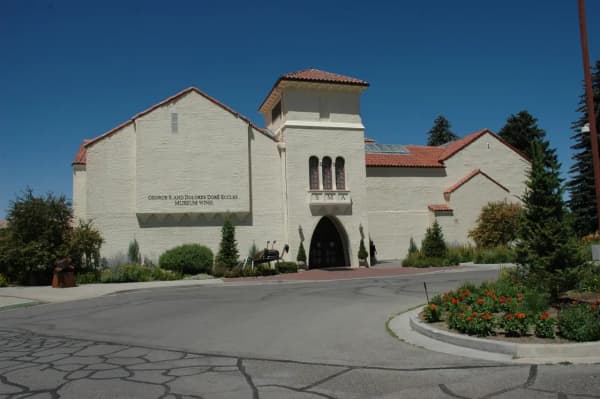
Springville's chosen story is the art. In 1903, the artists Cyrus E. Dallin and John Hafen donated work to Springville High School. That donation became a permanent collection, the collection became a museum, and the museum became the city's identity. The building that houses it now was constructed in 1936–37 by the Works Progress Administration in the Spanish Colonial Revival style, with a two-story addition built in 1964. It has been on the National Register of Historic Places since 1986.
The museum's building is, according to its National Register nomination, the only one of Utah's New Deal-era public buildings built specifically as an art center. David O. McKay dedicated the building with a phrase about beauty and contemplation that the city has never really stopped using.
The practical point for a buyer is small but real. Springville has a serious cultural institution inside its borders, with the school programs and annual exhibitions that come with one. Spanish Fork's civic energy goes into events and fairgrounds instead. Neither is better; they produce different calendars.
What the growth projections say
Spanish Fork's own planning documents project the city continuing to climb well past its current size over the coming decades. Municipal projections of this kind are planning instruments rather than forecasts — they exist so a city can size water and sewer capacity — but the direction is unambiguous and the city is building toward it.
Springville's population has been close to flat since 2020 in Census estimates, so its growth has been slower than Spanish Fork's.
The consequence for someone buying now is about disruption tolerance. Spanish Fork will have more construction traffic, more new schools opening, more road projects and more boundary redraws over the next decade. Springville will have fewer of all of those. If you find growth energizing, that favors Spanish Fork. If you find it exhausting, it favors Springville.
What a weekday looks like
In Springville, the shape of the day tends to run north. Work in Provo or Orem, school locally, errands on Main Street or at the freeway exit, and if the evening is free, a drive up Hobble Creek that takes ten minutes to reach real trees.
In Spanish Fork, more of the day can stay inside the city. There is more retail, more medical, more restaurants, and the city has been adding amenities as it grows. The evening canyon drive is longer and more of a commitment, so it happens less often but goes further when it does.
Neither pattern is obviously superior. But they are different enough that people who have lived in both usually have a clear preference, and that preference is rarely about housing.
Emergency services, and the thing nobody asks about
Both cities run their own police departments, and both have fire and EMS arrangements that residents rarely think about until they need them. This is worth ten minutes of research before buying, because response coverage is not uniform across either city.
The pattern in fast-growing Utah cities is that new subdivisions on the edges are farther from the existing station than the older core is, and staffing catches up on a lag. Spanish Fork's western growth has more of this exposure simply because more of its housing is new and peripheral. Springville's footprint is tighter, which generally means less variation.
Neither city is unsafe. But if you are looking at a house on the newest street in the newest subdivision, ask the city where the nearest station is and what the coverage plan for that area looks like. It is a normal question and cities answer it.
Water, which is the real long-term question
Every Utah Valley city comparison eventually comes down to water, and buyers almost never ask.
Both cities hold water rights and both operate pressurized secondary irrigation systems for outdoor watering, which is why Utah Valley lawns stay green through July on a valley that receives desert rainfall. Secondary water is metered in more places than it used to be, and the direction of travel statewide is toward more metering and more conservation pressure.
What this means practically: your outdoor water is a separate system with separate rules and a separate seasonal schedule, and those rules are tightening across the state rather than loosening. If you are buying a large lot in either city on the assumption that irrigation will stay cheap and unlimited, check the current rules and the city's stated direction first.
Commute, honestly
Springville is a few miles closer to Provo. Northbound, that is worth a few minutes most days and more than a few during the evening backup.
Neither city has a FrontRunner station. A Salt Lake commute from either means driving to the Provo station or farther north, which makes the train a worse proposition than it is from Orem or Lehi. If you work in Salt Lake and want rail, both of these cities are a compromise — see where to live in Utah County if you work in Salt Lake for the honest version.
Within the south valley, both are fine. Groceries, big-box retail and medical care are available in both, with Spanish Fork carrying somewhat more retail because of its size.
Where each one is stronger
Spanish Fork is stronger if you want newer housing, more retail without driving north, more room for the city to add amenities as it grows, and a position at the mouth of the routes toward southern and eastern Utah.
Springville is stronger if you want an established neighborhood with mature trees, a short green canyon you will use on weeknights, a shorter hop to Provo, and a smaller city that is not going to double around you.
The things that should not decide it
Do not decide on the basis of published median sale prices. Utah is a non-disclosure state, which means sale prices are not part of the public record the way they are elsewhere, and the figures aggregators publish are estimates built on partial data. Compare actual current listings instead.
Do not decide on general school-district reputation, because the district is the same. Look at the specific school.
Do not decide on which downtown looked nicer on the afternoon you visited. Both have small historic cores that photograph well and neither is where you will spend most of your time.
How to decide
Drive each city at the hour you would really commute, on a weekday, in the direction you would really go. The evening northbound backup on I-15 is the single biggest daily-life variable between these two, and it does not show up on a Saturday tour.
Then walk the specific neighborhood — not the city — on a weekend morning. These cities are similar enough that the decision almost always comes down to a particular street, a particular school boundary, or a particular drive. The city name is the least informative thing about the choice.
Finally, read the last year of city council minutes for whichever you are leaning toward. Growth pressure, utility rates and zoning fights are all visible there, months before they become visible on the ground.
If neither fits
The south valley has more options than these two. Salem is smaller and quieter, Mapleton is more rural and more expensive per lot, and Payson is farther south and generally cheaper. The full picture is in our guide to Utah County's small towns, and the Spanish Fork and Springville city guides go deeper on each individually.
Frequently Asked Questions
Are Spanish Fork and Springville in the same school district?
Which one is bigger?
Which is cheaper to buy in?
Which has the better commute to Provo or Salt Lake?
Does Spanish Fork really have its own power company?
Which is better for outdoor access?
Is Springville really the art city?
Which one should I pick if I cannot decide?
Sources
The facts in this guide were checked against these sources. Hours, fees and rules change, so confirm anything time-sensitive with the source before you go. How we make Provo.com.
- Annual Estimates of the Resident Population for Incorporated Places in Utah, 2020-2025 (SUB-EST2025), U.S. Census Bureau. Checked October 12, 2026.
- Spanish Fork History, Spanish Fork City. Checked October 12, 2026.
- Icelandic Monument, Spanish Fork City. Checked October 12, 2026.
- Springville Art Museum NRHP nomination, National Park Service / Utah State Historical Society. Checked October 12, 2026.
- "Alphabet" Agencies in Utah County, Utah Division of State History (History to Go). Checked October 12, 2026.