
Drive two hours north of Provo and the landscape performs a strange trick: it starts over. Another long valley floored with farms, walled by a steep range on the east. Another college town pressed against the bench, its stadium visible from across the valley. Another white temple on a hill, one of the oldest in the state. Cache Valley is Utah Valley run through a smaller, slower, dairyer filter, and that familiarity is exactly what makes it such an easy trip to underrate and such a satisfying one to take. For longer northern weekends, see Yellowstone and Jackson Hole and Grand Teton.
This is the shortest drive in our weekend-trips series, the only one that is comfortably a day trip in every season, and the one where the destination is less a list of sights than a culture: specifically, a dairy culture with a century and a half of momentum. Bring a cooler. That is not a figure of speech; you will regret its absence at three separate stops. The numbered list below has fourteen places to spend the day, with addresses, hours and prices as listed in October 2026.
The drive: Sardine Canyon and the reveal
The route is simple: I-15 north past Salt Lake City and Ogden to Brigham City, then US-89/91 northeast over the shoulder of the Wellsville Mountains, the range often described as among the steepest-rising in the country for the way it climbs straight off the valley floor, through Sardine Canyon. Call it about 125 miles; OpenStreetMap routing estimates about two hours and 20 minutes from Center Street and University Avenue in Provo to Center and Main in Logan without traffic, so plan on two hours or a little more. Sardine is a broad, fast mountain highway rather than a slot canyon, and its reward is the descent: the road crests and Cache Valley unrolls below, a green quilt of dairy and grain running north into Idaho, with Logan against the eastern bench.
Winter honesty: Sardine Canyon is the valley's front door and it is plowed accordingly, but it is a mountain pass that catches wind and drifting snow, and Cache Valley sits high enough, about 4,500 feet, to run colder than Provo and to hold its own winter inversions, a phenomenon Utah Valley residents will recognize with a grimace. Check conditions on storm days; the locals do. And read the section on driving Sardine Canyon after dark at the end of this page before you plan a late return.
Fourteen things to do in Logan and Cache Valley
Items 1 to 3 are the dairy circuit, which is the real itinerary; run them as a loop on any day but Sunday.
1. Aggie Ice Cream
The anchor. Utah State University was founded in 1888 as the state's agricultural college, hence "Aggies," and it has been making Aggie Ice Cream since 1921, with milk from the university's own herd and the ice cream made and sold on campus at the creamery store. Aggie Blue Mint, blue mint ice cream loaded with chocolate, is the flagship, and Bull Tracks is the connoisseur pick. It is a working piece of the university and doubles as the cheapest campus tour in the state. Getting there: The Creamery, 750 North 1200 East. Cost: By the scoop. Season: Its Google listing in October 2026 showed Monday through Thursday 11 a.m. to 9 p.m., Friday and Saturday to 10 p.m., closed Sunday. Aggie Ice Cream
2. Gossner Foods store
On Logan's west side, the industrial-scale sibling: a family company that grew into one of the largest Swiss cheese producers in the country, with a store selling the two cult items. First, fresh cheese curds, "squeaky cheese," cheddar young enough to audibly squeak, a sound that disappears with refrigeration, which is why curds bought here beat any curd that ever traveled. Second, the shelf-stable flavored milk in lunchbox-size boxes, root beer, orange and rotating others, which needs no cooler at all and has ridden home in Utah family cars for generations. Getting there: 1051 North 1000 West. Cost: Store prices. Season: Its Google listing showed Monday through Saturday 8 a.m. to 6 p.m., closed Sunday. Gossner Foods history
3. Bluebird Candy Company
Downtown on Center Street, Bluebird has been hand-dipping chocolates for generations, women at marble tables dipping by hand, in a storefront that works as a living museum of how candy used to be made. Add the local honey operations and the seasonal farm stands along the valley's highways, and the cooler thesis proves itself. Getting there: 75 West Center Street. Cost: Store prices. Season: Its Google listing showed Monday through Wednesday 10 a.m. to 7 p.m., Thursday through Saturday to 8 p.m., closed Sunday.
There is also a footnote Utah Valley readers will enjoy: the most famous food company to come out of Logan lately is not a dairy at all. Crumbl baked its first cookies here before the operation moved its headquarters to Utah Valley and went national, a two-valley origin story we tell in full in our Crumbl article.
4. Ellen Eccles Theater and the Utah Festival Opera and Musical Theater
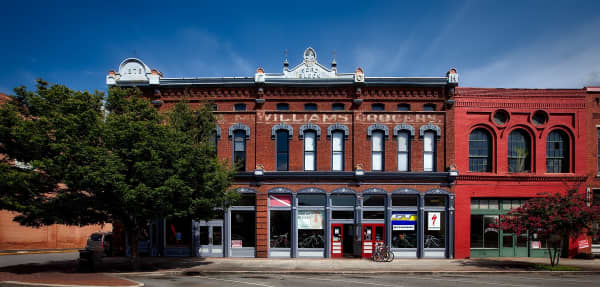
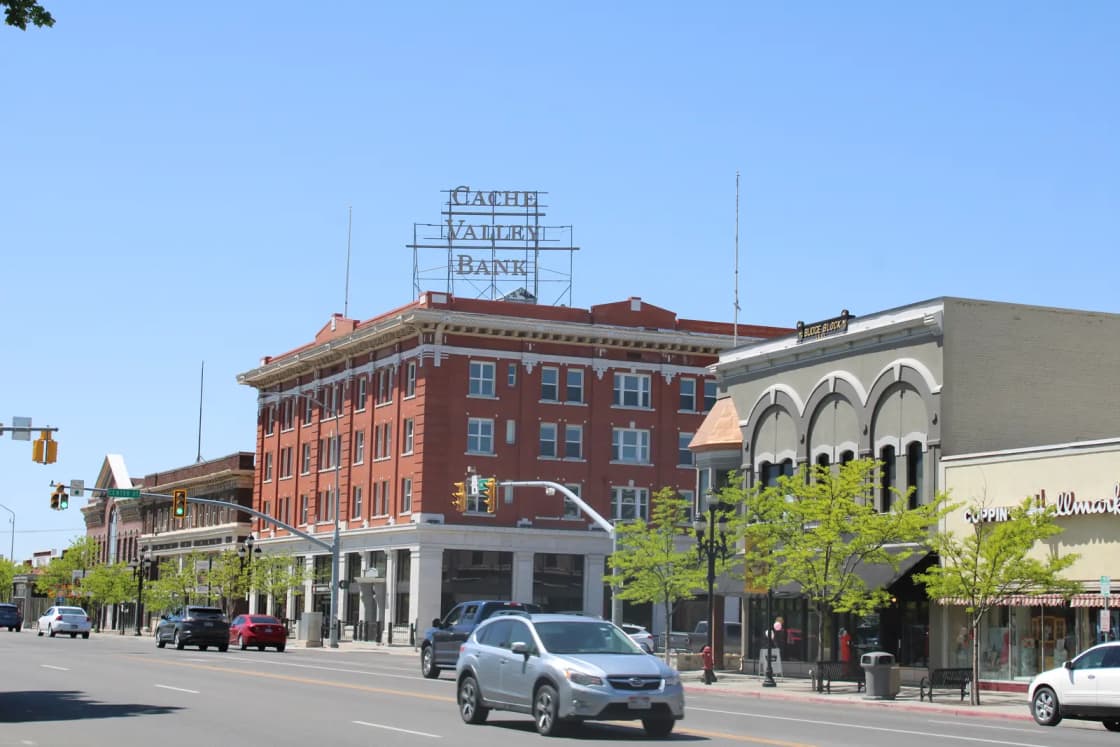
Logan's historic downtown survived the eras that hollowed out most American main streets, and its centerpiece explains the town's odd superpower. The Ellen Eccles Theater at 43 South Main, the former Capitol Theater, was saved from demolition and reopened in 1993 after a $6.5 million restoration, and it anchors an arts scene well out of scale with a town of Logan's size: every summer the Utah Festival Opera and Musical Theater, whose founding general director is the operatic tenor Michael Ballam, mounts a professional repertory season of opera and musical theater from mid-June into July, with the historic Utah Theater as a second venue. Summer also brings Summerfest, an arts faire with artist booths and music at the Cache County Fairgrounds. For a Utah Valley resident used to driving to Salt Lake for this tier of performance, finding it two hours the other direction is disorienting. Getting there: 43 South Main Street. Cost: Ticketed. Season: The festival season runs mid-June into July; the theater books shows year-round. Utah Festival Opera and Musical Theater
5. Utah State University campus and Old Main
Up on the bench, the campus rewards a wander. Old Main, the landmark tower building with the lighted "A" installed in 1909, anchors the hilltop, and the view back across the valley to the Wellsvilles frames the whole geography. There is also the sports angle, which lands differently coming from a BYU town: Utah State's basketball arena, the Spectrum, has a long reputation for one of the loudest student sections in the Mountain West, and fall Saturdays at Maverik Stadium, with the Wellsvilles behind the west stands, make the same argument for football. A game slotted into a Logan day upgrades it; check the schedule before a fall or winter trip. Getting there: The USU campus, east of downtown on the bench. Cost: Free to walk; game tickets vary. Season: Year-round; fall for campus energy. USU history and traditions
6. Nora Eccles Harrison Museum of Art
USU's art museum, known locally as NEHMA, is free and open to the public with free parking. It runs free family art-making on the second Saturday of each month and free first-Friday evening programs at its Wanlass Center for Art Education and Research. Getting there: 650 North 1100 East, on campus. Cost: Free. Season: Its Google listing in October 2026 showed Tuesday through Thursday 10 a.m. to 5 p.m., Friday to 8 p.m., Saturday to 4 p.m., closed Sunday and Monday. Nora Eccles Harrison Museum of Art
7. Logan Utah Temple grounds
Below campus, the Logan Utah Temple, completed in 1884 from dark quarried stone, is the valley's visual anchor the way the Provo temples are ours: visible from nearly everywhere, the oldest thing on the skyline. The grounds are open to walk. Getting there: 175 North 300 East. Cost: Free. Season: Year-round.
8. Zootah at Willow Park
Logan's small zoo, founded in 1970 and run as a private nonprofit since 2013, keeps more than 60 native and exotic species on seven tree-lined acres next to the Cache County Fairgrounds, with animal feedings and encounters. Getting there: Willow Park, 450 West 700 South. Cost: Ticketed; prices on Zootah's site. Season: Year-round; check the zoo's hours. Zootah
9. American West Heritage Center
The living-history farm on the highway south of Logan in Wellsville, built around Cache Valley's cultures from 1820 to 1920, with a seasonal calendar: Baby Animal Days and Farm Animal Days in spring, the Cache Valley Mountain Man Rendezvous, a homesteaders' fair, a fall corn maze, a Haunted Hollow, a Fall Harvest Festival and winter sleigh rides. In 2026 the corn maze ran September 28 to October 30, at $9 Monday through Thursday evenings and $10 Fridays and Saturdays for ages 3 and up. Getting there: 4025 South Highway 89-91, Wellsville. Cost: By event. Season: Spring through winter by event; check the calendar. American West Heritage Center
10. Logan Canyon Scenic Byway
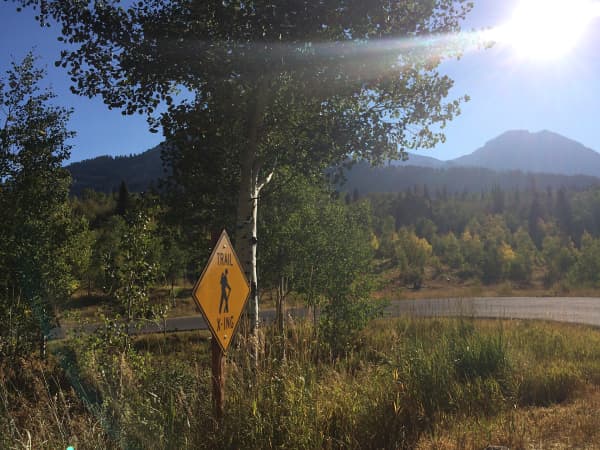
Logan's eastern exit is the trip's second act. Logan Canyon, a National Scenic Byway, runs about 41 miles from Logan toward Garden City, climbing to the summit above Bear Lake and following the Logan River the entire way up through limestone walls. Second Dam and the river pull-offs handle the picnic-and-fishing tier, and in late September the canyon's maple-and-aspen mix stages a fall color show that Cache Valley people quietly rank against anything the Wasatch offers. At the summit you can drop to Bear Lake, where the turquoise view from the overlook is the classic arrival. Getting there: US-89 east from Logan. Cost: Free to drive. Season: Year-round; late September for color. Logan Canyon Scenic Byway
11. Wind Cave Trail
The trail climbs about two miles from the canyon floor to a triple limestone arch, the "witches' castle," with the canyon unrolled below. Getting there: The signed trailhead in Logan Canyon. Cost: Free. Season: Spring through fall. AllTrails: Wind Cave Trail
12. Tony Grove Lake
Up a side road to over 8,000 feet, a glacial cirque lake where the Forest Service describes "an explosion of summer wildflowers during July and August," with a boardwalk, a picnic area and a nature trail around the water, plus fishing; backcountry trailheads leave from here too. There is no potable water at the site. Getting there: The Tony Grove road off the Logan Canyon byway. Cost: $7 per vehicle per day, $25 per week or $40 for the season, as listed in October 2026. Season: Summer and early fall, after the snow clears. Forest Service: Tony Grove Lake
13. Beaver Mountain
In winter, stop at Beaver Mountain, the ski hill near the top of the canyon that the same family has run since it opened in 1939, a deliberate throwback of short lines, cheap-by-2026-standards tickets and zero village pretension. As a learn-to-ski or family-day hill for a Utah Valley household priced out of the Cottonwoods, it is a smart two-hour play. Getting there: Off US-89 near the top of Logan Canyon. Cost: Lift tickets on the resort's site. Season: Winter. Beaver Mountain
14. Hyrum State Park
Hyrum's reservoir is the valley's local swim-and-paddle spot, at the south end of Cache Valley. Getting there: Hyrum. Cost: $15 per vehicle on weekdays and $20 on weekends and holidays, up to 8 people, $3 to walk or bike in, as listed in October 2026. Season: Summer for swimming; day use 6 a.m. to 10 p.m. Hyrum State Park fees
The valley beyond Logan
Cache Valley rewards ten extra minutes in any direction. Wellsville and Mendon sit under that steep range on the west side. Providence and Hyrum hold the valley's south end. North through Smithfield and Richmond, home of Black and White Days, a Holstein livestock show whose first edition was held in 1912, the farm-stand density increases until the road simply becomes Idaho. The valley also formalizes its dairy habit each spring with a cheese and dairy festival in Logan, worth aiming a trip at if the date lines up. Keep going north and you reach Preston, Idaho, where Napoleon Dynamite was filmed.
Birders know the valley for a different reason: the wetlands at its low points, and the marshes down the road toward the Great Salt Lake, sit on the Pacific Flyway, and spring and fall migrations turn the drive's margins into an event of their own.
Restaurant honesty for a college town: the scene is compact but real, with a downtown Indian standby that locals rate highly, burger-and-fries cafes, and a bakery culture that benefits from all that local butter. And the Sunday rule applies at full strength: Aggie Ice Cream, Gossner, Bluebird and the art museum all list Sunday as closed. Plan the dairy circuit for any other day of the week.
When to go, and the verdict
September and early October win outright: campus energy, canyon color, harvest stands, the heritage center's corn maze, festival crowds gone. Summer is the arts season and the full-menu version of the valley. Winter is Beaver Mountain, hot chocolate logistics, and a valley that looks beautiful under snow, inversions permitting. Spring is green, moody, and liable to snow on you in April.
The comparison question, Logan or Bear Lake, has a seasonal answer (the lake in high summer, Logan the rest of the year) and a better answer: they share a road, and the overnight that covers both is the strongest weekend in this series north of the Point of the Mountain. Do the dairy circuit and the canyon one day, the lake the next, and drive home understanding why Cache Valley people, alone among Utahns, feel gently sorry for the rest of us. If you are weighing a move rather than a visit, our Provo vs. Logan comparison covers the two college valleys side by side.
Sardine Canyon after dark, which the guidebooks skip
The drive up is the pretty part of this trip. The drive back, in the dark, is the part worth planning for, and Sardine Canyon is the reason.
The stretch of US-89/91 that carries you over the Wellsvilles into Cache Valley is fenced against wildlife, and has been for decades. That fencing is now the problem rather than the solution. UDOT's 2019 statewide study of wildlife-vehicle conflict hotspots notes that two wildlife culvert underpasses were built under this stretch in 1995, alongside miles of exclusion fence, and that one of them does not appear to be heavily used by deer; efforts since 2013 to keep mule deer off the right of way had only minimal success. The number worth carrying with you comes from the same study: even with the fence standing, US 91 from Brigham City to Sardine Summit ranked 11th among Utah's top 25 animal-vehicle crash hotspots. A fence that ranks eleventh is not doing the job the fence was built to do.
What that means in practice is narrow and useful. Animals do not enter the road evenly through the year. Utah's collision data clusters heavily in autumn and winter, when deer and elk are moving between summer range on the high ground and winter range lower down, and the Wellsville corridor sits across that movement. And a driver's ability to spot an animal at the shoulder drops sharply once the light goes.
Stack those two facts against how this day trip runs and the risk window is obvious. A Cache Valley day that ends with dinner in Logan puts you back in Sardine Canyon somewhere between dusk and full dark, in the months when the canyon is prettiest, which is to say September through November, exactly the fall-color window that makes the drive worth doing.
None of this is an argument against the trip. It is an argument for three specific, unglamorous adjustments. Drive the canyon at the posted limit rather than the prevailing one, because the entire value of a slower speed here is the extra second of reaction distance. Use high beams whenever there is no oncoming traffic, and scan the verges rather than the center line: eyeshine at the shoulder is the warning you get. And if an animal does step out, the standing advice from transport agencies is to brake hard and stay in your lane rather than swerve; the collisions that hurt people are disproportionately the ones where a driver leaves the roadway or crosses into oncoming traffic to avoid an animal that a straight-line stop would merely have struck.
One more piece of local mechanics. If you do hit something, or you pass a carcass on the shoulder, Utah has a reporting route for it: the state's Roadkill Reporter app, run jointly by the Division of Wildlife Resources and UDOT, exists so carcasses get cleared before they become the second hazard, and so the collision data improves. Reporting takes under a minute and is the single most useful thing a passing driver can do.
If the return leg worries you, the honest alternative is to make Logan an overnight rather than a long day, or to leave the valley before the light goes. Either beats the third option, which is arriving in Sardine Canyon at nine at night after a full day out and discovering how much of your attention the drive up had been quietly using.
Related Guides
- Provo vs Logan: Choosing Between Utah's Two College Valleys
- Dispersed Camping Near Provo: The Rules, The Roads & What Most Guides Get Wrong (2026)
- Heber Valley & Midway from Provo: The Day Trip Through the Canyon
- Moab from Provo: Planning the Drive, Arches and Canyonlands
- Zion and St. George from Provo: The Southern Utah Weekend
- Camping Near Provo: Best Campgrounds & Tips (2026)
- Capitol Reef from Provo: The Closest National Park Nobody Plans For
- The Heber Creeper: A Complete Guide to the Heber Valley Railroad
- Hot Springs Near Provo & Utah Valley (2026)
- The Lavender Farm in Mona: What to Know Before You Drive Down
- Best Day Trips from Provo, Utah (2026)
- Ogden From Provo: 25th Street, the Dinosaur Park and the Mountain Behind It All
Frequently Asked Questions
How far is Logan from Provo?
What is Aggie Ice Cream, and is it worth a two-hour drive?
What is squeaky cheese?
Is Logan Canyon worth driving if I'm not going to Bear Lake?
What is there to do in downtown Logan?
Is the Crumbl cookie company really from Logan?
When is the best time to visit Logan?
Logan or Bear Lake: if I only have one day, which drive wins?
Sources
The facts in this guide were checked against these sources. Hours, fees and rules change, so confirm anything time-sensitive with the source before you go. How we make Provo.com.
- Logan Canyon Scenic Byway, Federal Highway Administration (America's Byways). Checked October 12, 2026.
- Logan Canyon Scenic Byway - All Photos, Federal Highway Administration (America's Byways). Checked October 12, 2026.
- GeoSights: Wind Cave, Logan, Utah, Utah Geological Survey. Checked October 12, 2026.
- Fairgrounds & Event Center, Cache County. Checked October 12, 2026.
- Black & White Days, Richmond City. Checked October 12, 2026.
- Identification of Wildlife-Vehicle Conflict Hotspots in Utah (Report UT-19.27), Utah Department of Transportation. Checked October 12, 2026.
- Utah Roadkill Reporter, Utah Division of Wildlife Resources / UDOT. Checked October 12, 2026.
- Tony Grove Lake, USDA Forest Service, Uinta-Wasatch-Cache National Forest. Checked October 19, 2026.
- Hyrum State Park fees, Utah State Parks. Checked October 19, 2026.
- Nora Eccles Harrison Museum of Art, Utah State University. Checked October 19, 2026.
- Zootah at Willow Park: Zootah, Zootah at Willow Park. Checked October 19, 2026.
- American West Heritage Center. Checked October 19, 2026.
- Aggie Ice Cream, Utah State University. Checked October 12, 2026.
- History and Traditions, Utah State University. Checked October 12, 2026.
- Gossner Foods: History, Gossner Foods. Checked October 12, 2026.
- Ellen Eccles Theater, Utah Festival Opera & Musical Theater. Checked October 12, 2026.
- Utah Festival Opera & Musical Theater (home), Utah Festival Opera & Musical Theater. Checked October 12, 2026.
- Beaver Mountain Ski Resort, Beaver Mountain. Checked October 12, 2026.
- Wind Cave Trail, AllTrails. Checked October 12, 2026.
- Aggie Ice Cream, Gossner Foods, Bluebird Candy, Willow Park, American West Heritage Center, NEHMA and Logan Utah Temple listings, Google Places. Checked October 19, 2026.
- OSRM routing (OpenStreetMap data), drive estimates from Center St & University Ave, Provo, Project OSRM. Checked October 19, 2026.