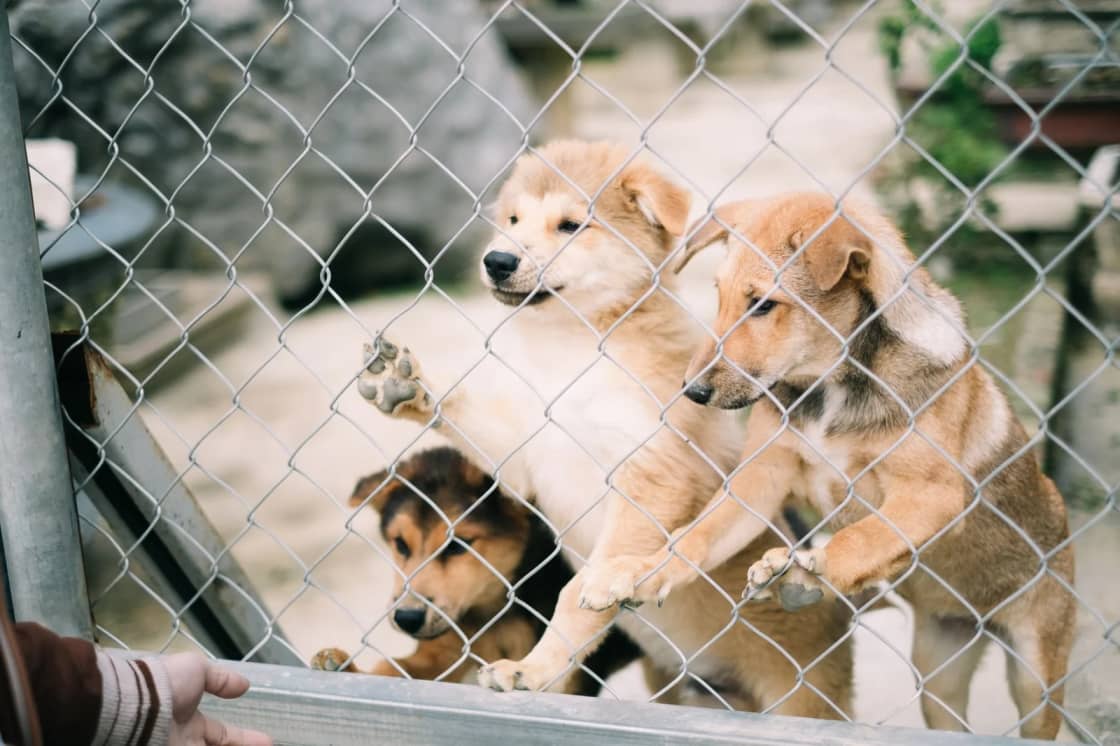

The first thing to know is that Utah County does not have a humane society.
People search for one constantly, and the reason is that "humane society" has become a generic phrase for "the animal shelter" in the way that people say hoover for vacuum cleaner. The Humane Society of Utah is a real and large organization, but it sits in Murray, in Salt Lake County, about 45 minutes up I-15 from Provo. It will adopt to you. It is not your local shelter, and it has no responsibility for an animal found in Utah County.
What Utah County has is two municipal shelters, several independent rescues, and a scheduling problem.
The two shelters, and the weekend problem
South Utah Valley Animal Shelter — 582 West 3000 North, Spanish Fork. 801-851-4080. This is the one that serves Provo, along with Springville, Mapleton, Spanish Fork, Payson, Salem, Santaquin, Elk Ridge, Genola, Goshen and Woodland Hills.
North Utah Valley Animal Services — 193 North 2000 West, Lindon. 801-785-3442. This covers Alpine, American Fork, Cedar Hills, Eagle Mountain, Highland, Lehi, Lindon, Orem, Pleasant Grove and Saratoga Springs.
Now the part that governs everything else: both are closed on Saturday and Sunday, and both also close for a stretch in the middle of Wednesday. Weekday hours run roughly from mid-morning to late afternoon.
Sit with that for a second, because it has consequences that nobody warns you about.
If your dog slips its collar on a Friday evening, the lobby is not available to you until Monday morning. If you find a stray on a Saturday, you cannot walk it in. If you have a full-time job with no flexibility, adopting requires taking time off work.
Hours do get adjusted, so ring before you drive rather than trusting any published schedule including this one. But plan around the weekend being closed, because it reliably is.
The practical workaround for an urgent situation is the non-emergency police line for the relevant city. Animal control officers are on a different roster from the shelter's front desk, and a lost or found animal is exactly the kind of call that line exists for. Our guide to reaching Provo police without calling 911 covers how that works.
Provo, incidentally, has its own Animal Control operation, but it is enforcement and response, not a shelter. Animals picked up in Provo go to Spanish Fork. Turning up at Center Street expecting kennels is a wasted trip.
Which building is my animal in?
Where the animal was found, not where you live.
That distinction matters more than it sounds, because Utah County's cities interlock in ways that are not obvious on the ground. A dog that gets out in north Provo and runs half a mile can be picked up in Orem, which puts it in Lindon rather than Spanish Fork. The Provo–Orem boundary is confusing even to people who have lived here for years.
So call both. Every time. It costs two phone calls, and skipping it is how a findable animal goes unfound.
Our guide to dog life in Provo covers the jurisdiction split in more detail, along with licensing and the off-leash rules.
The independent rescues work differently
Alongside the municipal shelters there are foster-based rescues, and they operate on a different model that suits some adopters much better.
All Paws Count, also known as Utah Valley Animal Rescue, is a rescue based in the Spanish Fork area. Animals are frequently placed with foster families rather than held in kennels, which means visits are by appointment rather than by walking in. That is not an obstacle so much as a different rhythm — you arrange a time, and you meet an animal that has been living in a house rather than a kennel run.
The trade-offs run both ways. A rescue can usually tell you far more about how an animal behaves around children, cats or stairs, because somebody has been living with it. Municipal shelters see more animals and turn them over faster, so if you want choice on a given afternoon, the shelter has more of it. Rescues often have stricter application processes and may decline placements the shelter would allow.
Neither is better. They are different instruments, and knowing which one you are dealing with prevents the frustration of showing up unannounced at a rescue or expecting a shelter to know an animal's full history.
What happens when you adopt
The sequence is fairly consistent.
You meet the animal. Both shelters have space to spend time with a dog away from the kennel, which matters — a dog's kennel behavior is often a poor guide to its behavior anywhere else. Barking, cowering and frantic energy in a kennel run are responses to the kennel run.
You fill in an application. Expect questions about your housing, whether you rent or own, other animals and household members.
You pay a fee, and this is where the question to ask is what does it include rather than how much is it. Specifically:
- Is the animal already spayed or neutered, or am I getting a voucher to arrange it later?
- Are vaccinations current, and which ones?
- Is there a microchip, and is it registered to me or still to the shelter?
A voucher is not the same as a completed surgery. It means an appointment you have to book, a clinic you have to reach, and a gap during which the animal is not sterilized. That is fine if you know about it and inconvenient if you assumed otherwise. Ask, and get the answer written down.
You take the animal home, usually the same day at a shelter and often not the same day at a rescue.
The hold period, and why the animal you saw is not available
Strays are not adoptable on arrival. There is a mandatory hold period during which the shelter keeps the animal so an owner can reclaim it, and the length varies depending on whether the animal arrived wearing identification.
This produces two situations that confuse people from opposite directions.
If you are adopting, an animal listed online may not be adoptable yet, and staff cannot promise it to you — if the owner appears, the owner gets it. That is the system working correctly.
If you are searching for a lost pet, the hold period is the clock you are racing, and it is shorter than most people expect. The instinct to wait a few days and see if the animal comes home is the wrong instinct. Go in person, early, and go to both shelters. Photographs on a website are taken under poor lighting by busy staff, and people routinely fail to recognize their own animal in them.
Before you adopt: the two things that undo adoptions here
Your lease. Utah Valley's rental market is heavily weighted toward student and family housing, and pet restrictions are common and strict. Breed restrictions, weight limits, pet rent, non-refundable pet deposits, and outright prohibitions all appear. Some complexes permit cats and not dogs. Some permit neither regardless of what a previous tenant had.
Get it in writing before you adopt, not after. Returning an animal because a lease says no is bad for the animal, bad for you, and entirely preventable. Our renters' rights guide covers what a landlord can and cannot impose.
Licensing. Provo requires dogs to be licensed, and the process is not run from where people assume. It is covered in our dog life guide, which is worth reading before the adoption rather than after, because it is the sort of small administrative task that gets forgotten for two years and then discovered at an inconvenient moment.
Cats are a different market from dogs
Almost every adoption guide is written about dogs, and the cat situation here is different.
Supply is seasonal. Cats breed on a warm-weather cycle, which means shelters and rescues across the valley run heavily overloaded with kittens from late spring through autumn and comparatively empty in late winter. If you want a kitten, summer is easy. If you want a settled adult cat, the shelter is a better bet in the colder months when it is not competing with a wave of litters.
Adult cats are also the animals most likely to be overlooked, and they are frequently the better match for the housing most people in this valley live in. A four-year-old cat has a personality you can assess in one visit. A kitten is a guess, plus six months of destruction.
The other cat-specific issue is indoor-outdoor expectations. Utah Valley has coyotes on the bench, busy arterial roads, and hot summers and cold winters. Shelters here will often ask about your intentions and some rescues will place only into indoor homes. That is not an arbitrary preference; it reflects what happens to outdoor cats in this particular geography.
Surrendering an animal, if that is why you are reading this
Sometimes the search that brings someone to a page like this is not about acquiring a pet.
Both municipal shelters accept owner surrenders, usually by appointment and usually with a fee, and the honest framing is that surrender is a legitimate option rather than a failure. An animal in a shelter has a route to another home. An animal abandoned somewhere frequently does not, and abandonment carries legal consequences.
Before surrendering, two things are worth trying, because they resolve a meaningful share of cases.
If the problem is money — a vet bill, a deposit, food — ask the shelter and the rescues what assistance exists before you assume there is none. Low-cost clinics and food assistance for pets both exist in the valley, and the people at the front desk know where.
If the problem is behavior, ask whether the issue is one a trainer addresses. A large proportion of surrendered dogs are surrendered for house-training failures, separation anxiety and leash reactivity, and all three are commonly fixable with help that costs less than most people expect.
If neither applies, surrender through the shelter and give them the honest history. Understating a behavior problem to get an animal accepted results in a failed placement later, which is worse for the animal than the truth would have been.
The first two weeks are not the animal
One thing shelter staff will tell you and adopters routinely forget: the animal you bring home is not the animal you will have.
A dog or cat coming out of a kennel has been through noise, confinement, strangers and often a period of being lost before that. The first days at your house are frequently either shut-down quiet or frantic, and neither is a reliable indication of temperament.
Give it time before drawing conclusions, keep the first week small and boring, and expect a house-trained dog to have accidents anyway while it works out where it lives. The animal that emerges after a few weeks of routine is usually noticeably different from the one that walked in — and adopters who return an animal in the first few days often return one that would have been fine.
If you cannot adopt but want to help
This is Provo, so a large share of the population is students in leases that forbid animals, on budgets that would not support a vet bill.
Fostering is the substantial version of helping. It is temporary, the rescue or shelter typically covers medical costs, and it directly creates capacity — a fostered animal frees a kennel.
Day outings are the low-commitment version. South Utah Valley Animal Shelter runs a program that lets approved volunteers take a dog out for a few hours. It is useful for the dog, which gets exercise and a break from kennel noise, and it requires no lease permission at all.
Volunteering as a dog walker or a cat socializer is the other route in, and the application process at both shelters is not onerous. Our volunteering guide covers the details of getting started at each.
A note on reviews before you pick a shelter
Both municipal shelters carry a large volume of public reviews, and they read very differently from one another. It is worth knowing why before you weigh them.
A municipal shelter is an open-admission facility. It cannot decline the animals that arrive, it operates on a city-funded budget, and it handles enforcement cases alongside adoptions. A foster-based rescue chooses its intake, sets its own capacity, and places animals from homes. Those are structurally different jobs, and they produce structurally different review profiles regardless of how well either is run.
Read reviews for concrete, checkable specifics — was a voucher honored, was a medical issue disclosed, did the hold period work as described — and discount the rest. The better question is the one you can ask at the desk: what does this fee include, and what do you know about this animal's history.
The short version
- No humane society in Utah County. The Humane Society of Utah is in Murray, in a different county.
- Provo is served by the Spanish Fork shelter, not by Provo Animal Control, which is enforcement only.
- Both shelters close Saturday and Sunday and part of Wednesday. Plan around it.
- Call both shelters for a lost animal — jurisdiction follows where it was found.
- Ask what the fee includes: spay/neuter done or vouchered, vaccinations, microchip registration.
- Strays have a hold period. Search early rather than waiting.
- Check your lease in writing first. A lease problem can force an adoption to be reversed.
- Cannot adopt? Foster, day-outing or volunteer — all three are real help.
The statutory clock: five business days, and what has to happen before anything else
Behind every shelter listing is a state statute governing how long an animal must be held, what may happen at the end of that period, and what a shelter must do before it does anything final. It is Utah Code Title 11, Chapter 46, and knowing the sequence changes how you read a listing — and how urgently to act if the animal on it is yours.
The hold. Utah Code § 11-46-103(1) requires each municipal or county animal
control officer to hold, or cause to be held at an animal shelter, any
unidentified or unclaimed stray animal and any other animal taken into custody, in
safe and humane custody, for a minimum of five business days after the time of
impound and before any final disposition. Business days, not calendar days — a
weekend and a holiday can stretch that materially, which cuts both ways for an
owner searching.
The record. (2) requires the shelter to maintain a record for each held
animal showing the date of impound, the date of disposition, and the method of
disposition, which may be placement in an adoptive home or other transfer, return
to the owner, placement in a community cat program, or euthanasia under Part 4.
The exception. (3) permits euthanasia before the five-working-day minimum
expires only to prevent unnecessary suffering due to serious injury or disease,
and only where it complies with written agency policies and procedures, local
ordinances, and Part 4.
Getting an animal back. (4) requires an impounded animal to be returned to
its owner on establishment of proof of ownership, compliance with applicable local
ordinances, and compliance with the sterilization Part.
The disposition provisions in Part 4 contain the step most people do not know
exists, and it is the reason rescue networks in this county work the way they do.
§ 11-46-403(3)(a) permits an animal shelter to euthanize an animal only after
the § 11-46-103 holding period has expired, and after notifying animal
shelters and animal rescue groups that have expressed an interest in receiving
animals at risk of euthanasia, and where no shelter or rescue group requests
transfer within two business days of that notice, and where none collects the
animal within two business days. § 11-46-403(2) frames the underlying condition:
euthanasia only where no reasonable alternatives are available and in accordance
with the Part.
That notification duty is why registering a rescue's interest with local shelters
matters, and why the practical window on an at-risk animal is longer than the
five-day figure suggests once a rescue is engaged. § 11-46-403(1) defines the
terms carefully: an animal organization includes both rescue groups and
shelters, an animal rescue group includes a private humane society or private
animal welfare organization, and animal shelter does not include those
private bodies — a distinction that matters when you are reading which
institution is subject to which duty.
Sterilization is the default on adoption, and the alternative is a deposit.
§ 11-46-203(1) bars a shelter from transferring an animal that has not been
sterilized, except under (2) or § 11-46-206. (2) permits transfer of an
unsterilized animal for adoption only where the shelter executes a written
agreement with the recipient stating the animal is not sterilized and the
recipient agrees to be responsible for ensuring sterilization within 30 days
if the animal is six months or older, or within 30 days after it reaches six
months if younger — and takes a sterilization deposit under § 11-46-204 on terms
forming part of that agreement. (3) allows the deposit to be waived for a
sponsor that is a 501(c)(3) non-profit providing proof of sterilization within
30 days. § 11-46-205 addresses failure to comply with the agreement, and
§ 11-46-206 covers when a deposit is required for redemption by the owner of an
impounded animal.
Two structural notes. § 11-46-208 provides that local ordinances may be no
less restrictive than the Part, so a city here may add requirements but may not
subtract them — which is why holding practices vary upward between jurisdictions
in this county. And Part 3, the Community Cat Act, at §§ 11-46-303 and
-304, provides for community cats and a permit process for community cat
colonies, which is the statutory basis for the trap-neuter-return work operating
locally.
If you are searching for a lost animal, the practical reading is: the clock is five business days from impound, the shelter is required to be keeping a dated record of the animal, and proof of ownership plus compliance with local ordinances and the sterilization requirement is what gets it back. If you are adopting, expect either a sterilized animal or a written agreement and a deposit — both are lawful, and the second is not a shortcut.
Related Guides
- Dog Parks & Pet Life in Provo — licensing, off-leash rules and which shelter covers your city
- Veterinarians in Utah Valley
- Dog Grooming in Provo
- Pet-Friendly Apartments in Provo
- Utah Renters' Rights
- Calling Provo Police Without Calling 911
- Volunteering in Utah Valley
- Yoga in Provo: Nobody Licenses Your Teacher, and the Studio May Owe You a Bond
- Printing, Copies & Custom Shirts in Provo: Who Does What, and Who Is Open Saturday
- Provo ZIP Codes, Explained: Why There Are Six and Only Three Are Places
- Phone & Computer Repair in Provo: Who Fixes What, and When Not To
- Dog Boarding and Daycare in Utah Valley: What to Ask Before You Leave the Dog
- Foster Care and Adoption in Utah County
Frequently Asked Questions
Is there a humane society in Utah County?
Which shelter serves Provo?
Are the shelters open at weekends?
What does adoption cost?
How long does a shelter hold a stray before it can be adopted?
Can I foster instead of adopting?
Does my rental allow a pet, and does the city require a license?
What should I do if I find a stray outside shelter hours?
Sources
The facts in this guide were checked against these sources. Hours, fees and rules change, so confirm anything time-sensitive with the source before you go. How we make Provo.com.
- Utah Code Title 11 Chapter 46, Utah State Legislature. Checked October 12, 2026.
- Animal Control, City of Orem. Checked October 12, 2026.
- Animal Control, Springville City Police. Checked October 12, 2026.
- Utah County Sheriff's Office Animal Services, Utah County Sheriff. Checked October 12, 2026.