
Most Olympic venues become monuments. Soldier Hollow became a tubing hill.
The site above Midway that hosted the biathlon and cross-country events of the 2002 Winter Games is now a place where families slide down 1,200 feet of snow on inner tubes, where border collies move sheep across an unfenced hillside every May, and where an e-bike rental counter operates in July. It also has the 2034 Games coming back to it, which means the "legacy venue" label is about to stop being retrospective.
It is 45 minutes from Provo through the canyon, and it is one of the more genuinely different days out available to Utah Valley. This guide covers what is there, what it costs, and the two things nearly every listing gets wrong.
Our Heber Valley and Midway guide is the parent article for the whole valley — the Homestead Crater, the Heber Creeper, where to eat, and the current status of the Ice Castles. This page goes deep on Soldier Hollow itself.
The name is older than the venue
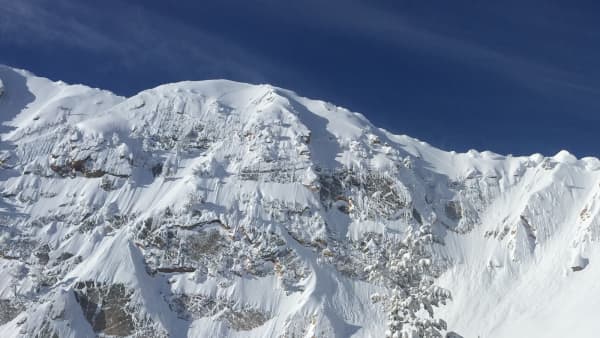
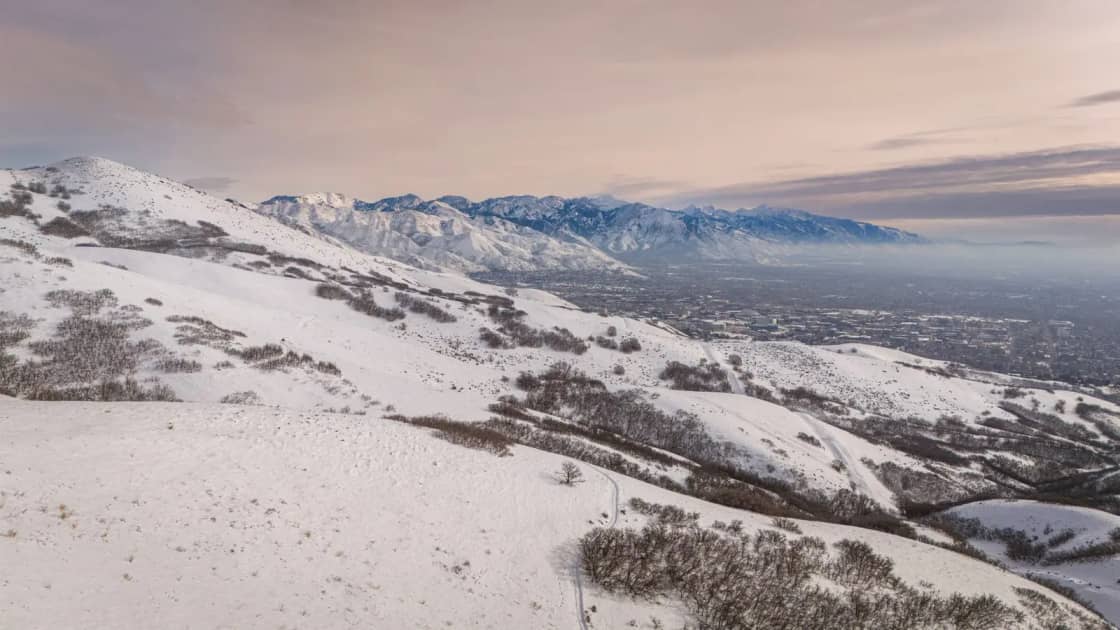
Soldier Hollow the sports venue sits at the mouth of Soldier Hollow the landform — a small hollow in the Wasatch Range that has carried the name on federal maps for a great deal longer than there has been a biathlon range here.
Where the hollow's own name came from is less settled than you would hope. One account traces it to nearby Soldier Springs, thought to have been used by US troops sent to Utah during the tensions of the Utah War in the late 1850s. Another has the hollow used by a party of Army surveyors in the same decade, and notes it was a Native American encampment before that. The soldiers are common to both versions; which soldiers is not.
What is clear is the direction of naming: the venue took its name from the hollow, not the other way around. Olympic organizers did not invent the phrase; they borrowed a feature name off a map.
What actually happened here in 2002
Soldier Hollow was built for the 2002 Salt Lake Games and hosted biathlon, cross-country skiing, and the cross-country half of Nordic combined. The ski-jumping half of Nordic combined took place at Utah Olympic Park up near Park City, which is why the two venues are often confused in the same sentence.
The venue was created essentially from scratch on state park land, and the numbers behind it are still visible when you stand there: a 419-foot vertical, a base around 5,463 feet and a top around 5,882, roughly 134 acres of skiable terrain, and a longest run — called, straightforwardly, Olympic — of about 3.1 miles.
It never stopped working. Soldier Hollow has continued to host serious competition, from the Biathlon Junior World Championships in 2022 to the cross-country events of the 2026 NCAA Skiing Championships in March. The Nordic Center's competition building was expanded and rebuilt in 2023, adding multi-purpose event space, indoor restrooms, larger spectator porches and lawn seating — the reason one long-running event had to skip a year, which we will come to.
And it is coming back. Soldier Hollow is on the official venue list for the 2034 Winter Olympics, again for biathlon and cross-country, as one of the sites being reused rather than newly built. The Games run in February 2034. Our Park City guide covers the full 2034 venue picture, including the fact that Provo itself is on the official list.
Why the tubing hill exists: the part nobody puts in a visitor guide
Here is the thing worth understanding before you buy a ticket, because it reframes the whole place.
Olympic venues usually rot. Bobsled tracks in former host cities sit in the weeds; ski jumps become hazards nobody will pay to demolish. Utah's did not, and the reason is a financial structure rather than good luck.
The 2002 Games finished in surplus. Utah had put in state money for venue construction before the bid — around $59 million — and the organizing committee repaid the state in full out of Games revenue. What was left seeded a Legacy Fund of roughly $76 million and created the non-profit Utah Olympic Legacy Foundation to own and run three sites: Utah Olympic Park, the Utah Olympic Oval, and Soldier Hollow. The idea was that earnings off the endowment would subsidize operations forever, because these facilities do not come close to breaking even on their own. One of the architects of the arrangement has described it as a deliberate break from how previous Games handled their venues, and the result speaks for itself: Utah's stayed open and busy while others closed.
The catch is that the arithmetic has not held. The endowment took damage in the 2008 crash, and inflation and energy costs have drained it faster in recent years. By 2024 the fund was reported to have fallen from its original $76 million to about $46 million, and a 2018 state audit had already put deferred repairs across the three venues at close to $40 million. The Foundation's chief executive has been blunt in public that the organization still lacks a financial model that works in perpetuity, and that hosting again is what makes the sums work — with a further infusion in the region of $130 to $160 million expected from the 2034 Games to re-endow the foundation.
So the tubing hill is not a novelty bolted onto a sports venue. It is the business model. Public recreation revenue, year-round, is a substantial part of what keeps an Olympic cross-country stadium groomed and staffed in a state of three million people. When you buy a two-hour session and slide down the hill four hundred times, you are, in a small and completely real way, paying to keep a 2034 venue alive.
Two footnotes for the record. Soldier Hollow came under the Foundation's operation in 2016, later than the other two venues. And the Foundation's own published figures put the 2002 surplus at $160 million in one place and $163 million in another — a reminder that even an organization writing about its own founding can carry two numbers for the same thing.
Tubing: the main event, and the price problem
For most visitors from Utah Valley, Soldier Hollow means the tubing hill, and it is the best one in the state by a clear margin.
The lanes run about 1,200 feet — described by the venue and by Utah's tourism office alike as the longest tubing lanes in Utah. A lift tows you and your tube back to the top, which is the entire difference between tubing as a pleasant afternoon and tubing as a two-hour stair workout. Sessions run about two hours. There is night tubing under the stadium lights, with a sound system, which is a genuinely good evening rather than a consolation prize.
Numbers on the hill are capped per session. That is deliberate — it is how the venue keeps lane waits short — and it is also why turning up unbooked on a Saturday in January is a poor plan.
Now the price question, which is where most write-ups fail.
Soldier Hollow uses variable pricing. The operator states plainly that ticket prices vary depending on the date and time of your visit, and that reserving a two-hour session in advance gets you the better rate. There is no single number to publish.
Meanwhile, state tourism pages have continued to print a fixed price list — a single-ride price, a two-hour price, a four-hour price — of the kind the venue no longer uses. We are not printing those figures, because reproducing them would be doing the same thing.
This is a pattern worth naming, since it keeps appearing in Utah Valley: an official host of information is not the same as a current source of it. A state tourism office is exactly the kind of site a reader trusts, and exactly the kind that updates on a slower cycle than the business it describes. Buy from the operator.
Practical notes: winter tubing is open to children aged three and up as well as adults, group sessions and buyouts exist outside public hours, and groups of twenty or more can qualify for a discount on weekday sessions Monday to Thursday — not on Fridays, weekends or holidays.
Night tubing exists. Night skiing does not.
Worth its own heading, because the lights are visibly on and the inference is natural.
Soldier Hollow lights the tubing lanes. It does not light the Nordic trails. There is no night skiing here. If your plan is an evening cross-country session under lights, this is not the place, and the glow you can see from the road is the tubing hill.
Cross-country skiing and biathlon
This is what the venue was built for, and it remains the best Nordic facility within reach of Utah Valley.
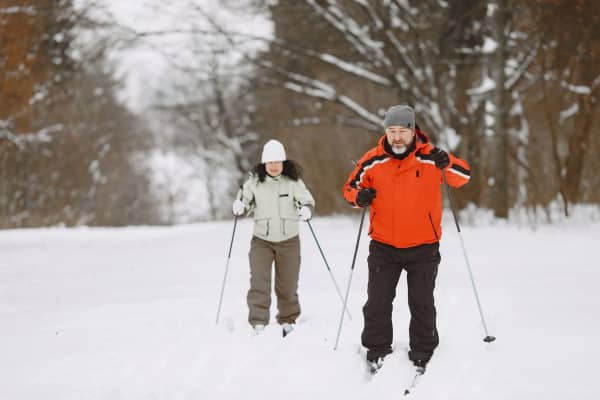
The trail network is groomed, extensive and genuinely varied, with beginner loops on the flat below the stadium and one section — laid out for the Olympic races — that is routinely described as among the toughest competitive cross-country terrain anywhere. Trail mileage is quoted inconsistently: some sources say 16 miles of cross-country trails, others 19, and we are not going to reconcile them. Snowmaking covers roughly 3.1 miles, which is what keeps the venue skiable in a thin year when the rest of the valley is not.
The Nordic Center runs lessons, clinics and rentals across beginner-to-performance gear, and there is a dedicated snowshoe trail. The season runs roughly mid-December to mid-March, weather permitting, and closing dates move — a poor snow year ends it early.
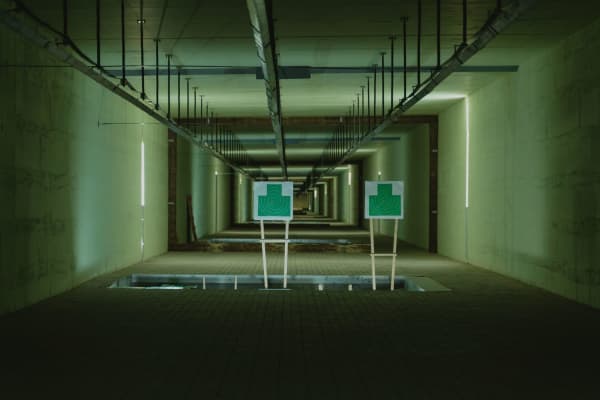
Biathlon is the unusual offering. Soldier Hollow runs biathlon activities year-round, which means you can try the thing you have only ever watched on television: ski hard, drop your heart rate, and shoot at targets fifty meters away. Very few places in North America let a member of the public do that on an Olympic range.
For everything closer to home, our winter activities guide covers Utah Valley's options, and skiing near Provo covers the downhill resorts.
The sheepdog championship, and the date that moved
This is the fact most Utah Valley guides still have wrong, including, until now, ours.
The Soldier Hollow Classic Sheepdog Championship and Festival was founded in 2003 by Mark Peterson of Park City. It has grown into one of the premier sheepdog trials in the world, drawing handlers from around nineteen countries. Sheep are set several hundred yards up the Olympic hillside; the handler works from a post at the bottom, sending the dog out and around, and the whole thing plays out across open, unfenced mountain terrain in full view of the stands. More than 300 Rambouillet sheep are worked over the weekend. It is far more gripping than a description of it can make it sound.
From 2003 through 2022 it ran over Labor Day weekend, at the same time as Swiss Days down in Midway, and the pairing became a fixture of how the valley's late-summer weekend was described.
Then it changed. The 2023 edition was canceled because of the construction at the Nordic Center. Organizers used the gap to make a move that had been under consideration for years, and from 2024 the event runs over Memorial Day weekend permanently. The reason given was heat: the competition manager pointed out that the final is a twenty-five-minute course and that recent Labor Day editions had run in temperatures over 100 degrees, which is hard on the sheep and hard on the dogs.
Recent dates: 24–27 May 2024, 23–26 May 2025, 22–25 May 2026. Trials run from about 8 a.m. daily, with preliminary rounds Friday through Sunday and the championship round on the Monday.
Attendance figures vary wildly by source — organizers' own press material has used "over 13,000", other write-ups say 15,000 and some go far higher — so treat any single number with suspicion.
The practical consequence: if you are planning a Labor Day weekend around Swiss Days and expecting to catch the sheepdogs on the same trip, that combination no longer exists. Swiss Days is still Labor Day weekend. The sheepdogs are in May.
Summer, and the rest of the year
Soldier Hollow is not a winter-only venue, which surprises people who have only been in January.
Summer brings mountain biking on the venue's terrain, e-bike rentals from the Nordic Center, hiking, horseback riding, and rollerskiing — Nordic skiers training on wheels on the same courses they race in February. The biathlon range operates through the warm months too.
The Nordic Yurt is the venue's most unusual booking: a half-mile snowshoe under a night sky to a private four-course dinner. It is not cheap and it is not a drop-in; book well ahead.
Golf. The 36-hole Soldier Hollow Golf Course — the Gold and Silver courses — opened in July 2004 just north of the sports venue, with Heber Valley and Mount Timpanogos as the backdrop. Wasatch Mountain State Park runs its own separate 36 holes, which puts 72 holes of public mountain golf in one small valley; our Heber Valley guide covers that, and the Utah Valley golf guide covers the courses on this side of the mountain.
The Courtland C. Nelson Day Lodge and the newer Sport Discovery Center are both bookable for weddings and gatherings, which is worth knowing if you are planning one — see our Utah Valley wedding venues guide for how it compares.
The park it sits inside
Soldier Hollow occupies the southeastern corner of Wasatch Mountain State Park, and the park is very much larger than its Olympic tenant. Established in 1961 and formally a state park from 1968, it covers around 21,592 acres rising directly behind Midway, and it is routinely described as Utah's most developed state park — more than half a million visits in a recent counted year.
The park adds campgrounds within walking distance of Midway's square, its own golf, an OHV network up Pine Canyon, and groomed snowmobile terrain. The seasonal road over to Cascade Springs leaves from here, which makes a loop back to Utah Valley possible in summer.
Planning an actual visit
Book before you drive. This is the single most useful instruction on the page. Tubing sessions are capped and priced by date and time, trail passes, rentals and lessons are all sold through the operator's site, and the Nordic Yurt dinner needs booking well in advance. A 45-minute canyon drive to be told the session is full is a bad afternoon.
Dress for standing around, not for sledding. Tubing is two hours of mostly being outdoors at altitude in the wind, moving slowly in a lift queue. Waterproof outer layers, proper gloves and a hat matter more than they would at a valley sledding hill. Snow boots rather than trainers.
Winter driving is the real variable. US-189 through Provo Canyon is maintained and generally fine, but it is a canyon road in winter and it closes or slows in a serious storm. Check UDOT conditions before an evening session, and remember Utah's winter tire requirements can apply on canyon routes.
Combine it properly. The Homestead Crater in Midway — a hot spring inside a limestone dome — is fifteen minutes away and is the natural pairing with a cold morning outdoors. Midway and Heber have the food. Our Heber Valley guide has the full itinerary, including the current position on the Ice Castles, which did not operate in the 2025-26 season and have not announced a Utah return.
Cheaper alternatives exist and are closer. If the drive or the ticket is the obstacle, our winter activities guide covers free sledding hills and cheap skating in Utah Valley, and cheap date ideas covers the low-cost end generally. Soldier Hollow is worth what it costs; it is not the only option.
Getting there, and one piece of trivia worth having
From Provo, take US-189 east through Provo Canyon, past Bridal Veil Falls and Deer Creek Reservoir, toward Heber. Cross to Midway on SR-113, then follow it about two miles and turn onto Tate Lane just before the railroad tracks; the venue is signed from there. Allow about 45 minutes without traffic.
Those railroad tracks are the trivia. The Heber Valley Railroad established a Soldier Hollow station in 2002, specifically to move spectators to the Olympic venue. A heritage tourist railway built a station for a Winter Games — and it is still on the line, in the narrow gap between two state parks.
The short version
Forty-five minutes from Provo. The longest tubing lanes in Utah with a lift back up, on variable pricing you should book in advance. Night tubing, no night skiing. Real Nordic trails with lessons, rentals and a public biathlon range. Sheepdogs in May, not September. And an Olympic venue that gets to be an Olympic venue again in 2034.
Related Guides
- Shooting Ranges in Utah Valley: Where the Public Can Actually Shoot, and What to Bring
- Horseback Riding in Utah Valley: Where to Ride, What It's Actually Like, and Who Takes Beginners
- Skate Parks in Utah Valley: Fort Utah, Orem, and Where Else to Actually Skate
- RV Parks & Hookups Around Provo: How Camping With a Rig Actually Works Here
- Steamboats, Carp and the June Sucker: Utah Lake's Strange History
- Utah 2034: What the Olympics Bring to Utah Valley
- Cross-Country Skiing Near Provo
- Utah Olympic Park From Provo: The Summer Playground That Is Also a 2034 Venue
- The Heber Valley Cowboy Poetry Gathering: what it was, and why it stopped
- The Soldier Hollow Classic: how to actually watch a sheepdog trial
Frequently Asked Questions
How far is Soldier Hollow from Provo?
How much does tubing at Soldier Hollow cost?
How long are the Soldier Hollow tubing lanes?
Can you ski at night at Soldier Hollow?
What did Soldier Hollow host in the 2002 Winter Olympics?
Is Soldier Hollow part of the 2034 Winter Olympics?
When is the Soldier Hollow Classic sheepdog championship?
Do you need a state park pass to visit Soldier Hollow?