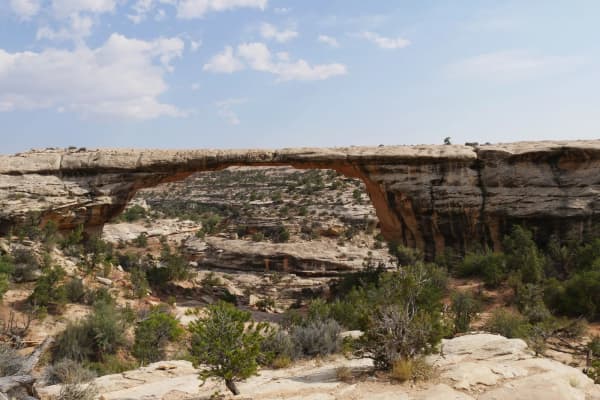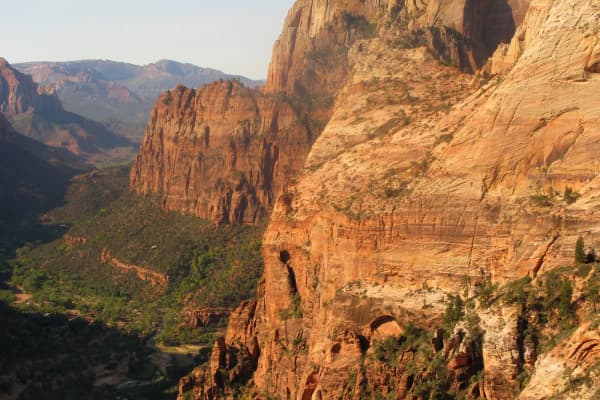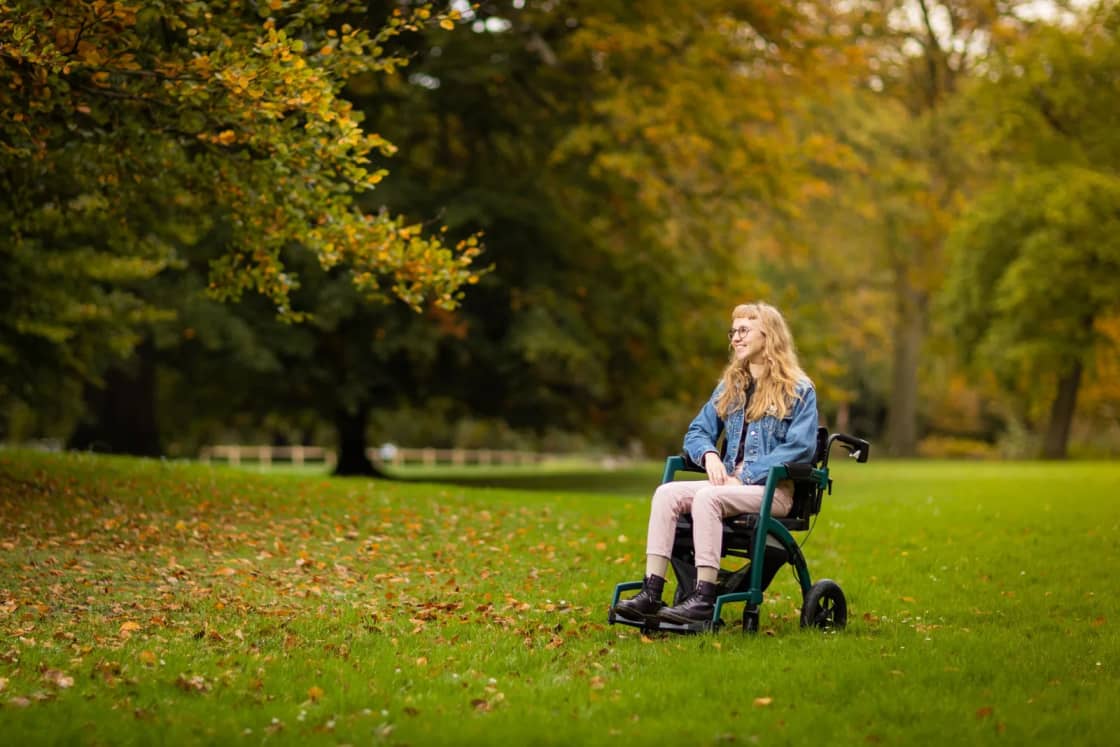
Utah's national parks are known for long hikes and slickrock scrambles, but each one also has places a wheelchair user can reach, from paved rim viewpoints at Bryce to a wheelchair-accessible shuttle in Zion. The details are scattered across the parks' accessibility pages, so this guide collects them park by park, with drive times from Provo. Conditions change with weather and construction, so call the park before a trip. For getting around Utah Valley itself, see our wheelchair guide to Utah Valley.
Quick facts
| Park | From Provo | Highlights the Park Service lists |
|---|---|---|
| Bryce Canyon | About 4 hr 5 min | Paved Sunset Point, Bryce Point and Paria View; all-terrain wheelchair loan; two accessible campsites |
| Zion | About 4 hr 35 min to Zion Canyon | Pa'rus Trail and Riverside Walk at your discretion; all shuttle buses wheelchair accessible |
| Arches | About 3 hr 45 min | Paved picnic areas; first 100 yards of the Windows trail barrier-free; all-terrain wheelchair loan |
| Canyonlands | About 4 hr 10 min to Island in the Sky | Buck Canyon, Green River and Grand View overlooks; Wooden Shoe Overlook in the Needles |
| Capitol Reef | About 3 hr 35 min | Petroglyph boardwalks; Fruita Schoolhouse; four accessible campsites |
Drive times are OpenStreetMap (OSRM) routing estimates from downtown Provo to each visitor center, from our driving-times guide.
Bryce Canyon
Bryce's accessibility page lists:
- Sunset Point is "a full-service viewpoint featuring accessible restrooms with flushing toilets," with short paved trails to the overlook, and "paved trails continue for another half mile along the rim."
- Bryce Point "is accessible via 150 feet of paved trail with a slight decline toward the view point."
- Paria View has a "paved and slightly sloping trail" from the parking lot down to the final overlook.
- Other viewpoints: "There are several other paved viewpoints with accessible parking throughout" the park.
- The Shared Use Path is paved from outside the park to the visitor center; manual wheelchair users "may require assistance on some sections."
The visitor center lends an all-terrain wheelchair, and ranger programs have wheelchair-accessible astronomy binoculars. In Sunset Campground, "Sites 223 and 224 of Loop A" are reserved for visitors with mobility impairments, with pull-through access, across from a fully accessible restroom. The park notes that not every overlook is reached by its shuttle. Our Bryce guide covers the drive.
Zion
Zion is direct about its limits: "none of Zion's trails are considered ADA accessible by law." It lists two as wheelchair-friendly "at the visitor's own discretion":
- The Pa'rus Trail, from the Zion Canyon Visitor Center along the Virgin River.
- The Riverside Walk, from the Temple of Sinawava along the river toward the Narrows.
"All buses are wheelchair accessible," the park says of its shuttle, which is how most visitors reach the canyon in season, and several campsites are designated for people with accessibility needs. Our Zion shuttle guide explains how the shuttle works.
Arches
"Only a few trails have paved sections," Arches says, but many arches are "visible from the road." What it lists:
- Paved picnic areas near Balanced Rock, Panorama Point and Devils Garden.
- The Windows: "The first 100 yards of the trail is barrier free"; beyond that, "Surfaces are rocky and uneven."
- Campsites: At Devils Garden Campground, "Site 4H is held for people with disabilities and is available first-come, first-served," and "Site 7 is available for reservation up to six months in advance." Both are mostly paved, with a dirt tent pad.
- All-terrain wheelchair: The visitor center lends one that "is non-motorized and requires an assistant/operator to push the chair." It is first-come, first-served for single-day use, both the user and the assistant sign a waiver, one of them shows ID and proof of insurance, and a ranger gives a short training. The park cannot store personal wheelchairs.
Before you go, check whether the park needs a reservation for your dates; our Arches entry guide explains how.
Canyonlands
"Of the park's districts, Island in the Sky is the most accessible," the park says. Its wheelchair-accessible overlooks are Buck Canyon, Green River and Grand View Point, and one Island in the Sky campsite is reserved for people with disabilities, paved except for a dirt tent pad.
In the Needles, Wooden Shoe Overlook is accessible, but "all trails in The Needles district have rocky, uneven surfaces, steep slopes, and some drop-offs." Two Needles campsites serve visitors with disabilities: one is always reserved, and the other is held until 8 p.m.
Capitol Reef
- Visitor center: "The visitor center is accessible to wheelchair users," with a ramped entrance, reserved parking and accessible restrooms.
- Petroglyphs: "Two wooden boardwalks provide access to petroglyph panels along Utah Highway 24."
- Fruita: The Fruita Schoolhouse and the Merin-Smith Implement Shed are accessible, and part of the Fremont River Trail near Fruita Campground is wheelchair-accessible.
- Overlooks: "Many scenic overlooks and wayside exhibits are accessible to wheelchair users."
- Campsites: "The Fruita Campground has four campsites that are fully accessible by wheelchair," reservable up to six months ahead on Recreation.gov.
Capitol Reef has no cell service or fuel; see our gas gaps guide.
The free Access Pass
The America the Beautiful Access Pass "is available free for US citizens or residents with permanent disabilities," of any age, the Park Service says. The disability "does not have to be a 100% disability" but must "severely limit one or more major life activities." You need a photo ID plus one of:
- A signed letter from a licensed physician describing the permanent disability and its limits.
- A document from a federal agency, such as the Department of Veterans Affairs, showing entitlement to disability benefits.
- A document from a state agency, such as Vocational Rehabilitation, showing eligibility for disability-related benefits.
Get it in person at a federal recreation site, which the Park Service recommends; by mail through the USGS Online Store, which can take up to three weeks; or as a digital pass through Recreation.gov. Our national park passes guide covers what the passes include.
Related reading
- Getting around Utah Valley in a wheelchair
- Utah's national parks from Provo, ranked
- Utah national park passes explained
- A Utah road trip with kids: how to pace the drive
Frequently Asked Questions
Which Utah national park is most wheelchair accessible?
Are any trails in Zion wheelchair accessible?
Can you borrow an all-terrain wheelchair in Utah's national parks?
Are there accessible campsites in Utah's national parks?
Is there a free national park pass for people with disabilities?
Sources
The facts in this guide were checked against these sources. Hours, fees and rules change, so confirm anything time-sensitive with the source before you go. How we make Provo.com.
- National Park Service, Bryce Canyon: Accessibility, National Park Service, Bryce Canyon. Checked November 27, 2026.
- National Park Service, Zion: Accessibility, National Park Service, Zion. Checked November 27, 2026.
- Physical / Mobility Needs, National Park Service, Arches. Checked November 27, 2026.
- National Park Service, Canyonlands: Accessibility, National Park Service, Canyonlands. Checked November 27, 2026.
- Physical / Mobility Accessibility, National Park Service, Canyonlands. Checked November 27, 2026.
- National Park Service, Capitol Reef: Accessibility, National Park Service, Capitol Reef. Checked November 27, 2026.
- America the Beautiful Access Pass, National Park Service. Checked November 27, 2026.
- OSRM routing (OpenStreetMap), Project OSRM. Checked November 27, 2026.