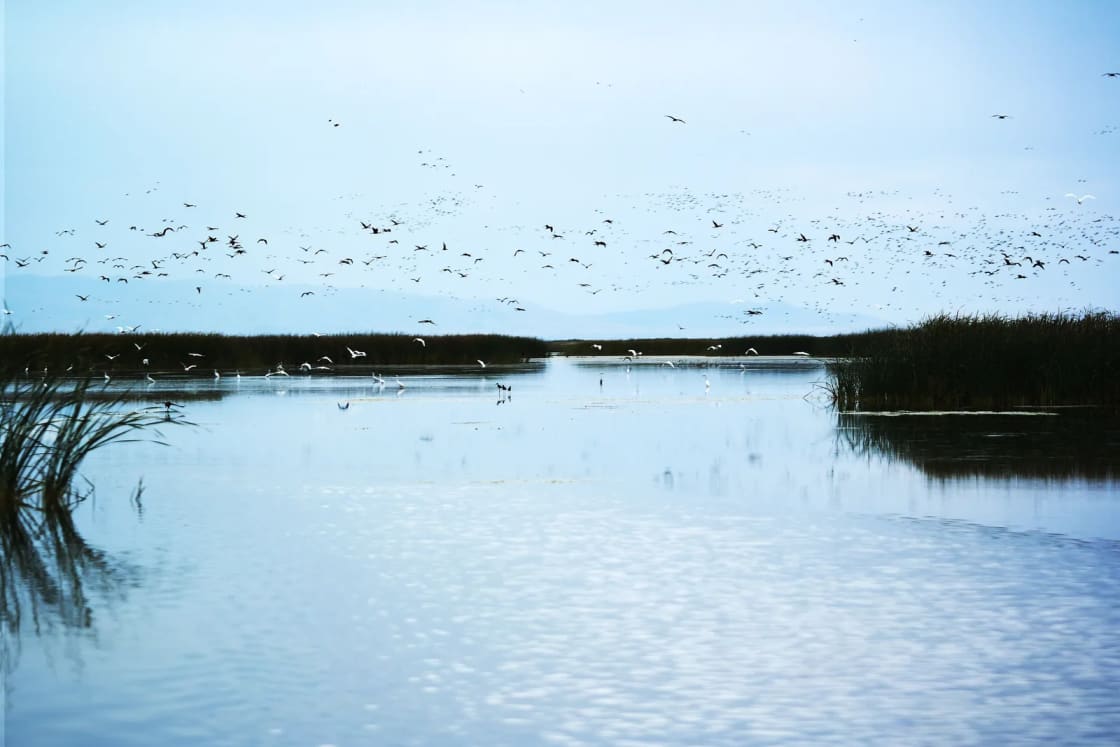
The Great Salt Lake's wetlands are a major staging area for migrating waterfowl and shorebirds, Visit Utah says, and millions of birds stop at the Bear River refuge alone. That makes birding here a calendar more than a list: the same refuge can be quiet in July and full of swans in March. This guide lays out where to go in each season, from the Utah Division of Wildlife Resources and Visit Utah, with drive times from Provo. For the birding next door, see our guide to Utah Lake and the Provo River Delta.
Quick facts
| Season | Where | What | From Provo |
|---|---|---|---|
| Winter | Statewide; Gunnison Bend Reservoir | Bald eagles; Snow Goose Festival in February | Varies |
| March | Bear River refuge, Salt Creek WMA, Eccles Center | Swans | About 2 hr to Bear River |
| Spring | Bear River, Farmington Bay, Fish Springs, Utah Lake | Shorebirds, waterfowl, loons | About 1 hr 15 min to the Eccles Center |
| May | Davis County | Great Salt Lake Bird Festival | About 1 hr |
| Summer | Uintas, Eccles Center | Mountain songbirds; nesting marsh birds | Varies |
| Fall | Fish Springs, Bear River | Migrants; swans in November | About 4 hr to Fish Springs |
Drive times are OpenStreetMap routing estimates from downtown Provo without traffic.
Winter: eagles and snow geese
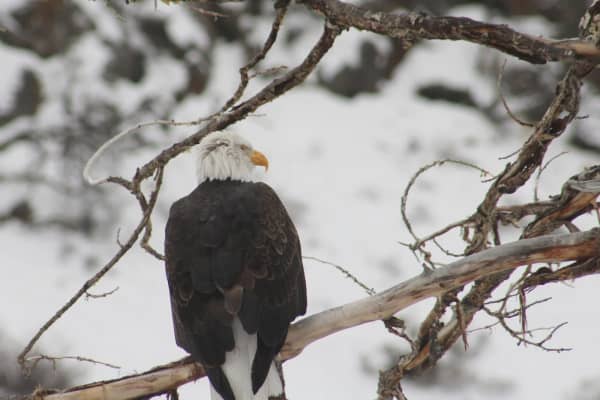
Visit Utah lists February as Bald Eagle Month statewide and the Snow Goose Festival at Gunnison Bend Reservoir, in Millard County, in February. Our bald eagles guide covers where to look, and the Scott M. Matheson Wetlands Preserve near Moab, with 225 recorded species on 875 acres, is at its best during migration and in winter, Visit Utah says.
March: the swans
Tundra and trumpeter swans both migrate through Utah, and spring viewing usually peaks in March, the DWR says. It names three places:
- Bear River Migratory Bird Refuge, where you "could see thousands of swans" along the 12-mile auto tour, about 12 miles west of Brigham City. See our Bear River refuge guide.
- Salt Creek Waterfowl Management Area, about 12 miles northwest of Corinne, from Compton's Knoll or two blinds below it. Stay behind closed gates.
- The Eccles Wildlife Education Center at Farmington Bay, where swans are sometimes seen. The WMA is closed to vehicles from March 1 into September, but the center's trails are open dawn to dusk.
Tundra swans have a small yellow spot near the eye; trumpeters are bigger, with wingspans over 8 feet, and lack it.
Spring: the big migration
Spring is the peak. The DWR's 2026 list of spring sites, by region:
- Northern Utah. Bear River's 12-mile auto tour, open sunrise to sunset daily; Farmington Bay WMA and the Eccles Center, where more than 300 species pass through each spring and fall; the Great Salt Lake Shorelands Preserve, between Farmington Bay and the Antelope Island Causeway, which feeds "tens of thousands" of migrants; and Antelope Island, for shorebirds and burrowing owls. Common loons stop at East Canyon, Hyrum, Echo and Pineview reservoirs on their way north.
- Central Utah. Fish Springs National Wildlife Refuge, "arguably one of the best places to see birds in Utah," the DWR says; and, closer to home, Utah Lake State Park, the airport dike road and the Provo River Delta, where ducklings and goslings show up from late April through May. The Provo River, Spanish Fork River, Hobble Creek and Jordan River trails carry migrants too.
- Northeastern Utah. Ouray National Wildlife Refuge's 9-mile auto tour and observation tower; Pelican Lake; Red Canyon Overlook near Flaming Gorge for high-elevation birds; and Matt Warner Reservoir, where pelicans are often seen in spring.
- Southern Utah. Mill Creek and the Matheson Preserve near Moab, and, near St. George, the Lytle Nature Preserve, Tonaquint Nature Center, Quail Creek and Sand Hollow state parks, plus Jackson Flat Reservoir in Kanab.
The festival. The Great Salt Lake Bird Festival is in May in Davis County. The 28th festival ran May 14 to 17, 2026, with field trips, some led by DWR biologists on waterfowl management areas, workshops, family events and a vendor fair; register ahead. In 2026, World Migratory Bird Day brought a free event to the Eccles Center on May 9.
Summer: the mountains and the marsh nests
When the marshes quiet down, go up. Visit Utah points to the Mirror Lake Scenic Byway in the Uintas, from Kamas, for wrens, bluebirds, warblers, hummingbirds, sparrows, thrushes, American pipits and Townsend's solitaires; see our Mirror Lake Highway guide. Down at Farmington Bay, the Eccles Center is best in summer, when birds feed and nest in the surrounding wetlands, Visit Utah says. Some areas close seasonally for nesting.
Fall: the return trip
Fall migration runs through the same places. Visit Utah gives late September, along with mid-spring, as the best time at Fish Springs, a 17,992-acre refuge fed by five major springs on the edge of the Great Salt Lake Desert and about 145 miles and four hours from Provo by routing estimate. Swans come back through in early to mid-November, the DWR says, and Bear River's auto tour is the place to see them.
Tips
Go early: about 6 to 9 a.m., "when birds are most vocal and active," the DWR says. Bring binoculars, or a spotting scope at Salt Creek, and a field guide or an app such as eBird or Merlin. Respect closed gates and seasonal nesting closures.
Related reading
- Bear River Migratory Bird Refuge
- Bird-watching at Utah Lake and the Provo River Delta
- Where to see bald eagles in Utah in winter
- Antelope Island from Provo
Frequently Asked Questions
When is the best time for birding in Utah?
Where is the best birding in Utah?
When do swans migrate through Utah?
When is the Great Salt Lake Bird Festival?
How many bird species are in Utah?
What time of day is best for bird-watching?
Sources
The facts in this guide were checked against these sources. Hours, fees and rules change, so confirm anything time-sensitive with the source before you go. How we make Provo.com.
- Where to celebrate World Migratory Bird Day and other places to bird-watch this spring, Utah Division of Wildlife Resources. Checked November 27, 2026.
- 3 places you can see swans migrating through Utah in March, Utah Division of Wildlife Resources. Checked November 27, 2026.
- Visit Utah: Birding, Visit Utah. Checked November 27, 2026.