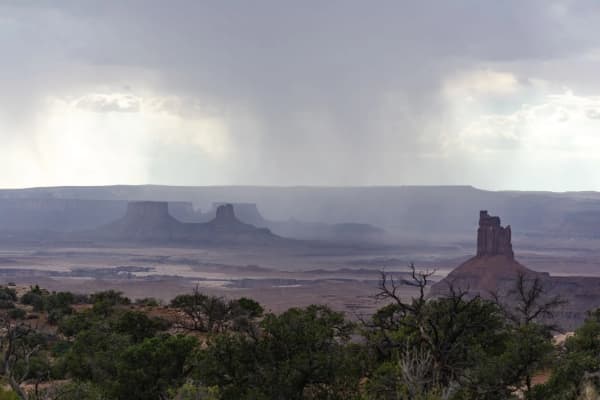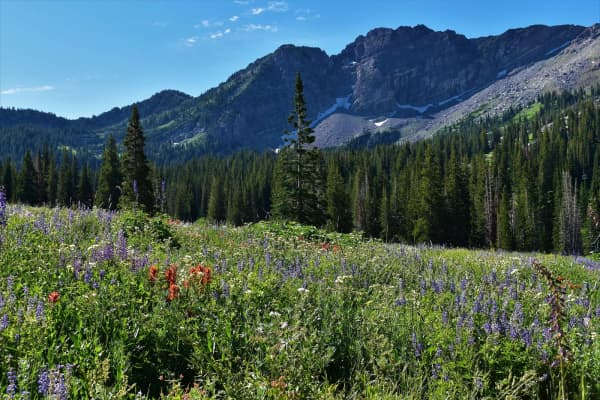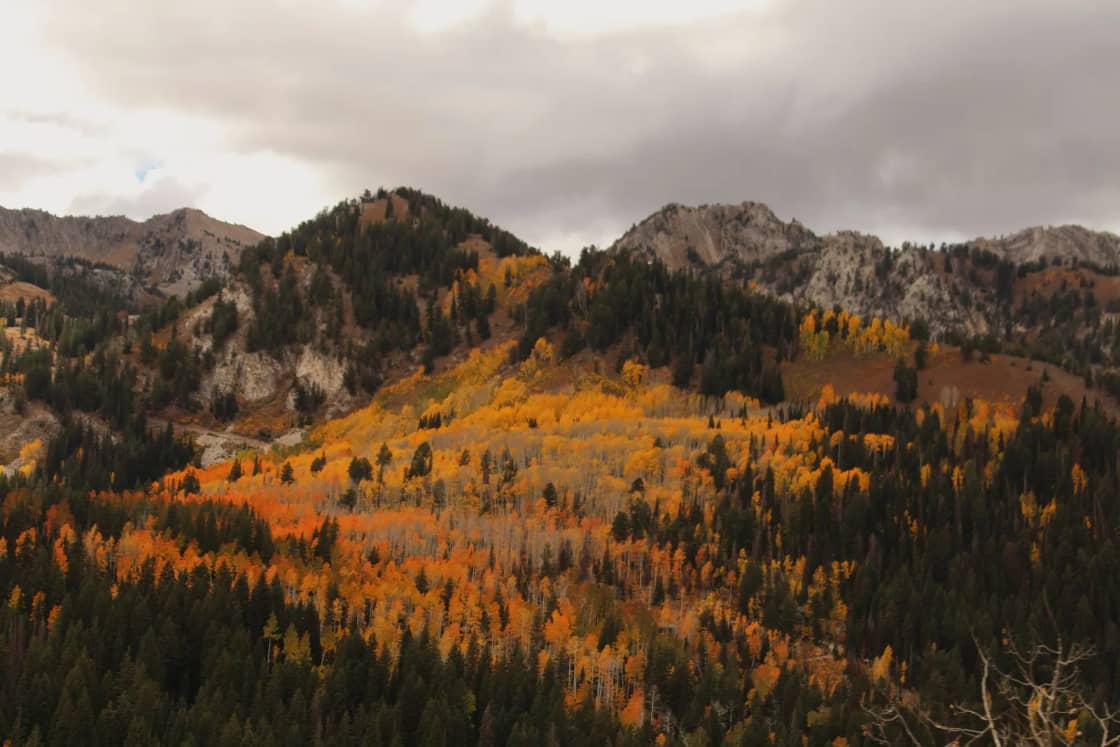
Utah's fall color doesn't arrive all at once. It starts in the high aspen country in mid-September and works its way down the mountains for about seven weeks, reaching the cottonwoods in Zion Canyon by early November. This guide shows how the timing works across the state, which trees turn which colors, and how to plan a fall drive in each region, using information from Visit Utah, the National Park Service and Utah State University Extension. For color close to home, see Fall in Provo.
Quick facts
| Question | Answer | Source |
|---|---|---|
| Start | Highest elevations, mid-September | Visit Utah |
| Most places | Wrap up in early October | Visit Utah |
| Zion Canyon | End of October and early November | National Park Service |
| Trigger | Shortening days, with cooling temperatures | USU Extension |
| Brightest years | Enough moisture all season, then sunny days and cool nights | USU Extension |
| Top tree, northern Utah | Canyon (bigtooth) maple | USU Extension |
| Stopping in national forests | Recreation pass required | Uinta-Wasatch-Cache National Forest, via KPCW |
How the timing works
"The shortened day length is the internal trigger that causes leaves to change color," writes JayDee Gunnell, a Utah State University Extension horticulturist. As the days shorten, the green chlorophyll in the leaves breaks down and isn't replaced. The yellow and orange pigments were there all along and show through, which is what aspen do. Red and purple come from anthocyanins, which the leaves make mainly in fall, so those colors vary more from year to year.
In Utah, elevation sets the order. Colors appear "first at the highest elevations and gradually move down," the Park Service says. Visit Utah says the best color usually "begins in the highest elevations in mid-September" and wraps up in early October in most places, and it notes that because forests sit at different elevations and get different rain, the state has "a multitude of peak viewing times." That spread is what lets you chase color from September into November.
Which trees, at which elevations
From Utah State University Extension forester Mike Kuhns' guide to Utah fall color:
| Tree | Color | Where |
|---|---|---|
| Canyon or bigtooth maple | "Brilliant orange-red" | Lower mountain slopes to mid elevations; "the top provider of fall color in northern Utah" |
| Gambel (scrub) oak | Orange to red-orange, sometimes red-brown | Low foothills to mid elevations; not north of southern Cache and Box Elder counties |
| Quaking aspen | Bright yellow, sometimes orange or orange-red | Dense stands at high elevations |
| Serviceberry | Yellow, red and purple | Mountains across most of the state |
| Douglas hawthorn | Red, orange or yellow, sometimes all three | Mountains across most of the state |
| River birch | Muted gold | Along mountain streams |
Aspen groves often turn as blocks of one color. That's because "the aspen trees of a particular clone will change color at the same time because they are genetically related," the Forest Service says, so a hillside of several clones turns in patches.
What weather does
"Colors are most vibrant when plants have had adequate moisture throughout the season," Gunnell writes, followed by sunny autumn days and cool nights; drier summers can make foliage less bright. In September 2026, FOX 13 reported that experts expected drought to dull that year's color, though the higher canyons were still expected to do well. Axios' advice for the Wasatch: after late September, "it's most important just to get there before the leaves turn brown or blow away."
Region by region
The timing below follows the pattern the sources describe: high and northern first, low and southern last. The windows in the headings are our reading of those sources, not official forecasts, and exact weeks change every year, so check recent photos or reports before a long drive.
Wasatch and Utah Valley: late September to early October
The Wasatch is where most of the state looks first. Axios, using an online fall foliage forecast, said in 2024 that leaves in the Wasatch begin to turn in mid-September and usually peak around the last weekend of September and the first of October. Close to Provo, the Alpine Loop and the Nebo Loop Scenic Byway are the classic drives; Visit Utah lists the Nebo Loop for its high-elevation color. Both close for winter: the Alpine Loop closed for 2026 on Nov. 2. In the Wasatch Back, Guardsman Pass and the Mirror Lake Highway draw the same crowds, KPCW reported. Lower slopes follow the same top-down pattern, so foothill maples can still be bright after the high aspen have dropped.
Northern Utah: late September to mid-October
Logan Canyon is the famous one; USU Extension says many people visit each fall for its canyon maples, and Visit Utah recommends the Jardine Juniper Trail, which passes through aspen. Logan is about 2 hours 20 minutes from Provo; see our Logan and Cache Valley guide. Visit Utah also lists Ogden Valley, Bear Lake and Scofield State Park.
Central Utah: late September to mid-October
Fish Lake, above 8,800 feet, is in Visit Utah's list, and the Pando aspen clone, a mile from the lake, is at its best when the leaves turn gold. It is just under three hours from Provo; see our Fish Lake and Pando guide. Axios suggested Pando and the La Sals for mid-October, saying southern Utah's mountains run "about a week behind the Wasatch."
Southern Utah high country: early to mid-October
Visit Utah lists Scenic Byway 12 and the Burr Trail among its fall drives. Byway 12 crosses Boulder Mountain at about 9,600 feet between Boulder and Torrey; see our Scenic Byway 12 guide.
Southern Utah canyons: late October to early November
The red-rock canyons are last. In Zion, color reaches the canyon floor "at the end of October and early November," the Park Service says. That makes Zion a good late-season trip after the northern mountains are bare; it is about 4 hours 35 minutes from Provo. See our Zion and St. George guide.
Before you go
- Go on a weekday. UDOT advises weekday trips to avoid fall weekend crowds on mountain roads.
- Stop only where it's allowed. "Stopping is only allowed in designated parking areas," KPCW reported, and cars parked elsewhere can be ticketed or towed. Use turnouts for photos.
- Carry a pass if you'll stop. Driving through the Uinta-Wasatch-Cache National Forest is free, but a recreation pass is required to stop, forest officials told KPCW.
- Check the car and the weather. UDOT recommends checking brakes, tires and cooling systems and planning for the weather.
- Check closures. Seasonal roads like the Alpine Loop, Guardsman Pass and the Nebo Loop close for winter; UDOT's seasonal roads page lists them.
Related reading
- Fall in Provo
- The Alpine Loop scenic drive
- The Nebo Loop Scenic Byway
- Utah photography calendar
- Utah wildflower calendar, desert to alpine
Frequently Asked Questions
When do Utah's fall colors peak?
Why do leaves turn earlier in the mountains?
Which Utah trees have the best fall color?
Does drought affect Utah's fall colors?
Do you need a pass to see fall colors in Utah's canyons?
When are fall colors in Zion?
Sources
The facts in this guide were checked against these sources. Hours, fees and rules change, so confirm anything time-sensitive with the source before you go. How we make Provo.com.
- Visit Utah: Fall Foliage, Visit Utah. Checked November 27, 2026.
- Spring, Summer, Fall, and Winter, National Park Service, Zion. Checked November 27, 2026.
- Fall Color in Utah, Utah State University Extension Forestry (Mike Kuhns). Checked November 27, 2026.
- Ask an Expert: What Causes Autumn Leaves to Change Color?, Utah State University Extension (JayDee Gunnell). Checked November 27, 2026.
- Aspen fall colors, U.S. Forest Service. Checked November 27, 2026.
- UDOT warns of mountain traffic as fall colors peak in Wasatch Back, KPCW. Checked November 27, 2026.
- Fall colors are starting to pop: what kind of season will Utah get, FOX 13. Checked November 27, 2026.
- Fall colors 2024 map: When and where to see Utah's best foliage, Axios Salt Lake City. Checked November 27, 2026.