
Most articles about moving somewhere are either brochures or complaints. This is an attempt at neither. Provo is a good place to live for a fairly specific set of people and a frustrating one for others, and the useful thing is to be clear about which is which before you sign a lease.
What follows is the honest ledger, drawn from what this site covers in detail elsewhere. Where something is contested or hard to verify, it says so.
The case for Provo
The mountains are absurdly close
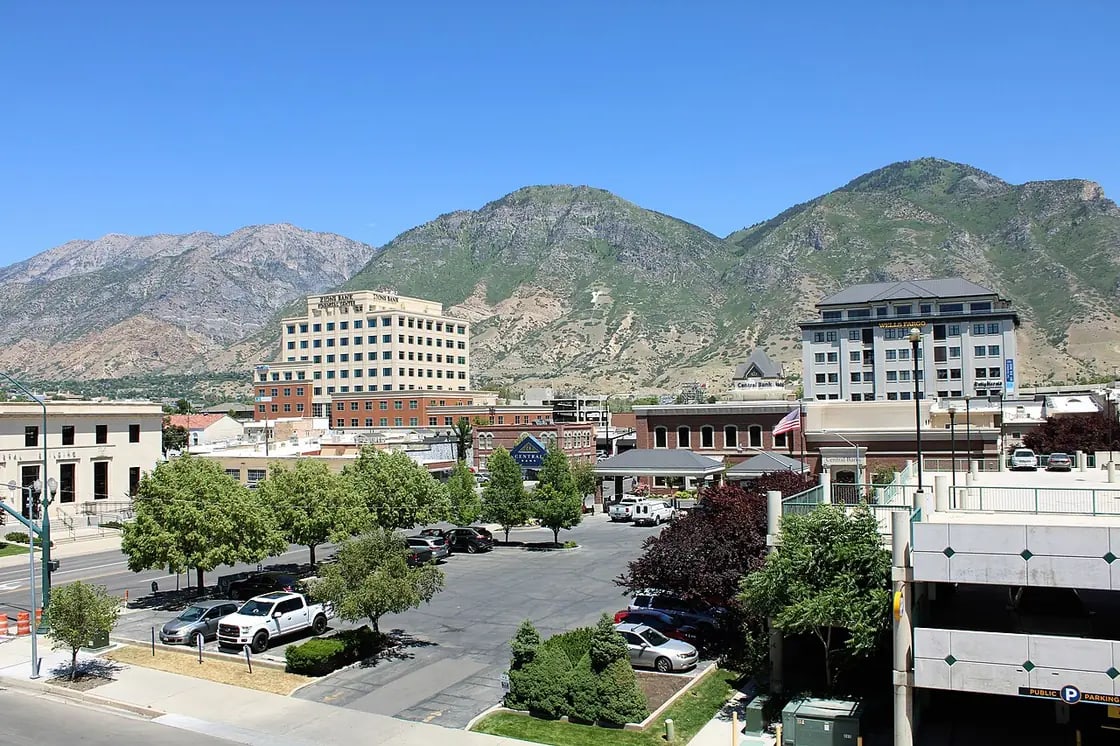
This is the thing that photographs undersell. The Wasatch does not sit on the horizon; it rises directly out of the eastern edge of the city, steeply, immediately. From most of Provo you can be at a trailhead in fifteen minutes and above the valley floor in forty.
That proximity changes how people use their time. Hiking here is not a weekend expedition requiring planning — it is something you do before work. Rock Canyon and the Y Trail are effectively city parks with elevation. Within an hour you have Sundance, the Alpine Loop, several reservoirs and a great deal of the Uinta National Forest. Within a longer drive you have five national parks.
For anybody whose quality of life is tied to being outside, this is the single strongest argument for the place, and it is not exaggerated.
It is very safe
Provo's violent crime rate is low, consistently and by a wide margin against national averages for cities of comparable size. This shows up in ordinary behavior: children walk to school, front doors get left unlocked more than they should, and a lot of the low-grade urban vigilance people carry elsewhere is simply absent.
Property crime exists — bike theft in particular is a real and persistent problem in the student areas — but the baseline sense of physical safety is high and it is one of the most commonly cited reasons people stay.
The job market punches above its weight
A city of Provo's size would not normally support the job market it has. The reason is the corridor of technology companies running north through Lehi and on toward Salt Lake, and the very large direct-sales and software sector headquartered in the valley.
The result is real depth in tech, software sales, customer support, healthcare and education, plus the substantial employment that two universities generate directly. Graduates who would have had to leave a comparable city elsewhere can stay here, which is part of why the population skews young.
The honest caveat is that a meaningful share of the best-paying work is north of Provo, which means the commute is part of the deal.
The cost of family life is low relative to the amenities
Utah Valley is organized around children in a way that is unusual, and the practical consequence is that a great deal of what a family does here is free or cheap. The park system is strong, the recreation programs are extensive, the libraries are good, and a Saturday can be filled without spending much.
There is also a social infrastructure that most places have lost — neighbors who notice, communities that mobilize when someone is ill, an assumption that people will help. Whether or not you share the religious culture that produced it, the effect is real.
Genuinely good food, contrary to reputation
The jokes about Utah food describe home cooking, not restaurants. Utah Valley now has deep Thai, Korean, Japanese, Vietnamese and Chinese categories, a large Latin American presence, Pacific Islander cooking and a specialty coffee scene that exists against the demographic odds.
The case against Provo
Winter air quality is the real problem
If there is one thing that would make a reasonable person choose somewhere else, this is it.
Utah Valley is a bowl. In winter, temperature inversions settle over it — warm air aloft capping cold air below — and pollution accumulates at valley level with nowhere to go. During a sustained inversion the mountains vanish into gray, the air is measurably unhealthy, and sensitive groups are advised to stay indoors. It can persist for days or occasionally weeks until a storm scours it out.
This is not an occasional inconvenience; it is a recurring feature of the season, and it is the most legitimate health complaint about living here. People with asthma or heart conditions should factor it in seriously.
Housing costs have outrun a lot of local wages
Utah Valley has seen substantial housing cost growth driven by the tech corridor, sustained in-migration and constrained supply. It remains cheaper than the major West Coast metros and it is considerably more expensive than its size and reputation suggest.
A note on figures: Utah is a non-disclosure state, meaning actual sale prices are not public record. Any specific median you encounter online is an estimate derived from listing data rather than a verified number, and different sources disagree substantially. Treat confident-sounding figures with corresponding skepticism, and verify locally.
The social monoculture is real, even as it changes
Provo is more religiously and culturally homogeneous than most American cities of its size. The non-LDS share of the population has grown and continues to, and Provo is more diverse than the county around it — but the default assumptions of the surrounding culture are still shaped by the majority.
This shows up in ordinary ways: neighborhood social life often organized around ward boundaries, a quiet Sunday, alcohol harder to obtain and more regulated than you may be used to, and life-stage assumptions that can feel pointed if you are single at thirty-five or childless by choice.
Plenty of people outside the majority culture build good lives here. The ones who struggle are usually those who expected the environment to be neutral. It is not neutral, and knowing that in advance is most of the adjustment.
It is a car city
Downtown Provo and the BYU-adjacent neighborhoods are walkable. The UVX bus line connecting Provo and Orem is a genuine piece of transit infrastructure and it works well along its corridor. FrontRunner connects the valley to Salt Lake, though it does not run on Sundays.
Outside those corridors, Provo assumes a car. The arterials are wide and fast, distances are longer than the map suggests, and winter adds its own complications on the canyon roads. Car-free living is achievable with deliberate neighborhood choice and is not the default.
The student population reshapes the city
Tens of thousands of students arrive and leave on an academic rhythm, and that produces effects a permanent resident feels year-round: an August rental market that is brutal, neighborhoods that empty in summer, traffic patterns organized around class schedules, and housing stock in student areas maintained to a landlord's rather than an owner's standard.
For students this is simply the environment. For a family buying a house near campus, the churn is a factor worth understanding before committing.
Nightlife is limited, and that is not a fixable complaint
If your idea of a city includes bars, late venues and a varied nightlife, Provo will disappoint you, and no amount of adjustment will change the underlying demographics that produce it. There is live music, there is a good downtown, and there is an enormous late-evening dessert and soda economy that fills much of the same social slot. It is not the same thing and it will not become the same thing.
Utah Lake is an asset the valley is still learning to use
Provo sits on the shore of Utah Lake, the largest freshwater lake in the state, and the relationship between city and lake has been complicated for a century.
The lake spent decades with a poor local reputation — shallow, warm, murky, prone to algal blooms in late summer, and carrying the legacy of industrial and agricultural runoff. A lot of lifelong residents still speak about it dismissively out of habit.
That picture is changing. Substantial restoration work has gone into the Provo River delta, the marina and trail access have improved, and the lake supports fishing, paddling, sailing and one of the better sunset views in the state. Algal advisories still occur in warm months and are worth checking before swimming.
For a newcomer, the practical read is that the lake is a genuine amenity with real caveats, and that local opinion of it lags the current reality by about twenty years.
Two universities set the rhythm of the year
BYU and UVU together enroll a very large number of students relative to the size of the city, and between them they do more to shape the calendar than any employer or institution.
The visible effects are the ones already described — the August housing scramble, the summer emptiness, the game-day traffic. The less obvious effects are mostly upsides. Two universities mean lecture series, museums, galleries, theater, competitive athletics and a public library system that are all better than a city this size would otherwise fund. Much of it is free or nearly free and open to anyone, and a striking number of long-term residents never take advantage of it.
They also keep the population young and unusually well educated, which feeds the job market and gives the city an energy that comparable places lose.
Growth is the story of the next decade
Utah County has been among the fastest-growing counties in the United States for years, and that single fact sits underneath most of the other complaints on this list.
Growth is why housing costs rose. It is why I-15 is under more or less permanent construction. It is why the school district in the north of the county grew large enough that it is being split into three. It is why the west side of the valley went from farmland to subdivisions inside a decade, and why the restaurant scene out there materialized to follow it.
Whether you read this as a pro or a con depends largely on what you want. A growing place has momentum, opportunity and new things opening constantly. It also has traffic that is worse than last year, infrastructure permanently one step behind demand, and long-time residents who will tell you at length what the valley used to be like. Both descriptions are accurate.
The practical planning point is that anything you assess about Provo on a visit is a snapshot of a place that is still changing quickly, and the direction of travel matters as much as the current state.
The weather, beyond the inversion
Provo has four distinct seasons, which is a selling point for people arriving from places that do not.
Winter is cold, snowy and sunny between storms, with the inversion caveat above. Snow in the valley is manageable; snow in the canyons is a different proposition and the reason winter tires are not optional if you drive them. Spring is short, unsettled and prone to a warm week followed by a late snow that kills the blossom. Summer is hot and very dry, routinely into the upper nineties, with low humidity that makes it more tolerable than the same temperature elsewhere. Autumn is the best season here and it is not close — clear, mild, and the canyons turn color through late September and October.
Two things newcomers underestimate. The elevation is around 4,500 feet, which affects sleep, exercise, hydration and alcohol tolerance for the first few weeks. And the sun at this altitude in a dry climate is stronger than it feels, in winter as much as summer.
Healthcare and everyday services
Utah Valley is well served for a metropolitan area its size. There are major hospitals in the valley, a full spread of specialists, and the university presence supports a deeper medical and dental market than the population alone would.
The gaps are the ones you would expect: highly specialized care sometimes means a trip to Salt Lake, and certain services run thin — after-hours veterinary care being a perennial local complaint. Waits for some specialists are longer than they were, which is a growth symptom rather than a structural failing.
Who Provo suits
It suits you well if you are outdoors-oriented, raising or planning a family, working in tech or healthcare or education, looking for a low-crime environment, or attending or working at one of the universities. It also suits people who want a community that will absorb them quickly, which happens here faster than almost anywhere.
It suits you poorly if you have a respiratory condition that winter air would aggravate, you want to live without a car, nightlife and cultural density matter a lot to you, or you would find a religiously homogeneous environment wearing over years rather than merely noticeable.
The honest middle is that a lot of people arrive skeptical for school or a job, plan to leave in three years, and are still here a decade later. That happens often enough to be a pattern rather than an anecdote, and it is usually the mountains and the safety that do it.
Before you decide
Visit in February, not July. Summer Provo is a beautiful place with mountains on every side, and it tells you almost nothing about what January feels like under an inversion. If the winter version is acceptable to you, the rest of the year is straightforward.
Pick the neighborhood deliberately, because Provo varies more internally than a city this size usually does — the student-dense areas, the established east-bench neighborhoods and the newer west-side developments are different places to live.
And check the school district question if you have children, especially in the north of the county, where the Alpine School District is scheduled to split into three separate districts on July 1, 2027.
The housing document that beats anybody's opinion, including ours
Everything above about housing costs is an argument. There is a document that is not an argument, it is public, and almost nobody weighing a move to Provo has read it.
Utah requires every municipal general plan to contain a moderate income housing element. The requirement sits at Utah Code Sec. 10-9a-403(2), with the county version at Sec. 17-27a-403. The element is not a statement of good intentions. Subsection (2)(b)(iii) sets out a lettered menu of specific strategies a city can commit to — rezoning for the densities that moderate income housing needs, investing in infrastructure that makes it buildable, rehabilitating housing stock that is currently uninhabitable, waiving construction-related fees, and a long list beyond those. A city has to pick from that menu and say which ones it picked.
How many it must pick depends on transit. A "specified municipality" as defined in Sec. 10-9a-408 that has no fixed guideway public transit station must recommend implementing three or more strategies. One that has a fixed guideway station must recommend five or more, and two of those five are constrained — one has to be the strategy at subsection (2)(b)(iii)(W), and one has to come from (G), (H) or (Q). We are deliberately not telling you which tier Provo falls into, because that classification turns on a statutory definition we would be guessing at, and the city's own filing answers it directly.
The filing is the part that matters to you. Section 10-9a-408 requires an initial moderate income housing report and then an annual progress report, submitted to the Housing and Community Development Division within the Department of Workforce Services on or before August 1 each year. The report has to restate the exact statutory language of each strategy the city selected, attach an implementation plan, and then — in every subsequent year — describe each action taken in the previous twelve months and each land use regulation or land use decision made. The section's own catchline runs through prioritization for funds, ineligibility for funds after noncompliance, and civil actions, which tells you the reporting has teeth attached.
So the useful move, if housing cost is the thing that decides your answer, is to read Provo's most recent report rather than any listing site's median. You get the strategies the city has formally committed to, the things it says it did last year, and the gap between those two — which is the honest measure of whether the direction of travel is toward more housing or away from it. It also gives you a way to compare Provo against Orem, Springville, Lehi or Vineyard on identical terms, because every one of them files the same form against the same statute on the same date.
We publish no price figures anywhere in this guide, and this is why: the numbers move faster than any page can track, but the document that shows what a city is actually doing about them is refreshed once a year, on a known deadline, in public.
Related Guides
- Moving to Provo: The Complete Guide
- Cost of Living in Provo
- Provo Neighborhoods: Where to Live
- Provo Weather: What Each Season Actually Feels Like
- Which School District Am I In?
- Jobs in Provo & Utah Valley
- The UVX Bus: A Complete Guide
- FrontRunner from Provo
- Best Parks in Provo & Orem for Families
- Winter Tires & Canyon Driving in Utah
- A Short History of Provo
- Utah Food Culture Explained
- Utah Lake: A Complete Guide
Frequently Asked Questions
Is Provo a good place to live?
What is the biggest downside of living in Provo?
Do you have to be LDS to fit in in Provo?
Is Provo expensive?
Is Provo good for families?
What is the job market like in Provo?
Is Provo walkable?
What surprises people most after moving to Provo?
Sources
The facts in this guide were checked against these sources. Hours, fees and rules change, so confirm anything time-sensitive with the source before you go. How we make Provo.com.
- Utah Division of Forestry, Fire & State Lands: Utah Lake, Utah Division of Forestry, Fire & State Lands. Checked October 12, 2026.
- Update: Commissioners vote on Alpine School District boundary maps, Utah County. Checked October 12, 2026.
- Utah Code 10-9a-408, Moderate income housing report, Utah Legislature. Checked October 12, 2026.