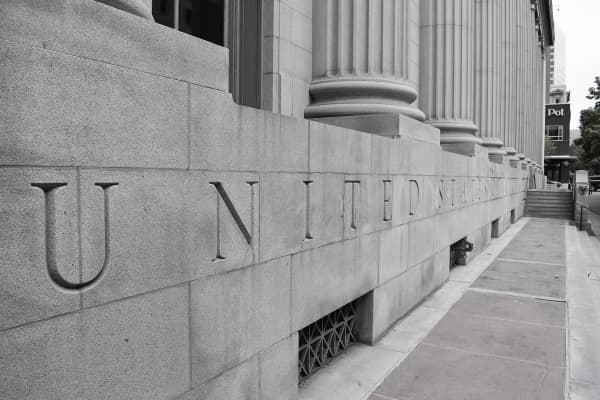

City Hall is the building people drive to when they do not know where else to go. Roughly half the time, the thing they need is not in it.
That is not a criticism of Provo. It is a consequence of three separate governments — city, county and state — operating in overlapping territory with offices that look interchangeable from the outside and are not.
This page is a map of what is at 445 West Center Street, and, more usefully, what is not.
The building
Provo City Hall sits at 445 West Center Street. Inside it:
The mayor's office. Provo runs a strong-mayor government in which the mayor is the city's chief executive, overseeing departments, preparing the budget and holding a veto over the council. What that job does and does not decide is covered in detail in the Provo mayor's office, and it is worth reading before you direct anything at it.
The Council Chambers, Room 100. Where the seven-member city council meets. Meetings are broadcast live and archived, and a telephone channel exists for people without reliable internet, with call-in details published in each agenda.
The City Recorder, Suite 410. This is the office almost nobody thinks about and the one that holds what you need surprisingly often. The recorder keeps official city documents, election records and canvass reports. Published hours are Monday through Thursday, 7:00 AM to 6:00 PM, and the office can be reached at (801) 852-6524.
City administration. The departments and administrative functions that run the city day to day.
The four-day week
Provo city offices run a compressed schedule rather than a conventional five-day week. The City Recorder's published hours are Monday through Thursday.
This catches people in both directions. The building opens earlier than a typical office — seven in the morning is useful if you work standard hours. And it is closed on a day most people assume is a working day, which is how a Friday errand becomes a Monday errand.
Departments within the building are not obliged to keep identical schedules, and holiday closures apply on top. Confirm the specific office before you travel. Five minutes on the phone beats a wasted morning, which is a theme that recurs across every civic page on this site for good reason.
Start at 311, not at a department
For nearly everything operational, the right first move is not a visit and not an email. It is Provo 311, at (801) 852-6000.
311 is a routing system rather than a receptionist. A contact through it generates a ticket, and a ticket generates a record — a reference you can point back to, and a thing that exists independently of whether one employee saw one message.
Compare that with the common alternative. An email to a department, or to the mayor, about a pothole produces a forwarded message that arrives at 311 several days later having accomplished nothing except delay. The instinct to go higher is understandable and it is usually counterproductive.
Use 311 for potholes, streetlights, missed collection, water pressure, code complaints, utility billing, service starts and stops, and the large category of things where you know what is wrong and do not know who fixes it.
Escalate past 311 when the normal process has already been tried and stalled — a department that has stopped responding, a problem that keeps getting handed between departments, or something that needs a decision rather than a service.
One deliberate exception: power outages. Provo runs its own electric utility and its guidance is that you generally do not need to report an outage, because dispatch and an outage management system detect it. The exception inside that guidance matters more than the rule — call if you heard a pop, saw damage, or hold information their monitoring cannot generate. Sensors report effects; only a person reports causes. Power outages in Provo covers the distinction properly.
What is not at City Hall
This is the section that saves the trip.
Not the DMV, and not the driver license office
Vehicle registration and driver licensing are state functions handled by two different state agencies in two different buildings, neither of which is City Hall and neither of which is Provo City in any sense.
The Motor Vehicle Division — what everyone calls the DMV — operates under the Utah State Tax Commission and handles titles, registration and plates. The Driver License Division is separate and handles licenses and identification cards. People lose entire mornings to this distinction. The Provo DMV, decoded exists specifically because of how often it happens.
Not the county
Marriage licenses, passports, elections, and the county's official record belong to the Utah County Clerk. Deeds, mortgages and parcel maps belong to the County Recorder — see looking up property records. Valuation and tax billing are the Assessor and Treasurer, covered in property tax in Utah County. Countywide policy and the budget behind all of it sit with the county commission.
The county is a separate government with separate elected officials, a separate budget and almost no overlapping authority with the city.
Not the courts
District and justice courts are part of the state court system. Case files, dockets and hearings are court business. The Utah County courts guide covers which court holds which kind of case, and jury duty covers the summons that arrives from the same system.
City Hall keeps the city government's record. It does not keep the judiciary's.
The rough test
If the thing is about your property, your street, or your city services, it is city business and City Hall is at least the right building. If it is about records, courts, elections, licenses from the state, or countywide services, it is not.
What City Hall is for
Having spent most of this page on exclusions, here is the positive list.
City council business. Agendas, public comment, hearings, the budget process, ordinances. If you want a development stopped, a rule changed or money spent, this is the building and the council is the body. How to follow Provo City Council covers the mechanics, including the substantial point that the daytime Work Meeting is frequently where the real deliberation happens and the evening vote can be close to a formality.
Permits and planning. Building permits in Provo covers when you need one and when you do not — and it is worth checking current process rather than assuming, since permit streamlining has been an administration priority and the process has been moving toward online submission.
Business licensing. Provo's business license process involves several agencies rather than one counter, which is exactly the sort of thing worth reading before turning up.
Code enforcement questions. What the city can cite you for — weeds, junk vehicles, nuisance — is its own subject, covered in code enforcement in Utah Valley.
Records and official documents. The City Recorder in Suite 410, and public records requests under Utah's records statute.
Why three governments overlap here at all
The confusion this page exists to solve is not anyone's mistake. It is structural, and understanding why makes it much easier to predict which government you need without looking anything up.
Cities exist to handle things that stop at a boundary. Streets, water, sewer, zoning, local police, parks, building inspection. These are inherently geographic, they vary block to block, and they are best decided by people who live on the blocks in question. Provo does all of them, and it does something most Utah cities do not — it runs its own electric utility, which is why your power bill and your water bill come from the same government that fixes your street.
Counties exist to handle things that cannot stop at a boundary. A jail cannot be municipal in any sensible way. Neither can a court system, an elections operation, a property assessment roll that has to be consistent across every city in the valley, or a public health authority tracking something that does not check addresses. Counties also govern the land that is not inside any city at all.
States exist to handle things that should be identical everywhere. A driver's license issued in Provo has to work in Moab. Vehicle titles have to mean the same thing statewide. Professional licensing, road standards on state routes, and the statutes that let cities do any of the above are state functions.
Once you have that frame, most routing questions answer themselves. Does this thing need to be the same across the state? State. Does it need to be consistent across the county, or does it involve records, courts or ballots? County. Is it about this specific piece of ground and the services reaching it? City.
The residual confusion comes from geography rather than logic: the county seat is Provo, so county buildings sit a few blocks from city buildings, and everything looks like it belongs to the same organization. It does not.
The errand that has quietly moved online
A meaningful share of what used to require a counter no longer does, and the fastest visit remains the one that never happens.
Utility account setup and changes, many permit submissions and status checks, service requests of every kind through 311, agendas and meeting packets, and city records in a growing number of categories are all reachable without a trip. Permitting in particular has been an administration priority, which means the process you remember from two years ago may not be the process today.
That has a practical consequence worth naming: check the current process before you plan around an old one. This applies with unusual force to permits, where a resident's mental model is often several years stale and the difference between the old and new path can be an entire week.
It also means the counter is increasingly reserved for the transactions that need a human — the unusual case, the disputed one, the one where a form does not fit. Which is a good use of a counter, and a reason not to feel bad about occupying one when you need it.
When City Hall is the wrong lever entirely
Three situations come up repeatedly where people go to City Hall, get treated politely, and leave with nothing — because the building was never going to be the answer.
A dispute with a neighbor over property. Boundary disagreements, fences, trees, drainage between two private parcels. The city enforces its code; it does not adjudicate between two private owners. If a code violation exists, code enforcement is a real channel — what Provo can cite you for covers the scope. If it is a civil matter between neighbors, it is a civil matter, and the city will correctly tell you so.
A development you dislike that is fully permitted. If a project complies with the zoning that applies to it, the administration has limited discretion to stop it. The moment to influence that outcome was when the zoning was set, or during the approval process, at the council. Arriving after the permit has issued is arriving after the decision.
A landlord or tenant problem. Habitability, deposits, notice, eviction — these run through state law and the courts rather than through city administration. Code enforcement can address genuine code violations in a rental, which is a narrower thing than most tenants expect, and it is worth understanding the difference before pinning hopes on it.
None of these mean you are without options. They mean City Hall is not the option, and the sooner you know that the sooner you get to the one that is.
The recorder's office, and why you will end up there
Of everything in this building, the office residents least expect to need is the City Recorder in Suite 410 — and it is the one that turns out to hold the answer surprisingly often.
The recorder keeps the city's official documents. That includes election records and canvass reports, which is why the certified result of a municipal race lives here rather than with the county. It includes ordinances as adopted, which matters when a summary of a rule and the rule itself disagree — and on this site we have now documented several cases where a city page and the underlying code say different things. It includes the official version of the city code itself, with the recorder holding the authoritative text for anything passed since the last published update.
If you are researching something that has to be right — a boundary, a rule as it stood on a particular date, what a body adopted rather than what was reported — this is the office. Published hours are Monday through Thursday, and the number is (801) 852-6524.
Before you go
The same five-minute discipline that applies to county offices applies here, and it applies more sharply because the four-day week removes a fifth of your opportunities.
Confirm the office is the right one — city, county or state. Confirm the office is in this building rather than another city facility. Confirm today's hours, including whether it is one of the days the building is closed. Confirm what you must bring, since identification and payment requirements differ by transaction. And confirm whether the errand can be completed online at all, because a growing share of city business can be, and the fastest visit is the one that does not happen.
If you are new to the valley and working through the whole list of civic setup tasks at once, moving to Provo sequences them, and setting up utilities covers the one that has to happen first.
Utah offers cities three forms of government, and which one you are in changes the errand
The section above explains why three governments overlap on the same ground. A separate question, and the one that decides whether your request lands, is what shape the city government itself has. Utah does not leave this to each city to invent. Utah Code Title 10, Chapter 3b sets out a fixed menu, and every municipality in the state is operating under one of the options on it.
The three forms
Section 10-3b-103 carries the forms forward from the 2008 restructure and assigns each municipality to one of them:
- Council-mayor. Section 10-3b-201 vests municipal power in two separate, independent and equal branches — a council of five or seven members, and a mayor who supervises the executive and administrative departments, divisions, offices and officers. This is the form people describe as "strong mayor." Provo runs on it; our mayor's office guide covers what the job controls day to day.
- Six-member council. Section 10-3b-301 vests municipal government powers in the council itself. The mayor is a member of that body (Section 10-3b-302), and the council may appoint a manager. There is no separation of branches to speak of.
- Five-member council. Section 10-3b-401 does the same with a five-member body, with the mayor's role at Section 10-3b-402 and the council's at Section 10-3b-403.
Section 10-3b-104 and Section 10-3b-105 set out the mayor's and the council's powers in the six-member and five-member forms, where the two are not separated. Section 10-3b-103 also addresses towns and the former council-manager form, which is why you will still hear "city manager" used about places whose statutory form is a council form with a manager appointed under it.
Why this changes what you should do at City Hall
In a council form, the mayor sits on the legislative body and votes with it. A concern raised with the mayor is, structurally, a concern raised with a member of the council.
In the council-mayor form, that is not true. The mayor is not a member of the council and does not vote on ordinances; the council does not direct staff. A request about a pothole, a permit, a code enforcement case or a utility bill is an executive matter and belongs with the administration — which is why this guide keeps sending you to 311 rather than to an elected official. A request to change a rule, rezone a parcel, or spend money differently is a legislative matter and belongs with the council.
Sending an executive request to the council usually produces a polite referral and a delay. Sending a legislative request to a department usually produces an explanation of why the department cannot do it, which is true and unhelpful.
This is also why advice borrowed from a neighboring city so often misfires here. It is not wrong; it is describing a machine with a different number of moving parts.
The mayor's veto is a statutory clock, not a mood
Because the branches are separate, council action has to be presented to the mayor. Section 10-3b-204 requires the council to present each ordinance, tax levy and appropriation to the mayor, and lets the mayor veto an ordinance or tax levy, or all or any part of an appropriation. A veto must be returned to the council within 15 days of presentation, with a written statement of objections, and the council must reconsider at its next meeting.
The action takes effect on recording if the mayor signs it, if the mayor fails to sign within 15 days, or if, after a veto, the council passes it again by at least two-thirds of all council members. Note the denominator: two-thirds of all members, not two-thirds of those present and voting.
Changing the form requires a vote of the people
Unlike almost everything else here, this one does go to the ballot. Section 10-3b-601 grants the authority to change form, and Section 10-3b-602 provides that a municipality may not change its form under that part unless the voters approve the change at an election held for that purpose. Section 10-3b-603 allows the change to be proposed by council resolution or by petition, Section 10-3b-604 sets limits on when a resolution may be adopted or a petition filed, Section 10-3b-605 prescribes the ballot form, Section 10-3b-606 handles the election of officers afterward, and Section 10-3b-607 fixes the effective date.
And if a city changes class rather than form — crossing a population threshold under Section 10-2-301 — Section 10-2-303(1)(f) provides that it keeps the same form of government it had immediately before. The two systems do not interact.
Structures, officeholders and department assignments change. Confirm current arrangements with Provo City before relying on them.
Related guides
- The Provo Mayor's Office
- How to Actually Follow Provo City Council
- The Provo DMV, Decoded
- The Utah County Clerk
- Building Permits in Provo
- Getting a Business License in Provo
- Setting Up Utilities in Provo
- Moving to Provo
- Who Decides What in Utah Valley — the boards and commissions that meet in this building besides the council
- Provo's Neighborhood District Program
Frequently Asked Questions
Where is Provo City Hall?
What are Provo City Hall's hours?
Can I pay my utility bill at Provo City Hall?
Is the DMV at Provo City Hall?
Do I get a marriage license or look up a court case at City Hall?
Where do I go for a building permit in Provo?
Can I attend a Provo City Council meeting at City Hall?
Who do I call if I do not know which department I need?
Sources
The facts in this guide were checked against these sources. Hours, fees and rules change, so confirm anything time-sensitive with the source before you go. How we make Provo.com.
- Provo City: City Recorder, Provo City. Checked October 12, 2026.
- City Utilities, Provo City. Checked October 12, 2026.
- Notice of Hearing, Redevelopment Agency of Provo City, Provo City. Checked October 12, 2026.
- Utah Code 10-3b (forms of municipal government), Utah Legislature. Checked October 12, 2026.